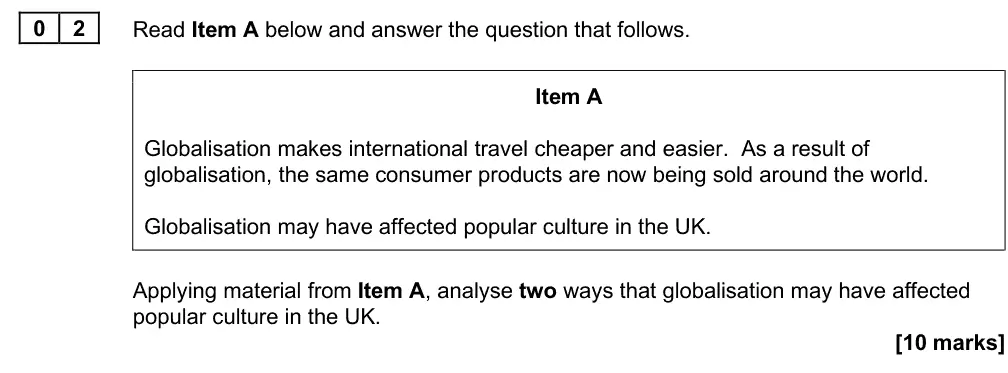
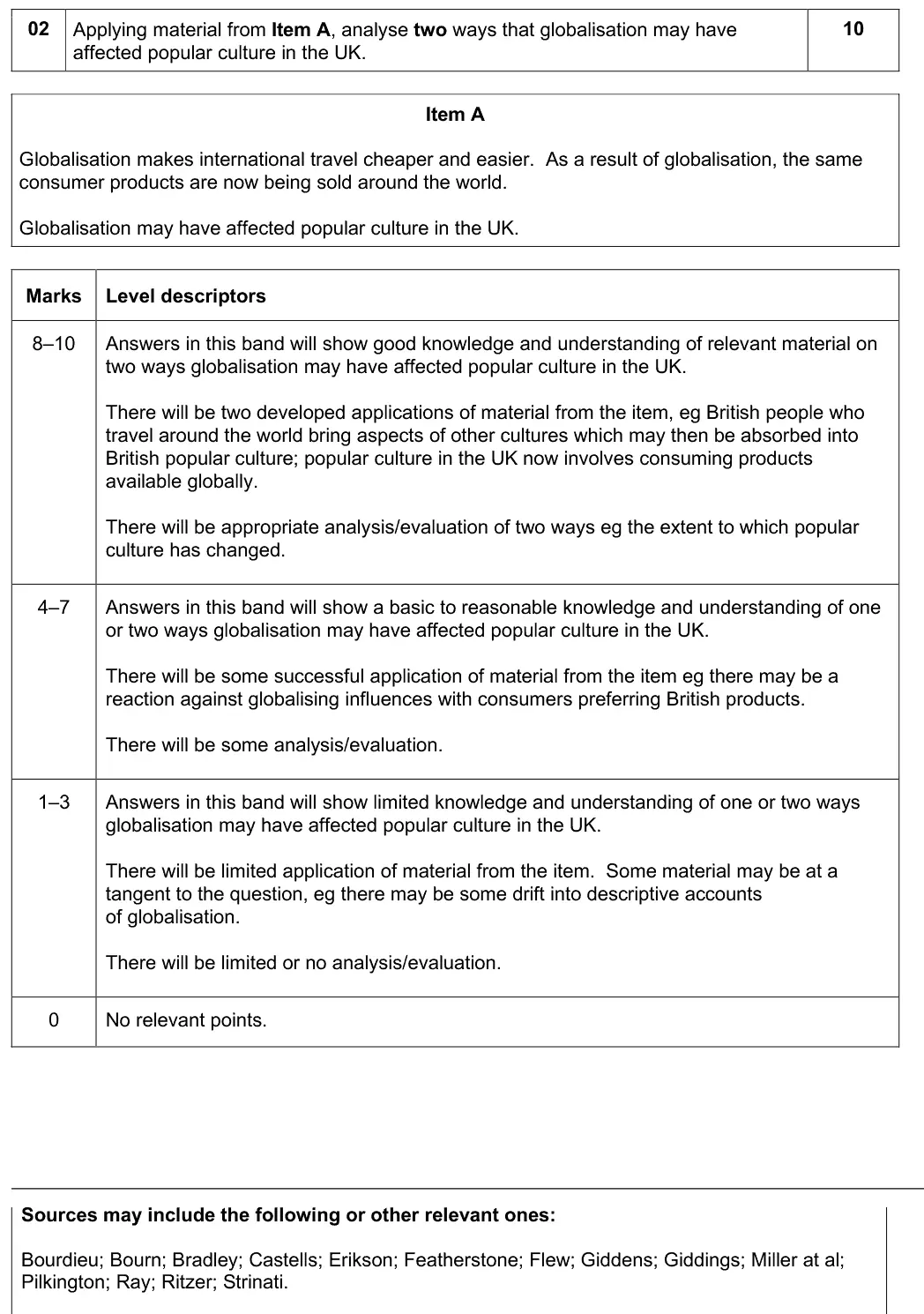
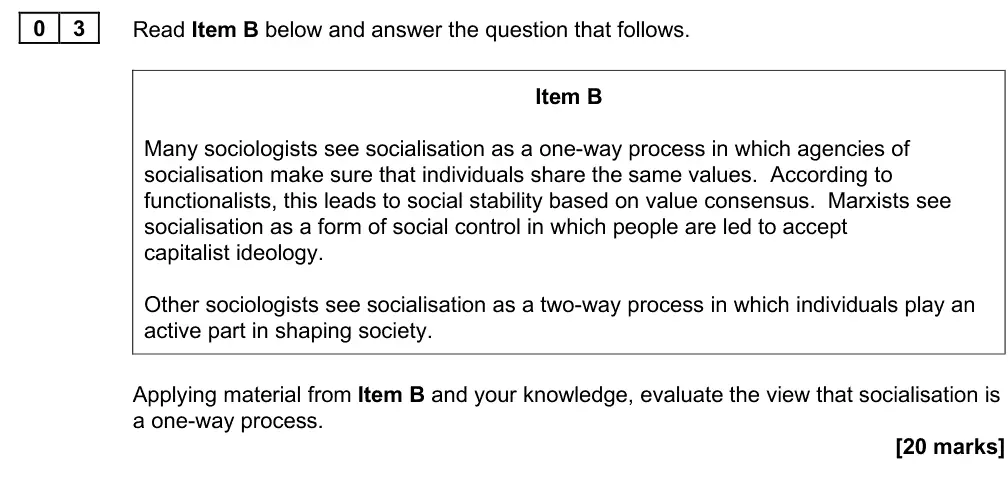
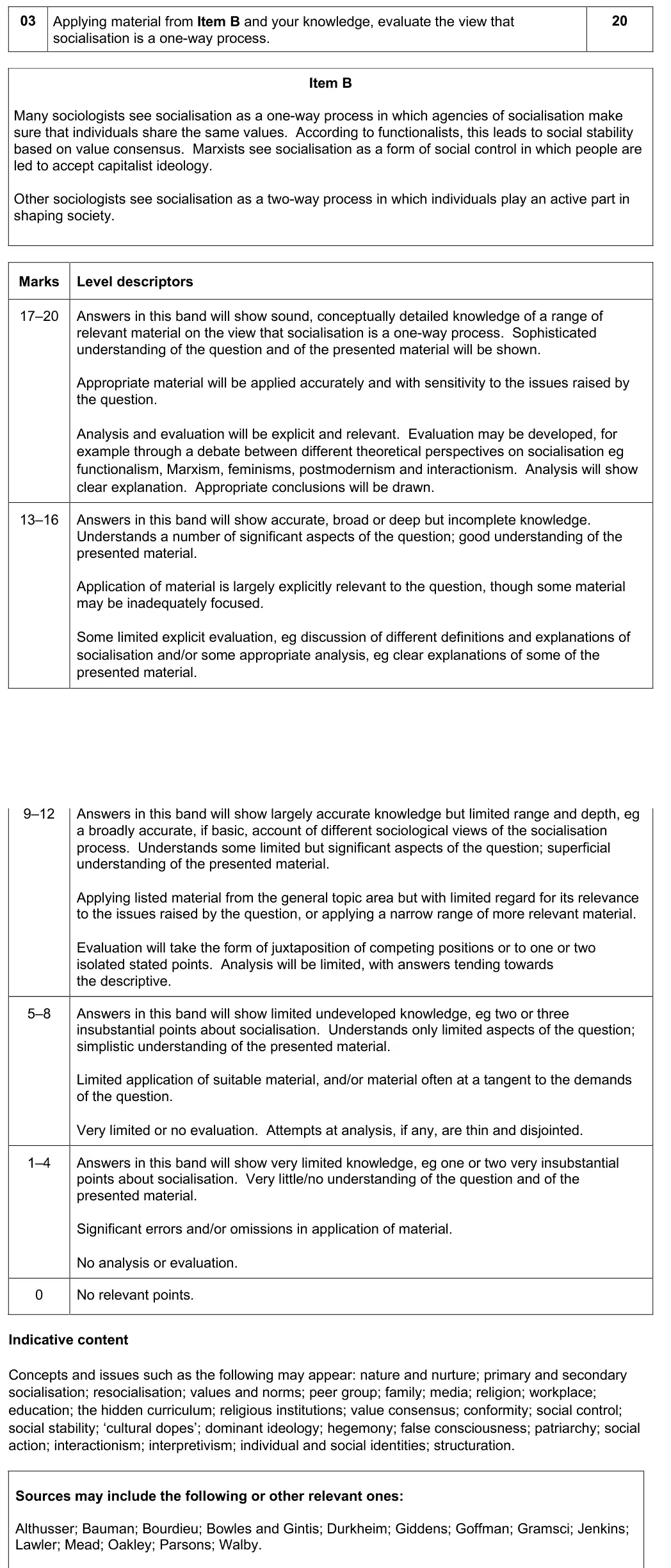
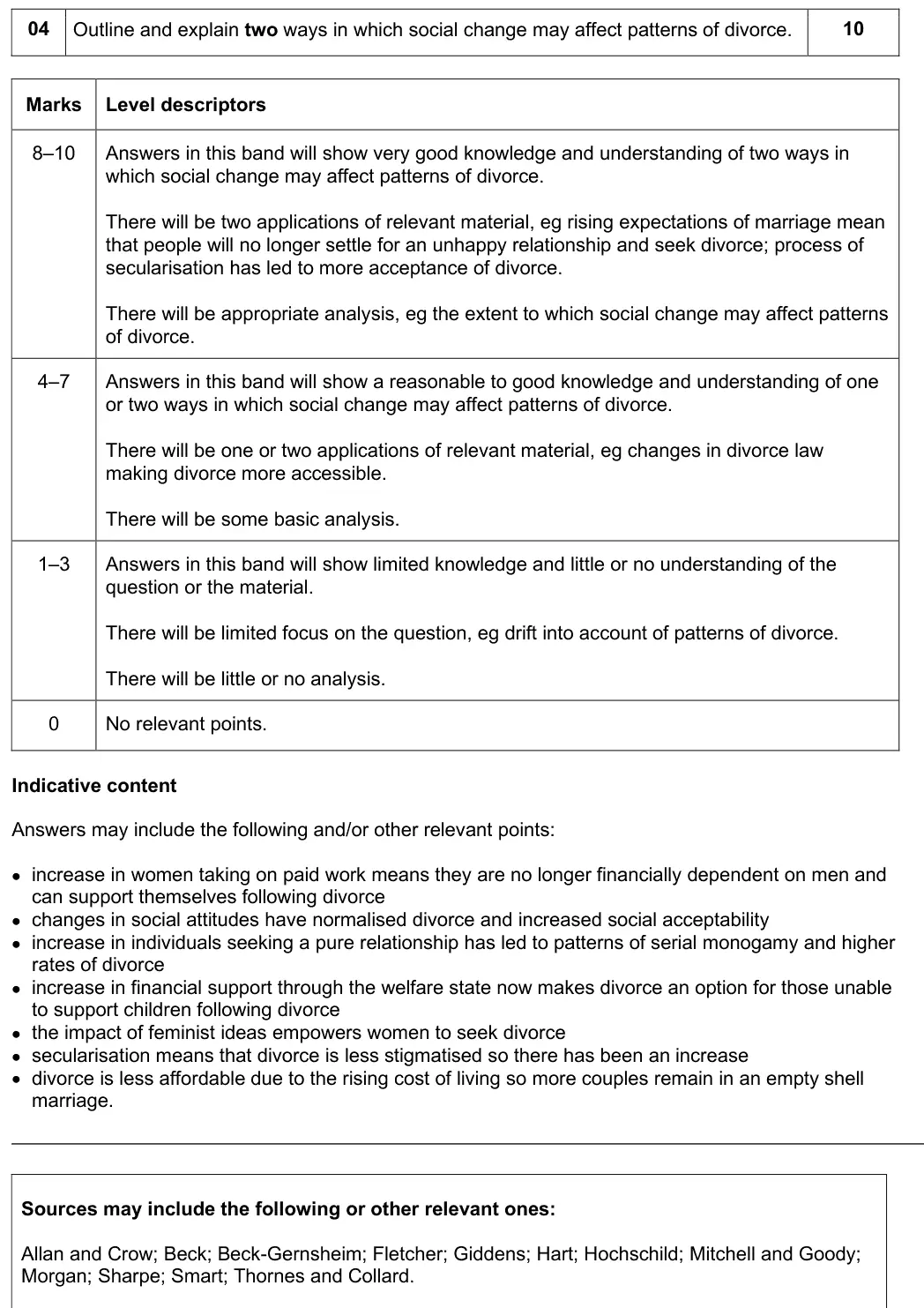
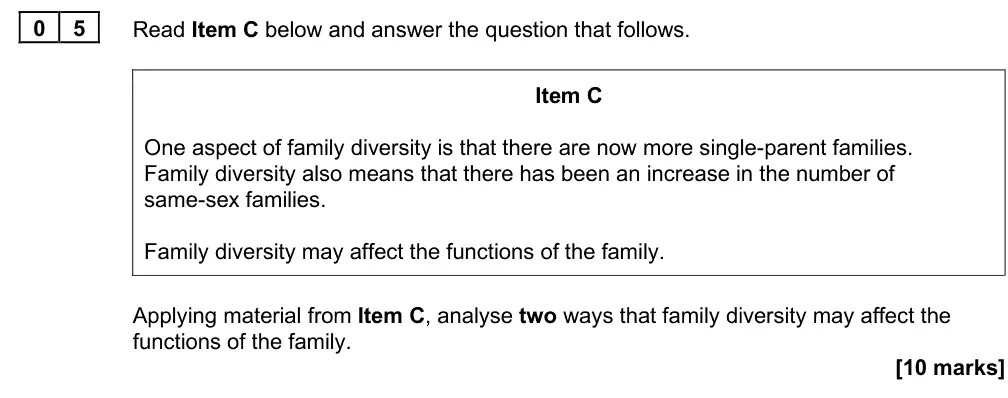
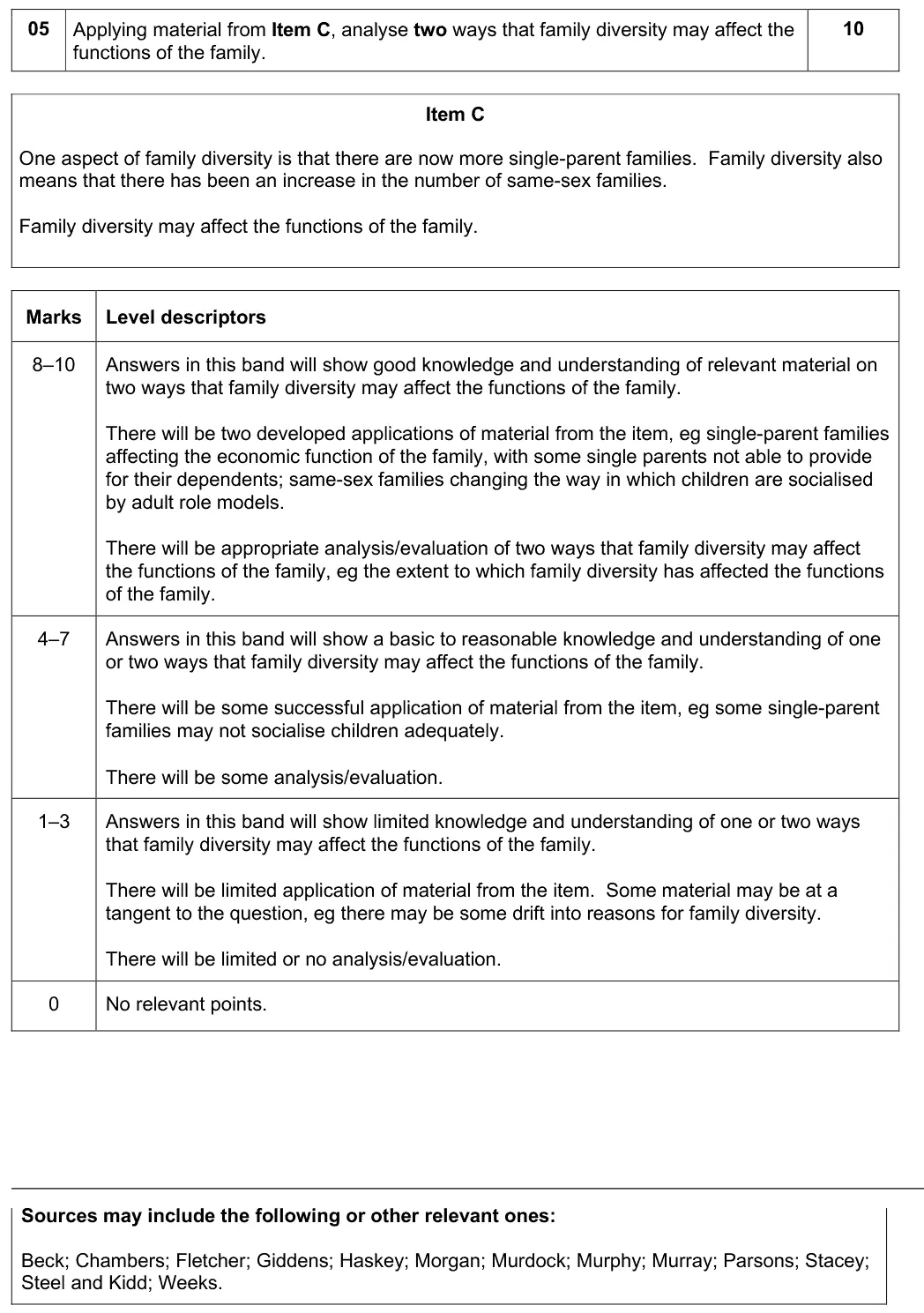
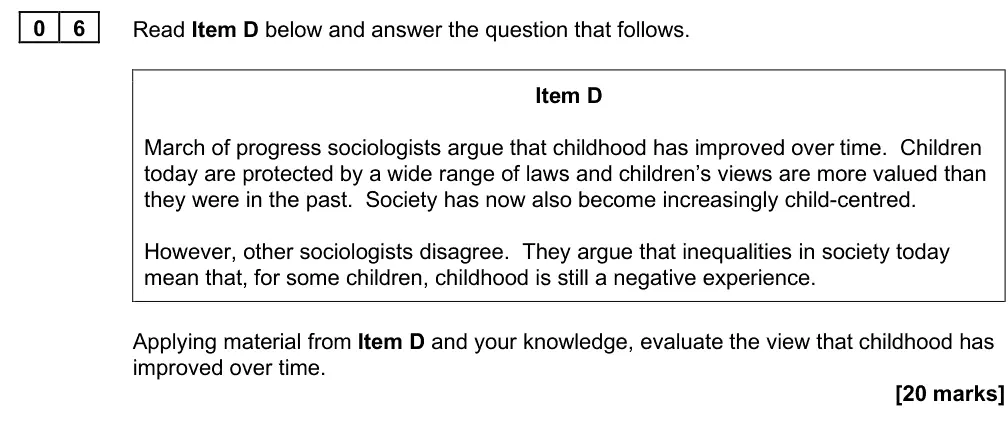
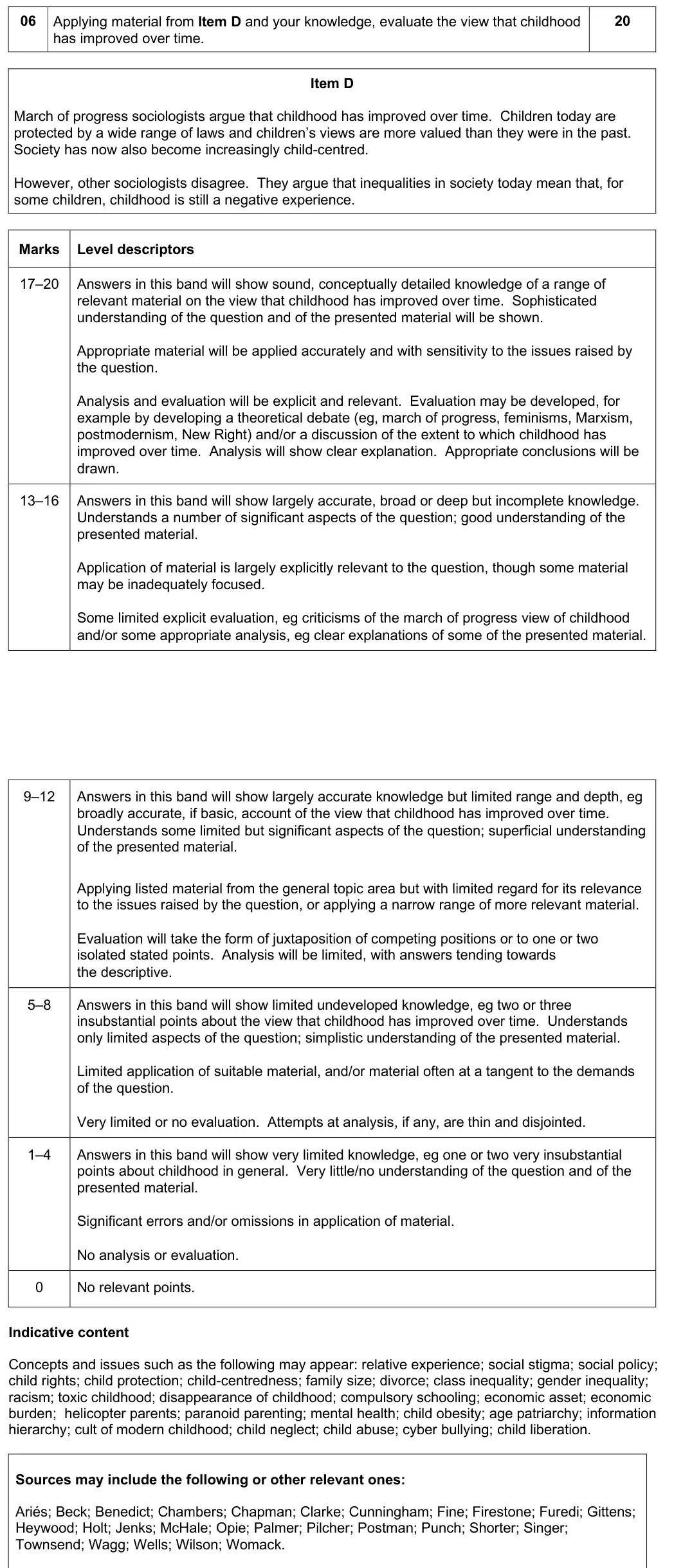
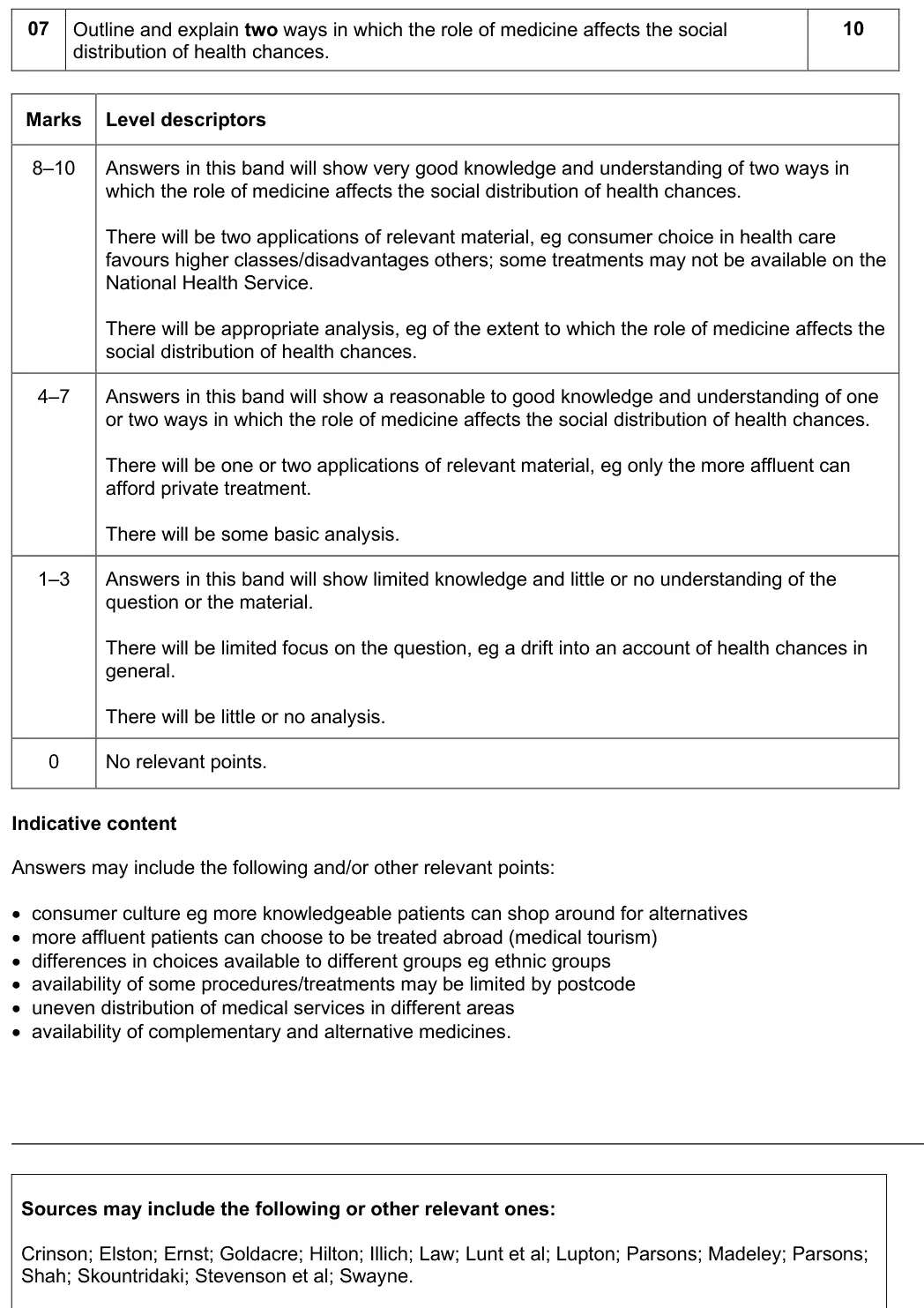
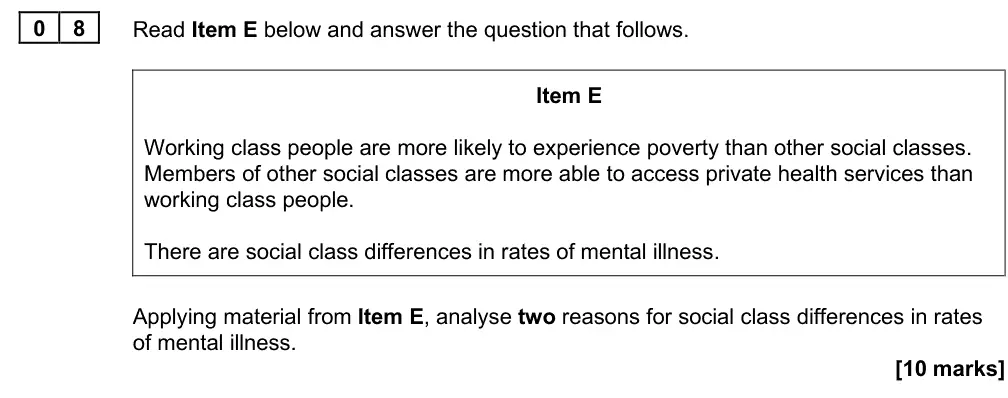
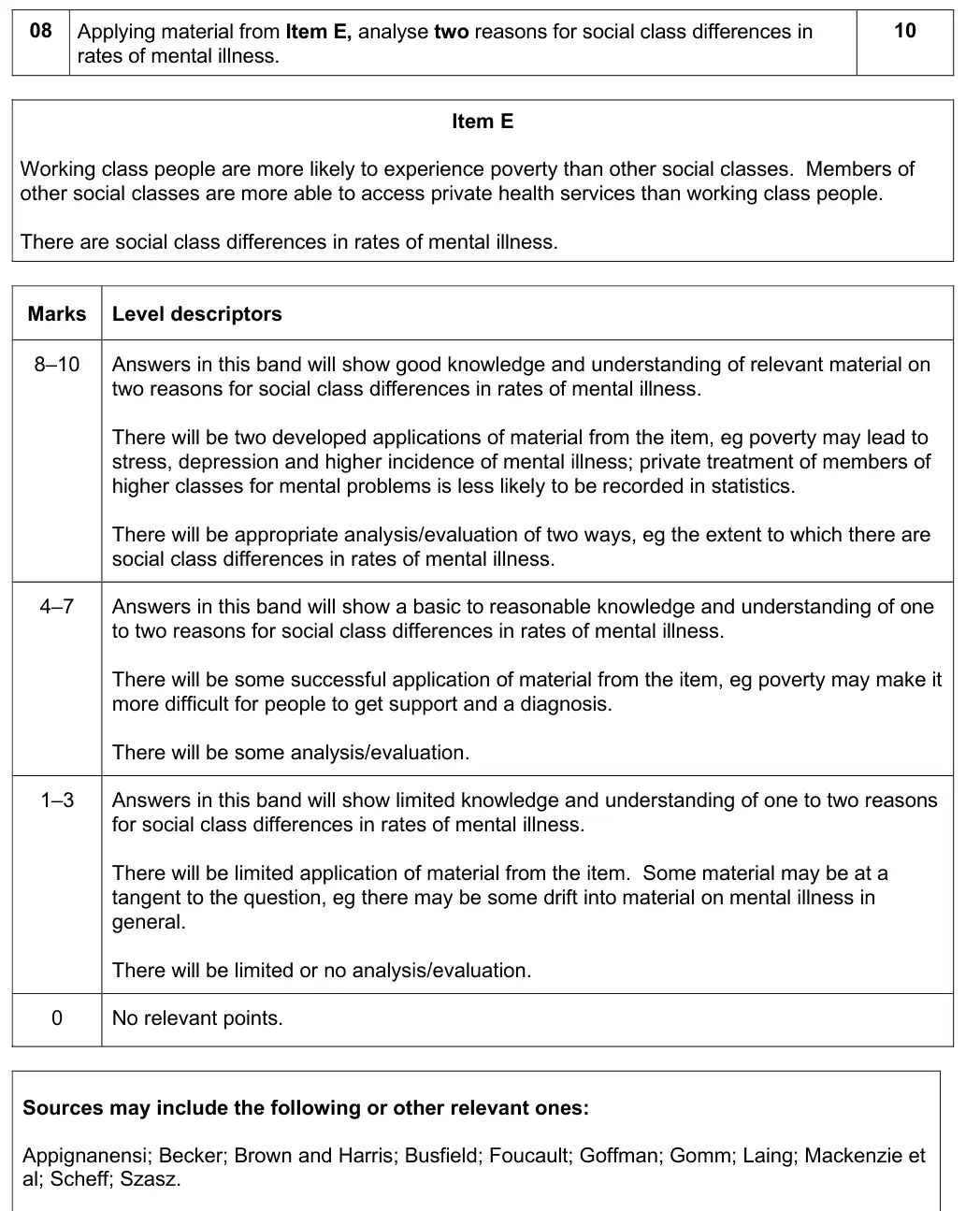
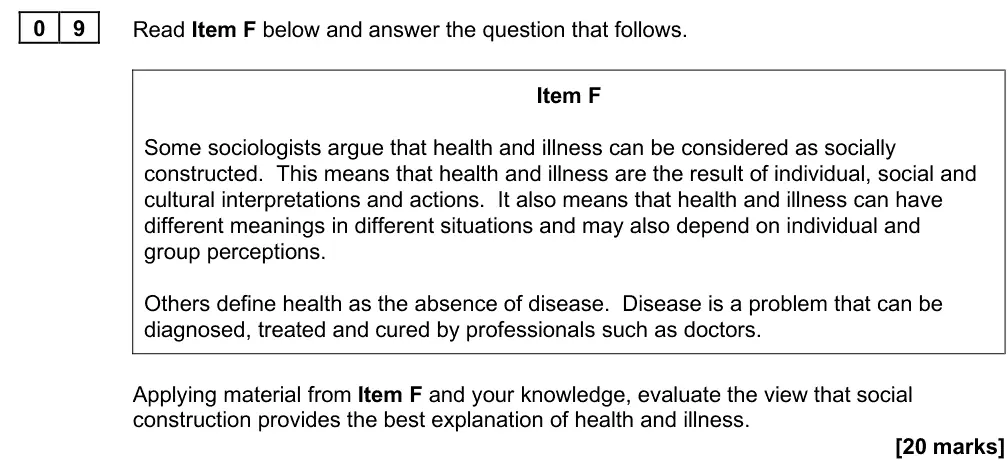
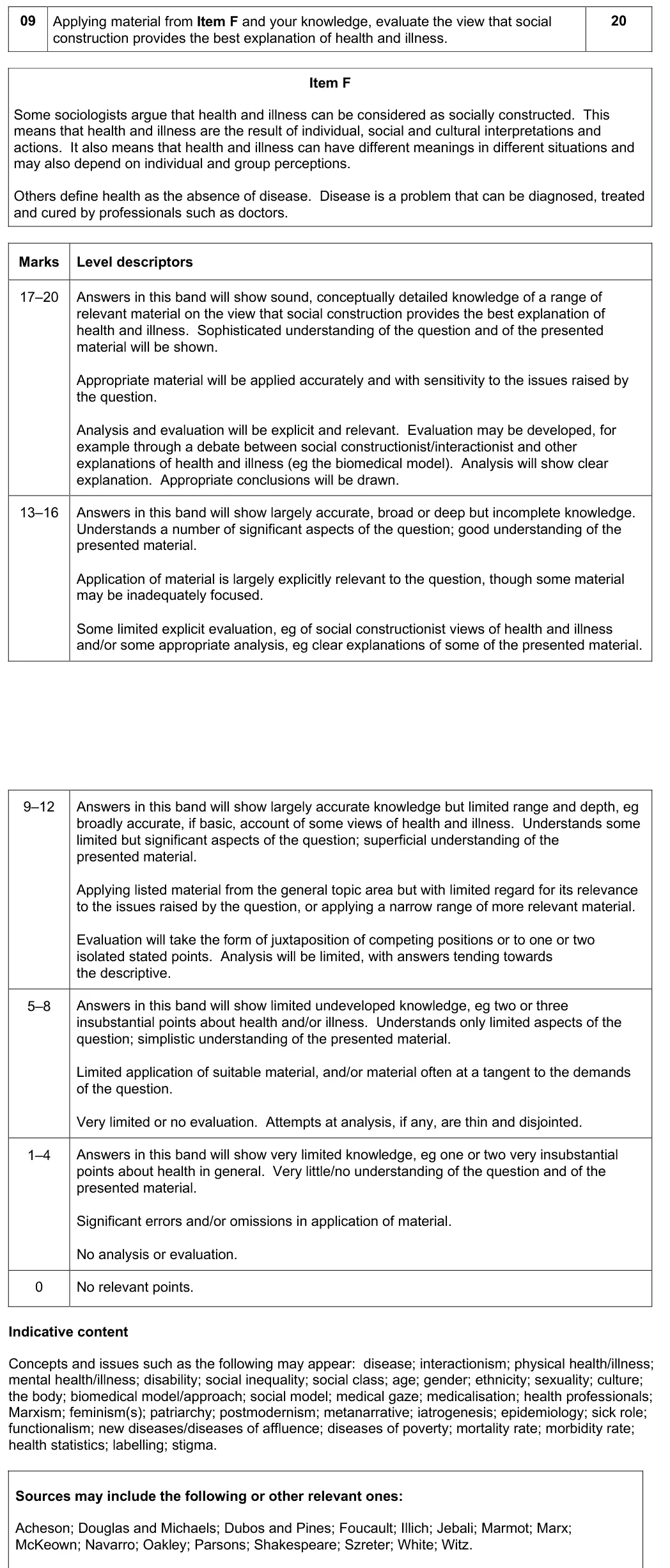
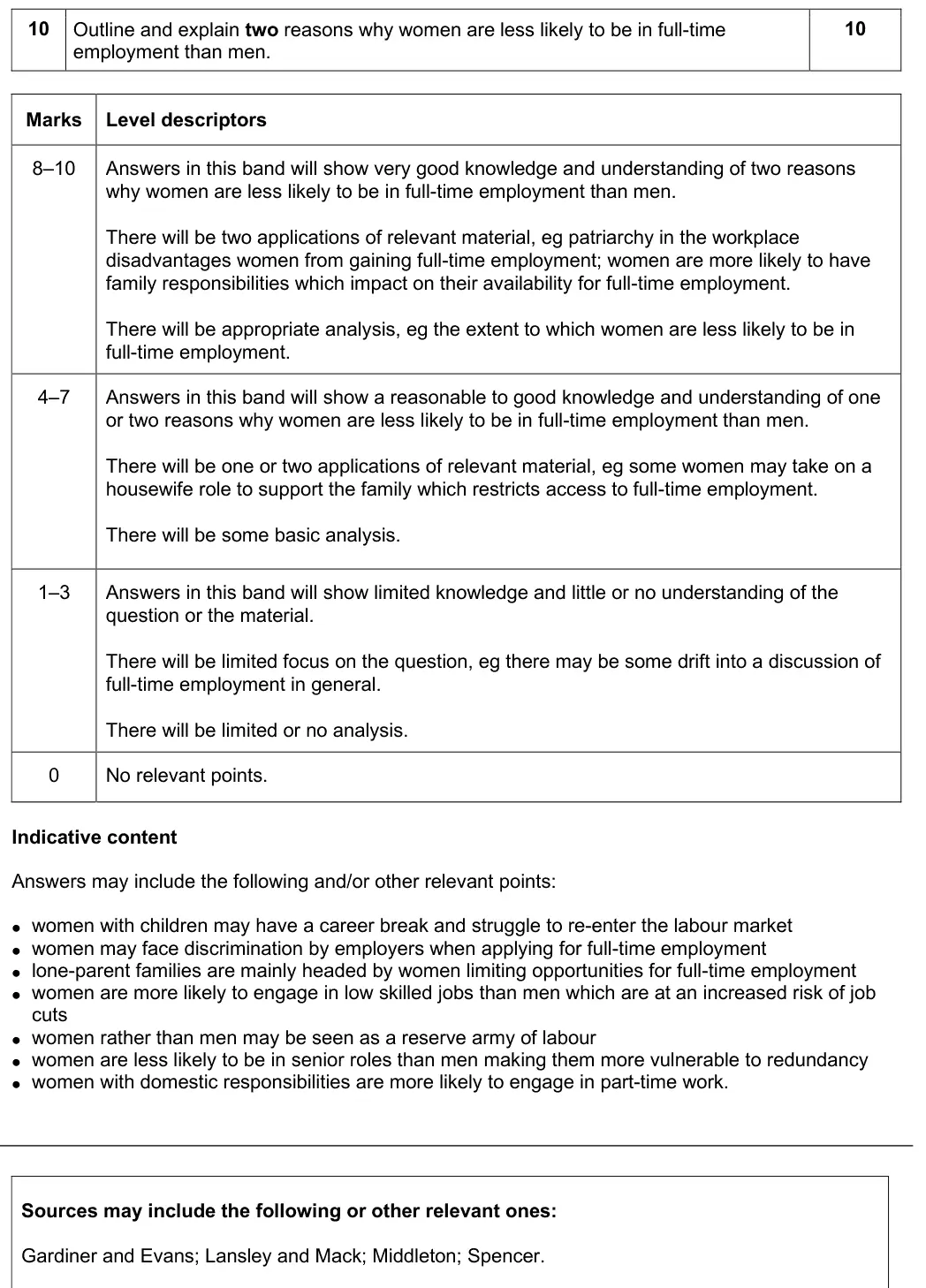
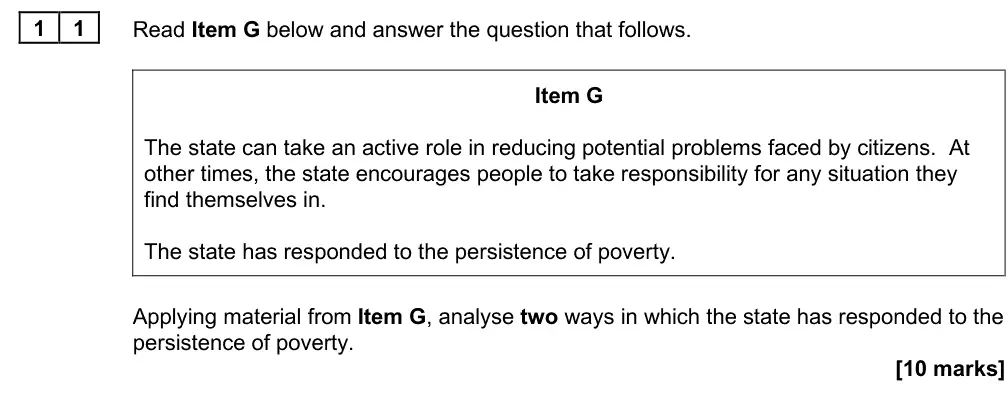
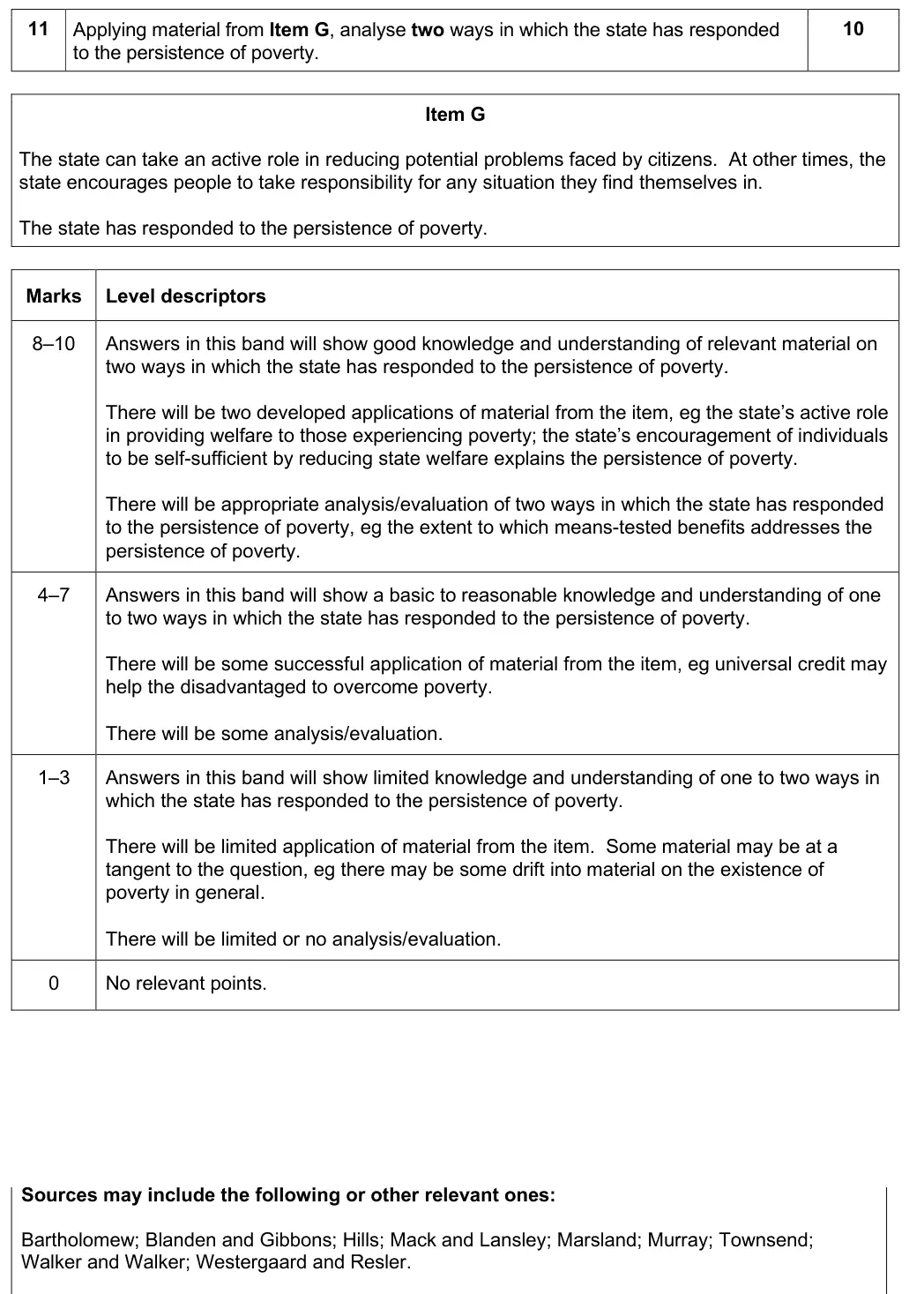
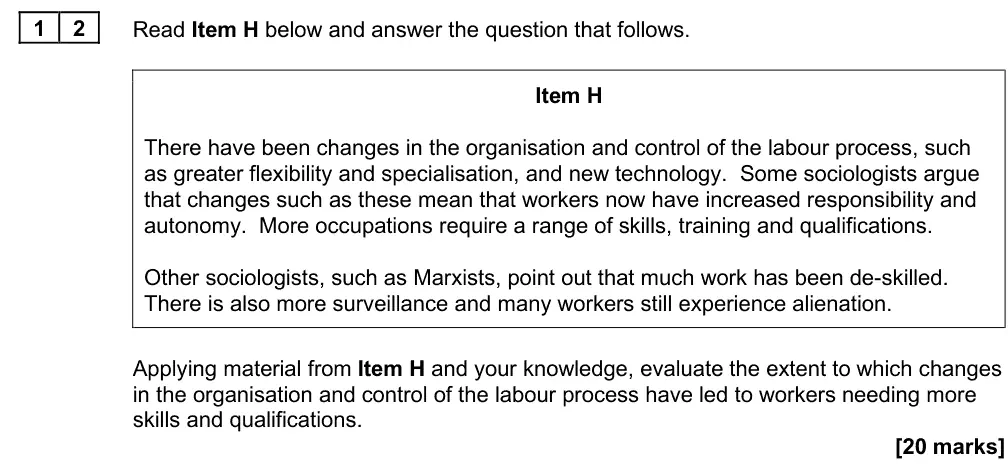
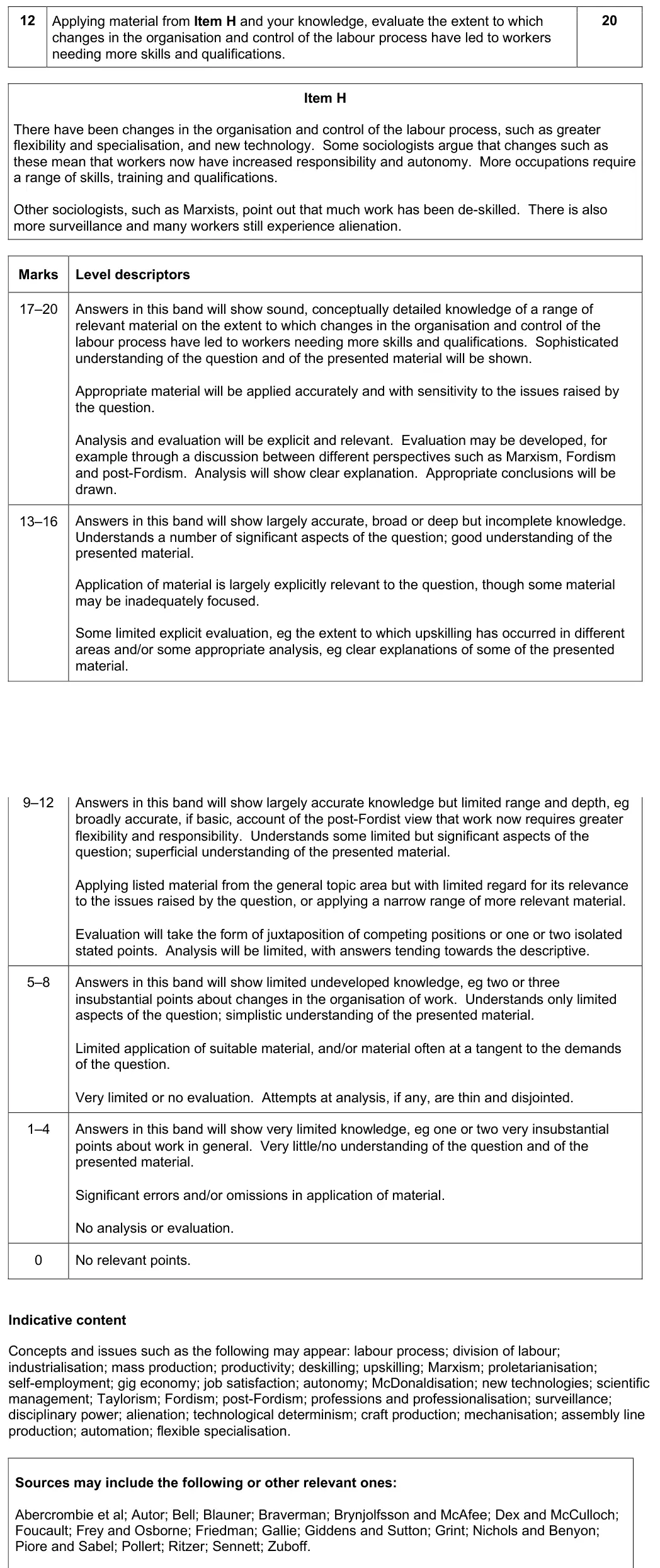
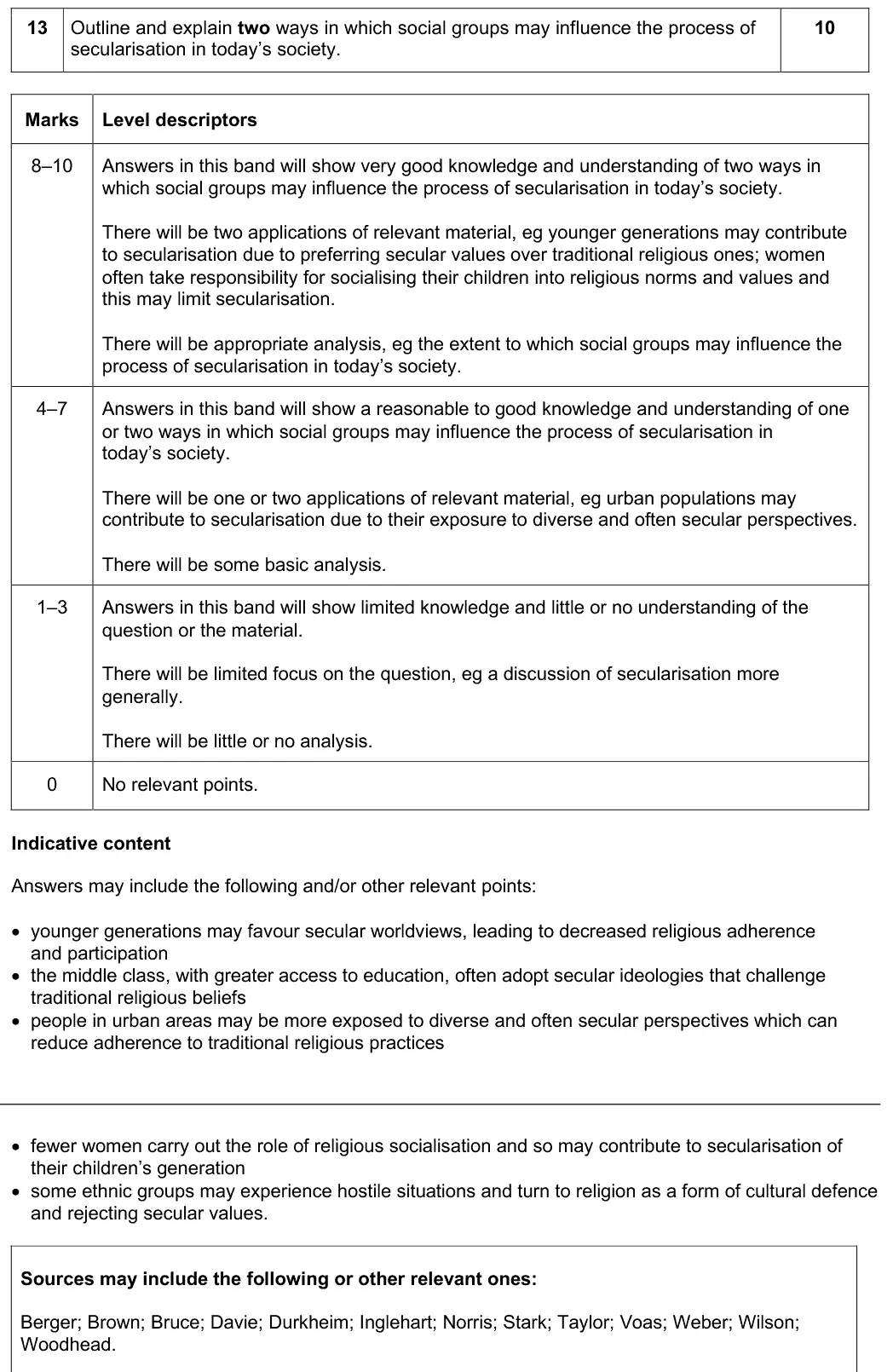
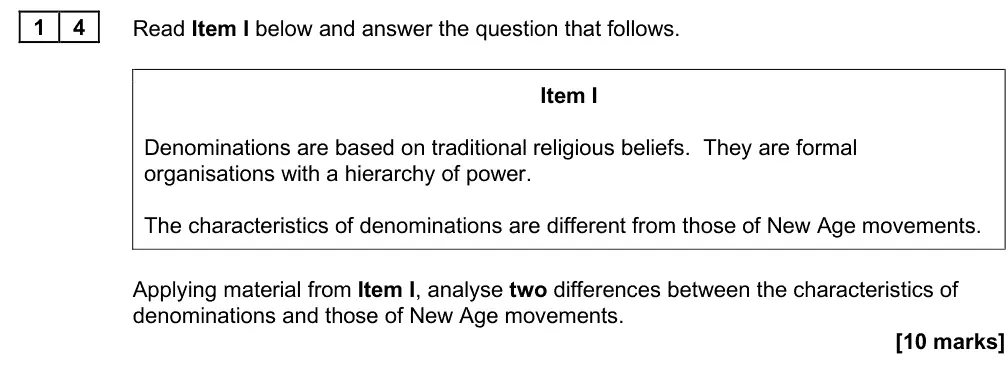
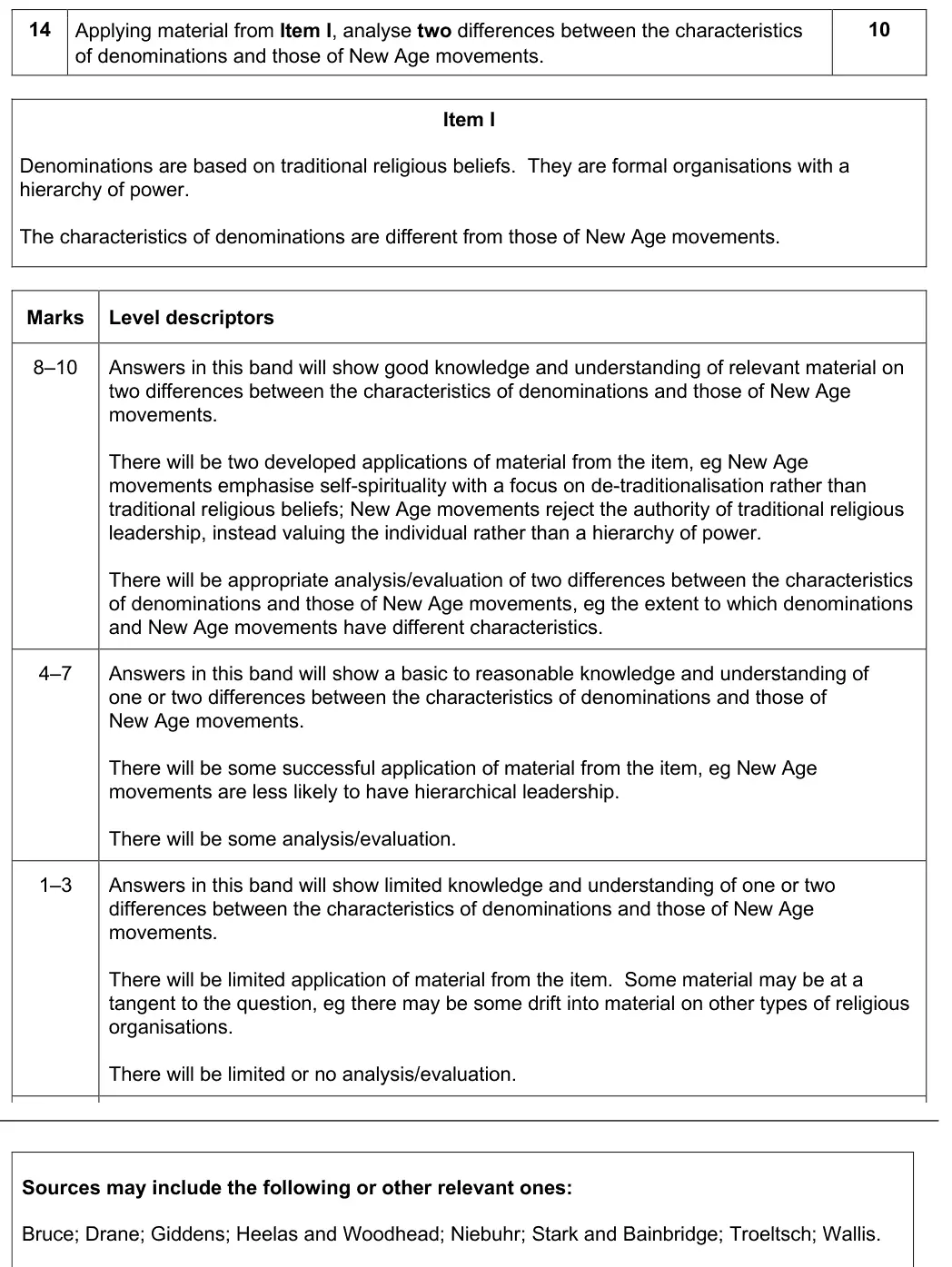
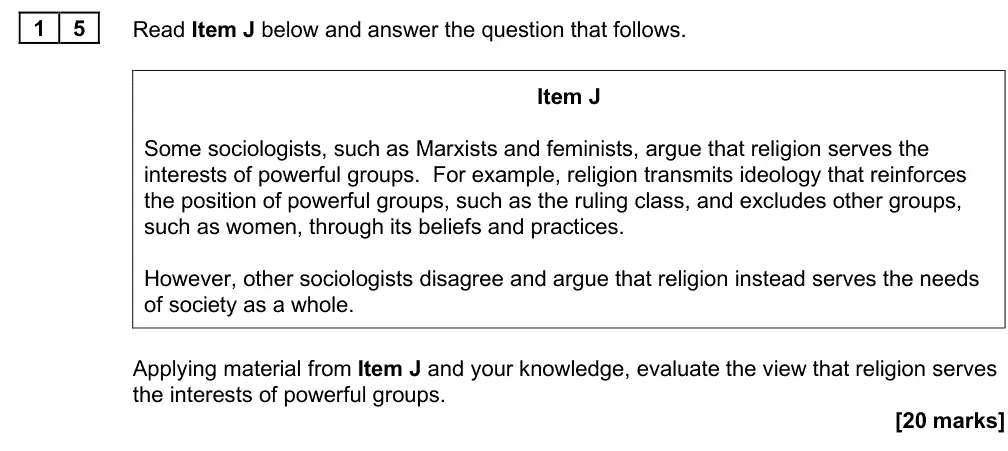
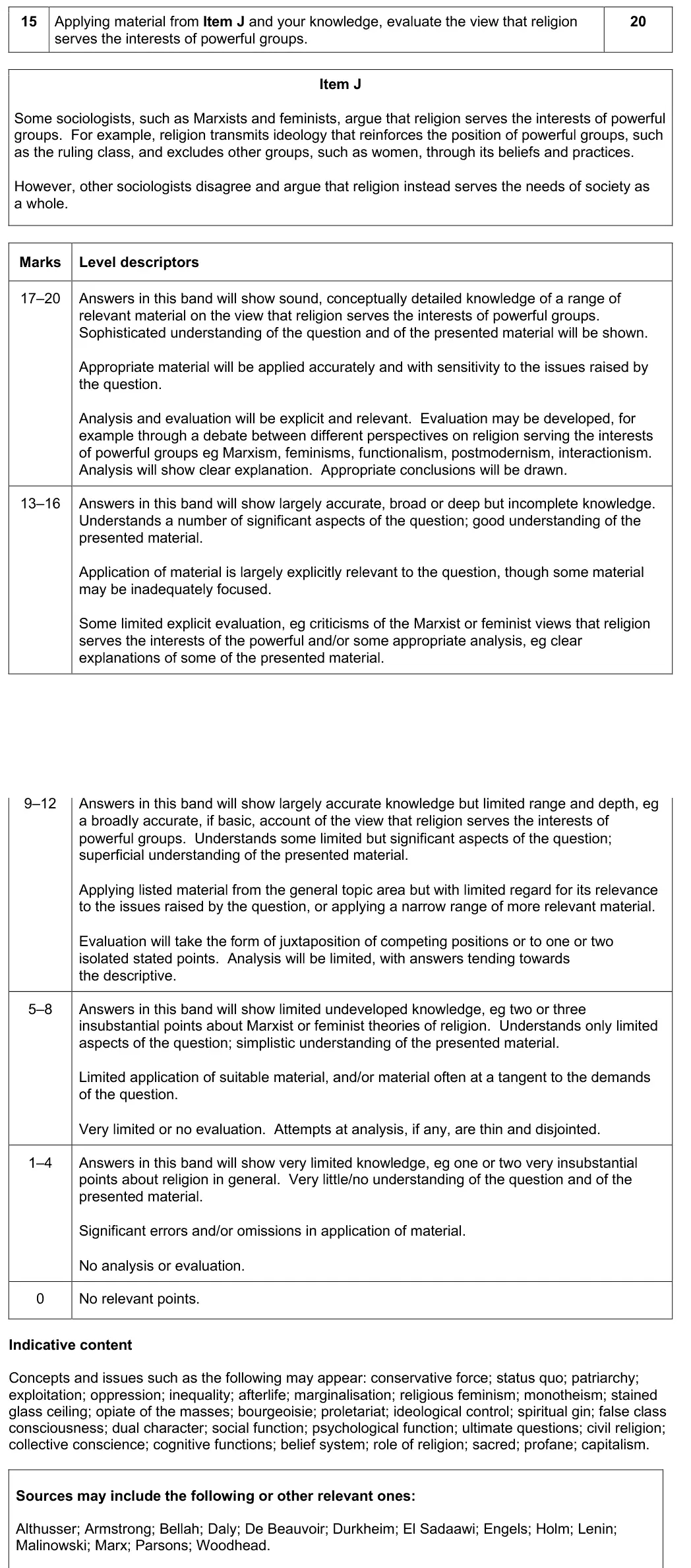
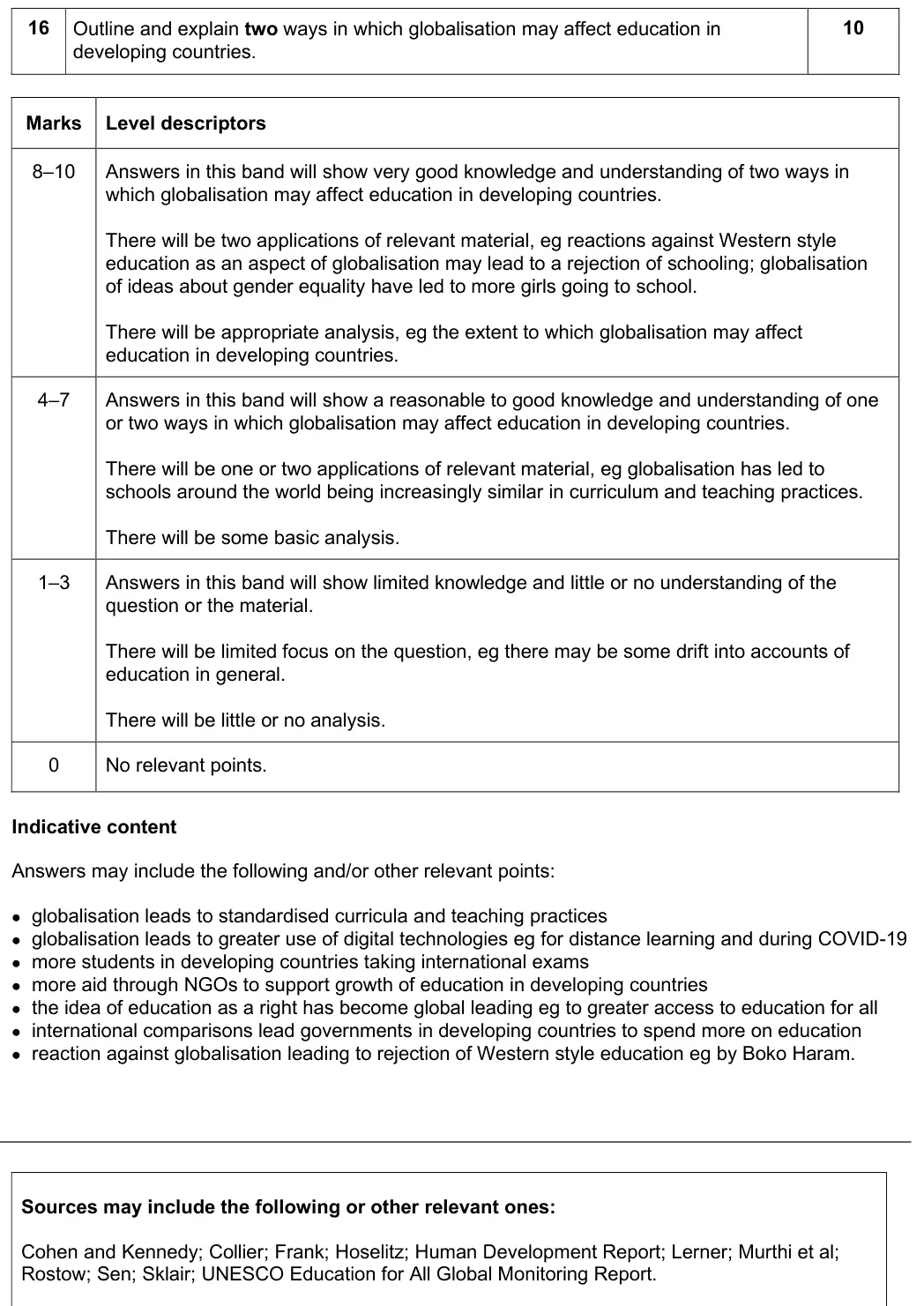
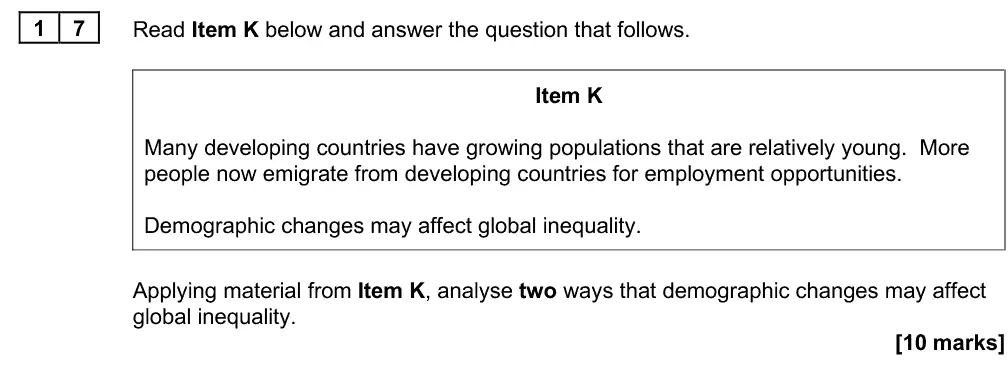
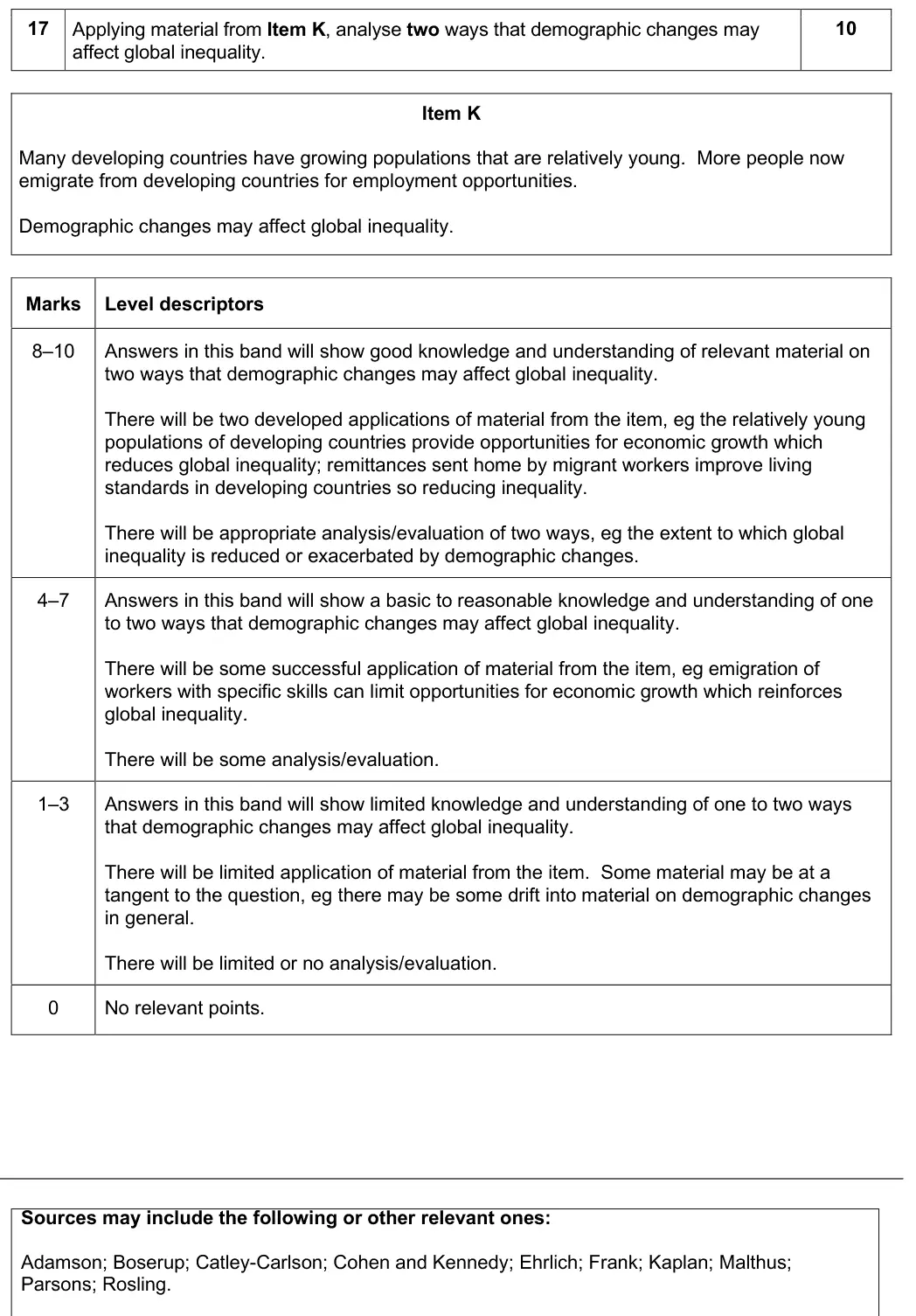
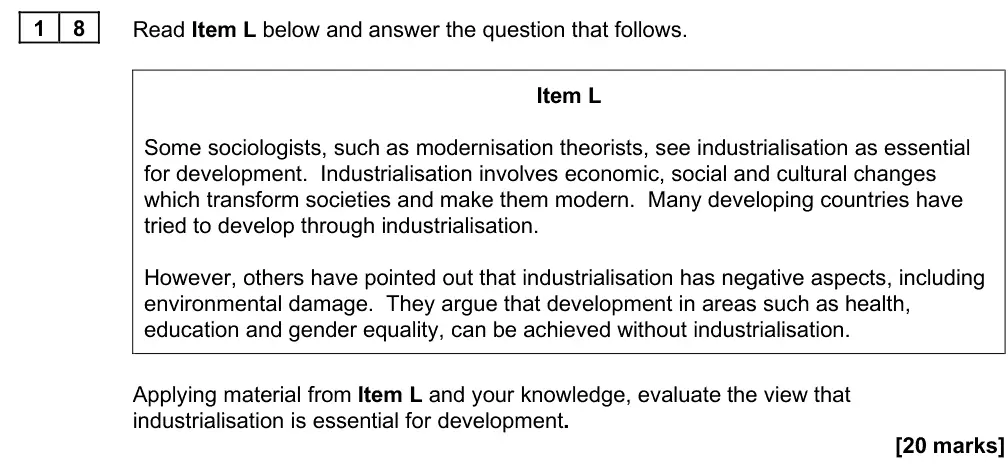
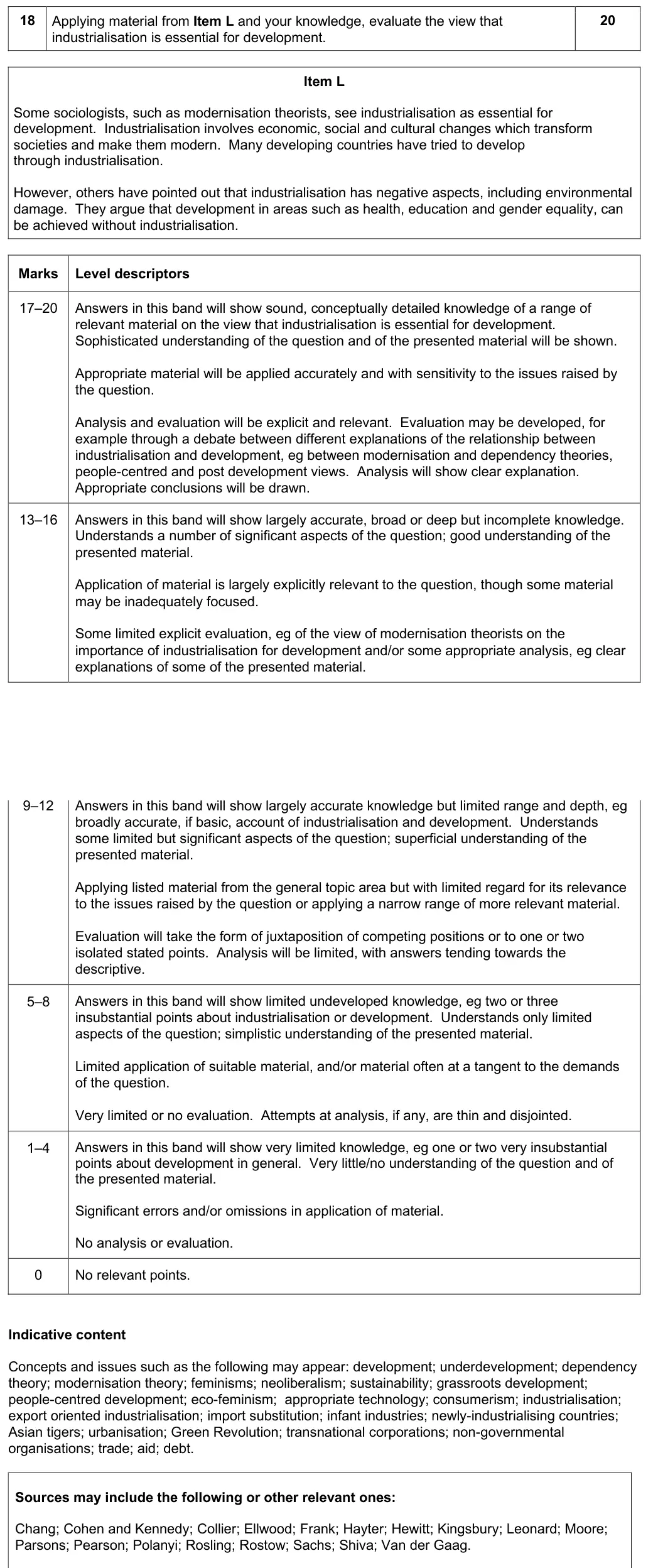
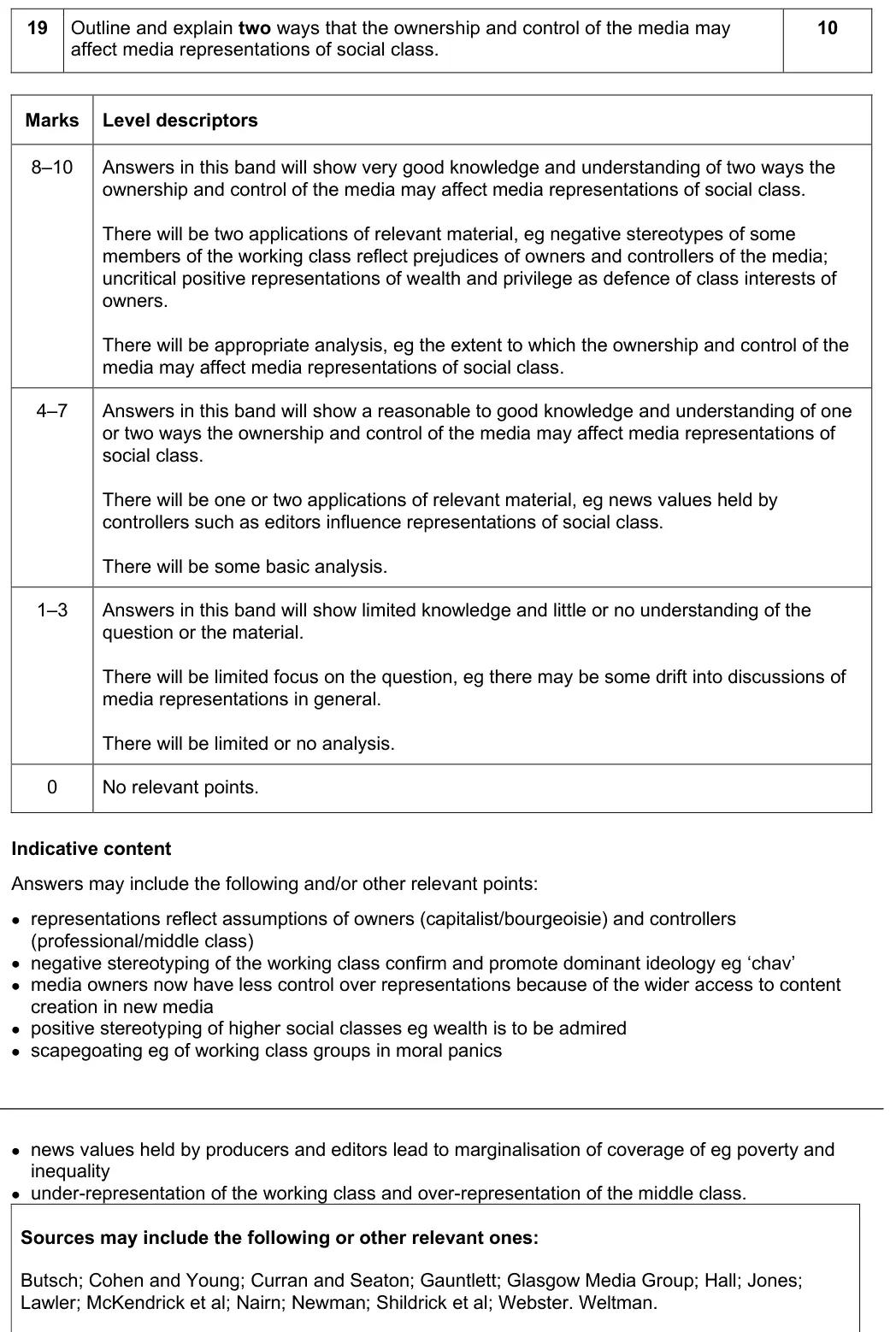
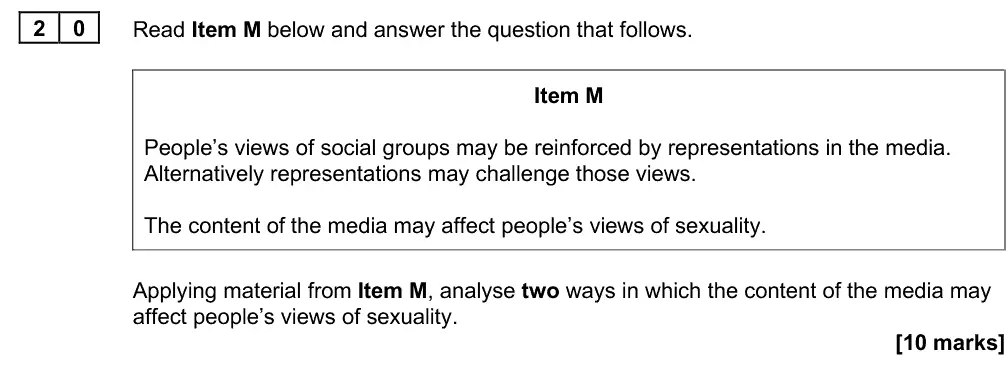
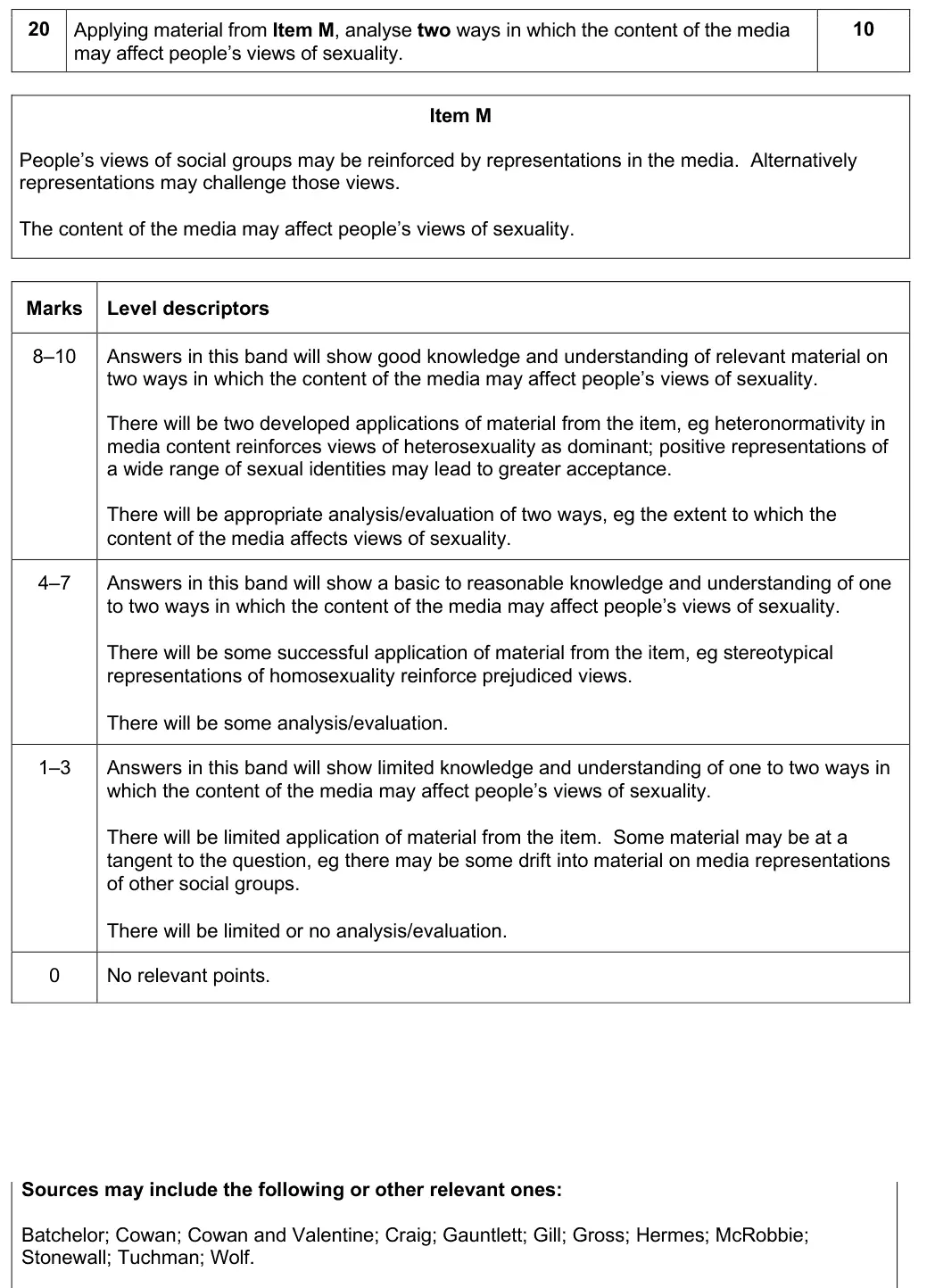
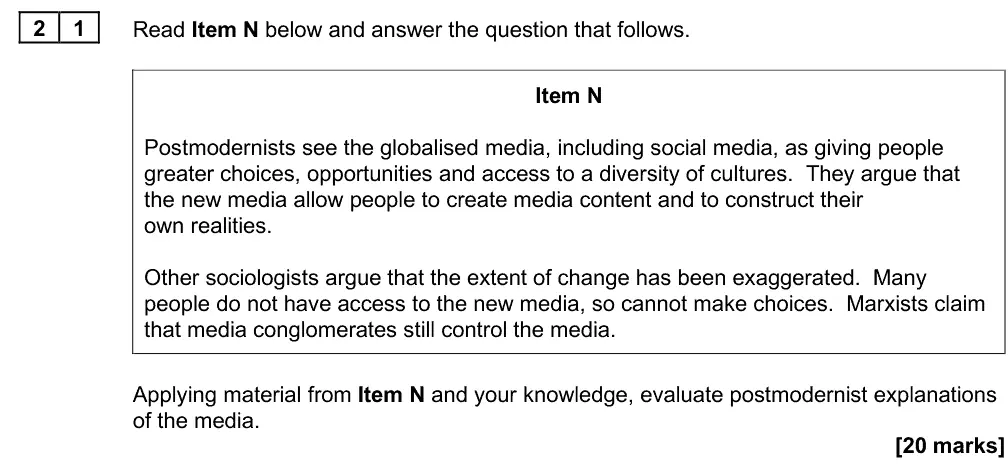
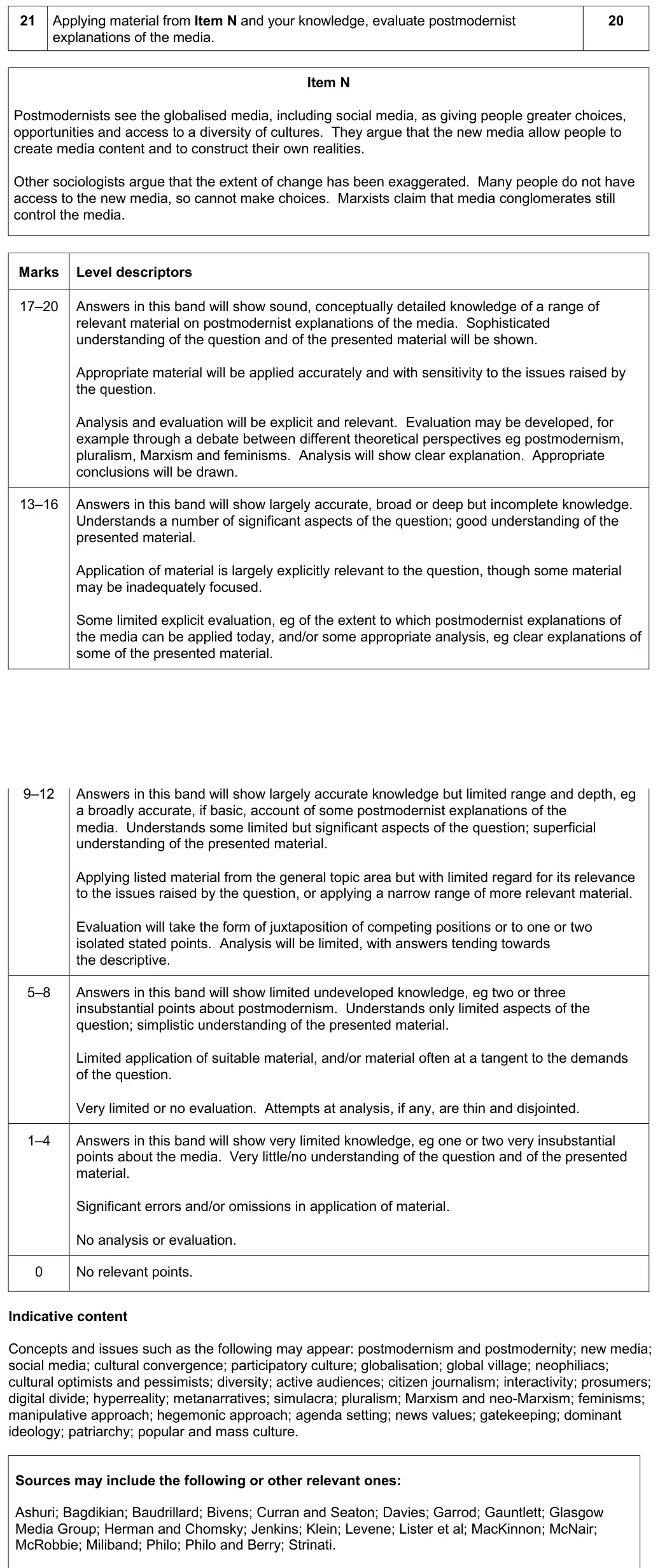
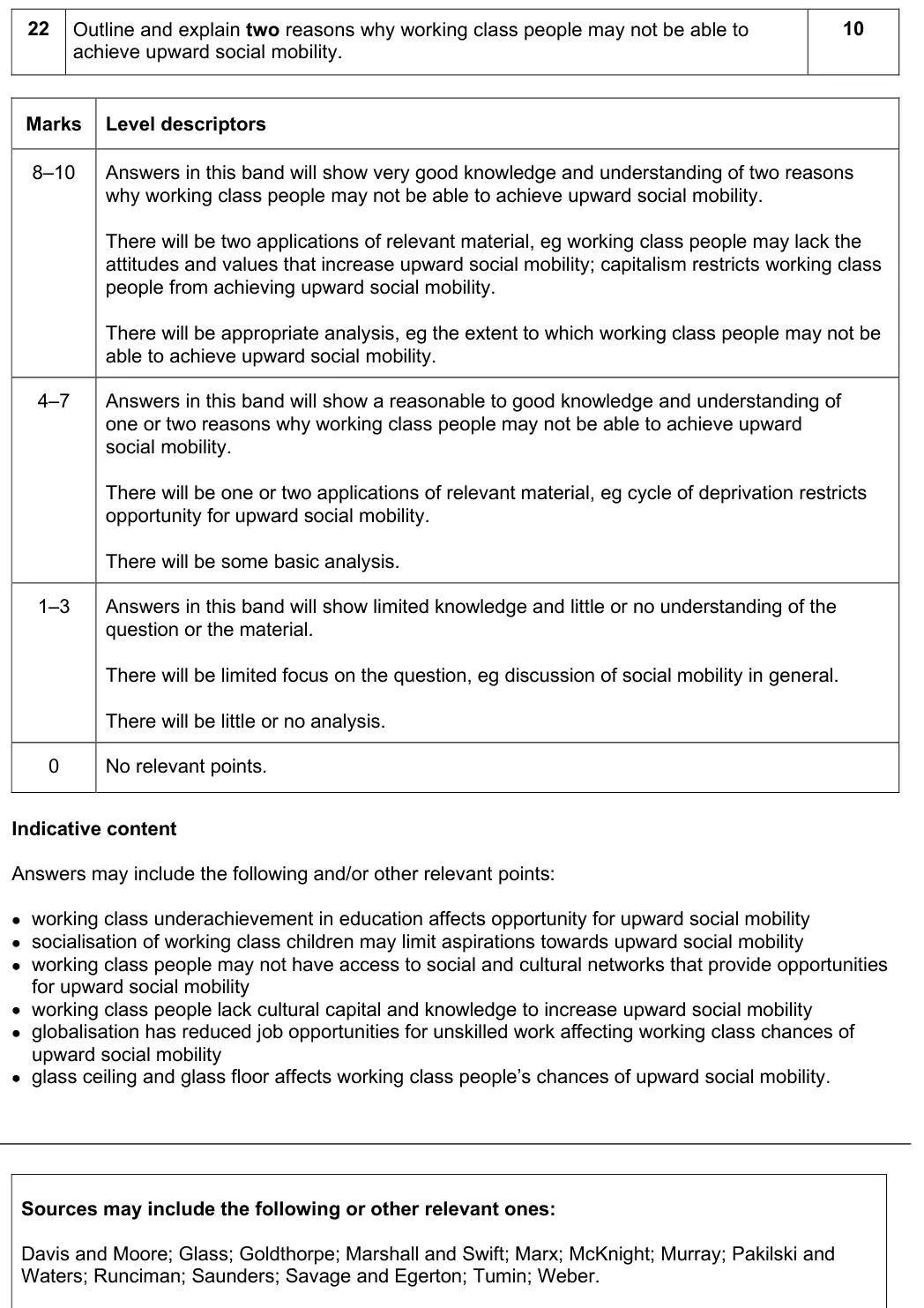
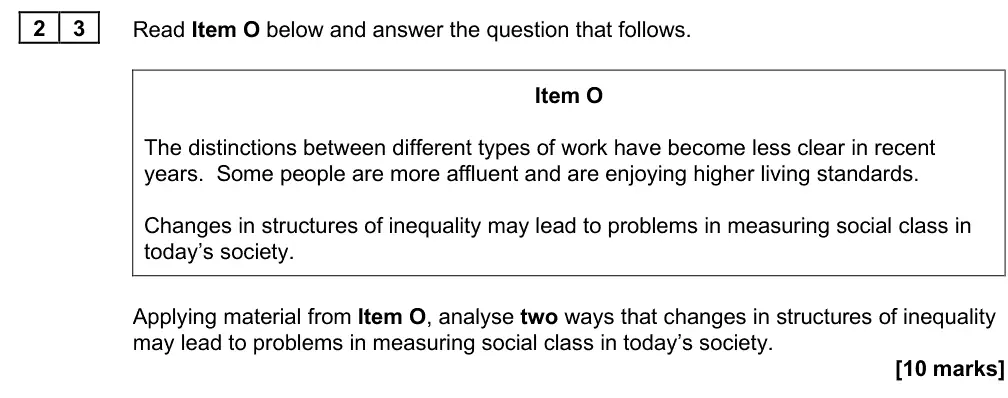
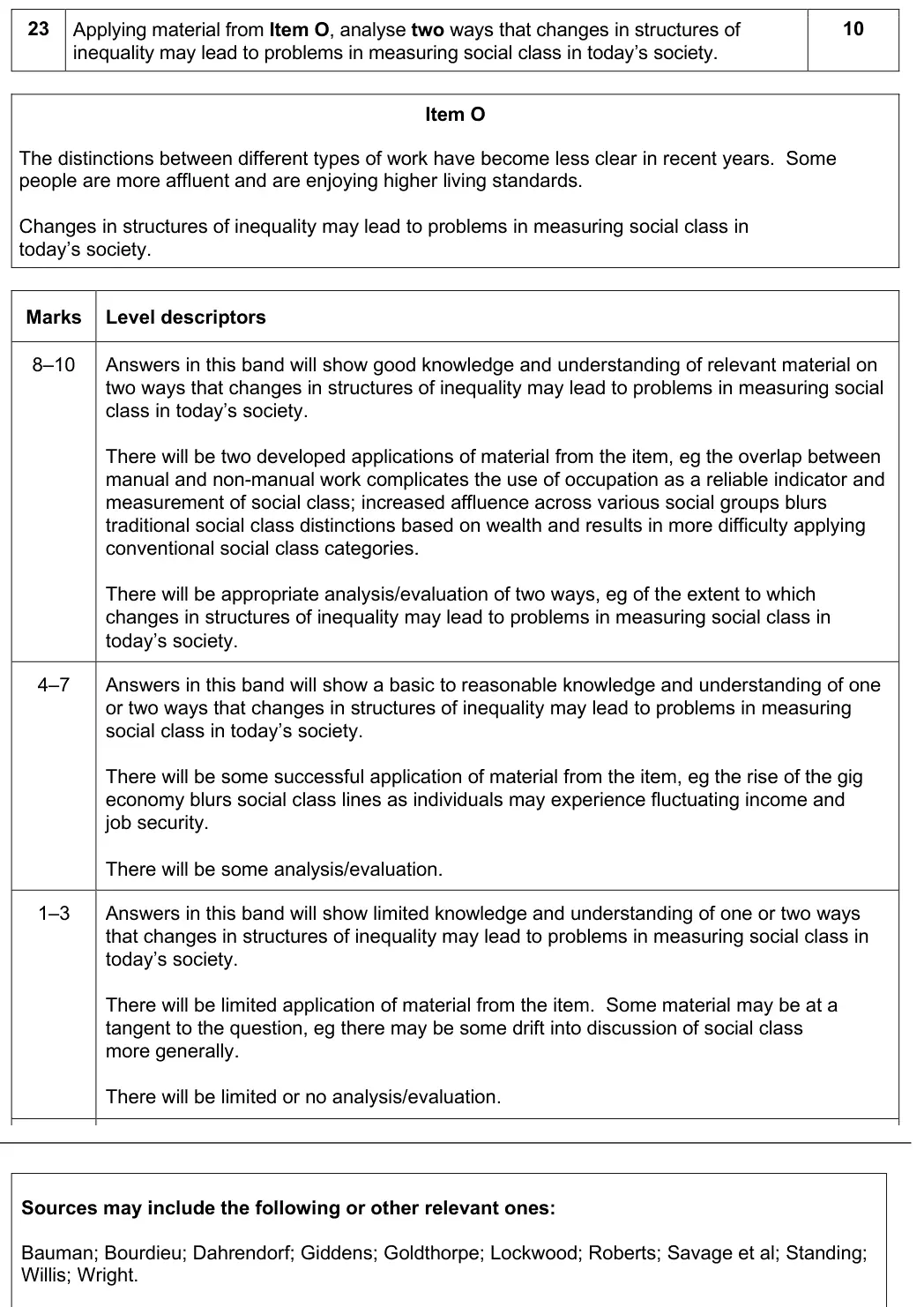
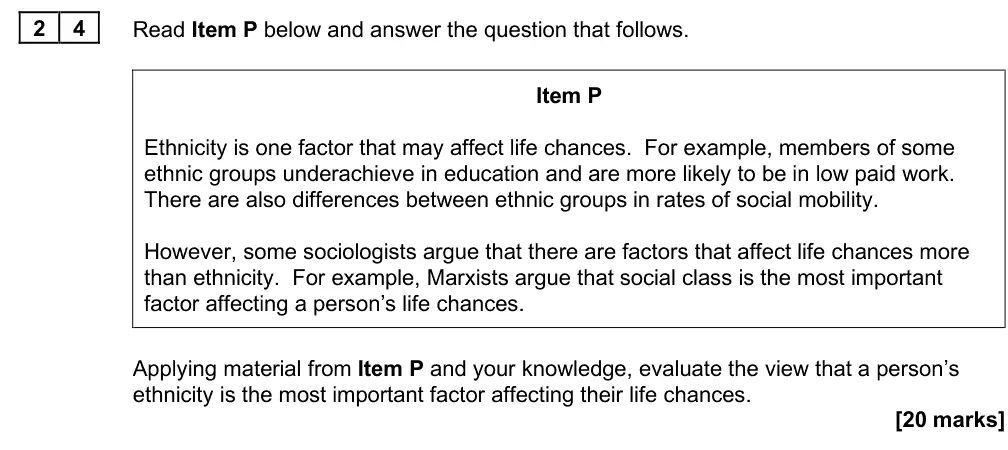
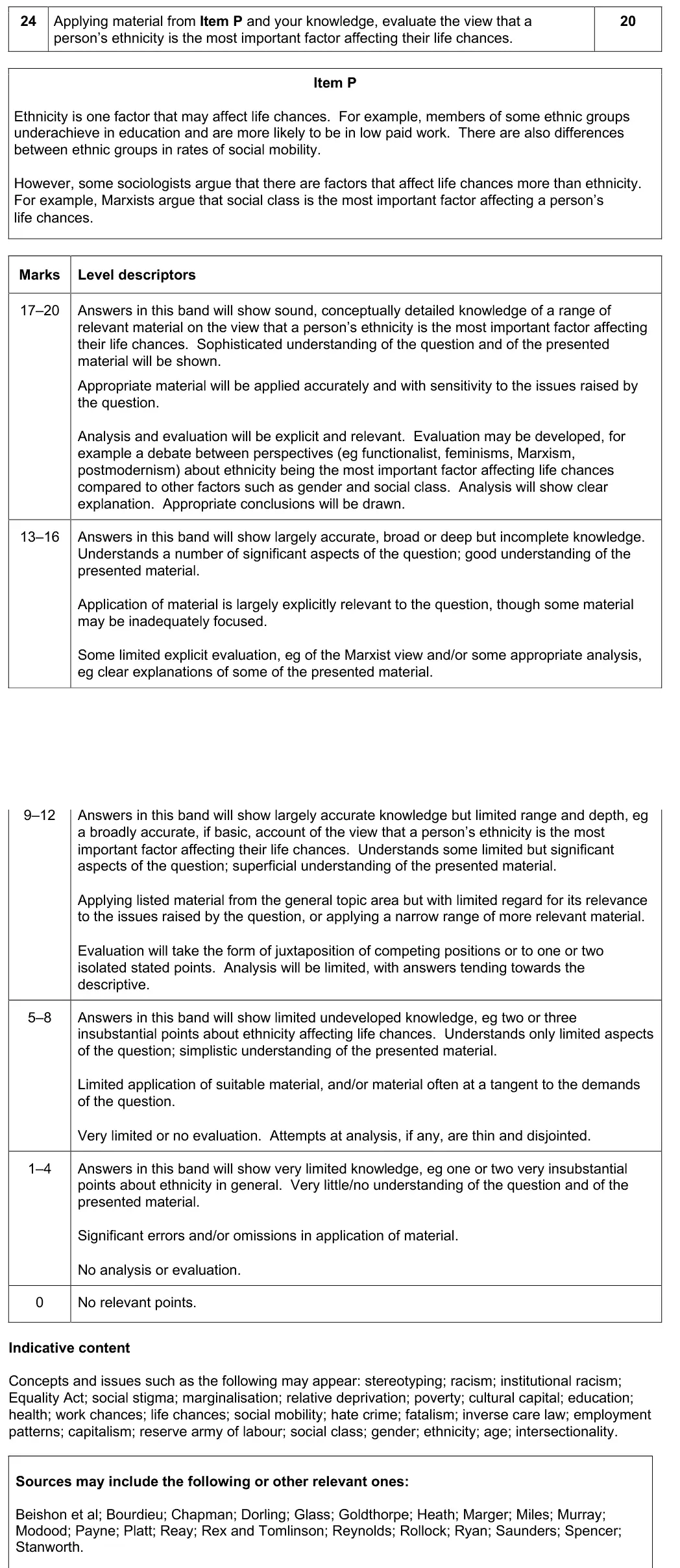
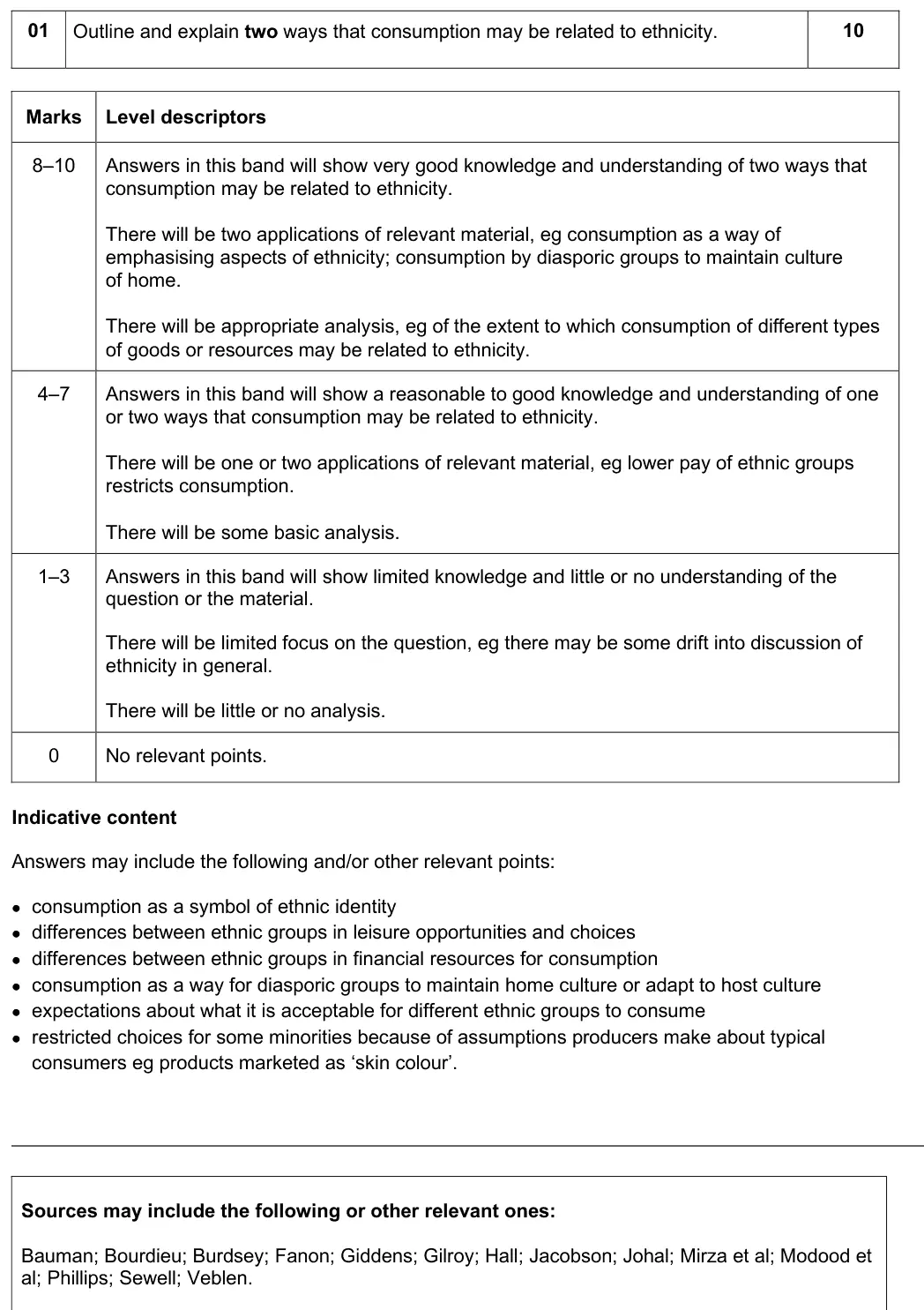
Mark scheme, including the levels grid and indicative content
Examiner's comment
The nature of these questions means that students cannot rely on reciting knowledge. Questions will ask them to bring together aspects of their sociological knowledge in ways they have not done before. It is therefore important for students to allow time to think about how to answer the question. Students should be aware that there are two types of ten-mark questions. These have different requirements and different mark schemes. There are different marks available for the assessment objectives. 10 mark “outline and explain” questions have more marks available for knowledge and understanding, and none for evaluation. Introductions and conclusions are not required for 10-mark questions, are unlikely to help students and take up time. It is helpful if answers are set out to clearly indicate the two answers, with wording such as “One way/reason is…” or by starting a new paragraph for the second point. Answers that give more than two answers are unlikely to develop two of them sufficiently. The most successful answers to 10-mark questions were focused, clearly stating a point that addressed the question and then developing it, using sociological concepts, evidence such as an example and, where appropriate, theory. This question was not as well answered as expected, with answers sometimes not explicitly focused on ethnic groups. The better answers made connections between ethnicity and consumption by, for example, considering the role of consumption in maintaining cultures based on ethnicity, or comparing consumption between ethnic groups.
Notes from the mark scheme and report
- answers must focus explicitly on ethnic groups
- drift into ethnicity in general = 1–3
- top band: consumption to express ethnic identity or keep diasporic culture, and comparing consumption between groups
- not as well answered as expected