Tap a question to zoom it. The mark scheme (with the level descriptors and indicative content) and the examiner's comment open underneath.
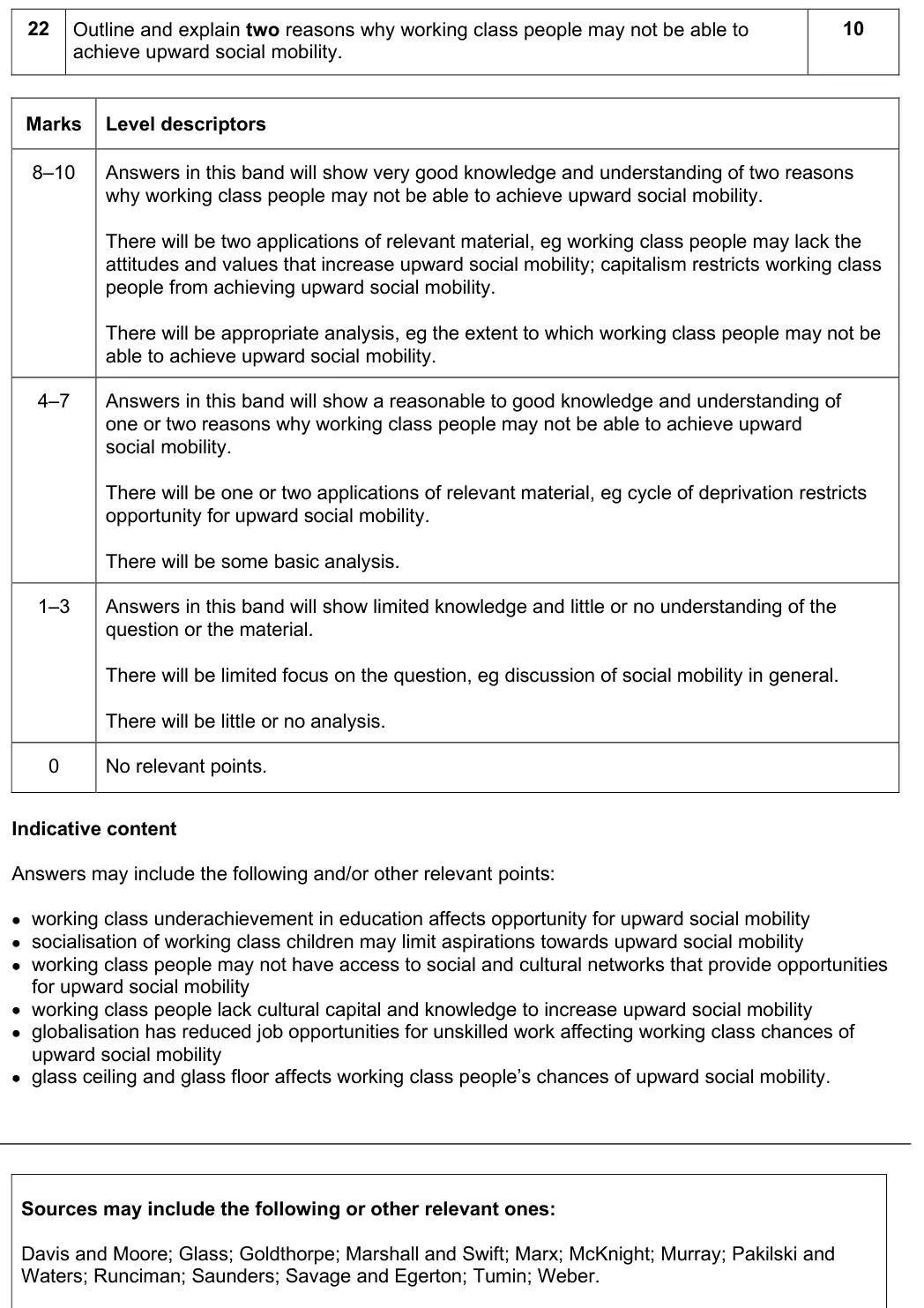
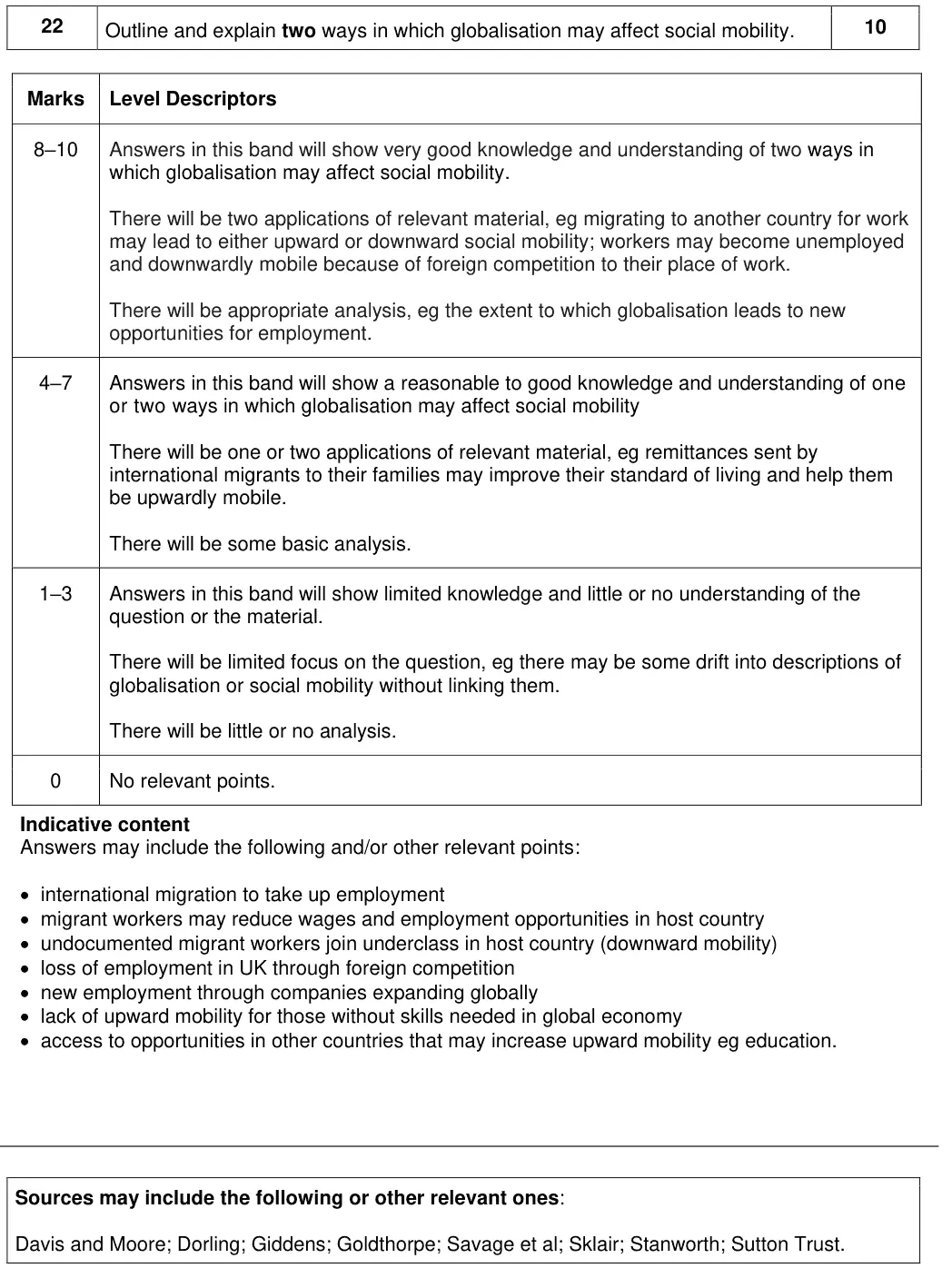
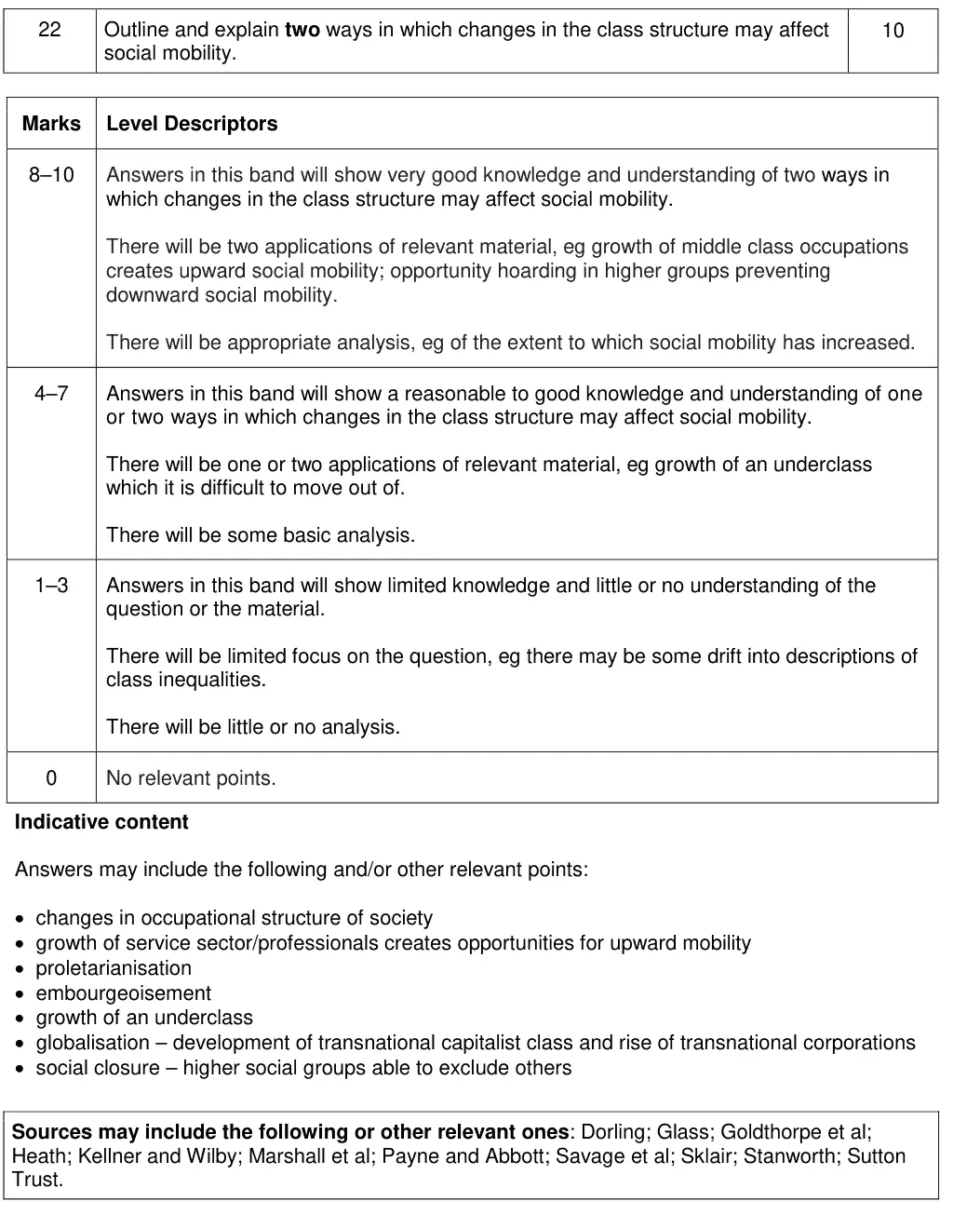
June 2025 · Paper 2 · Q2210 marksAO1=5, AO2=3, AO3=2Outline and explain
Mark scheme, including the levels grid and indicative content
Examiner's comment
The nature of these questions means that students cannot rely on reciting knowledge. Questions will ask them to bring together aspects of their sociological knowledge in ways they have not done before. It is therefore important for students to allow time to think about how to answer the question. Students should be aware that there are two types of ten-mark questions. These have different requirements and different mark schemes. There are different marks available for the assessment objectives. 10 mark “outline and explain” questions have more marks available for knowledge and understanding, and none for evaluation. Introductions and conclusions are not required for 10-mark questions, are unlikely to help students and take up time. It is helpful if answers are set out to clearly indicate the two answers, with wording such as “One way/reason is…” or by starting a new paragraph for the second point. Answers that give more than two answers are unlikely to develop two of them sufficiently. The most successful answers to 10-mark questions were focused, clearly stating a point that addressed the question and then developing it, using sociological concepts, evidence such as an example and, where appropriate, theory. Students were generally able to identify two reasons. Answers often discussed lack of educational achievement amongst the working class, reducing their opportunity for upward mobility, contrasting with resources available to the middle classes. Better answers were able to explain how upward mobility could be achieved through, for example, investment, benefitting from inheritance and education. Only a minority of students referred to studies of social mobility such as by the Sutton Trust which could have allowed deeper analysis.
Notes from the mark scheme and report
drift into social mobility in general = 1–3
common answers: working-class educational underachievement, lack of cultural capital and networks
few used mobility studies (e.g. Sutton Trust) for analysis
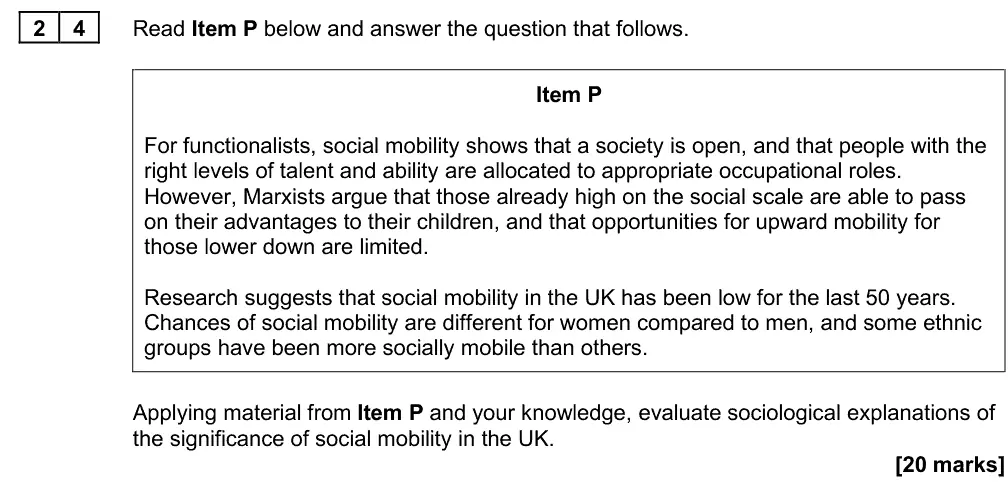
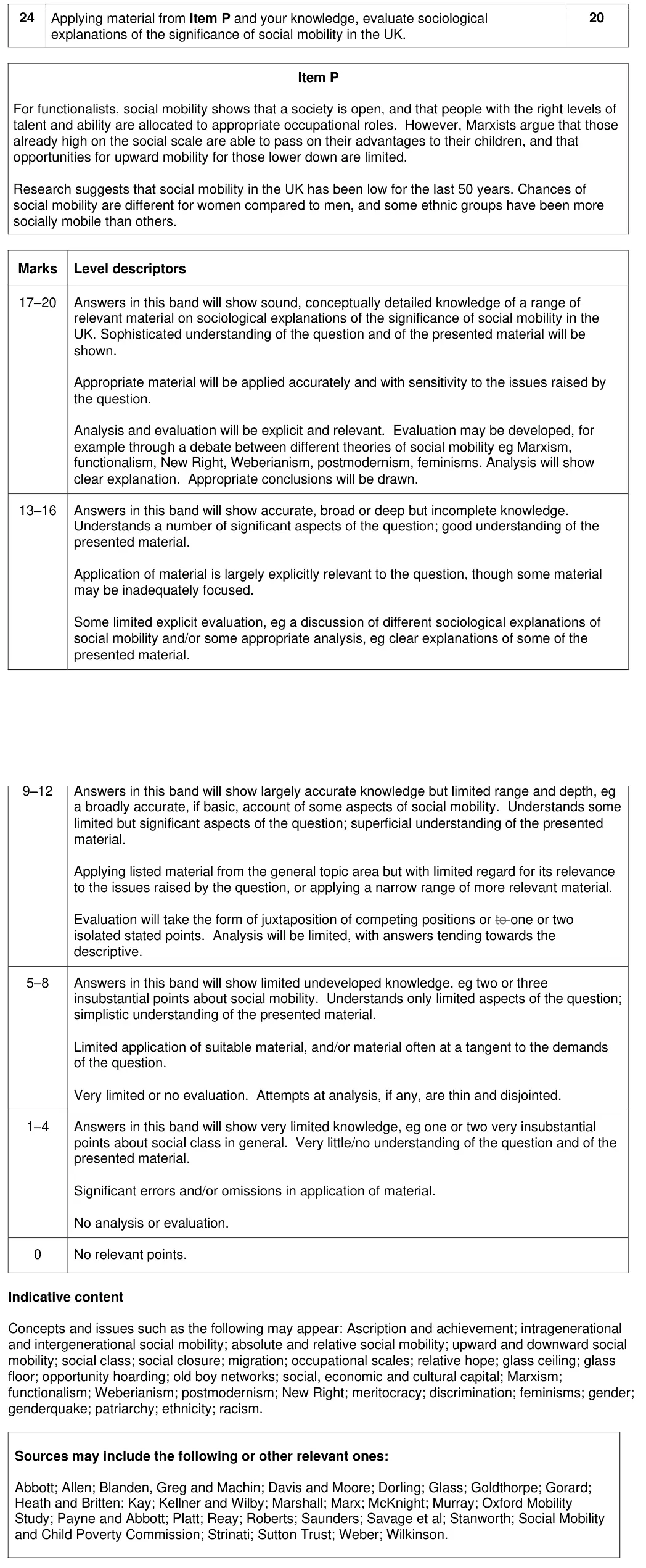
June 2024 · Paper 2 · Q2420 marksAO1=8, AO2=6, AO3=620-mark essay
Mark scheme, including the levels grid and indicative content
Examiner's comment
The items for these questions have a different purpose to those for 10 mark “analyse” questions. The items will suggest a few starting points for students, including ways into evaluation. Students are expected to also bring in further ideas (“and your knowledge” in the instruction). A wide range of material can be relevant to these questions, so students need to be selective. It is more effective to cover a limited number of points in depth rather than to try to include everything. Students who made essay plans appeared to benefit by having more structured and coherent responses. Q24: Students were able to apply the item by contrasting functionalist and Marxist approaches to the nature of social mobility. They did this, for example, by setting functionalist ideas of meritocracy against Marxist concepts of class, elite self-recruitment and so on. Feminism was also frequently added to provide an extra dimension to the debate. Few students made use of more traditional material on social mobility such as intragenerational and intergenerational mobility. There were also few references to empirical mobility studies.
Notes from the mark scheme and report
top band debates theories of mobility (Marxism, functionalism, New Right, Weberianism, postmodernism, feminisms) and its significance
most contrasted functionalist meritocracy with Marxist elite self-recruitment and added feminism
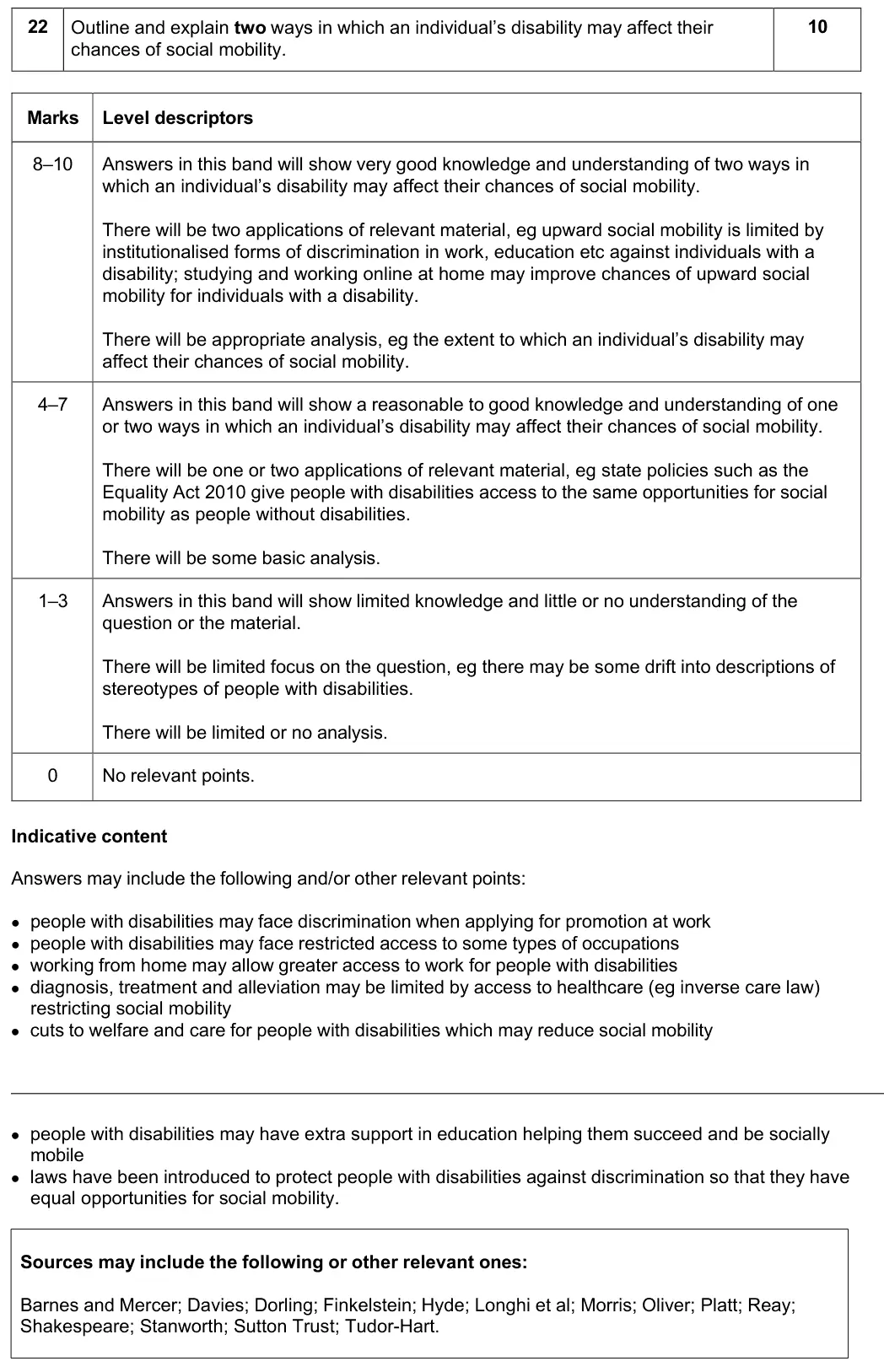
June 2023 · Paper 2 · Q2210 marksAO1=5, AO2=3, AO3=2Outline and explain
Mark scheme, including the levels grid and indicative content
Examiner's comment
The nature of these questions means that students cannot rely on reciting knowledge. Questions will ask them to bring together aspects of their sociological knowledge in ways they are unlikely to have done before. It is therefore important for students to allow time to think about how to answer the question. Students should be made aware that there are two types of 10 mark questions. These have different requirements and different mark schemes. There are different marks available for the assessment objectives. 10 mark “outline and explain” questions have more marks available for knowledge and understanding, and none for evaluation. Introductions and conclusions are not required for 10 mark questions and take up valuable time. It is helpful if answers are set out to clearly indicate the two separate points, with wording such as “One way/reason is…” or by starting a new paragraph for the second point. Answers that give more than two points are unlikely to develop two of them sufficiently. Question 22: Most were able to answer this question adequately. Many focused on discrimination and restricted access as ways, but some lacked sociology and were very generalised.
Notes from the mark scheme and report
two ways disability affects social mobility (institutional discrimination, restricted access to occupations, home working, educational support, equality law)
drift into stereotypes of disabled people = 1–3
many focused on discrimination and access but some answers were generalised and lacked sociology
June 2022 · Paper 2 · Q2210 marksAO1=5, AO2=3, AO3=2Outline and explain
Mark scheme, including the levels grid and indicative content
Examiner's comment
The nature of these questions means that students cannot rely on reciting knowledge. The questions will ask them to bring together aspects of their sociological knowledge in a way that they are unlikely to have done before. There was a tendency, however, to attempt to answer the question by giving knowledge based on words or phrases in the question, rather than meeting the demands of the question. Students are advised to spend time reading the question, and, where there is one the item, to ensure that they are answering the question. Some students seemed unaware of the different demands of the two types of questions. The marks awarded for the assessment objectives are different in the two types of ten mark questions, and students should be aware of this. In particular, it should be noted that there are no marks available for evaluation in “outline and explain” (no item) questions. There is no need for an introduction or conclusion for 10 mark questions. It is helpful if answers are set out to clearly indicate the two answers, with wording such as “One way is…” or by starting a new paragraph for the second point. The best answers to 10 mark questions were focused, clearly stating a point that addressed the question and then developing it, using sociological concepts, evidence and, where appropriate, theory. Answers need to address all aspects of the question. Q22 Most candidates were aware of ways in which globalisation may affect social mobility. Answers included both social mobility for migrants, ability to move to take advantage of employment and lifestyle opportunities, and threats to employment in the UK, leading to downward social mobility, as companies close down or relocate.
Notes from the mark scheme and report
must link globalisation to mobility
describing either alone = 1–3 band
answers covered migrants' mobility and UK job losses from relocation and foreign competition (downward mobility)
November 2021 · Paper 2 · Q2310 marksAO1=3, AO2=4, AO3=3Analyse
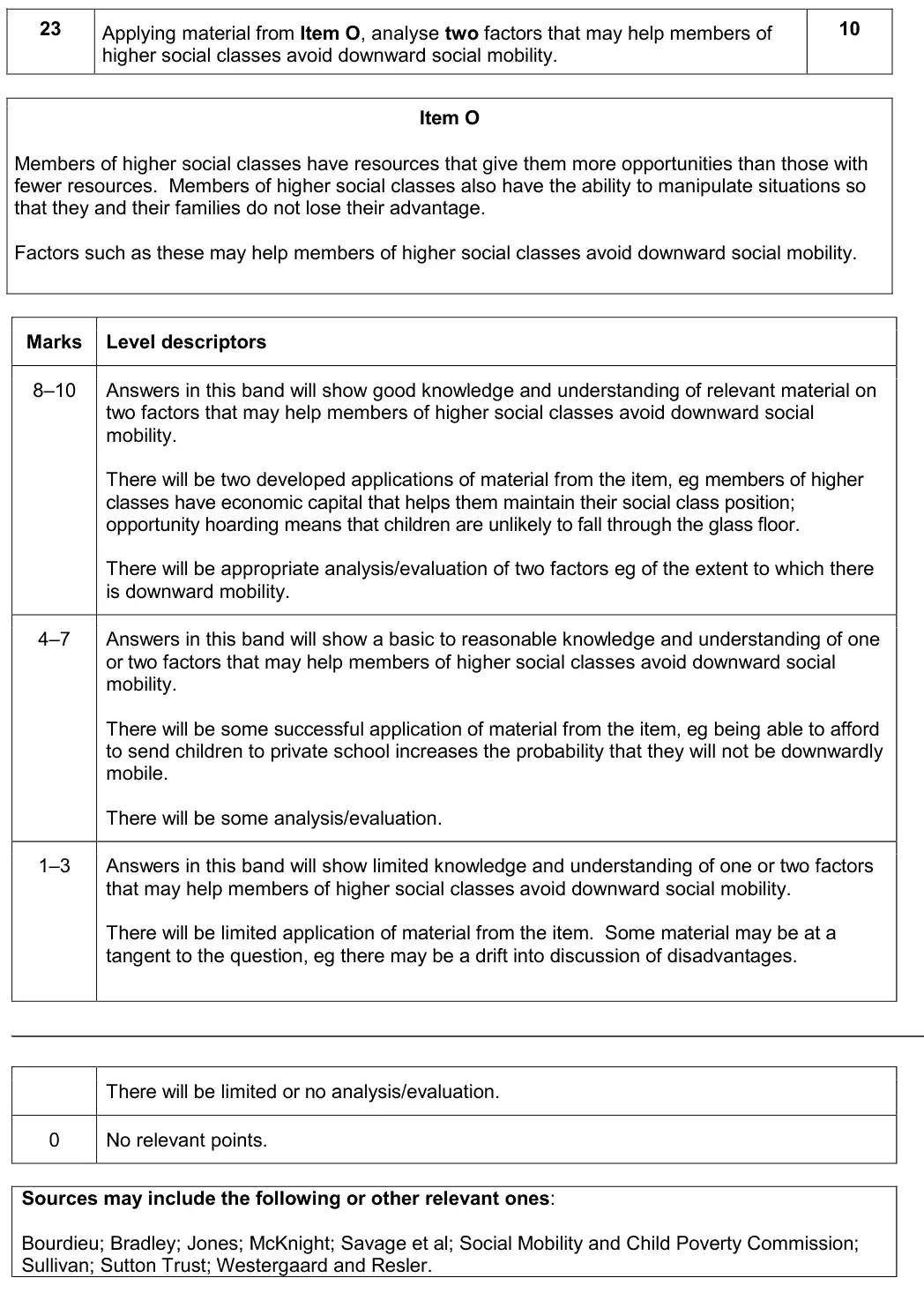
Mark scheme, including the levels grid and indicative content
Notes from the mark scheme and report
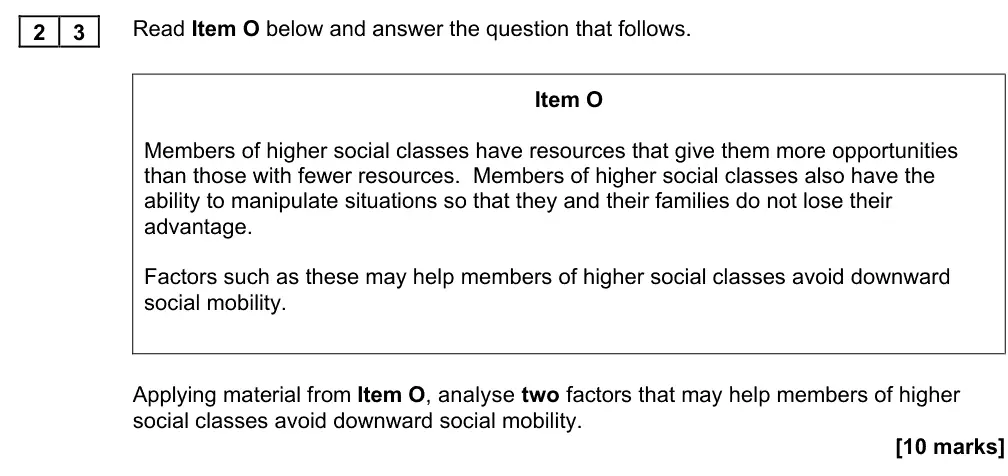
must develop hooks from Item O (resources, manipulating situations to keep advantage)
the last line restates the question and is not a hook
credited: economic capital, private schooling, opportunity hoarding and the glass floor
drift into disadvantages of lower classes = 1–3
no examiners' report comment for this part
November 2020 · Paper 2 · Q2210 marksAO1=5, AO2=3, AO3=2Outline and explain
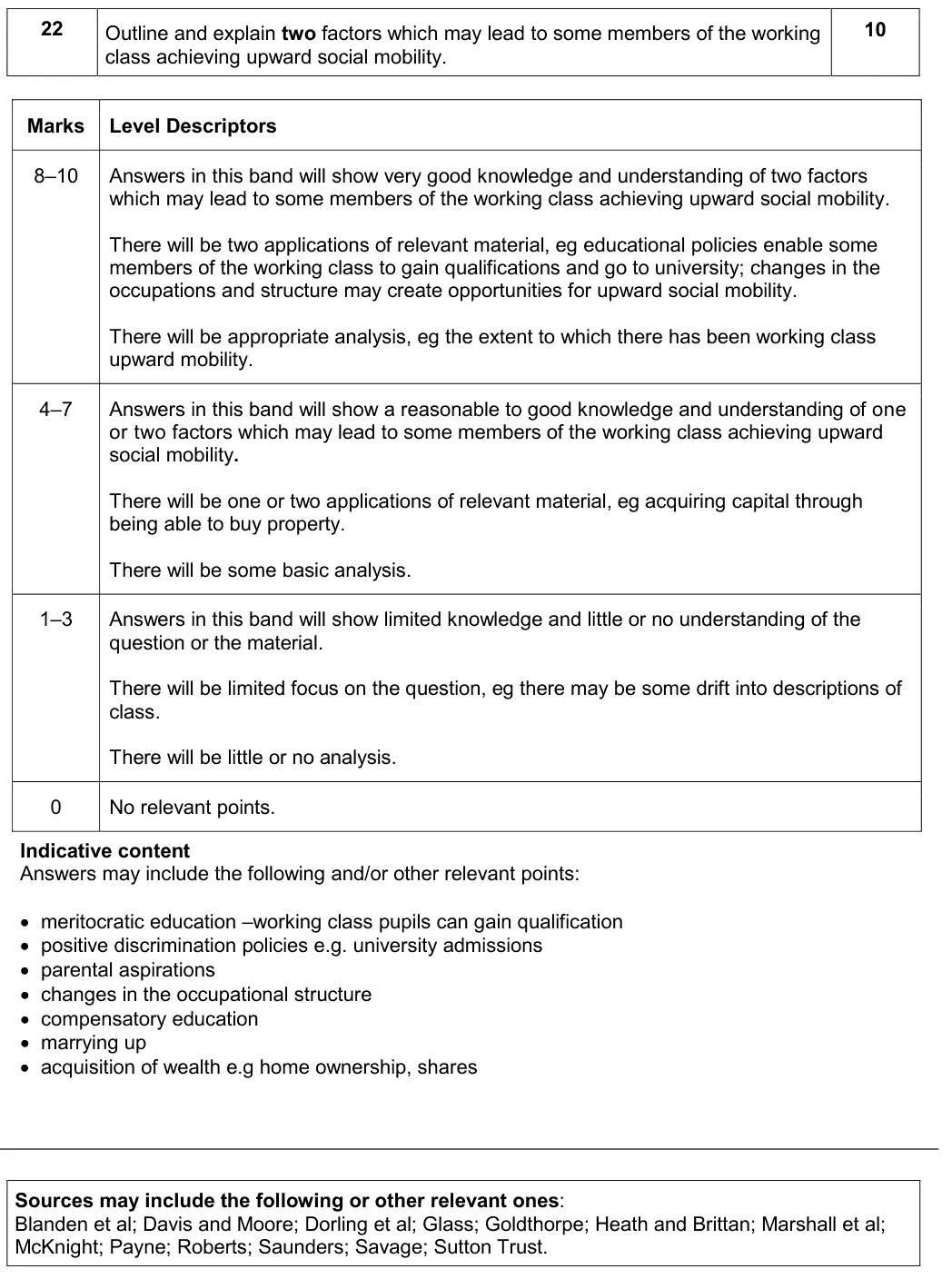
Mark scheme, including the levels grid and indicative content
Notes from the mark scheme and report
factors for working-class upward mobility: meritocratic education, widening-participation policies, changes in occupational structure, marrying up, home ownership
drift into descriptions of class = 1-3
no marks for evaluation in this question type (examiners' report general remark)
June 2019 · Paper 2 · Q2210 marksAO1=5, AO2=3, AO3=2Outline and explain
Mark scheme, including the levels grid and indicative content
Examiner's comment
Some students wrote introductory paragraphs and/or conclusions. These are not necessary, and are unlikely to gain additional marks; they also take up time. Some students made only one point in their answers, or three or more, rather than the two asked for. The word ‘two’ is put in bold in the question to try and draw students’ attention to this. Sometimes it was not clear how many points were being made. It is helpful for students to clearly indicate their two answers, with wording such as “One way is…” or by starting a new paragraph for their second point. Notably, some students wrote far more than was needed for a 10-mark response. The two types of 10-mark question, “outline and explain” and “analysis” types, are marked differently as the assessment objectives have different weightings. It is important that students are aware of this. In particular they should note that evaluation is not a requirement for answers to 10 mark “outline and explain” questions. For 10 mark “outline and explain” questions, students cannot rely on reciting knowledge; these questions will ask them to bring together aspects of their sociological knowledge of the topic in a way that they are unlikely to have done before. The best answers to 10-mark questions were focused, clearly stating a point and then developing it, and used sociological concepts, studies, evidence and theory as appropriate. Some students found it difficult to identify “changes in the class structure” and therefore to explain ways in which these might affect social mobility. Answers included the growth of an underclass, which people found it hard to move out of, and the growth of middle-class occupations, creating opportunities for upward mobility into them.
Notes from the mark scheme and report
must identify a change in the class structure and its effect on mobility
drift into class inequality = 1–3
common answers: growth of middle-class jobs (upward mobility), an underclass that is hard to leave
AO split from AQA's standard grid for this paper (this year's mark scheme does not print it).
June 2017 · Paper 2 · Q2310 marksAO1=3, AO2=4, AO3=3Analyse
Mark scheme, including the levels grid and indicative content
Examiner's comment
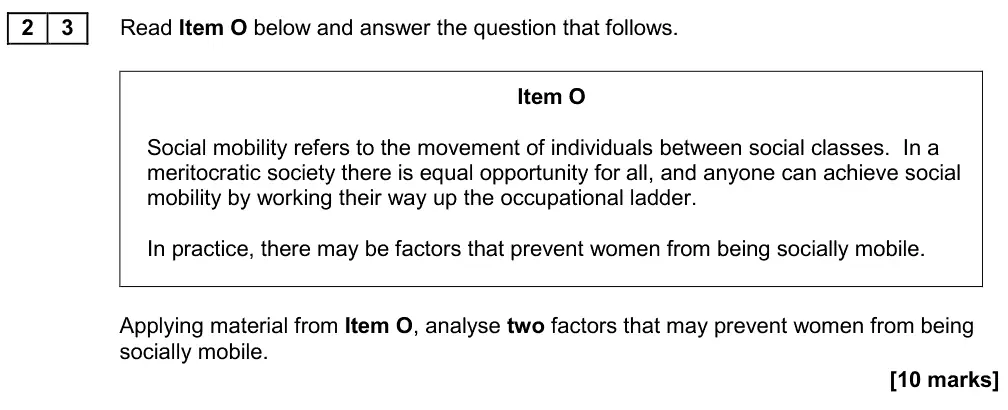
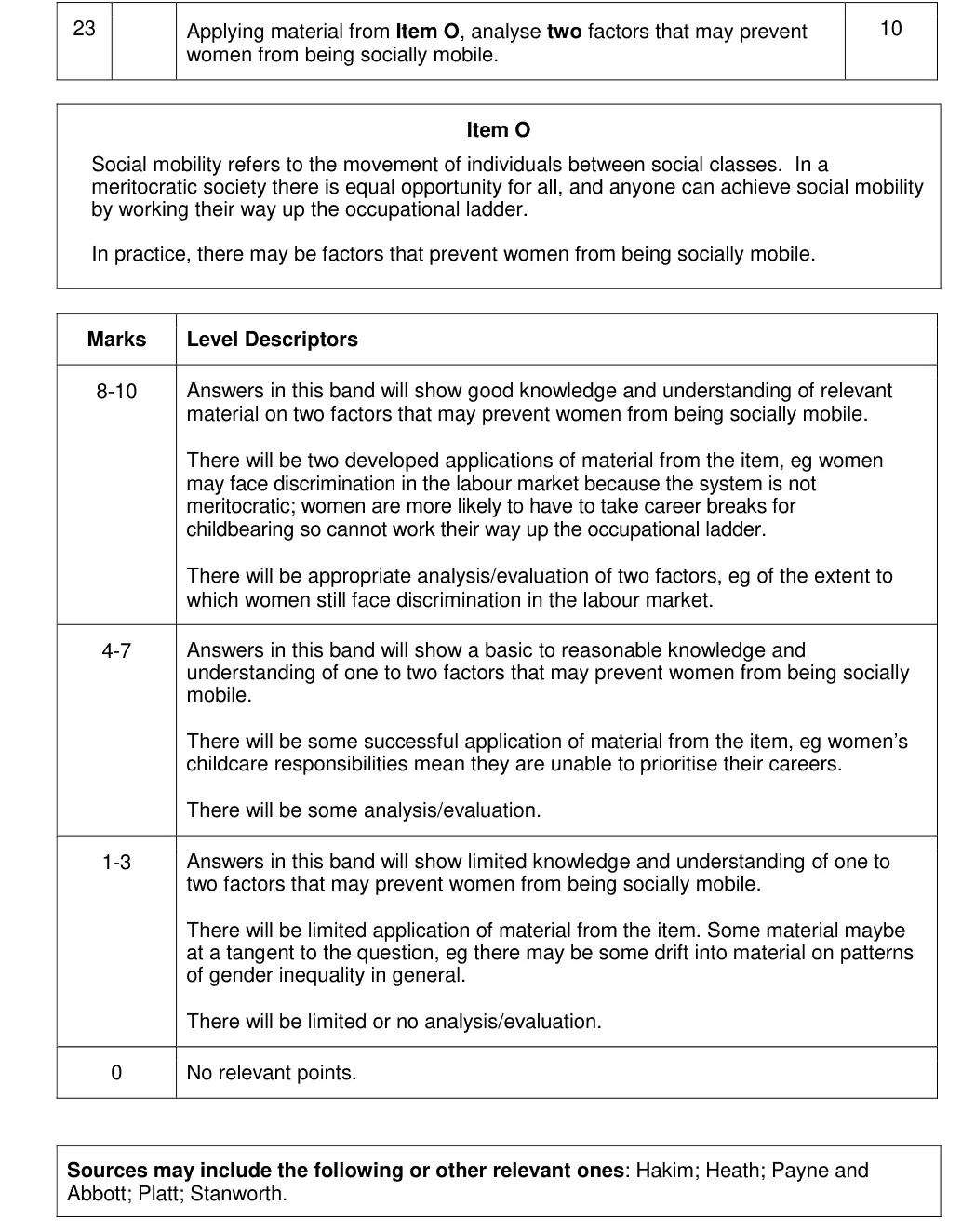
A number of students wrote introductory paragraphs and/or conclusions. These are not necessary, and are unlikely to gain additional marks. A number of students made only one point in their answer, or three or more, rather than the two asked for. In these cases, the two best answers were rewarded and will be in future series. It is helpful for students to clearly indicate their two answers, with wording such as “One way is…” or by starting a new paragraph for their second point. The assessment objective allocations are different in the two types of 10 mark questions, and students should be made aware of this. There was a wide range of responses to these questions. A minority of students wrote very brief answers. For these 10 mark items, a simple statement of two ways, reasons or factors, without development, is not sufficient to access more than the lower marks in the mark range. The best answers were focused, clearly stating a point and then developing it, with use of sociological concepts, evidence and theory where appropriate, in ways that demonstrated the skills expected from the targeted assessment objectives. There was a tendency, however, for many answers to focus on the first aspect of the question at the expense of the second. Students need guidance on how to approach these questions and how to best demonstrate their sociological understanding. The nature of these questions means that students cannot rely on reciting knowledge. They require students to bring together two aspects of their sociological knowledge in a way that they are unlikely to have done before. Answers will sometimes require claims that students may be unsure of because they do not know of specific evidence (for example, in question 5, whether migrants from Eastern Europe who are single workers tend to live alone or in shared households). However, answers that are sociologically plausible will be accepted. Most students were able to take from the item two points which could then be analysed as factors preventing women from being socially mobile. Popular and appropriate answers included the effects of maternity breaks on career progression and the continuing pressures of gender roles within the family.
Notes from the mark scheme and report
hooks: meritocracy, working up the occupational ladder
e.g. labour-market discrimination, career breaks for childbearing
drift into gender inequality in general = 1–3
popular answers: maternity breaks and gender roles in the family
Work with an AQA sociology tutor
Essays stuck in the middle band, or losing marks on the 10-markers? Book a trial lesson with Mark, a former AQA examiner.