Applying material from Item N and your knowledge, evaluate the usefulness of early media theories in explaining the role of the new media in contemporary society.
Tap a question to zoom it. The mark scheme (with the level descriptors and indicative content) and the examiner's comment open underneath.
June 2025 · Paper 2 · Q2010 marksAO1=3, AO2=4, AO3=3Analyse
Mark scheme, including the levels grid and indicative content
Examiner's comment
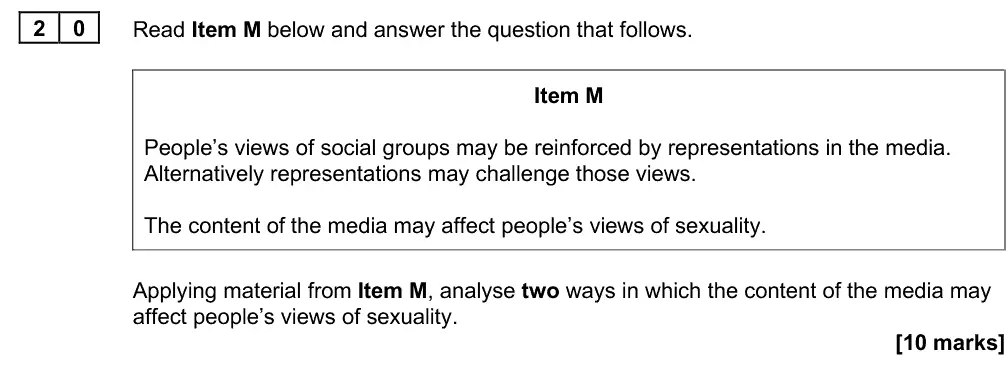
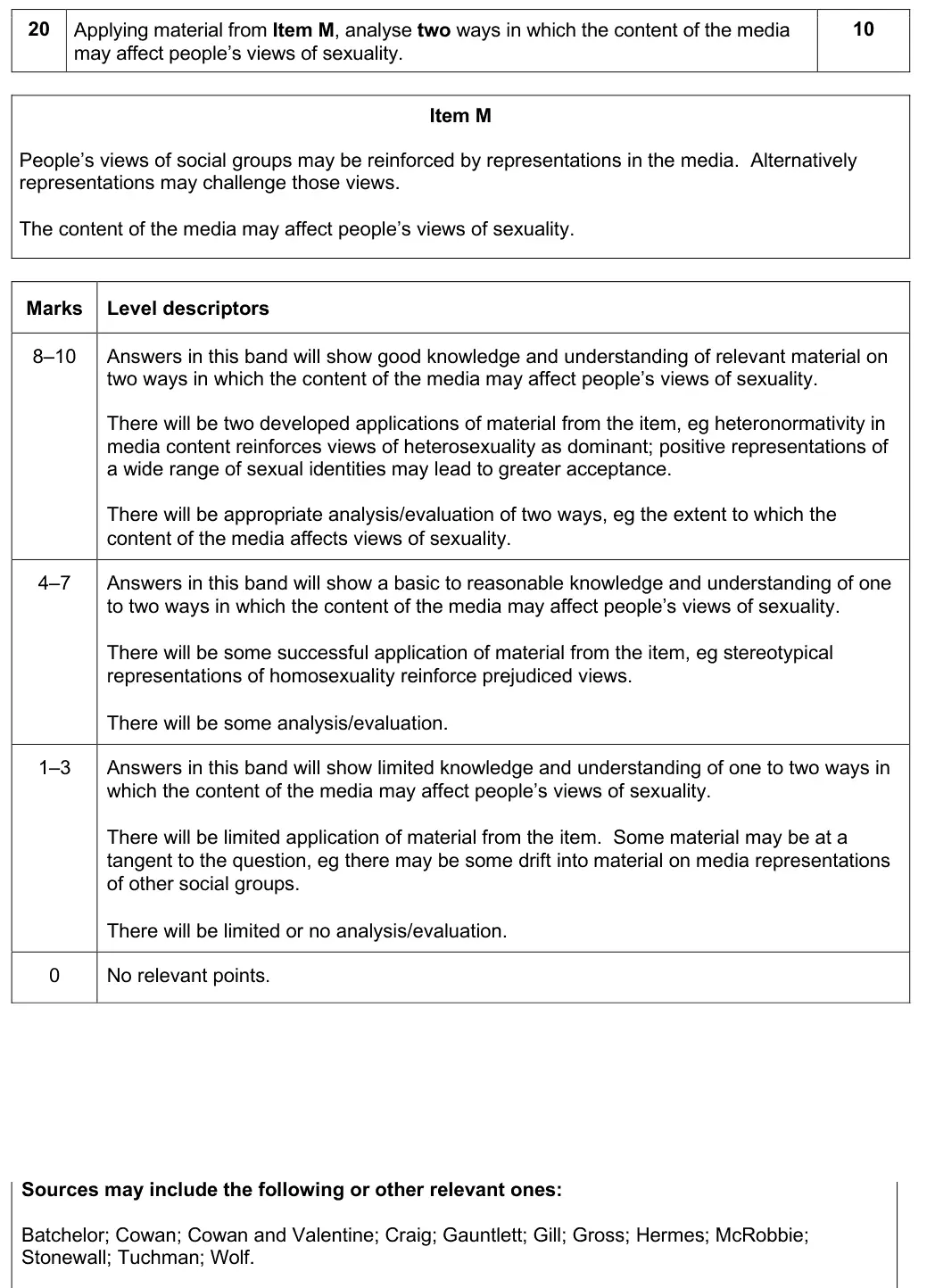
The nature of these questions means that students cannot rely on reciting knowledge. Questions will ask them to bring together aspects of their sociological knowledge in ways they have not done before. It is therefore important for students to allow time to think about how to answer the question. Students should be aware that there are two types of ten-mark questions. These have different requirements and different mark schemes. There are different marks available for the assessment objectives. The items for 10 mark “analyse” questions are written to give prompts or “hooks” for student answers. These must be used to access application marks. Answers can indicate use of hooks by quoting, by a reference in parentheses or by wording (e.g. “As the item says…”). Items end with a sentence restating the question; the hooks are in the preceding part of the item. Introductions and conclusions are not required for 10-mark questions, are unlikely to help students and take up time. It is helpful if answers are set out to clearly indicate the two answers, with wording such as “One way/reason is…” or by starting a new paragraph for the second point. Answers that give more than two answers are unlikely to develop two of them sufficiently. The most successful answers to 10-mark questions were focused, clearly stating a point that addressed the question and then developing it, using sociological concepts, evidence such as an example and, where appropriate, theory. A small number of students took this as a gender question rather than a sexuality question. covered both with gender points that were about sex, using concepts such as the male gaze. Most were able to apply the hooks and develop their analysis of two ways, using concepts such as heteronormativity. Some found it difficult to go beyond representations and discuss effects on people’s views.
Notes from the mark scheme and report
must cover effects on views of sexuality, not just representations
item hooks: reinforcing (heteronormativity, stereotypes) vs challenging (diverse positive portrayals)
a few answered on gender instead
drift into other groups = 1–3
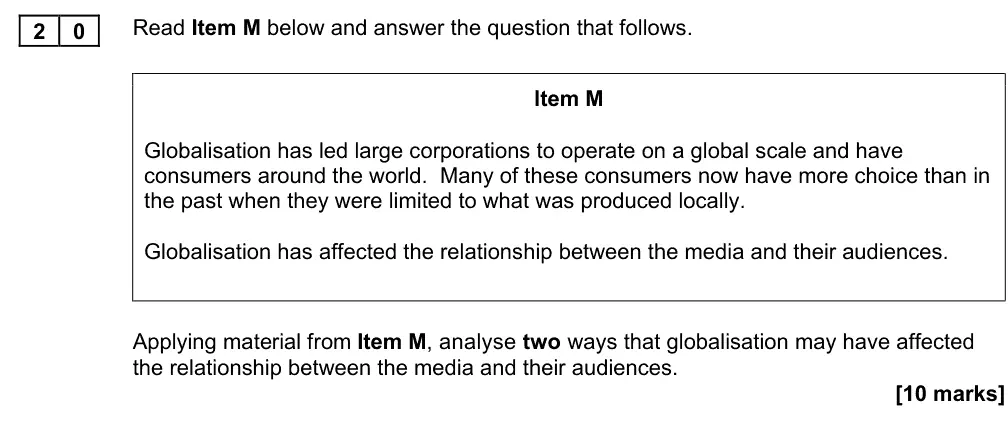
June 2024 · Paper 2 · Q2010 marksAO1=3, AO2=4, AO3=3Analyse
Mark scheme, including the levels grid and indicative content
Examiner's comment
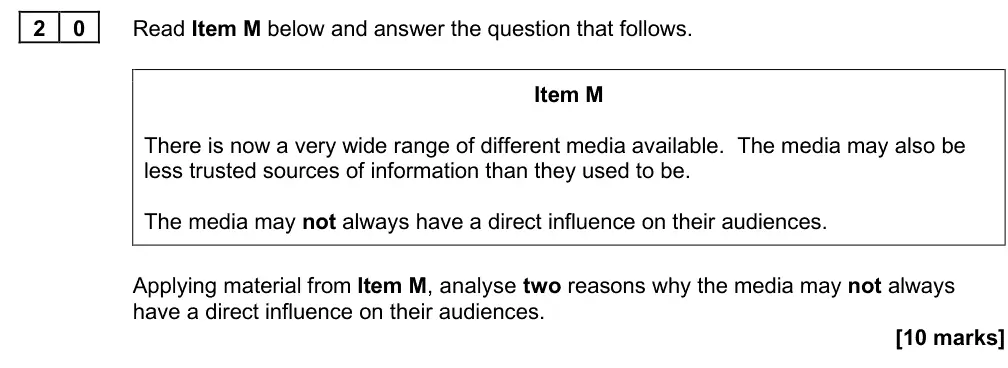
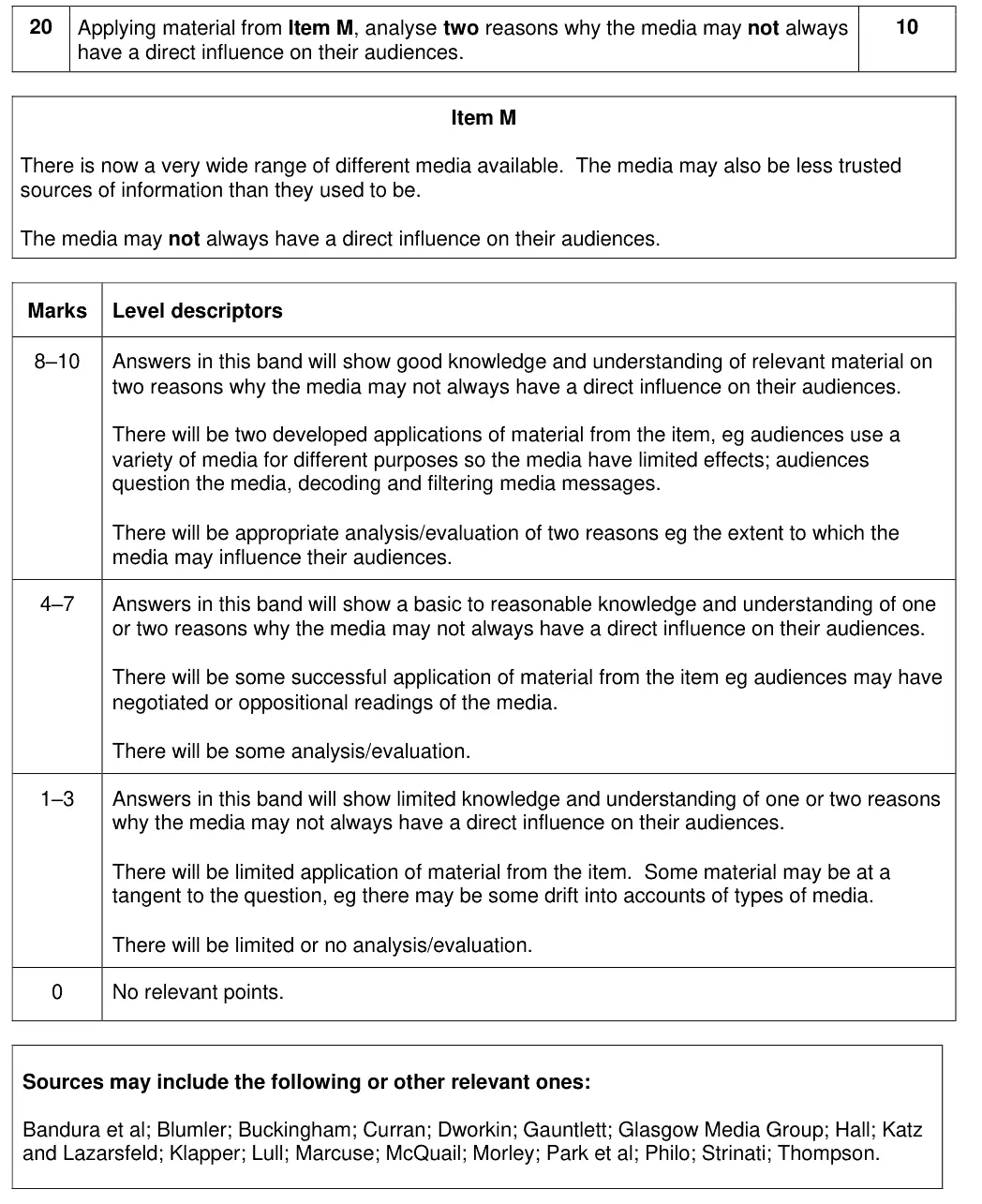
The nature of these questions means that students cannot rely on reciting knowledge. Questions will ask them to bring together aspects of their sociological knowledge in ways they will not have done before. It is therefore important for students to allow time to think about how to answer the question. Students should be made aware that there are two types of 10 mark questions. These have different requirements and different mark schemes . There are different marks available for the assessment objectives. A breakdown of the marks awarded by assessment objective can be found in the mark scheme. The items for 10 mark “analyse” questions are written to give prompts or “hooks” for student answers. These have to be used to access application marks. Answers can indicate use of hooks by quoting, by a reference in parentheses or by wording ( eg “As the item says…”). Items end with a sentence restating the question; the hooks are in the preceding part of the item. Students should avoid writing all they know about a “hook”, and focus on applying the idea to the question. Introductions and conclusions are not required for 10 mark questions; they take up time and rarely improve the mark. It is helpful if answers are set out to clearly indicate the two answers, with wording such as “One way/reason is…”, or by starting a new paragraph for the second point. Answers that give more than two points are unlikely to develop two of them sufficiently. Q20: Stronger responses often referred to effects models such as the two-step flow model or the cultural effects approach to enhance their answers. Citizen journalism and the greater speed of communication also often featured in good answers.
Notes from the mark scheme and report
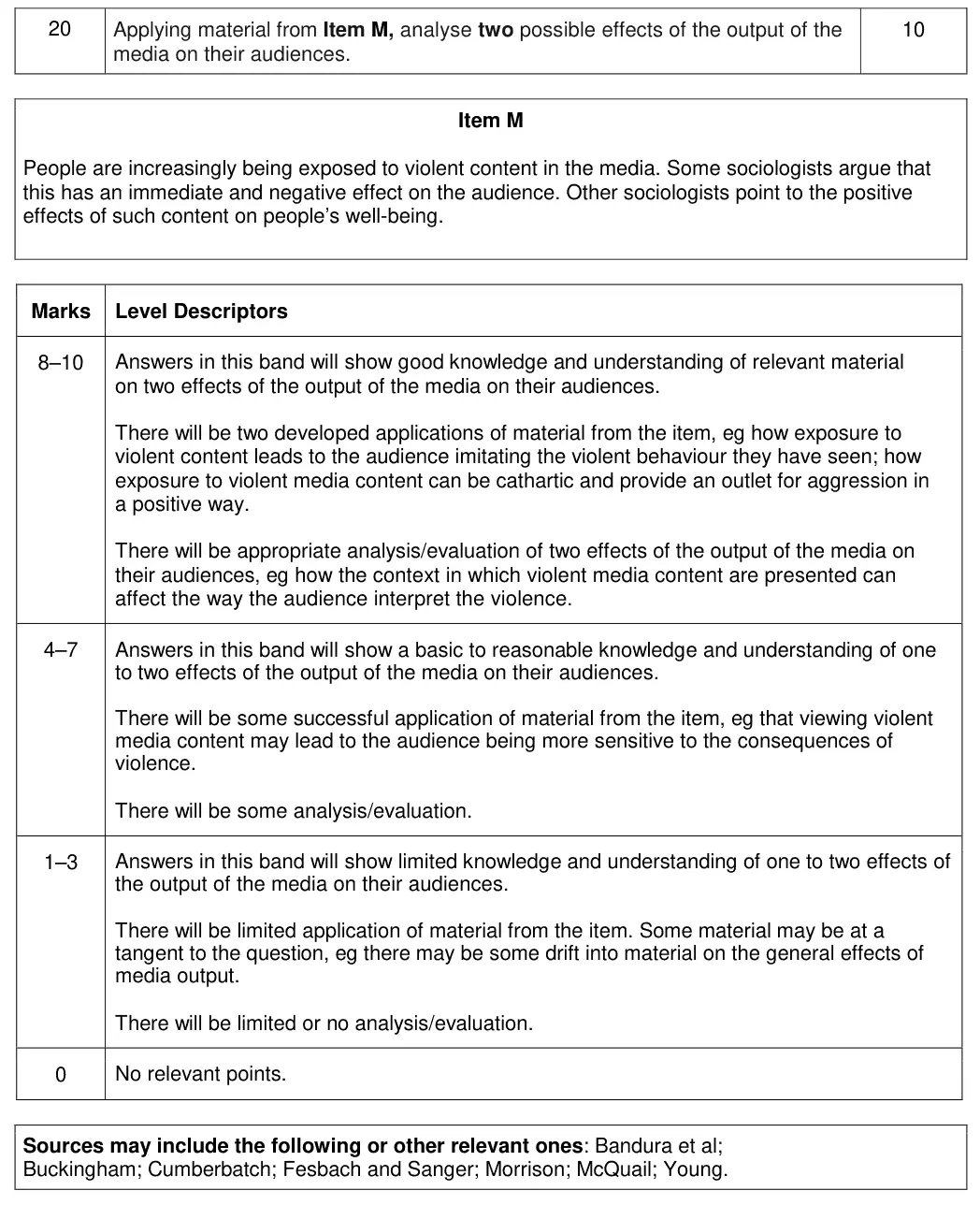
two developed applications from Item M (wide range of media
lower trust), e.g. audiences using varied media for different purposes, decoding and filtering with negotiated or oppositional readings
drift into describing types of media is a tangent
stronger answers used two-step flow and cultural effects
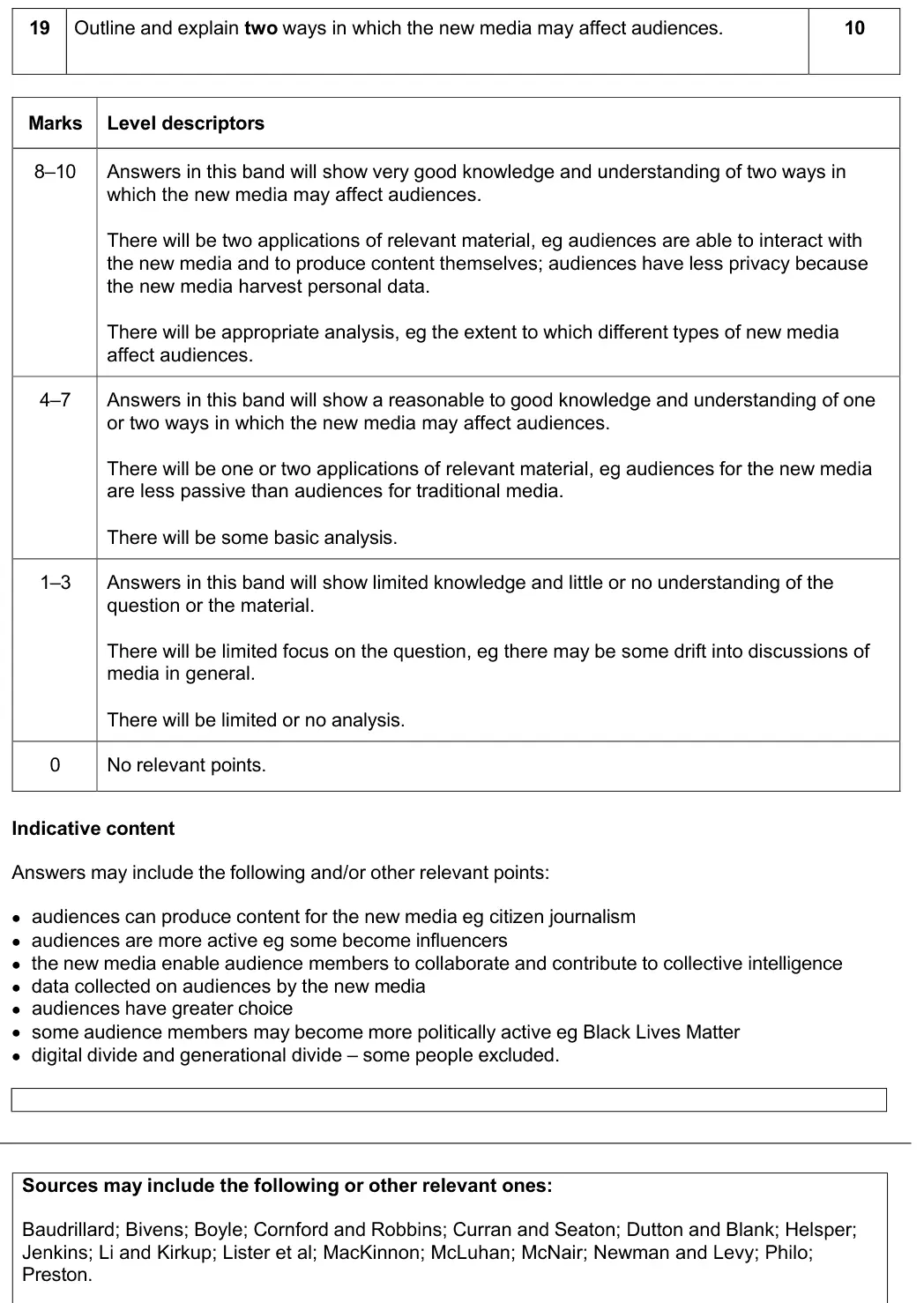
June 2023 · Paper 2 · Q1910 marksAO1=5, AO2=3, AO3=2Outline and explain
Mark scheme, including the levels grid and indicative content
Examiner's comment
The nature of these questions means that students cannot rely on reciting knowledge. Questions will ask them to bring together aspects of their sociological knowledge in ways they are unlikely to have done before. It is therefore important for students to allow time to think about how to answer the question. Students should be made aware that there are two types of 10 mark questions. These have different requirements and different mark schemes. There are different marks available for the assessment objectives. 10 mark “outline and explain” questions have more marks available for knowledge and understanding, and none for evaluation. Introductions and conclusions are not required for 10 mark questions and take up valuable time. It is helpful if answers are set out to clearly indicate the two separate points, with wording such as “One way/reason is…” or by starting a new paragraph for the second point. Answers that give more than two points are unlikely to develop two of them sufficiently. Question 19: This was generally well done, with most able to discuss two ways in which the new media may affect audiences. Some weaker answers were about media generally, for example outlining models of media effects without considering how these apply to new media.
Notes from the mark scheme and report
two ways new media affect audiences (user-generated content, active audiences/influencers, data harvesting, choice, digital divide)
drift into media in general = 1–3
weaker answers outlined effects models without applying them to new media
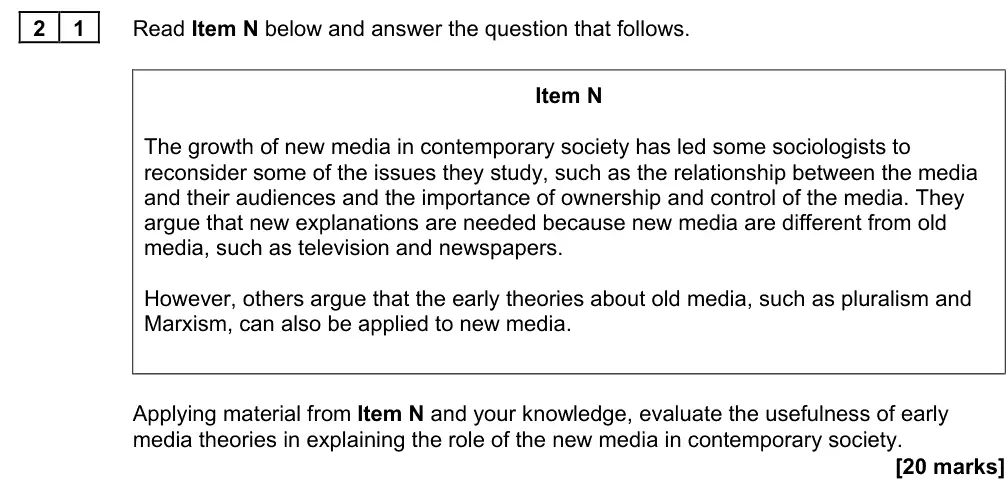
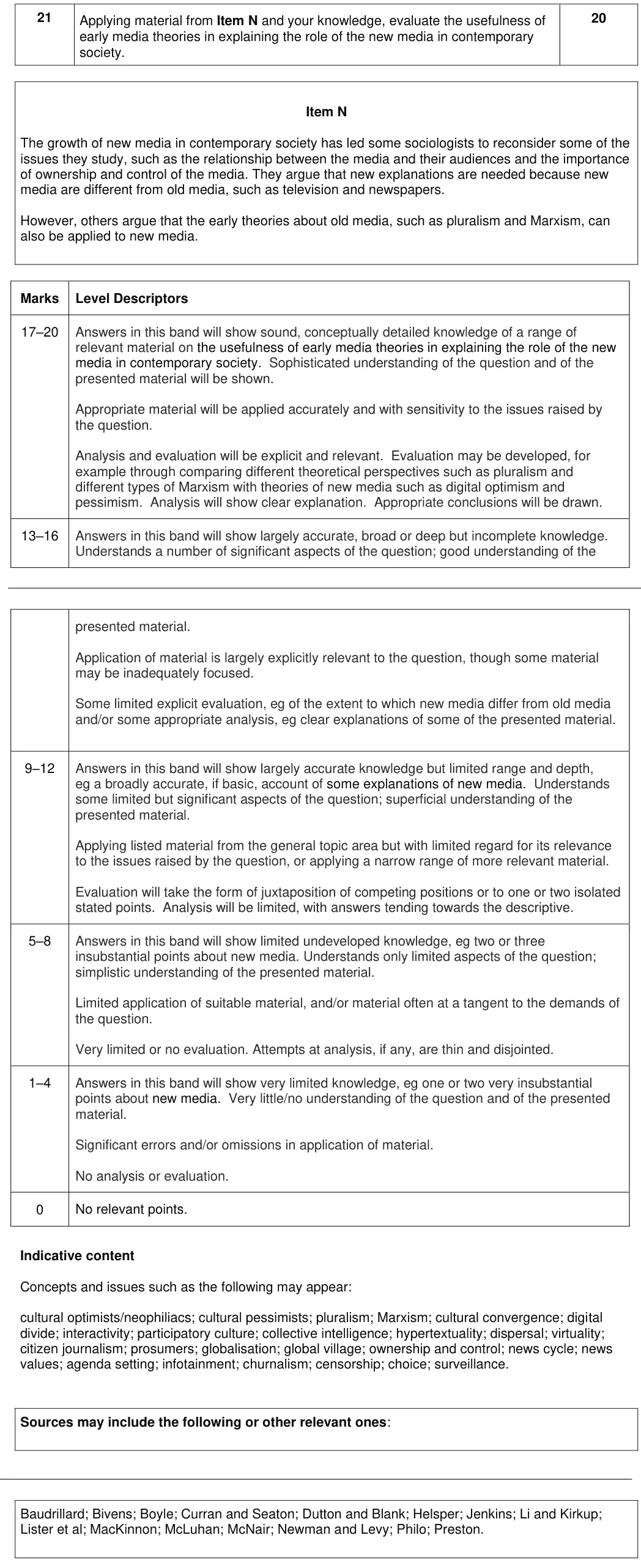
June 2022 · Paper 2 · Q2120 marksAO1=8, AO2=6, AO3=620-mark essay
Mark scheme, including the levels grid and indicative content
Examiner's comment
Most candidates answered their chosen questions in the order in which they appeared on the question paper. They therefore answered the section B 20 mark essay question last, and for many this was a relatively brief and often apparently unfinished answer. This suggests that timing is a problem for many candidates. The items for 20 mark questions are written to provide a number of ideas on which students can begin to build their answers. Students are expected to also bring in further ideas (hence “and your knowledge” in the instruction). It is often the case that a wide range of material can be relevant to these questions, and students need to be selective. For example, it may be more effective to cover a limited number of views or theories in some depth rather than to include every possible theory. There was a tendency for answers to progressively lose sight of the question and to become a list of different views. Many attempts at evaluation were learned criticisms. Evaluation is more effective where it is focused on the demands of the question. Students should also be aware that evaluation includes awareness of the strengths as well as the weaknesses of an argument or theory. Following feedback from centres regarding the advance information for the 20 mark questions, we have monitored the marking of these questions, as well as carrying out statistical analysis on student performance. Based on this analysis, we can confirm that students have performed as we expected them to on these questions, and their performance on these questions is in line with previous series. Q21 This question enabled students to apply their knowledge and understanding of media theories to new media. Better answers avoided reciting all they knew about a theory and focused on the question, often making insightful points on the changing nature of media. There was a tendency to focus on the positive aspects of new media (such as interactivity and citizen journalism) without always recognising more negative aspects such as the power of large corporations and the implications of surveillance and data harvesting.
Notes from the mark scheme and report
top band compares pluralism and varieties of Marxism with new-media theories (digital optimism and pessimism)
better answers avoided reciting whole theories
many stressed positives (interactivity, citizen journalism) and neglected corporate power, surveillance and data harvesting
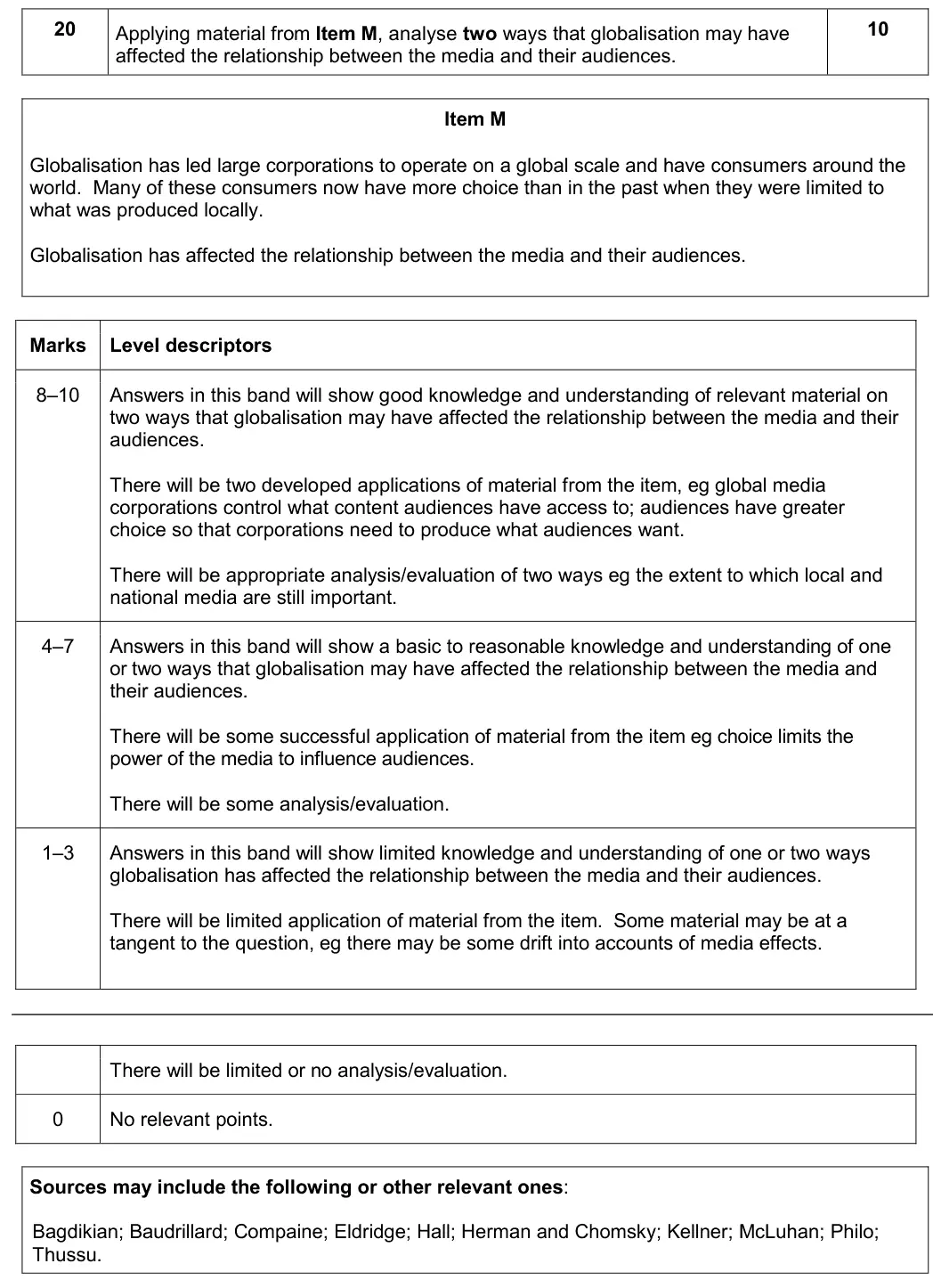
November 2021 · Paper 2 · Q2010 marksAO1=3, AO2=4, AO3=3Analyse
Mark scheme, including the levels grid and indicative content
Notes from the mark scheme and report
must develop hooks from Item M (global corporations, greater consumer choice)
the last line restates the question and is not a hook
credited: global corporations controlling content, audience choice forcing producers to meet demand, choice limiting media influence
drift into media effects = 1–3
no examiners' report comment for this part
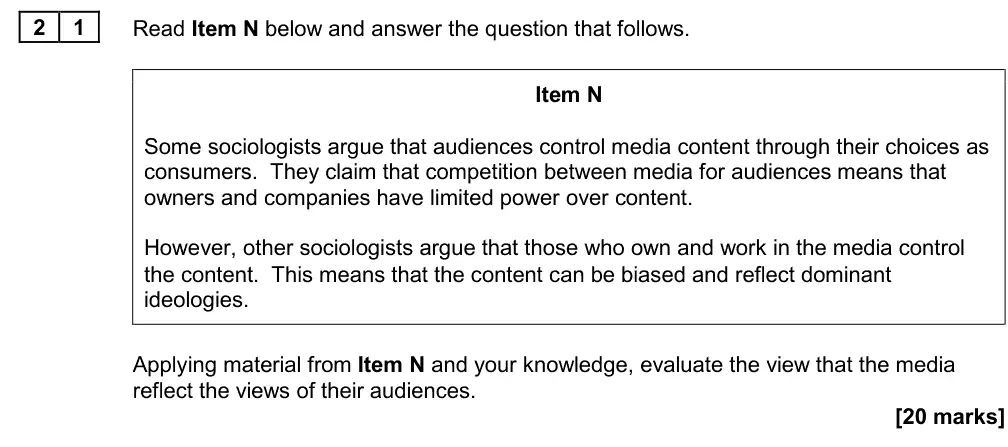
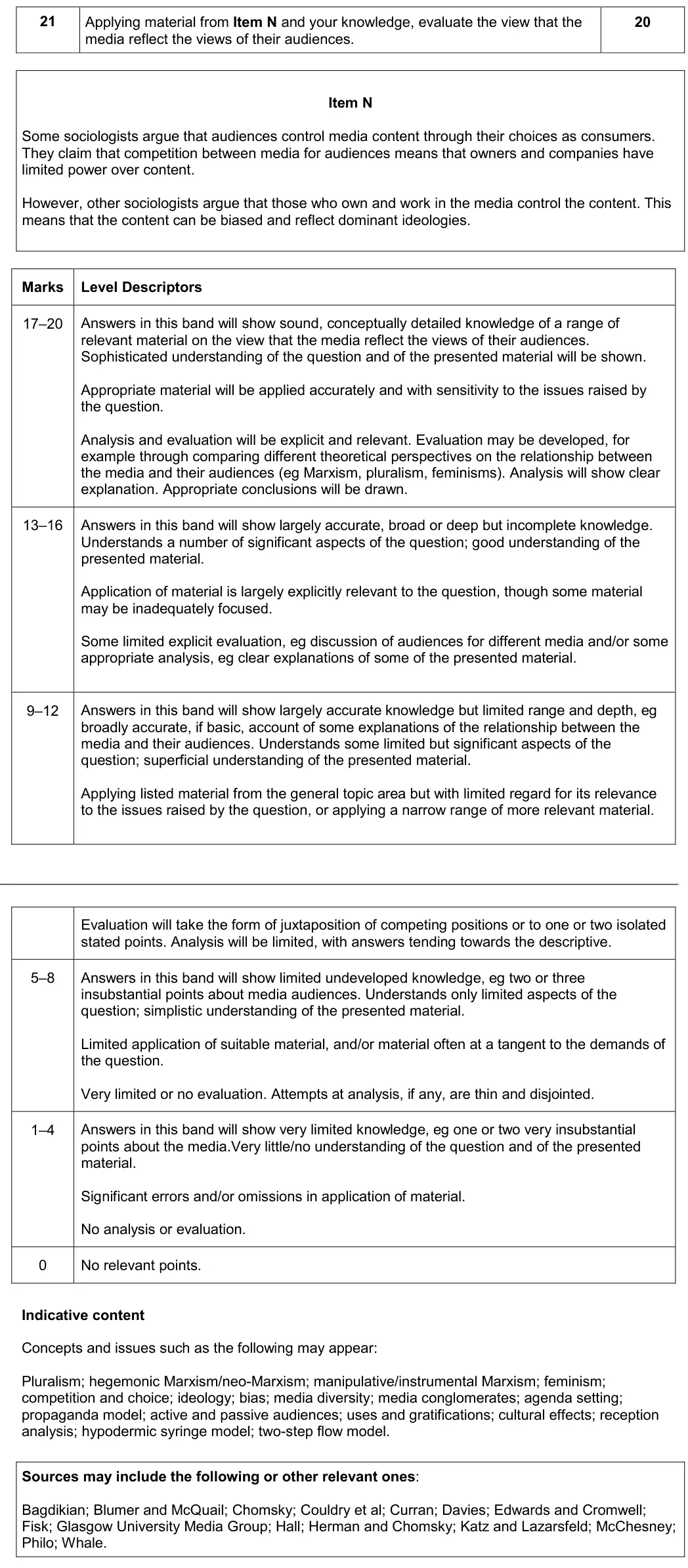
November 2020 · Paper 2 · Q2120 marksAO1=8, AO2=6, AO3=620-mark essay
Mark scheme, including the levels grid and indicative content
Notes from the mark scheme and report
apply Item N (audiences control content through consumer choice vs owners/workers control biased content)
evaluation via pluralism, Marxism, feminisms or audiences for different media
basic account of media-audience relationship = 9-12
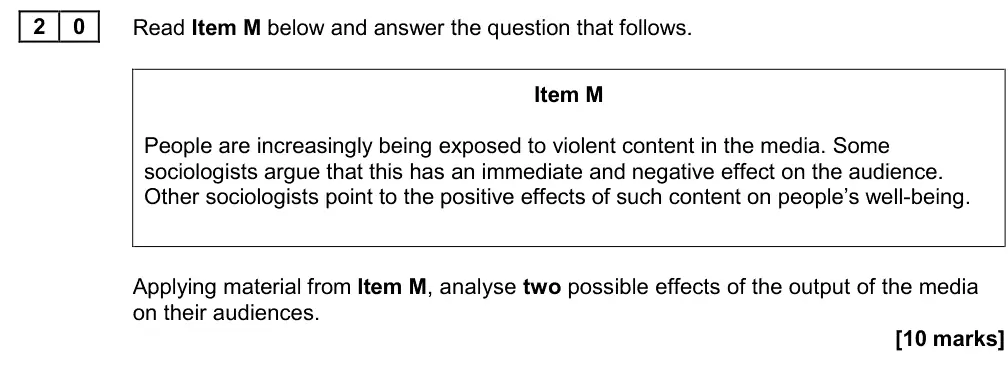
June 2019 · Paper 2 · Q2010 marksAO1=3, AO2=4, AO3=3Analyse
Mark scheme, including the levels grid and indicative content
Examiner's comment
Some students wrote introductory paragraphs and/or conclusions. These are not necessary, and are unlikely to gain additional marks; they also take up time. Some students made only one point in their answers, or three or more, rather than the two asked for. The word ‘two’ is put in bold in the question to try and draw students’ attention to this. Sometimes it was not clear how many points were being made. It is helpful for students to clearly indicate their two answers, with wording such as “One way is…” or by starting a new paragraph for their second point. Notably, some students wrote far more than was needed for a 10-mark response. The two types of 10-mark question, “outline and explain” and “analysis” types, are marked differently as the assessment objectives have different weightings. It is important that students are aware of this. For 10 mark “analyse” questions, the parts of the item being used should be clearly indicated, preferably by exact words being quoted. It is acceptable for two different points to be drawn from one part of the item, but answers which do not use the item cannot access the application marks. The best answers to 10-mark questions were focused, clearly stating a point and then developing it, and used sociological concepts, studies, evidence and theory as appropriate. This was a well answered question, with imitation or desensitisation and catharsis or sensitisation being popular answers drawn from the item and analysed effectively, often through use of media effects models and research findings.
Notes from the mark scheme and report
develop the item's negative and positive effects, e.g. imitation or desensitisation vs catharsis or sensitisation, using effects models and research
drift into general media effects = 1–3
AO split from AQA's standard grid for this paper (this year's mark scheme does not print it).
June 2018 · Paper 2 · Q2120 marksAO1=8, AO2=6, AO3=620-mark essay
Mark scheme, including the levels grid and indicative content
Examiner's comment
Most students answered their chosen questions in the order in which they appeared on the question paper. They therefore answered the 20 mark essay question in section B last. Some student responses to this question were relatively brief and seemingly unfinished. This suggests that timing was a problem for some students. Many scripts had one substantial well developed answer to a 20 mark question and one significantly briefer one, suggesting problems with timing. It is often the case that a wide range of material can be relevant to these questions, and students need to carefully choose the content they wish to use by planning their answers. For example, it may be more effective to cover a limited number of views or theories in some depth rather than to include every possible theory. There was a tendency for answers to progressively lose sight of the question and to become a list of different views. The best answers will address all aspects of the question and will draw on theories, concepts and empirical examples or evidence. Evaluation which meets the demands of the questions is better than points of criticism which have been learned and included, regardless of the question. Students should also be aware that evaluation includes awareness of the strengths as well as the weaknesses of an argument, theory or piece of evidence. Better answers recognised that ‘direct’ and ‘immediate’ were separate issues, for example the cultural effects model is direct but not immediate. Many answers summarised several models of media effects, with evaluation often limited to points of comparison rather than addressing the demands of the question. Many answers used examples, usually in support of direct and immediate effects, but these were often dated, for example the James Bulger case and the Columbine shooting. Few students brought in current or recent examples, such as those related to social media memes. Some answers also addressed only the issue of whether the media do or do not cause violent behaviour, ignoring other possible effects.
Notes from the mark scheme and report
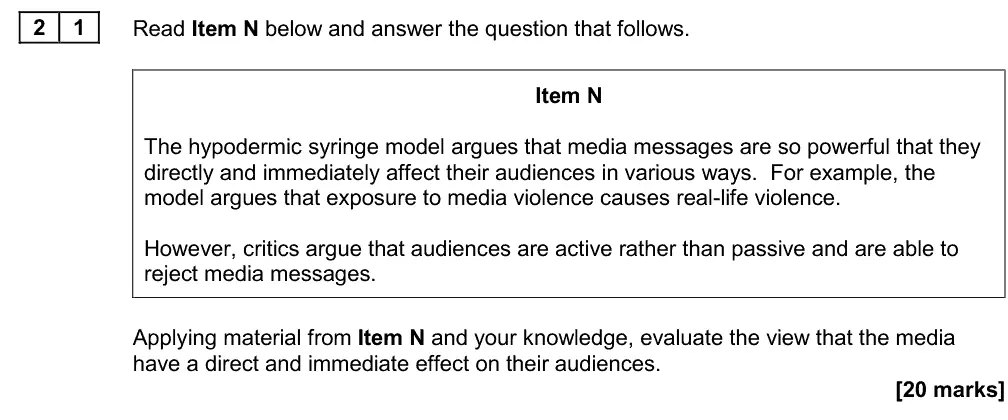
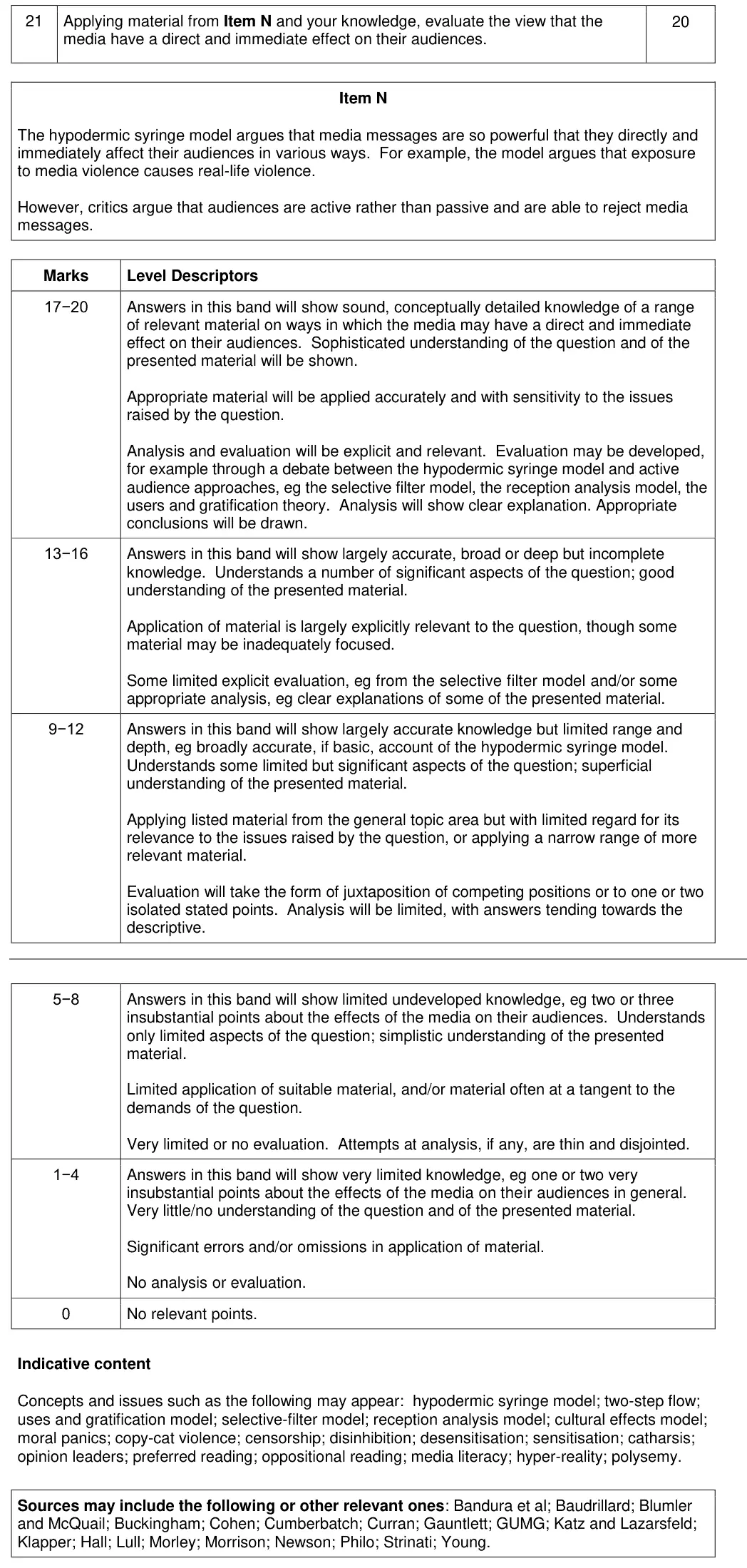
top band debates hypodermic syringe against active-audience models
better answers treated 'direct' and 'immediate' separately (cultural effects is direct but not immediate)
many summarised models with comparison rather than evaluation
examples dated (Bulger, Columbine)
some narrowed to violence only
AO split from AQA's standard grid for this paper (this year's mark scheme does not print it).
Specimen set 1 · Paper 2 · Q1910 marksAO1=5, AO2=3, AO3=2Outline and explain
Mark scheme, including the levels grid and indicative content
Notes from the mark scheme and report
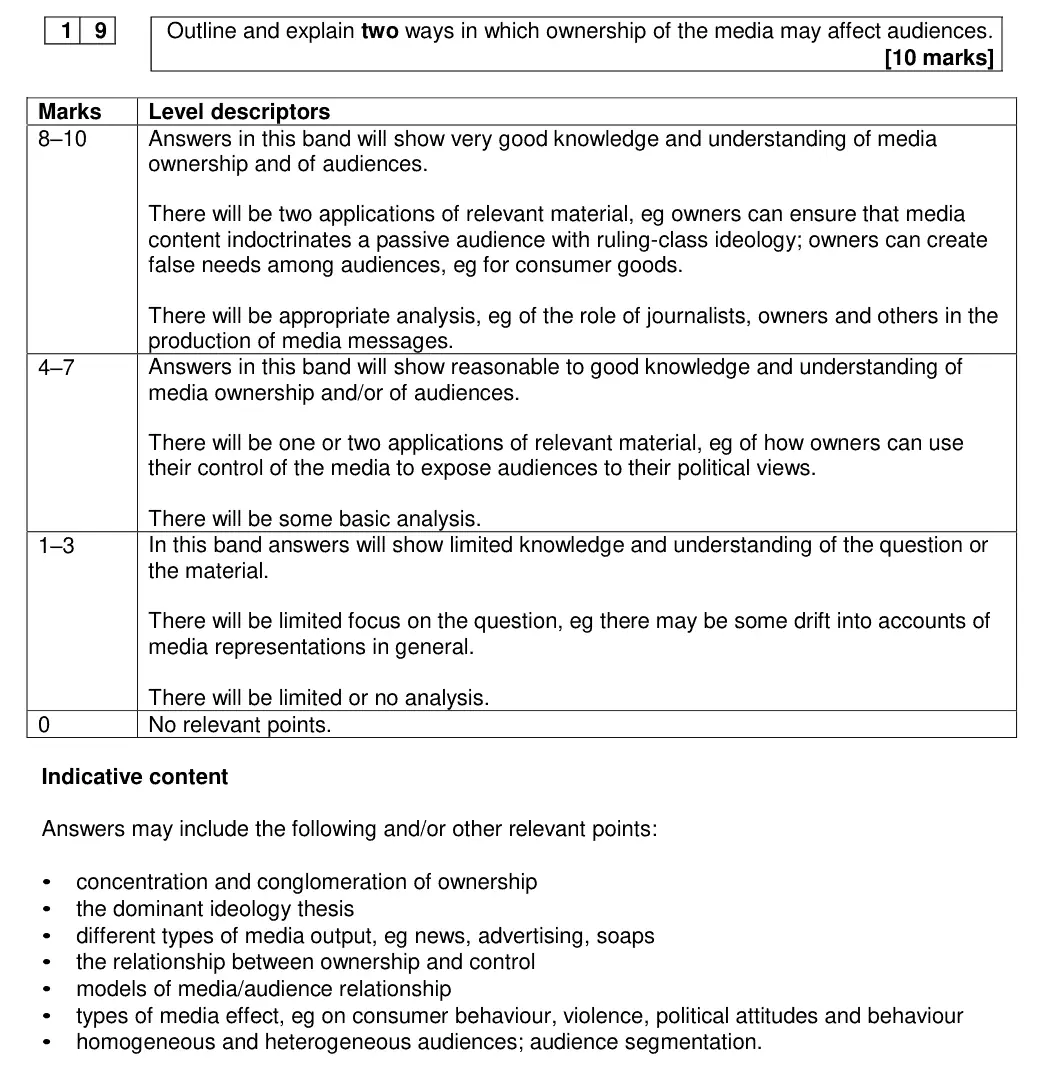
must link ownership to effects on audiences (e.g. ideology for a passive audience, false needs)
analysis of the roles of owners and journalists in producing messages
drift into media representations in general = 1–3 band
Work with an AQA sociology tutor
Essays stuck in the middle band, or losing marks on the 10-markers? Book a trial lesson with Mark, a former AQA examiner.