Tap a question to zoom it. The mark scheme (with the level descriptors and indicative content) and the examiner's comment open underneath.
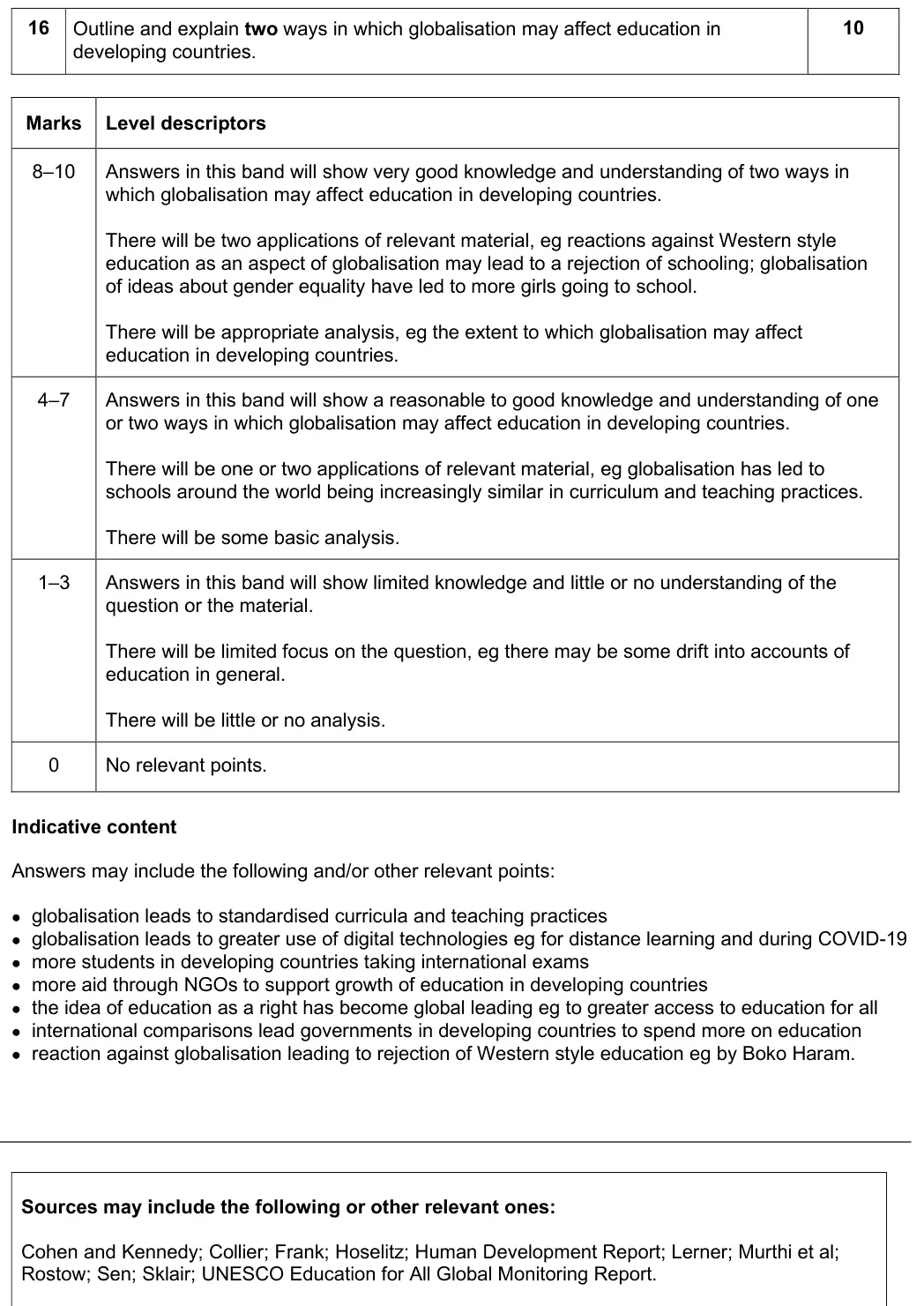
June 2025 · Paper 2 · Q1610 marksAO1=5, AO2=3, AO3=2Outline and explain
Mark scheme, including the levels grid and indicative content
Examiner's comment
The nature of these questions means that students cannot rely on reciting knowledge. Questions will ask them to bring together aspects of their sociological knowledge in ways they have not done before. It is therefore important for students to allow time to think about how to answer the question. Students should be aware that there are two types of ten-mark questions. These have different requirements and different mark schemes. There are different marks available for the assessment objectives. 10 mark “outline and explain” questions have more marks available for knowledge and understanding, and none for evaluation. Introductions and conclusions are not required for 10-mark questions, are unlikely to help students and take up time. It is helpful if answers are set out to clearly indicate the two answers, with wording such as “One way/reason is…” or by starting a new paragraph for the second point. Answers that give more than two answers are unlikely to develop two of them sufficiently. The most successful answers to 10-mark questions were focused, clearly stating a point that addressed the question and then developing it, using sociological concepts, evidence such as an example and, where appropriate, theory. This question was generally well answered with successful answers often discussing standardised Western teaching practices spreading globally and ways in which aid from non- governmental organisations may affect education.
Notes from the mark scheme and report
drift into education in general = 1–3
common answers: spread of standardised Western teaching, NGO aid for schooling
also global ideas on girls' education and reaction against Western schooling
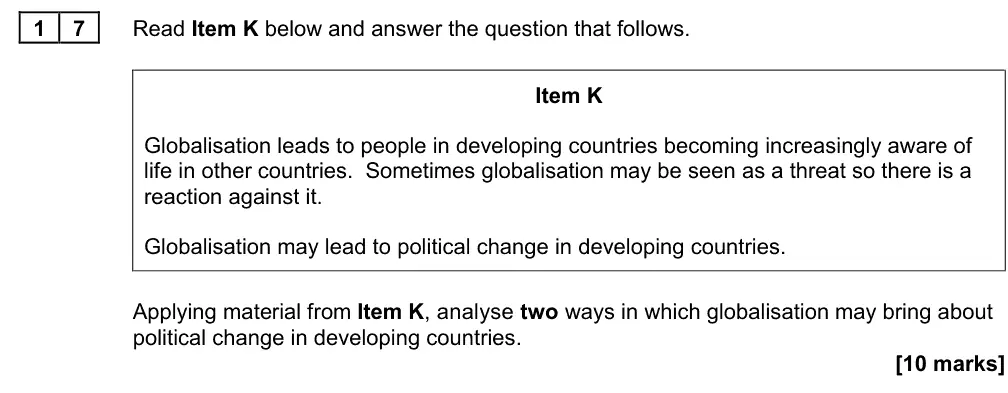
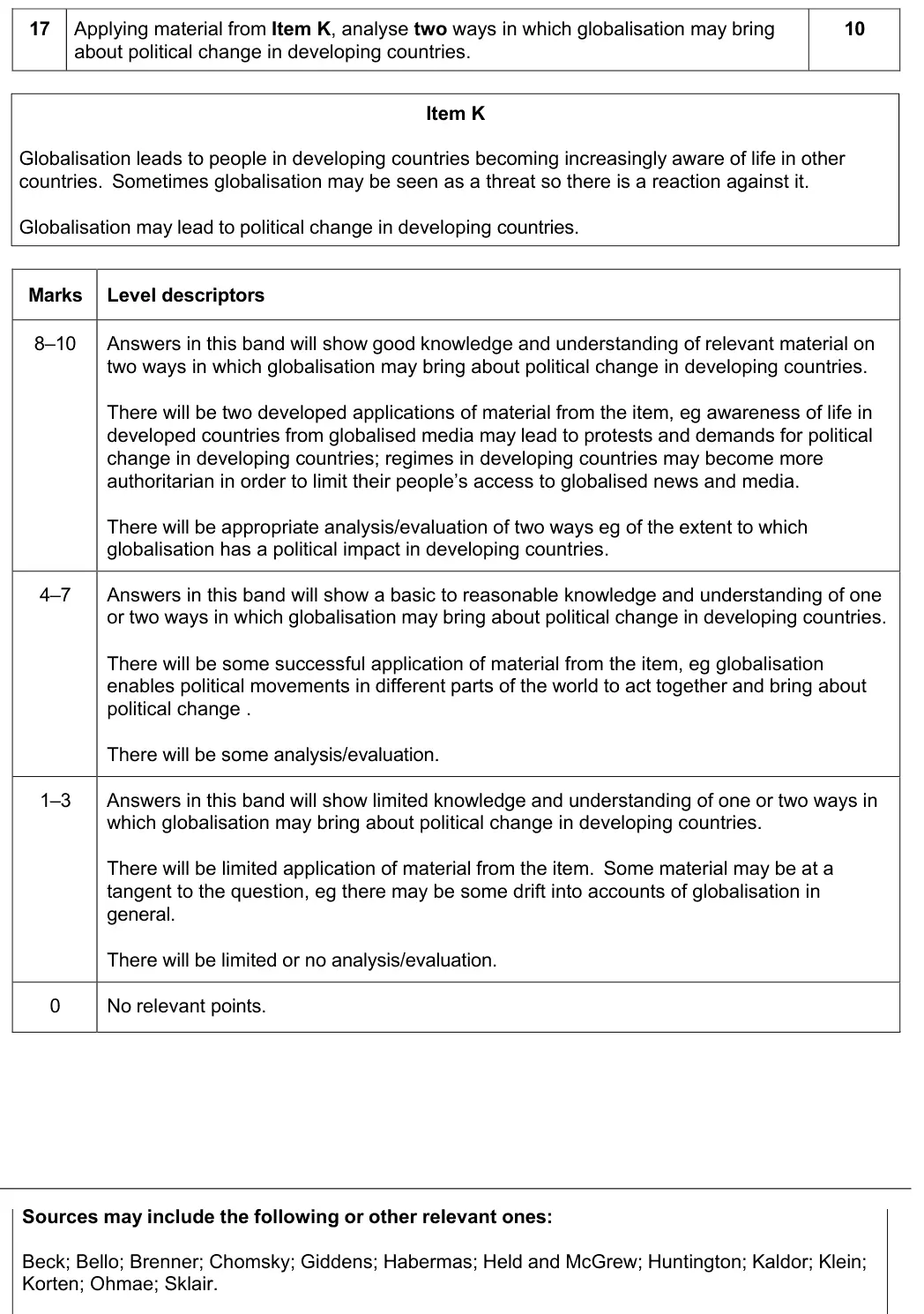
June 2023 · Paper 2 · Q1710 marksAO1=3, AO2=4, AO3=3Analyse
Mark scheme, including the levels grid and indicative content
Examiner's comment
The nature of these questions means that students cannot rely on reciting knowledge. Questions will ask them to bring together aspects of their sociological knowledge in ways they are unlikely to have done before. It is therefore important for students to allow time to think about how to answer the question. Students should be made aware that there are two types of 10 mark questions. These have different requirements and different mark schemes. There are different marks available for the assessment objectives. The items for 10 mark “analyse” questions are written to give prompts or “hooks” for student answers. These have to be used to access application marks. Answers can indicate use of hooks by quoting, by a reference in parentheses or by wording (eg “As the item says…”). Items end with a sentence restating the question; the hooks are in the preceding part of the item. Introductions and conclusions are not required for 10 mark questions and take up valuable time. It is helpful if answers are set out to clearly indicate the two separate points, with wording such as “One way/reason is…” or by starting a new paragraph for the second point. Answers that give more than two points are unlikely to develop two of them sufficiently. Question 17: Most answers were able to develop from the item two ways in which globalisation may bring about political change in developing countries. Better answers often included good contemporary examples, such as states restricting citizen access to social media to prevent change.
Notes from the mark scheme and report
hooks: awareness of life elsewhere and reaction against globalisation
e.g. protests and demands for change, authoritarian controls on media
drift into globalisation in general = 1–3
better answers used contemporary examples such as states restricting social media
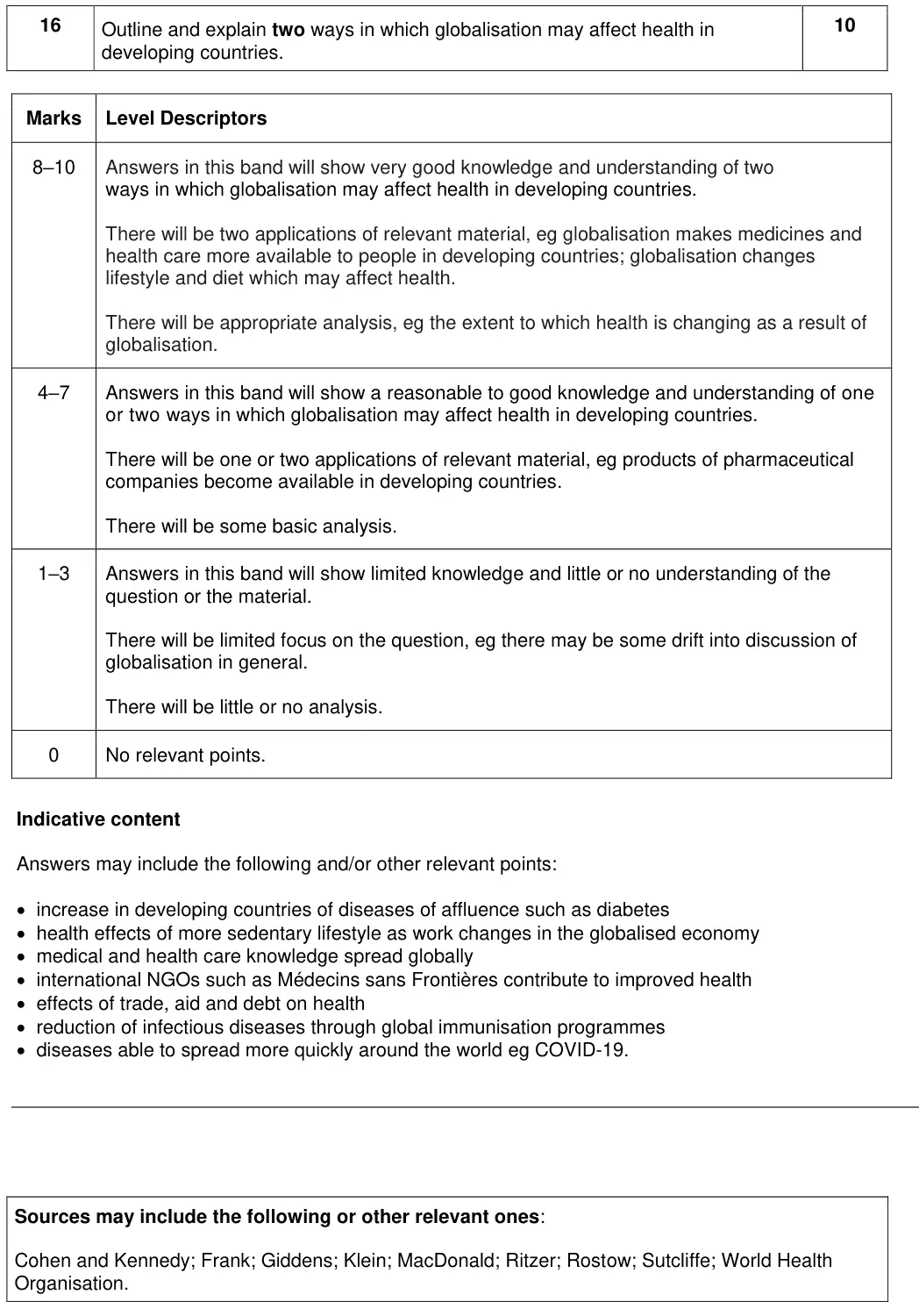
June 2022 · Paper 2 · Q1610 marksAO1=5, AO2=3, AO3=2Outline and explain
Mark scheme, including the levels grid and indicative content
Examiner's comment
The nature of these questions means that students cannot rely on reciting knowledge. The questions will ask them to bring together aspects of their sociological knowledge in a way that they are unlikely to have done before. There was a tendency, however, to attempt to answer the question by giving knowledge based on words or phrases in the question, rather than meeting the demands of the question. Students are advised to spend time reading the question, and, where there is one the item, to ensure that they are answering the question. Some students seemed unaware of the different demands of the two types of questions. The marks awarded for the assessment objectives are different in the two types of ten mark questions, and students should be aware of this. In particular, it should be noted that there are no marks available for evaluation in “outline and explain” (no item) questions. There is no need for an introduction or conclusion for 10 mark questions. It is helpful if answers are set out to clearly indicate the two answers, with wording such as “One way is…” or by starting a new paragraph for the second point. The best answers to 10 mark questions were focused, clearly stating a point that addressed the question and then developing it, using sociological concepts, evidence and, where appropriate, theory. Answers need to address all aspects of the question. Q16 There were some very good answers to this question. Many chose to give one positive effect, such as improved health care and inoculations and availability of medicines, and one negative effect, such as vulnerability to diseases from external sources or increases in diseases associated with affluence. Better answers usually included examples of specific health problems or incidents.
Notes from the mark scheme and report
drift into globalisation in general = 1–3 band
many gave one positive effect (medicines, immunisation) and one negative (spread of disease, diseases of affluence)
better answers named specific health problems or incidents
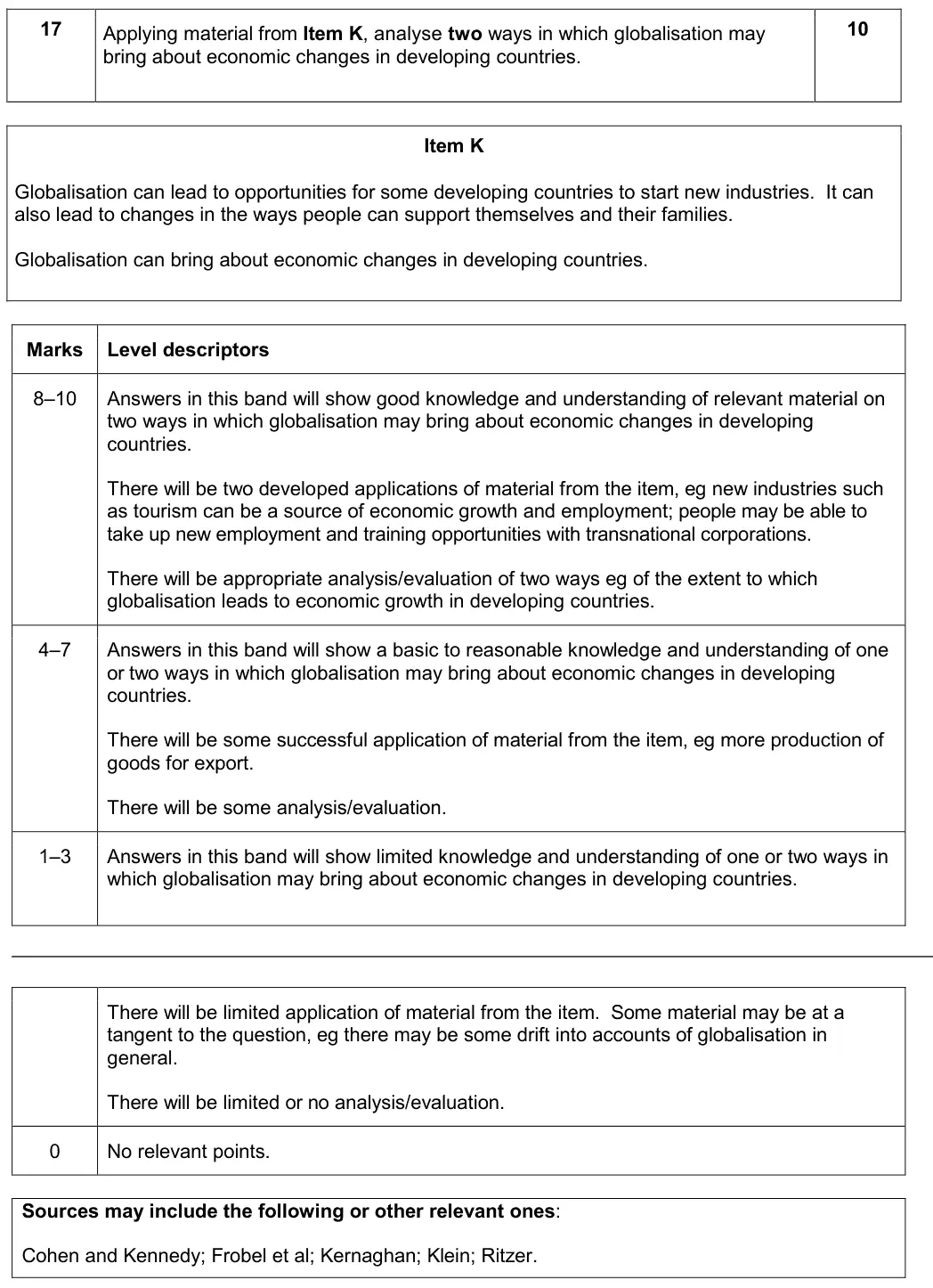
November 2021 · Paper 2 · Q1710 marksAO1=3, AO2=4, AO3=3Analyse
Mark scheme, including the levels grid and indicative content
Notes from the mark scheme and report
must develop hooks from Item K (new industries, new ways to support families)
the last line restates the question and is not a hook
credited: tourism and export industries, employment and training with TNCs
drift into globalisation in general = 1–3
no examiners' report comment for this part
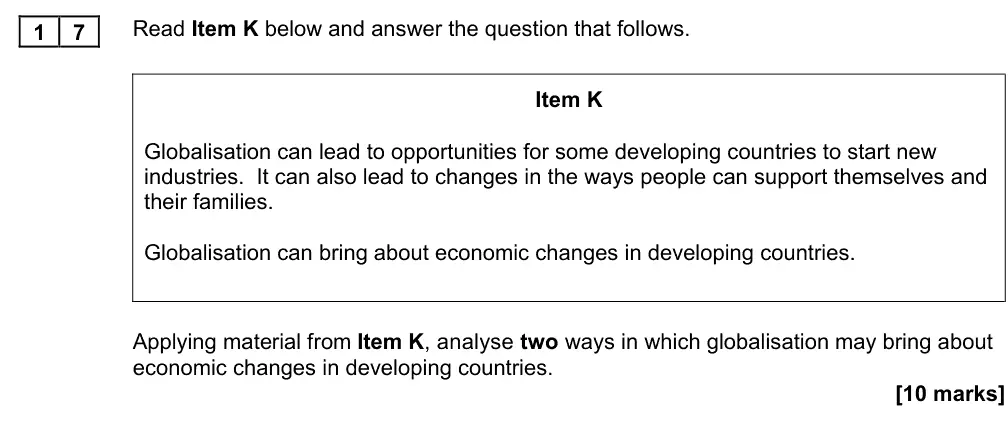
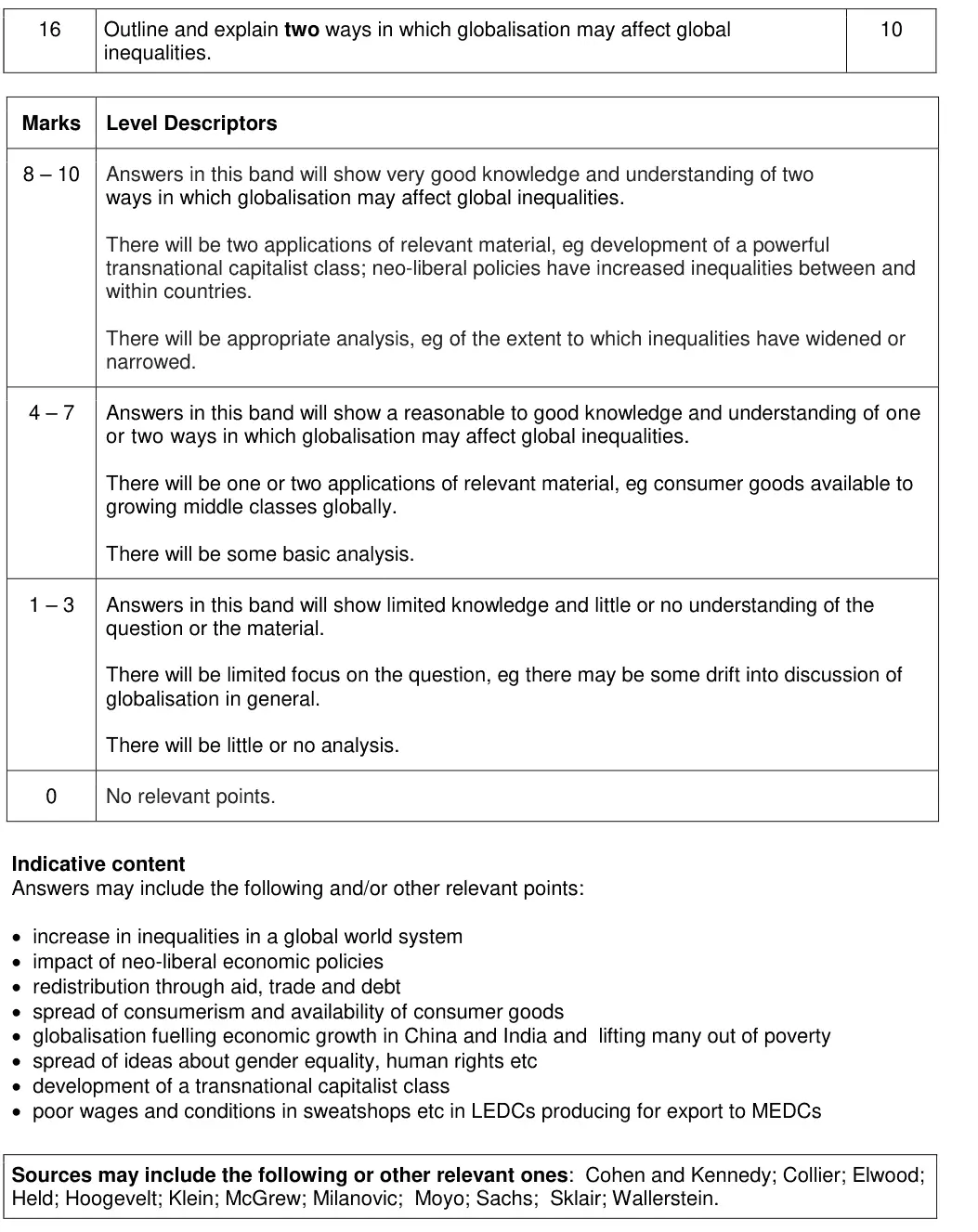
June 2019 · Paper 2 · Q1610 marksAO1=5, AO2=3, AO3=2Outline and explain
Mark scheme, including the levels grid and indicative content
Examiner's comment
Some students wrote introductory paragraphs and/or conclusions. These are not necessary, and are unlikely to gain additional marks; they also take up time. Some students made only one point in their answers, or three or more, rather than the two asked for. The word ‘two’ is put in bold in the question to try and draw students’ attention to this. Sometimes it was not clear how many points were being made. It is helpful for students to clearly indicate their two answers, with wording such as “One way is…” or by starting a new paragraph for their second point. Notably, some students wrote far more than was needed for a 10-mark response. The two types of 10-mark question, “outline and explain” and “analysis” types, are marked differently as the assessment objectives have different weightings. It is important that students are aware of this. In particular they should note that evaluation is not a requirement for answers to 10 mark “outline and explain” questions. For 10 mark “outline and explain” questions, students cannot rely on reciting knowledge; these questions will ask them to bring together aspects of their sociological knowledge of the topic in a way that they are unlikely to have done before. The best answers to 10-mark questions were focused, clearly stating a point and then developing it, and used sociological concepts, studies, evidence and theory as appropriate. There were some very good answers to this question, with many choosing to discuss one way in which inequalities might be being reduced and another in which they might be increasing, applying relevant theories and examples.
Notes from the mark scheme and report
drift into globalisation in general = 1–3
good answers gave one way inequalities may be narrowing and one way they may be widening, with theory and examples
AO split from AQA's standard grid for this paper (this year's mark scheme does not print it).
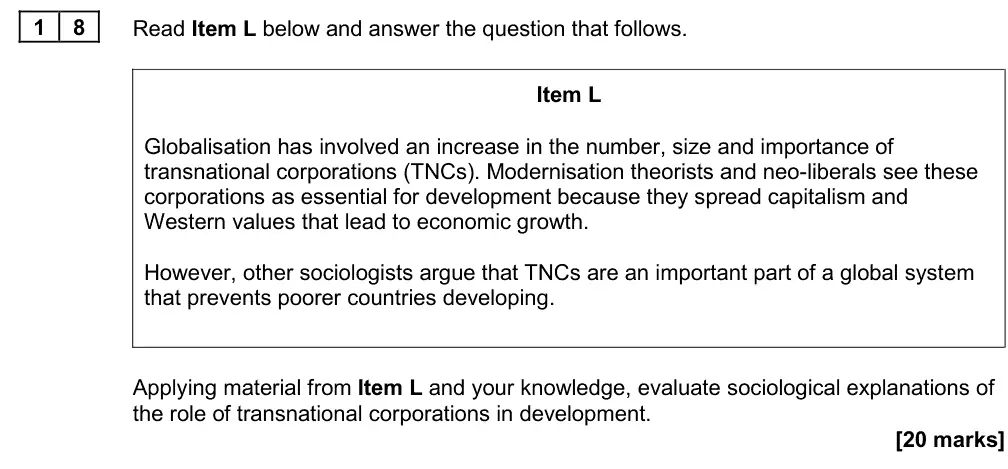
June 2019 · Paper 2 · Q1820 marksAO1=8, AO2=6, AO3=620-mark essay
Mark scheme, including the levels grid and indicative content
Examiner's comment
They therefore answered the section B 20 mark essay question last, and for many this was, as last year, a relatively brief and often apparently unfinished answer. This suggests that time management continues to be a problem for many students on this paper. As last year, many scripts had one substantial answer to the Section A 20-mark question and one significantly briefer one for Section B, suggesting problems with timing. There was often little evidence of planning. A wide range of material can be relevant to these questions, and students are not expected to include everything. They need to carefully choose the content and to plan their answers. The best answers will be both empirical and theoretical, for example showing knowledge of research findings and examples, and knowledge of theoretical perspectives. Some answers amounted to lists of theoretical perspectives, with learned points of criticism, and lost focus on the question itself. While the items are intended as a helpful starting point for answers, they should not be taken by students as a full list of what is relevant; better answers will draw in other relevant knowledge and ideas. Many answers were in effect a comparison of modernisation and development theories with only some brief references to transnational corporations, often without adding named examples. Stronger answers went beyond the content of the item to draw in other theories and to discuss, for example, environmental impacts, gender issues, employment practices and movement of profits.
Notes from the mark scheme and report
must keep TNCs central
many just compared modernisation and dependency theories with few references to TNCs or named examples
stronger answers covered environment, gender, employment practices and profit flows
AO split from AQA's standard grid for this paper (this year's mark scheme does not print it).
June 2018 · Paper 2 · Q1710 marksAO1=3, AO2=4, AO3=3Analyse
Mark scheme, including the levels grid and indicative content
Examiner's comment
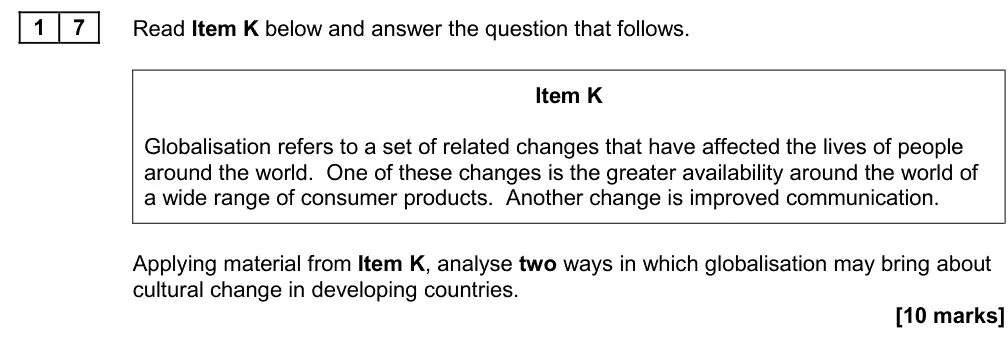
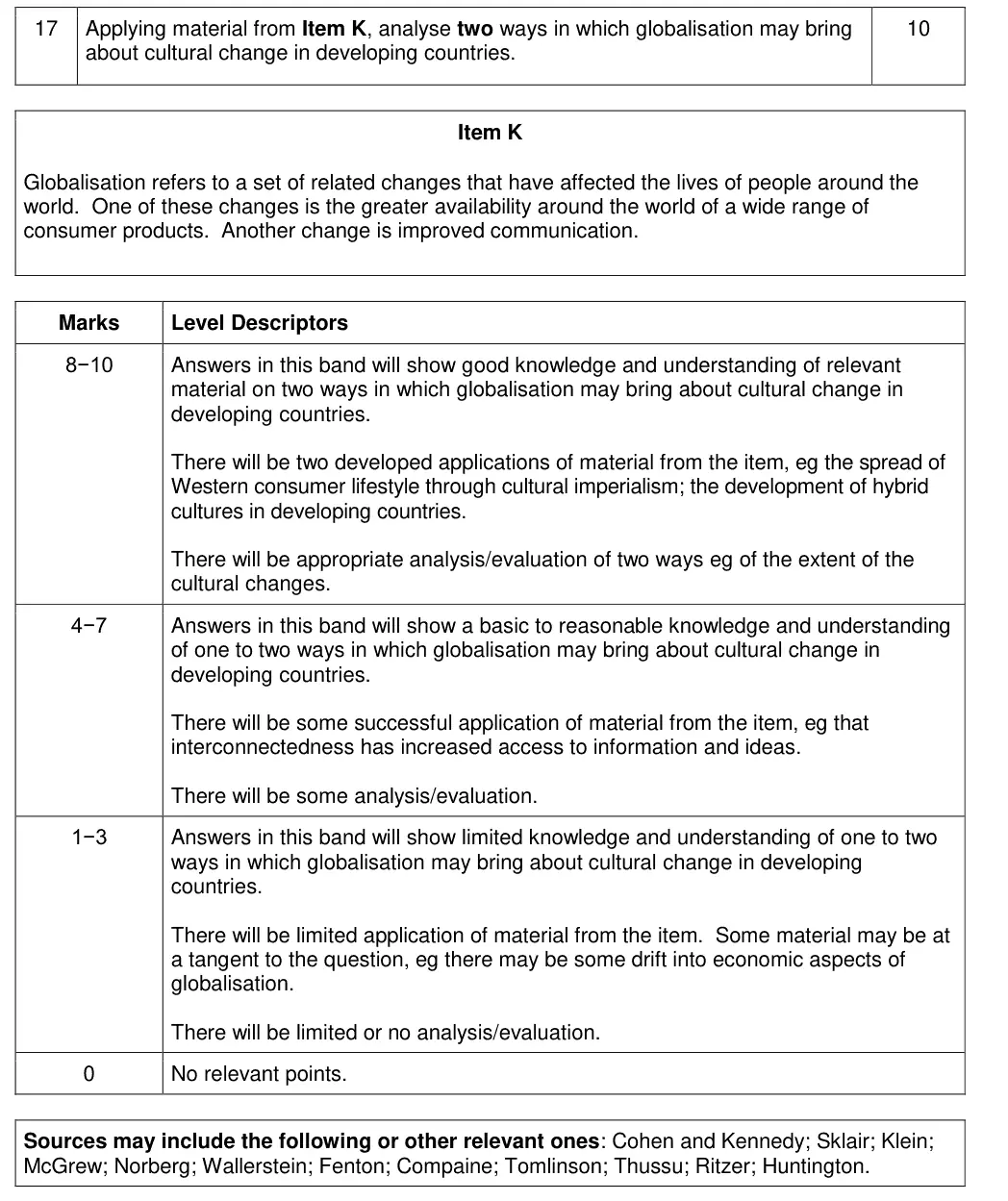
Some students wrote introductory paragraphs and/or conclusions. These are not necessary, and are unlikely to gain additional marks, and they also take up time. Some students made only one point in their answers, or three or more, rather than the two asked for in the question. Sometimes it was unclear how many points were being made. It is helpful for students to clearly indicate their two answers, with wording such as “One way is…” or by starting a new paragraph for their second point. Evaluation is not a requirement for answers to 10 mark “outline and explain” questions. The marks awarded for the assessment objectives being targeted are different in the two types of ten mark questions, and students should be made aware of this. The best answers to 10 mark questions were focused, clearly stating a point and then developing it, using sociological concepts, evidence and theory where appropriate. In some questions students tended to focus on the first aspect of the question at the expense of the second. Students need guidance on how to approach these questions and how to best demonstrate their sociological understanding. The nature of these questions means that students cannot rely on reciting knowledge. These questions will ask them to bring together aspects of their sociological knowledge in a way that they are unlikely to have done before. There were some very good answers to this question, drawing on concepts such as hybridity and cultural imperialism. The main challenge for many was to move beyond describing material changes such as availability of products to their cultural consequences.
Notes from the mark scheme and report
two developed applications from Item K (consumer products, communication), e.g. cultural imperialism, hybridity
drift into economic aspects is a tangent
main weakness was describing the availability of goods without drawing out cultural consequences
AO split from AQA's standard grid for this paper (this year's mark scheme does not print it).
Work with an AQA sociology tutor
Essays stuck in the middle band, or losing marks on the 10-markers? Book a trial lesson with Mark, a former AQA examiner.