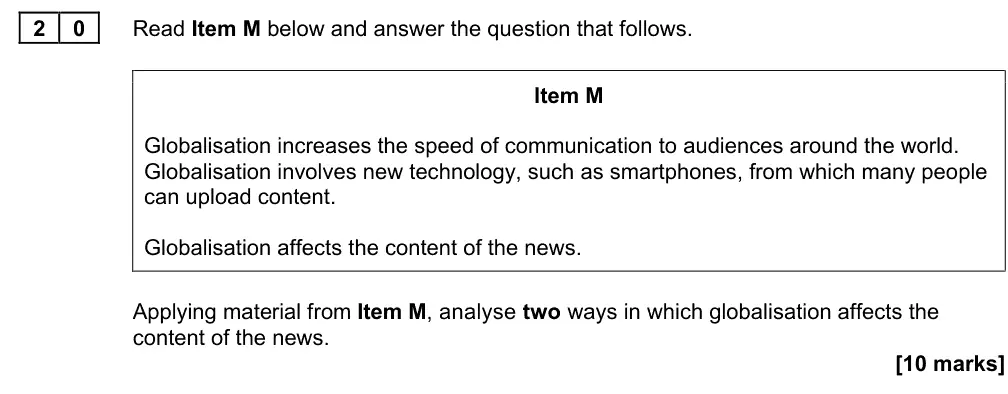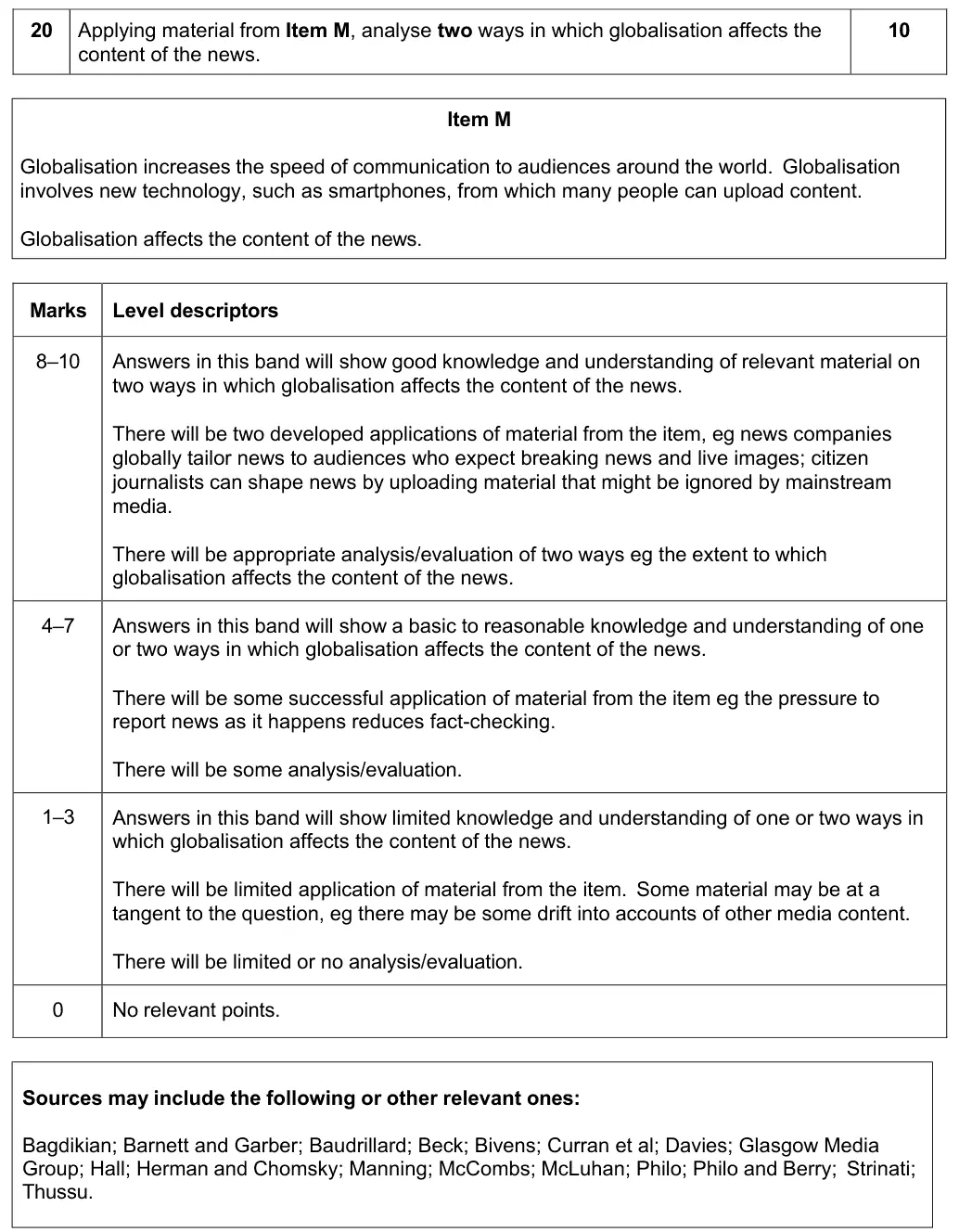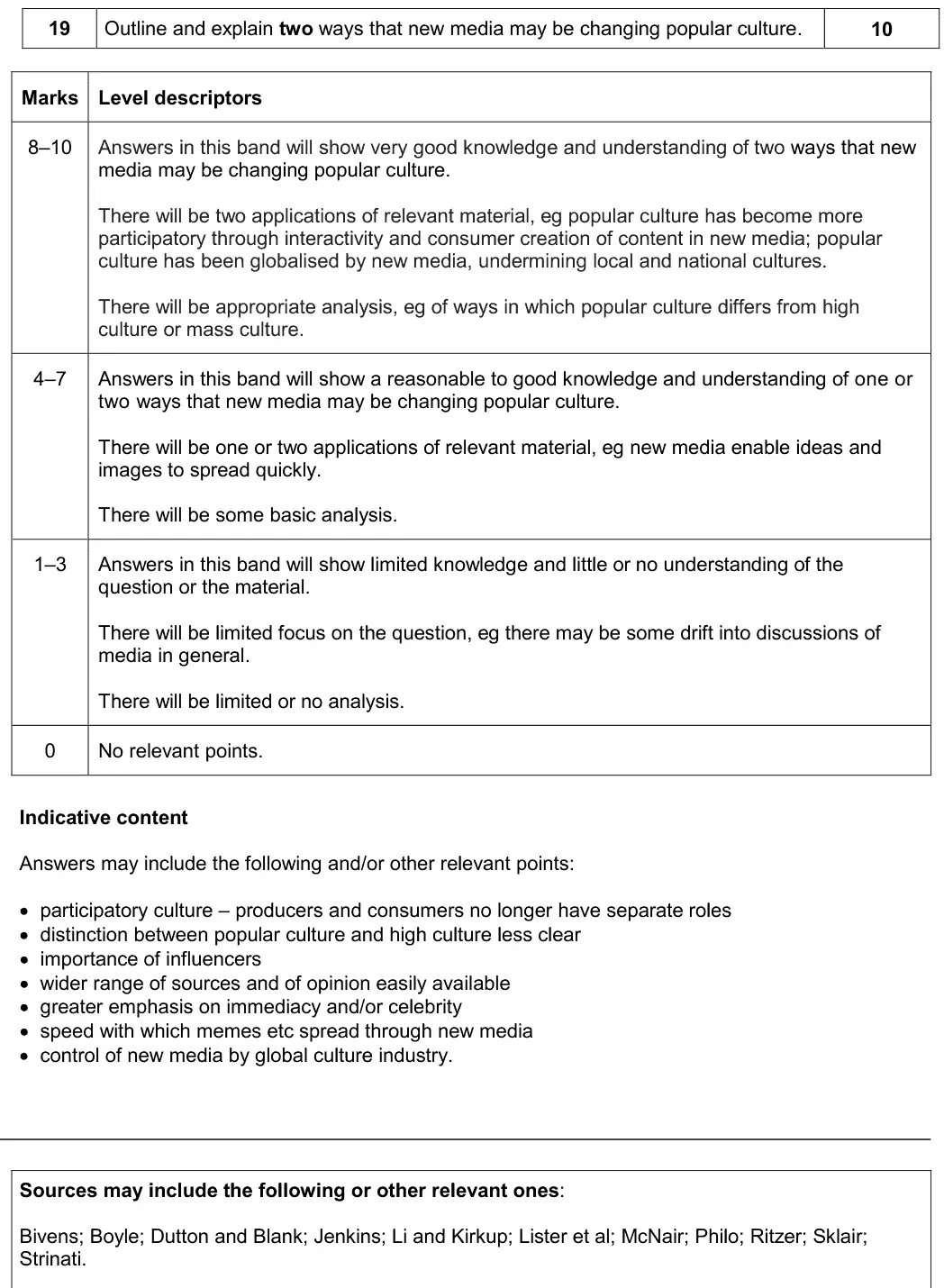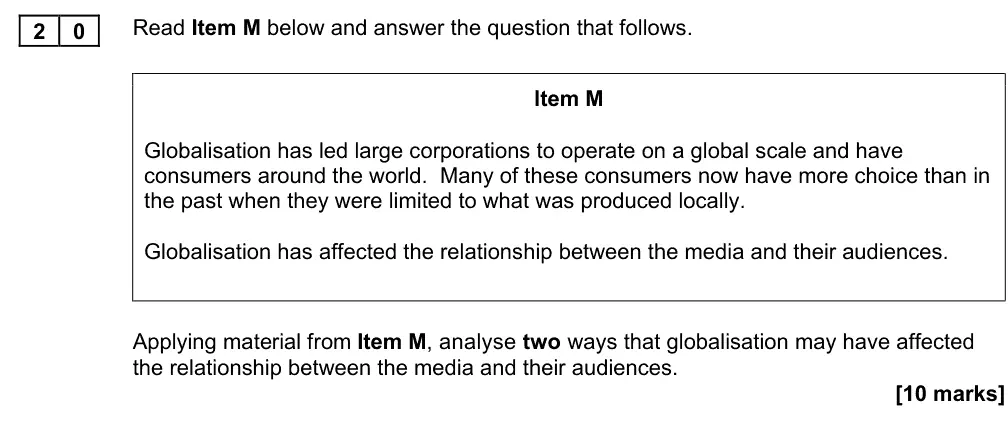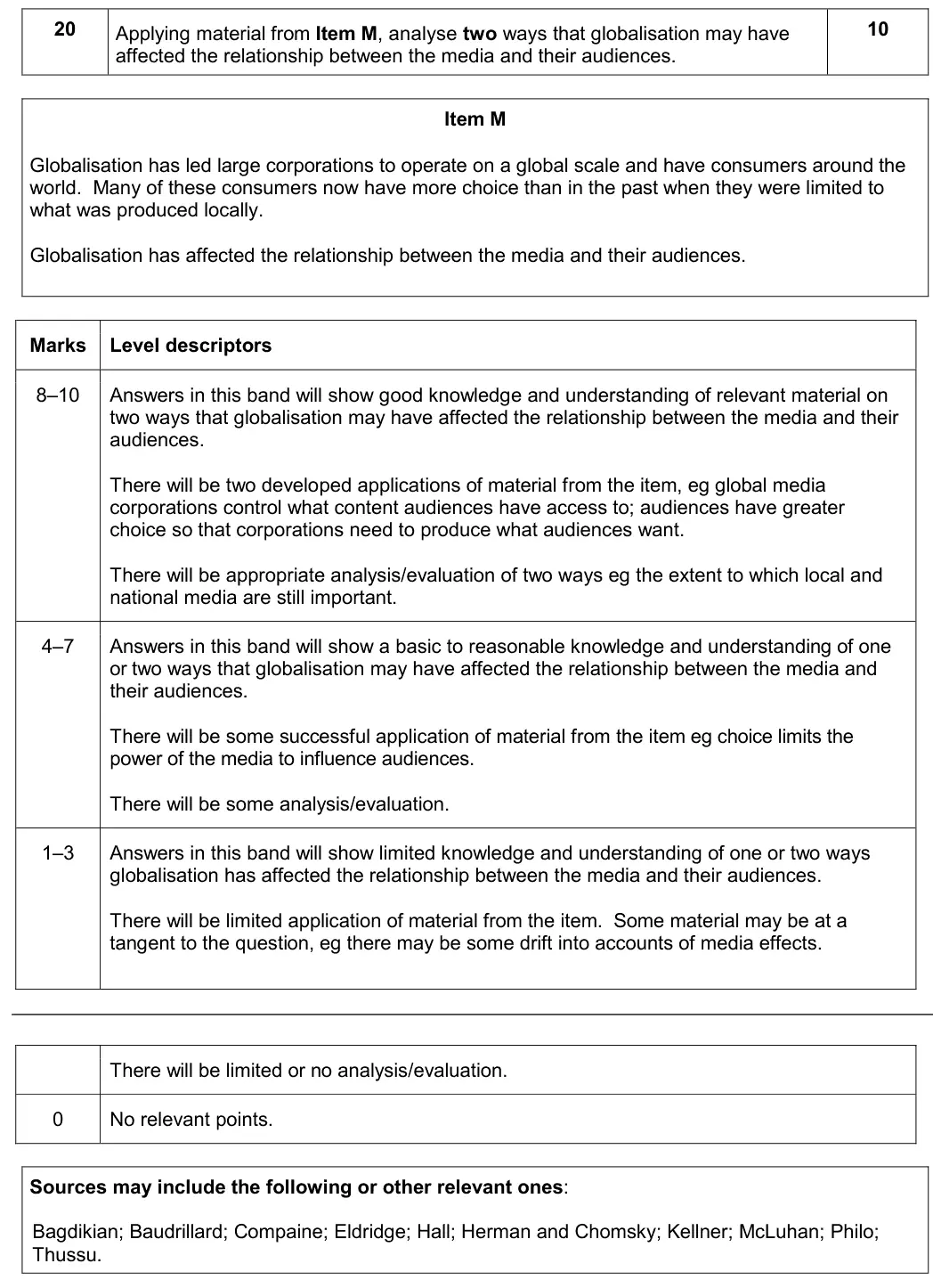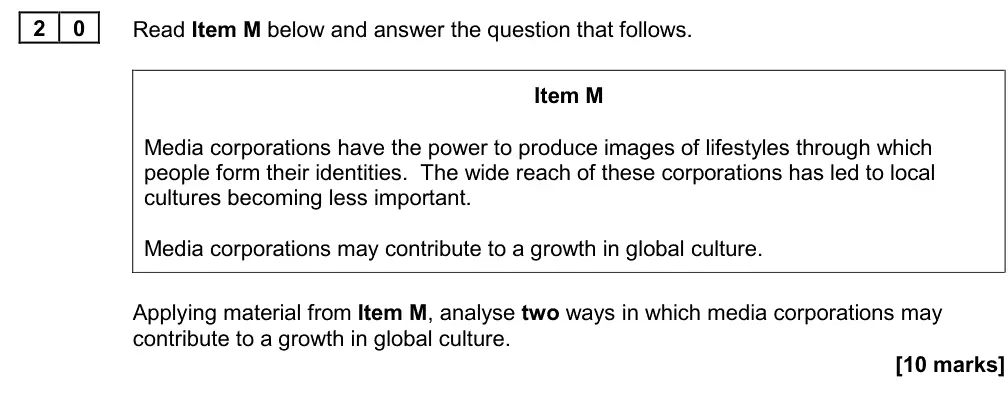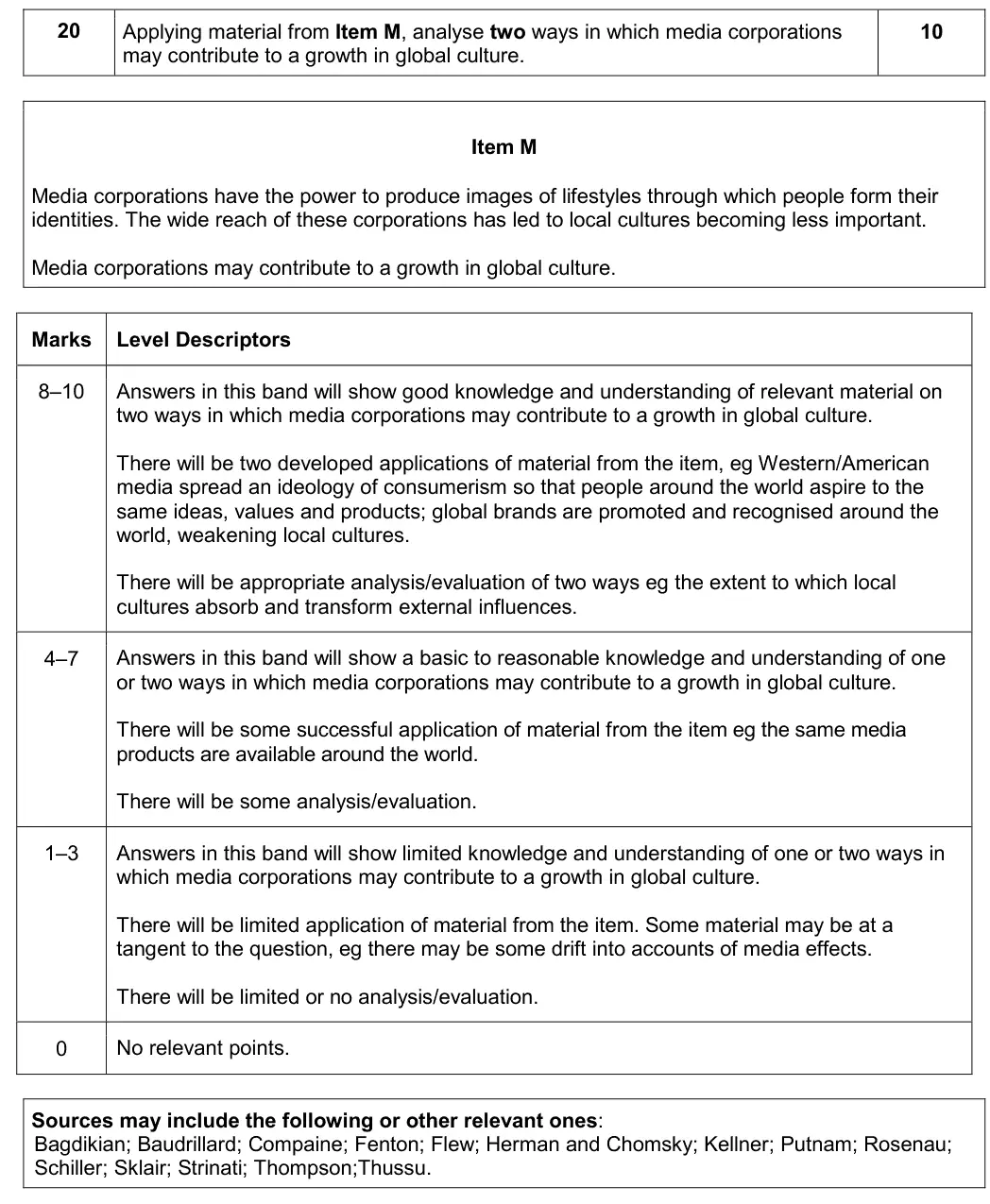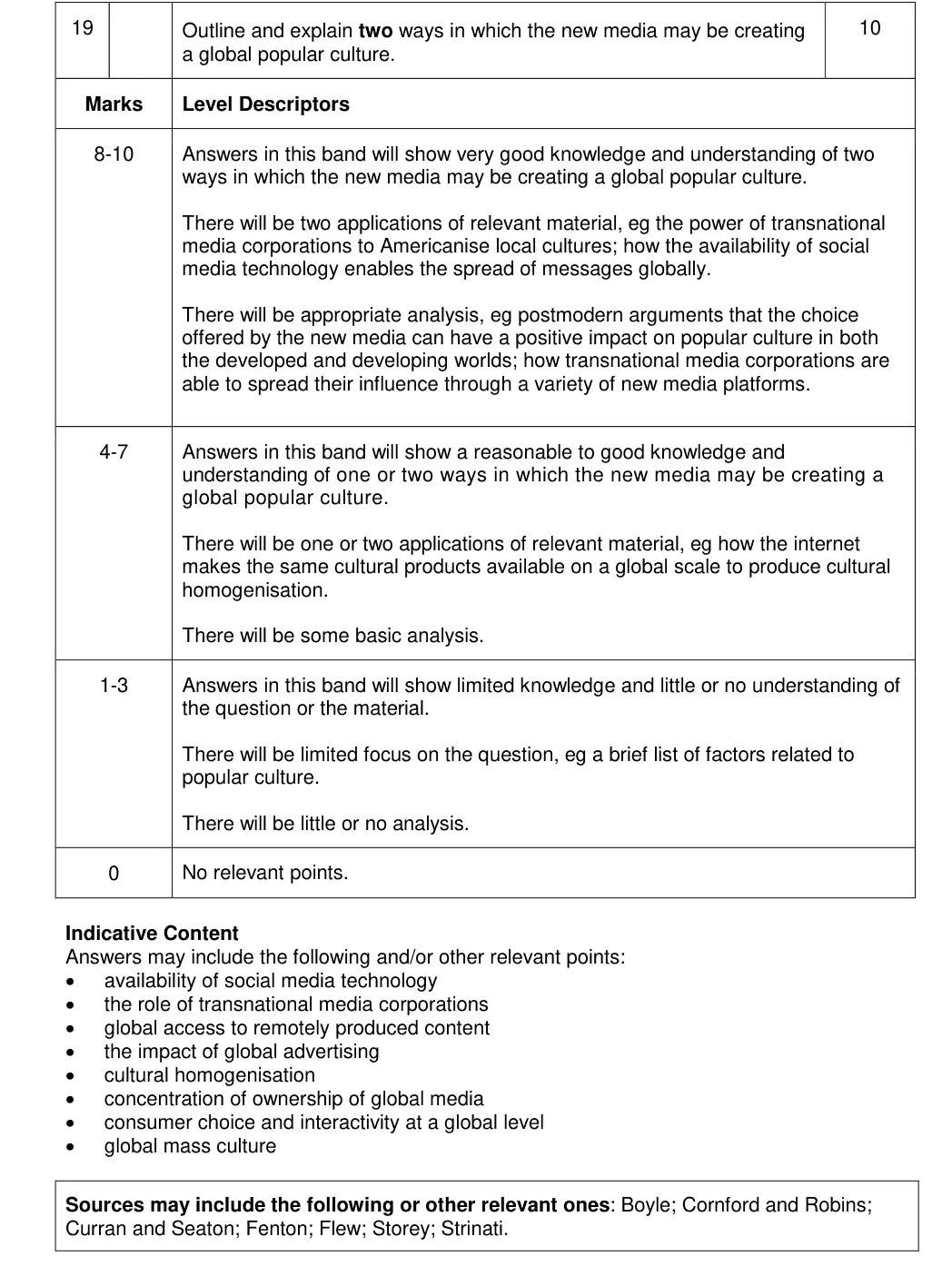
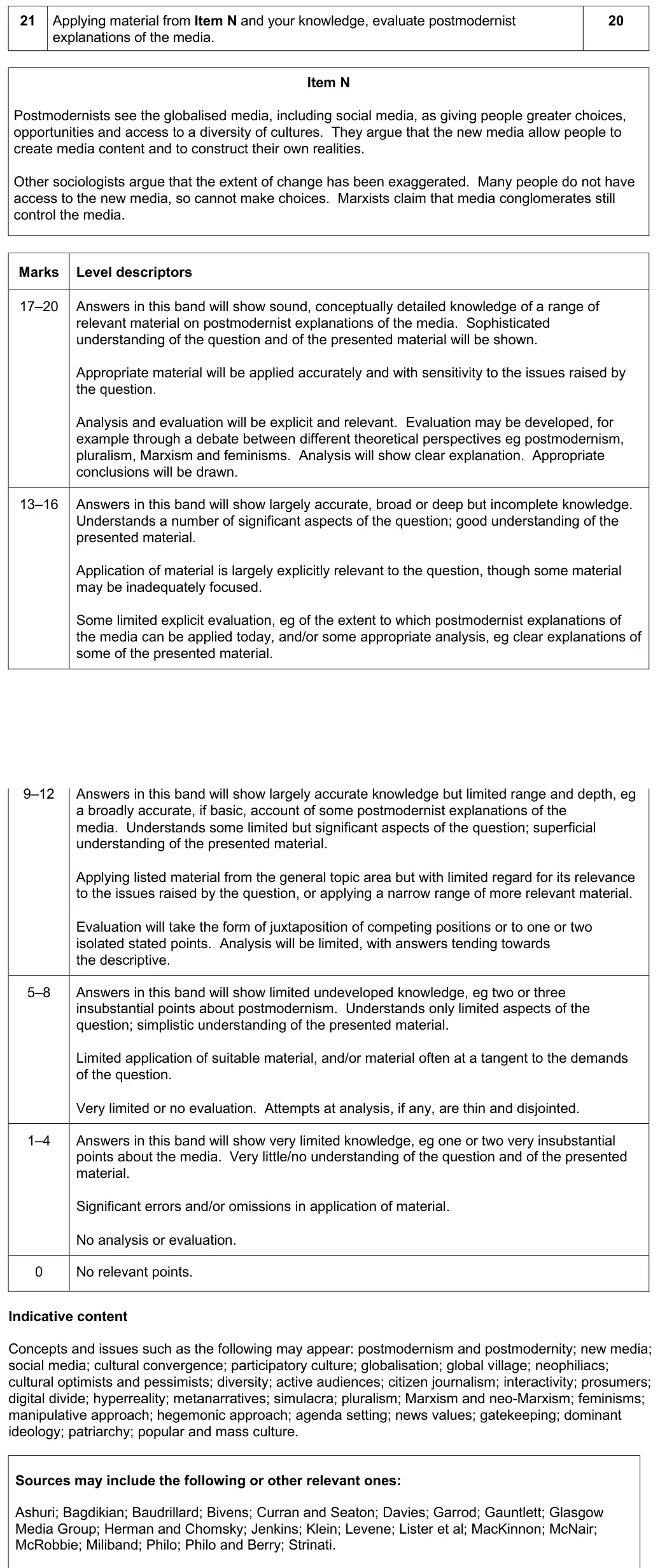
Mark scheme, including the levels grid and indicative content
Examiner's comment
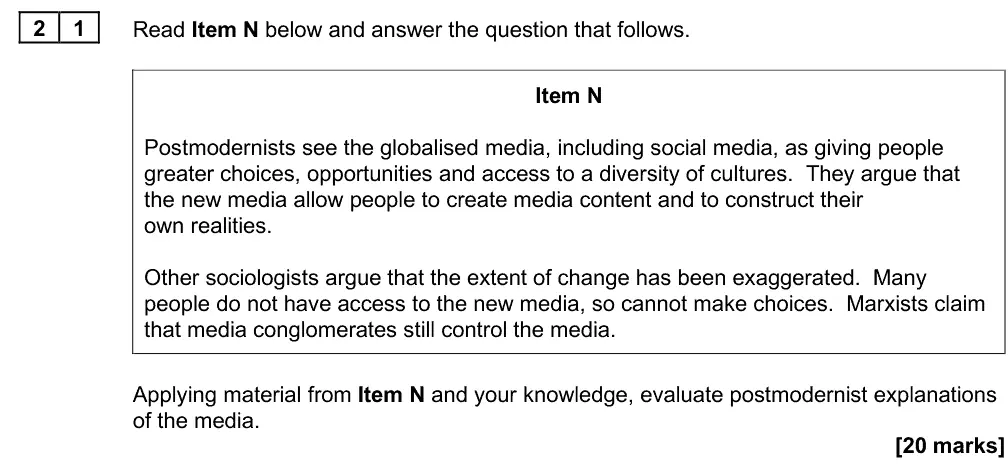
These require answers that are essays and are best written in paragraphs. A brief introduction can help set out the argument of the essay. It will not attract marks if it only repeats the question or parts of the item. The purpose of the items for these questions is to suggest a few starting points for students, including ways into evaluation. Students are expected to also bring in further ideas (“and your knowledge” in the instruction) rather than relying only on the item. A wide range of material can be relevant to these questions, so students need to be selective. It is more effective to cover a limited number of views/theories in depth rather than to try to include everything. Students should keep to the question. When a question is about a particular view, other views can be used for evaluation but without writing all that the student knows about them. There was a tendency for answers to progressively lose sight of the question and to become a list of different views. Students who made brief essay plans appeared to benefit by having more structured and coherent responses. Although this question was focused on one perspective, answers tended to try to cover several perspectives with only a short section on postmodernism itself. The best approach to a question like this is to use other perspectives only to evaluate (for example, by explaining points of agreement and difference). Some answers were limited by taking postmodernism as a synonym for pluralism. There were also some very good answers, showing knowledge of a range of studies and concepts.
Notes from the mark scheme and report
- keep postmodernism central and use other perspectives (pluralism, Marxism, feminisms) only to evaluate it
- many gave several perspectives with little on postmodernism, and some treated postmodernism as pluralism