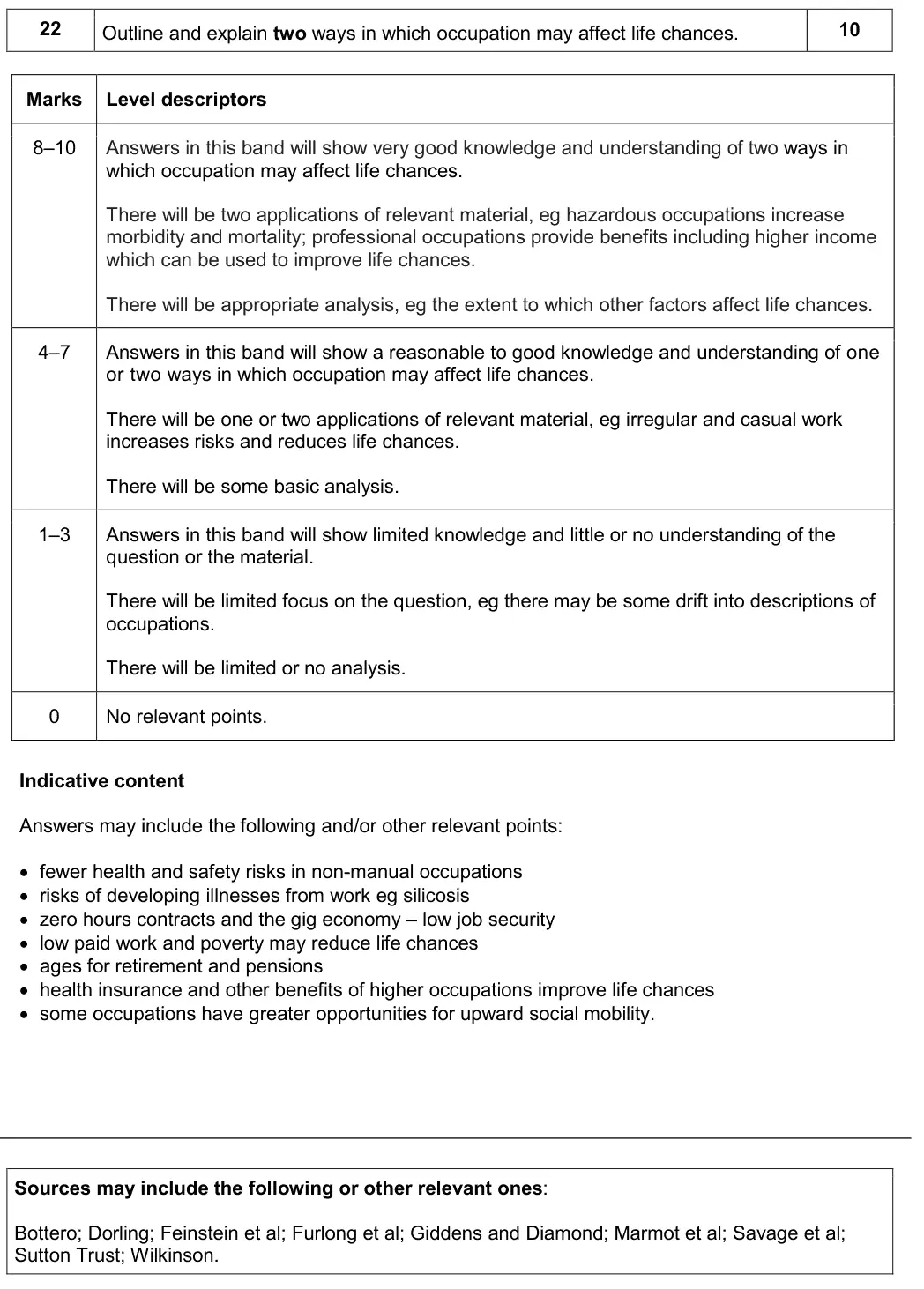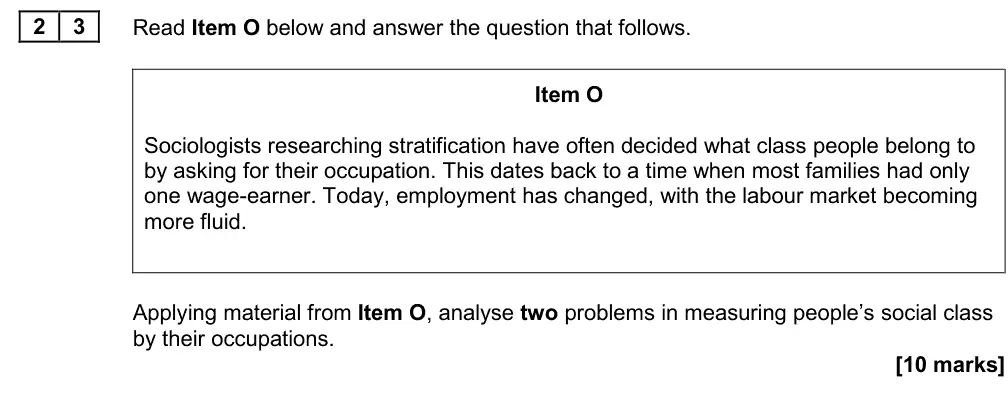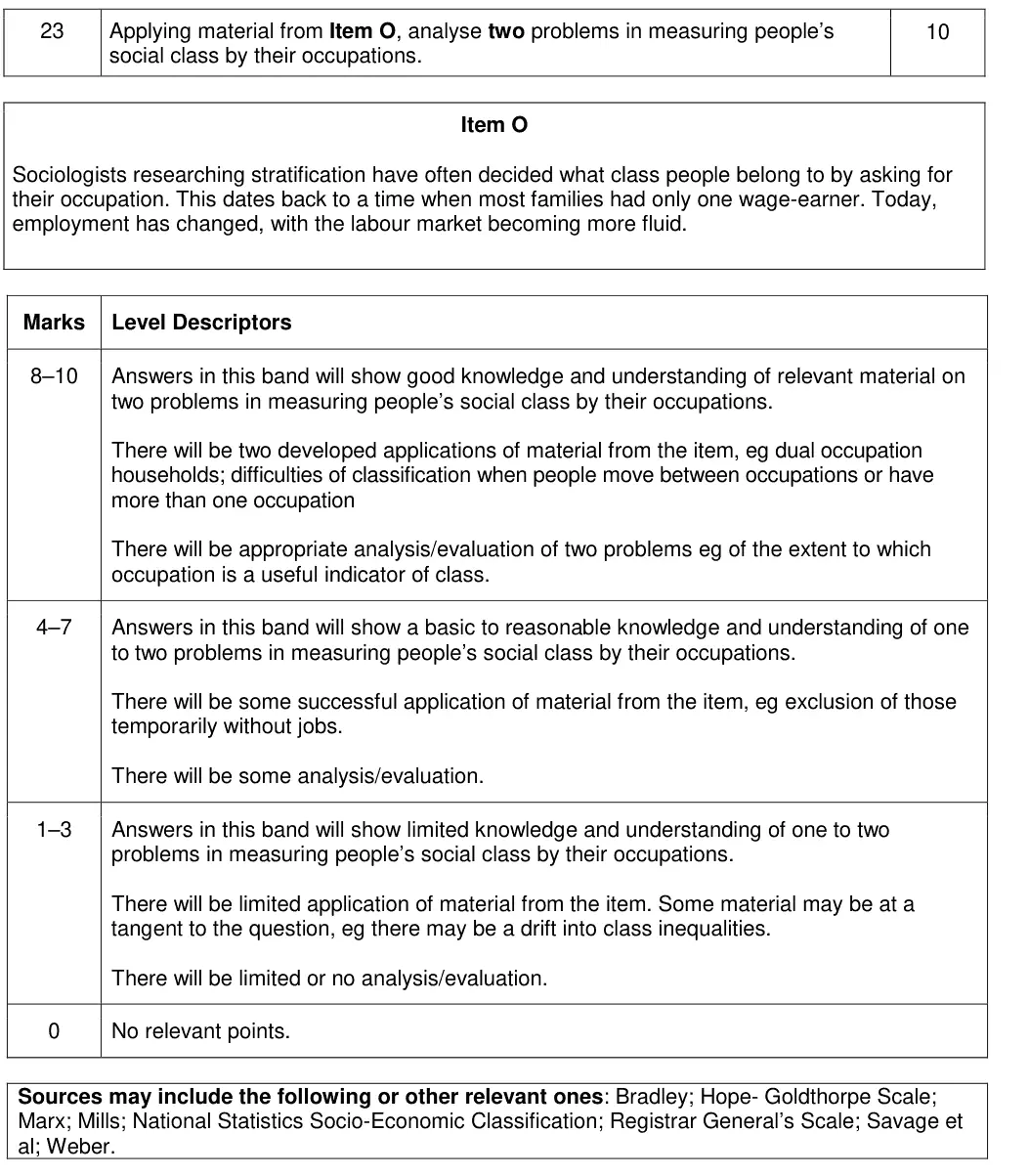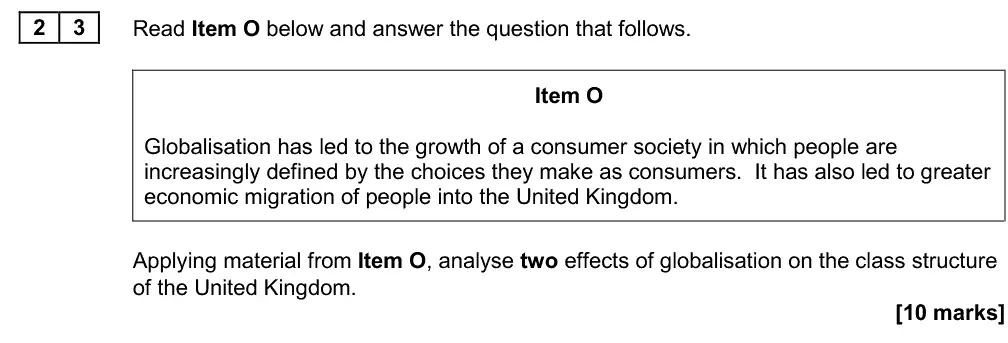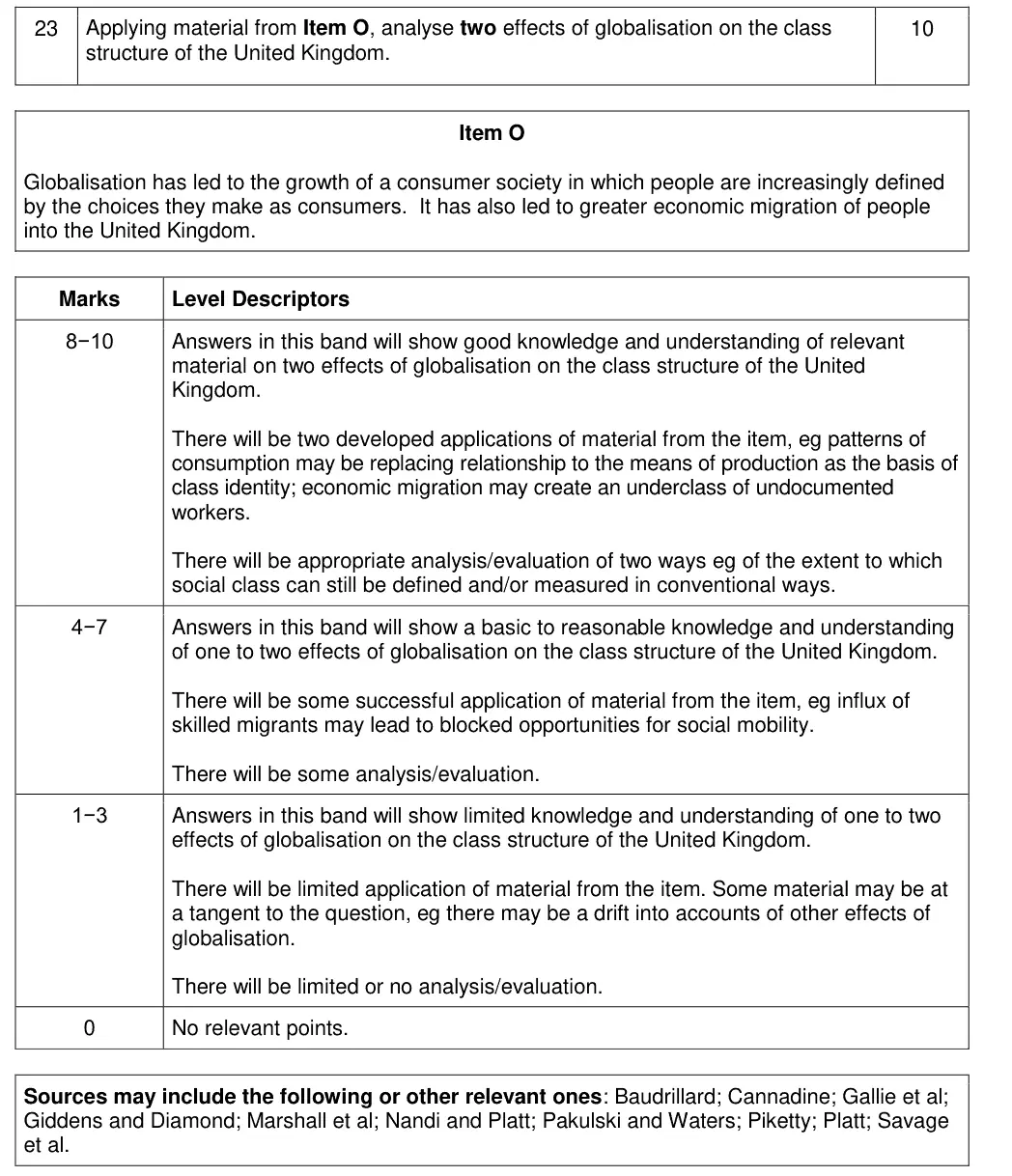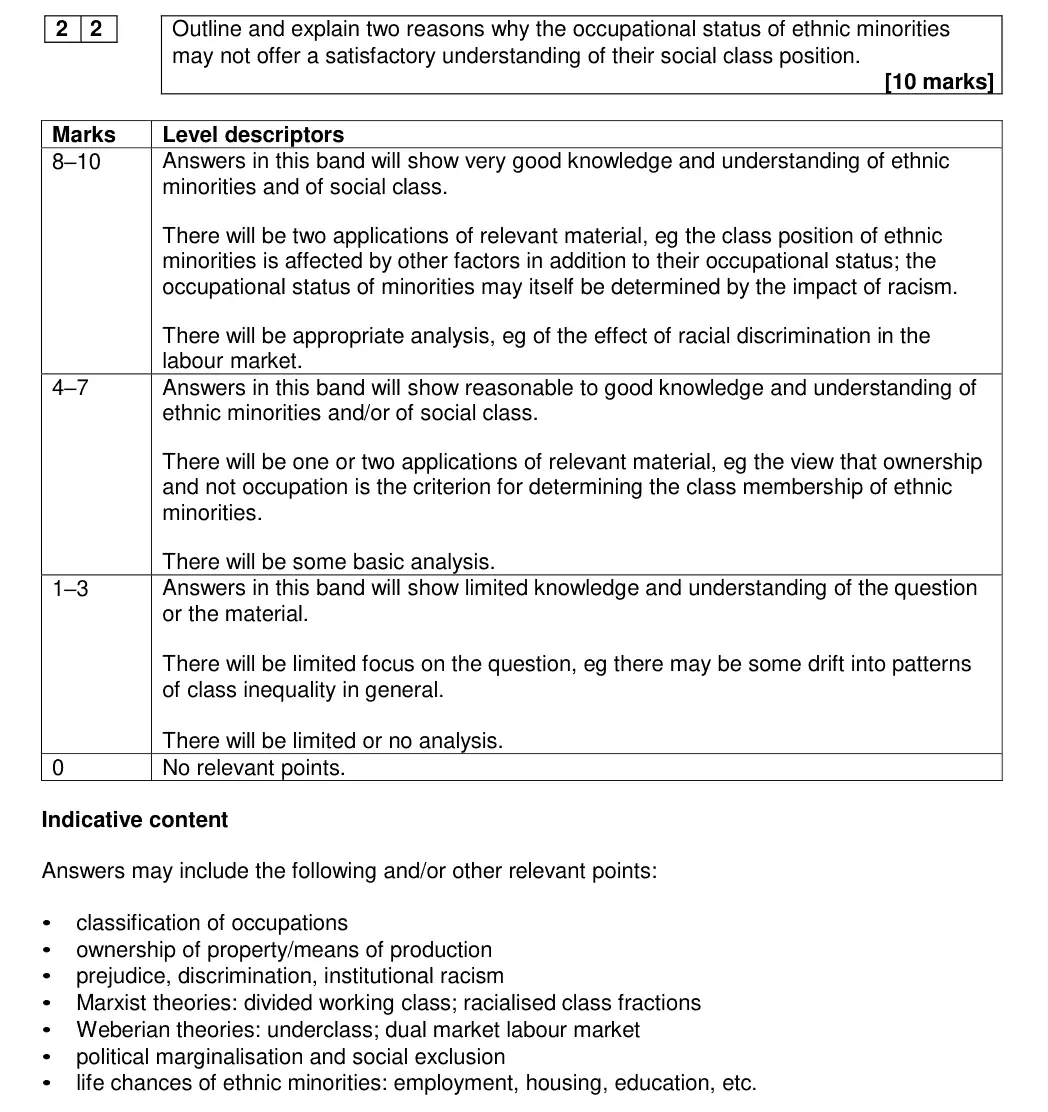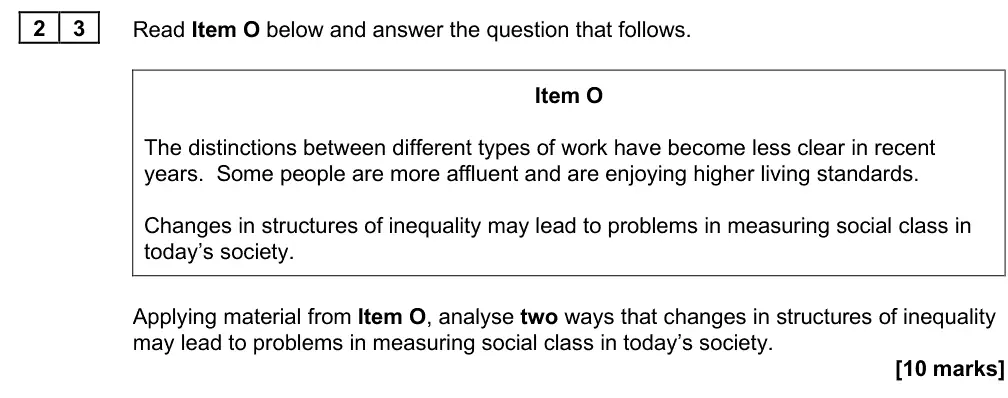
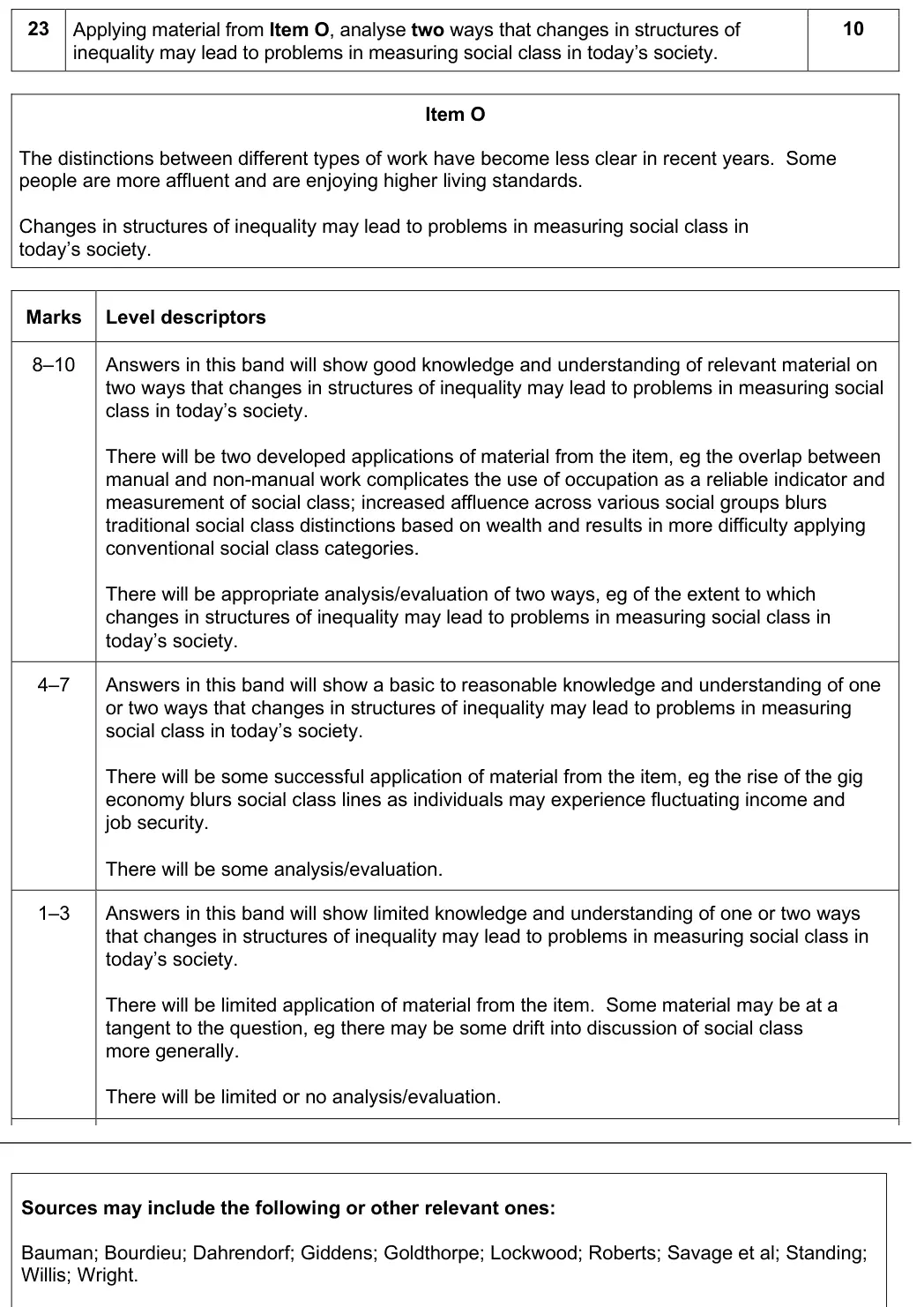
Mark scheme, including the levels grid and indicative content
Examiner's comment
The nature of these questions means that students cannot rely on reciting knowledge. Questions will ask them to bring together aspects of their sociological knowledge in ways they have not done before. It is therefore important for students to allow time to think about how to answer the question. Students should be aware that there are two types of ten-mark questions. These have different requirements and different mark schemes. There are different marks available for the assessment objectives. The items for 10 mark “analyse” questions are written to give prompts or “hooks” for student answers. These must be used to access application marks. Answers can indicate use of hooks by quoting, by a reference in parentheses or by wording (e.g. “As the item says…”). Items end with a sentence restating the question; the hooks are in the preceding part of the item. Introductions and conclusions are not required for 10-mark questions, are unlikely to help students and take up time. It is helpful if answers are set out to clearly indicate the two answers, with wording such as “One way/reason is…” or by starting a new paragraph for the second point. Answers that give more than two answers are unlikely to develop two of them sufficiently. The most successful answers to 10-mark questions were focused, clearly stating a point that addressed the question and then developing it, using sociological concepts, evidence such as an example and, where appropriate, theory. Some answers showed difficulty in developing effective answers from the hooks. Examples of the convergence of different types of occupation and how that process might pose issues of categorisation for classifications such as the National Statistics Socio-economic Classification only featured in a minority of answers.
Notes from the mark scheme and report
- item hooks: blurring of manual/non-manual work (occupation as indicator) and rising affluence (blurring class lines)
- few linked this to classification schemes such as NS-SEC
- drift into class in general = 1–3