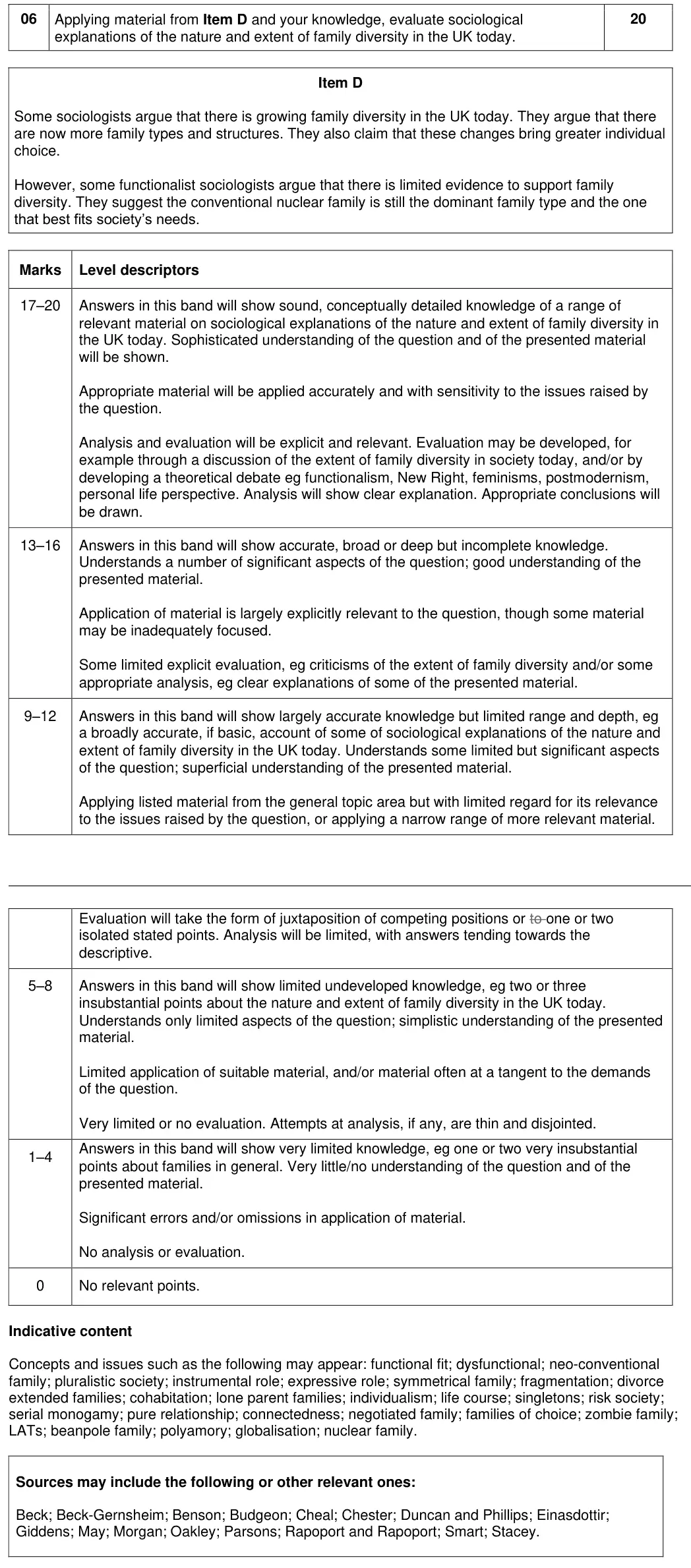
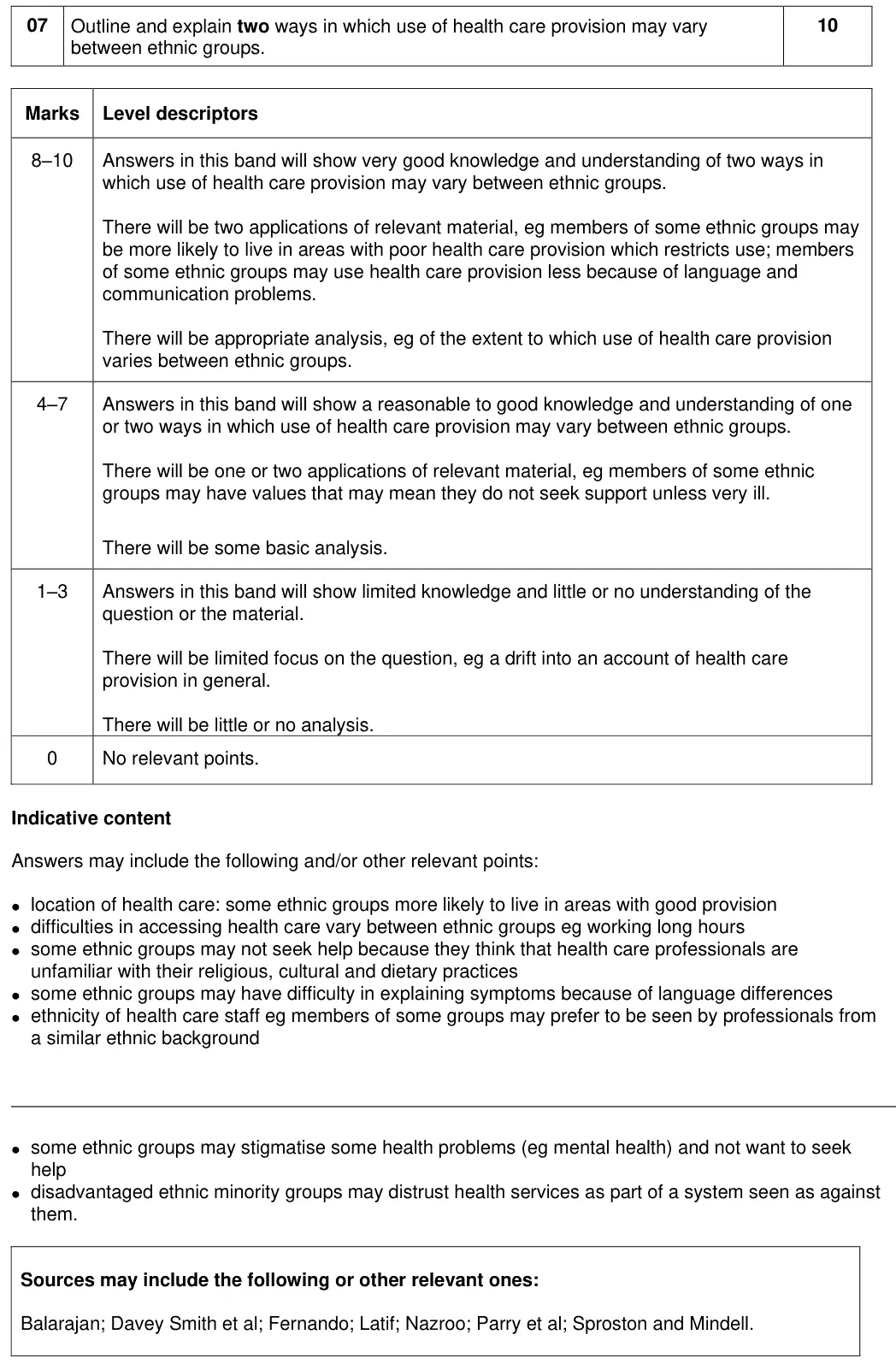
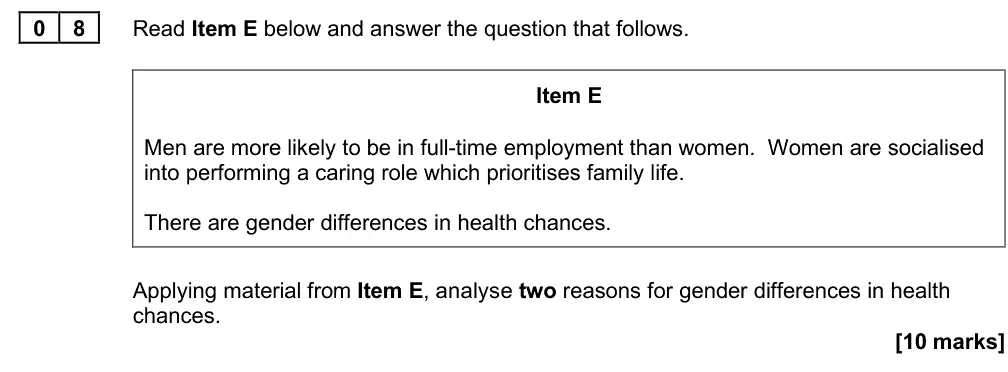
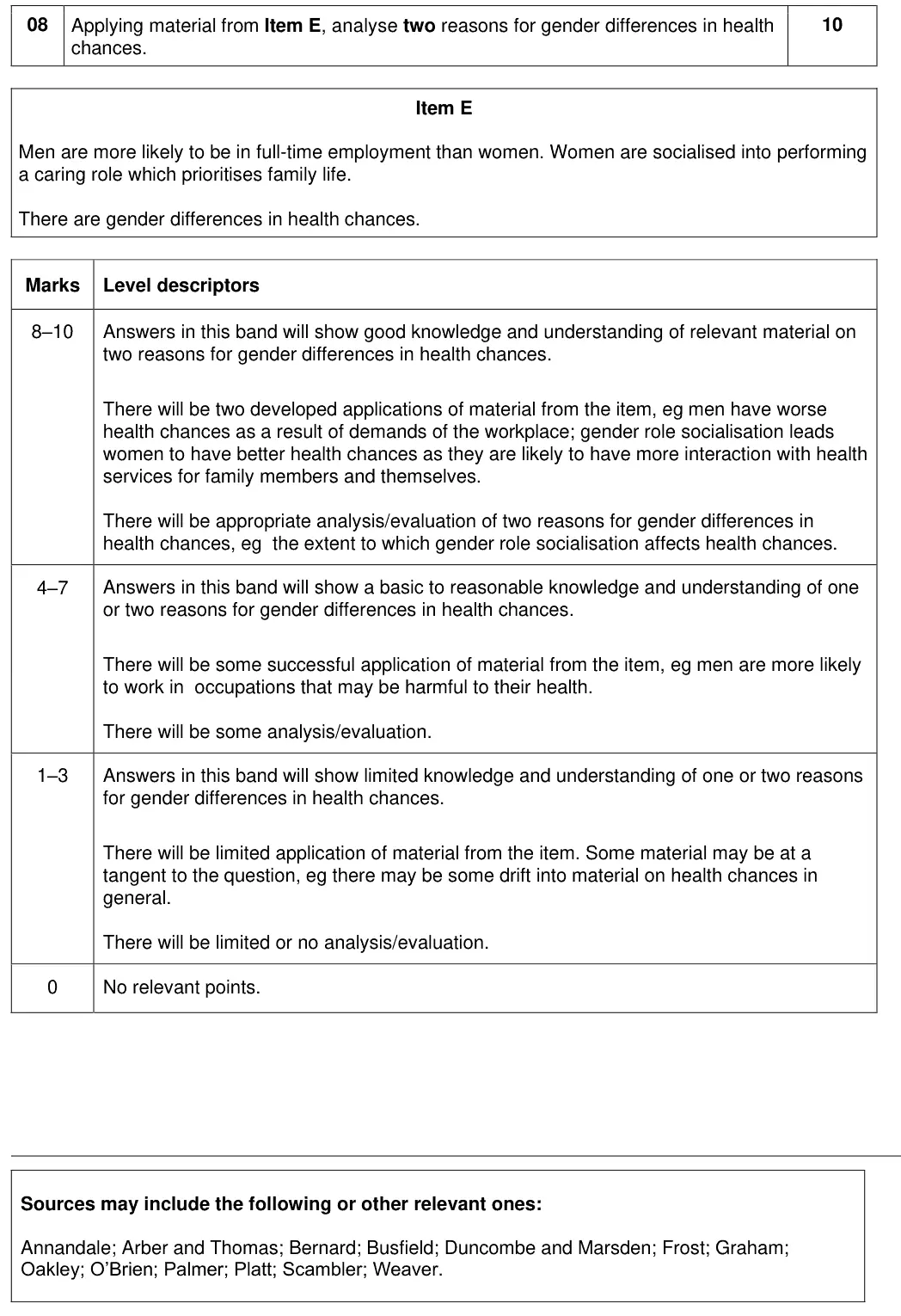
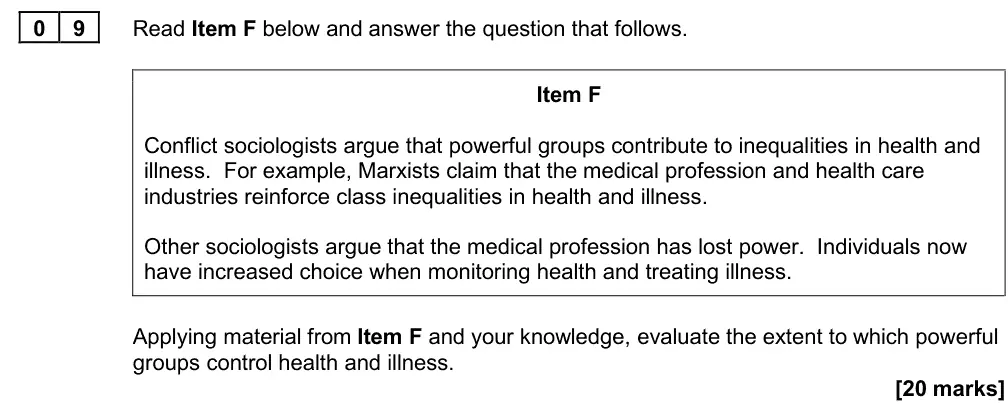
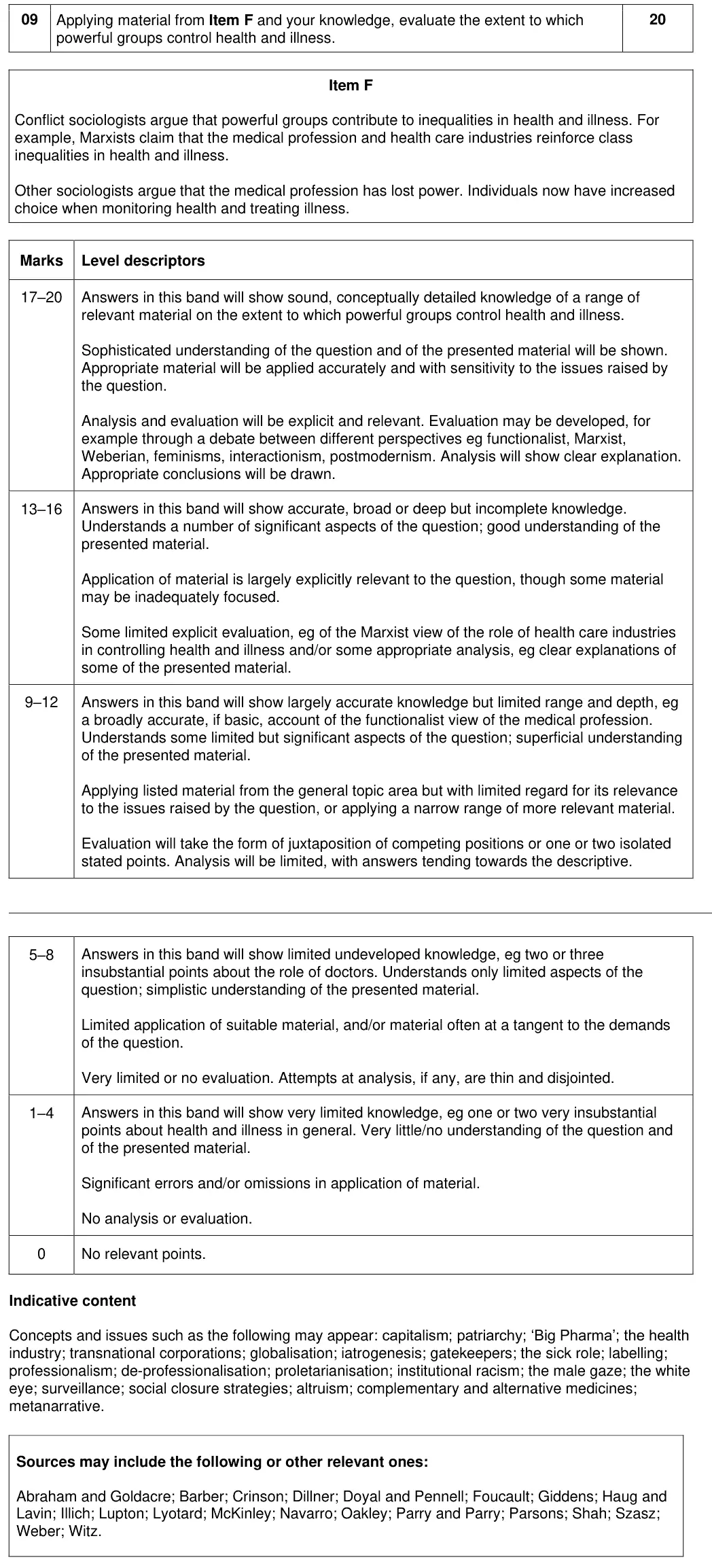
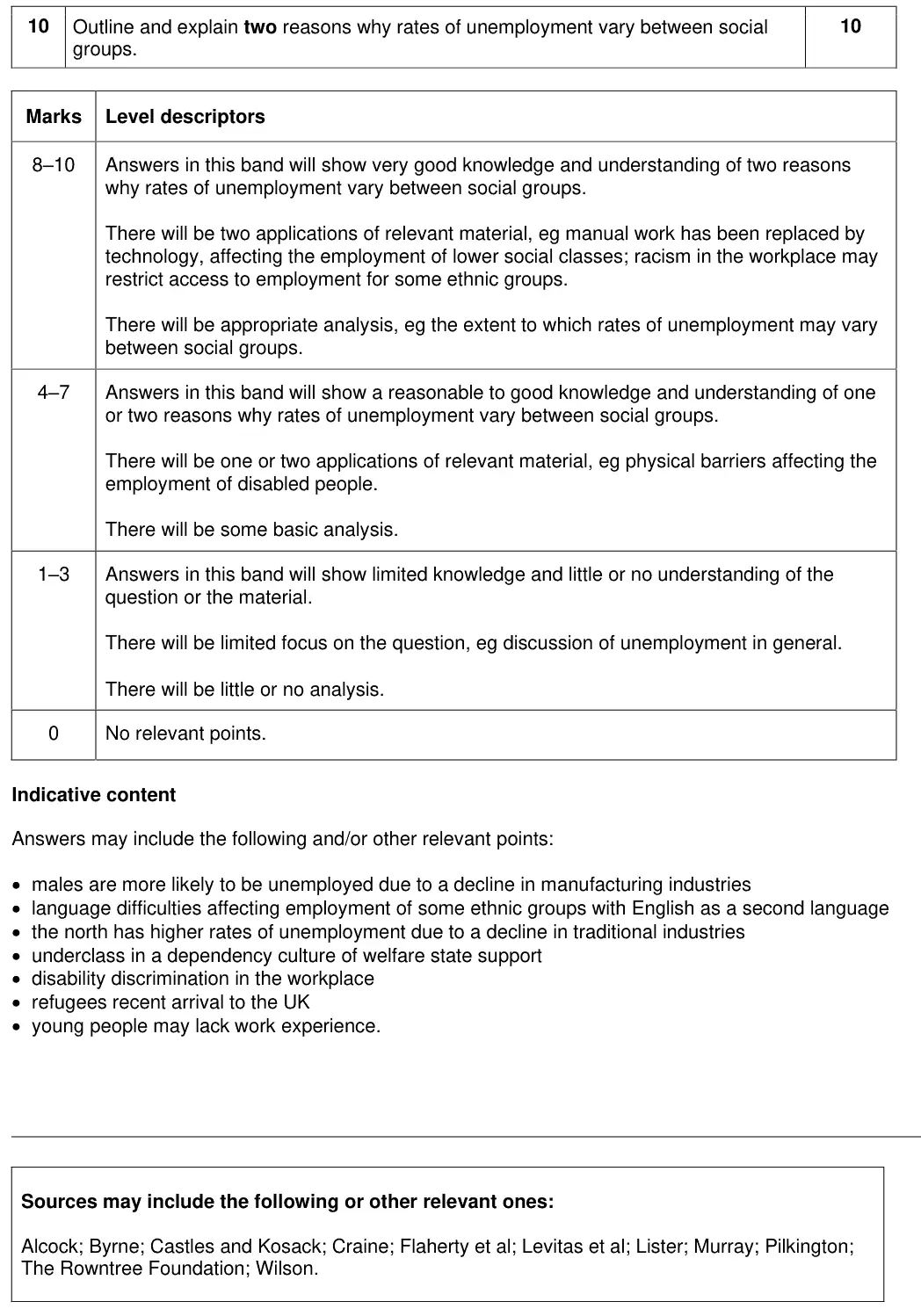
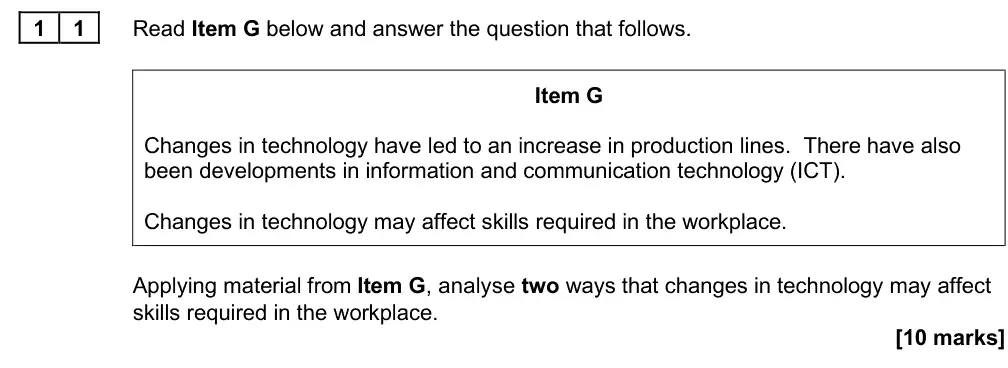
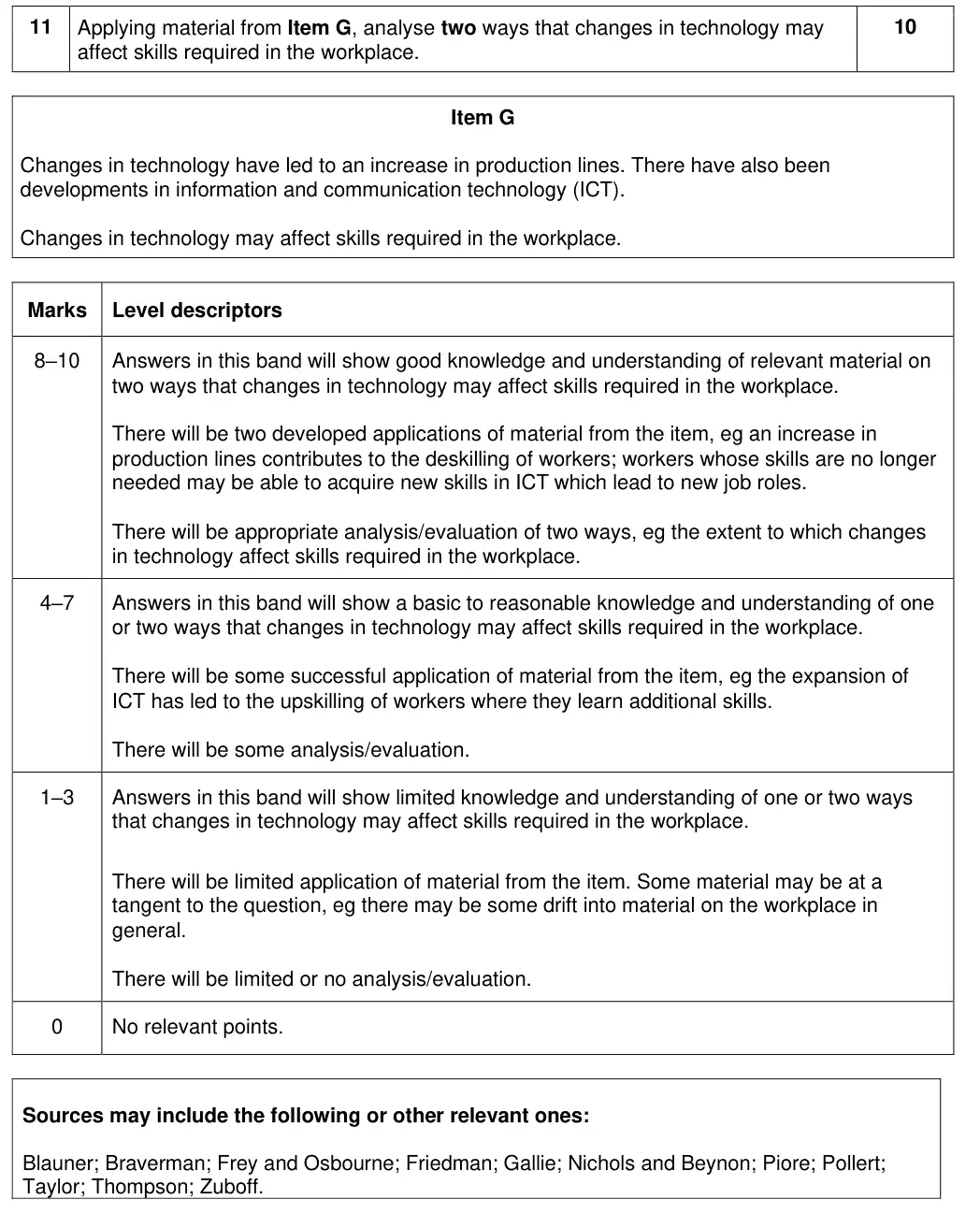
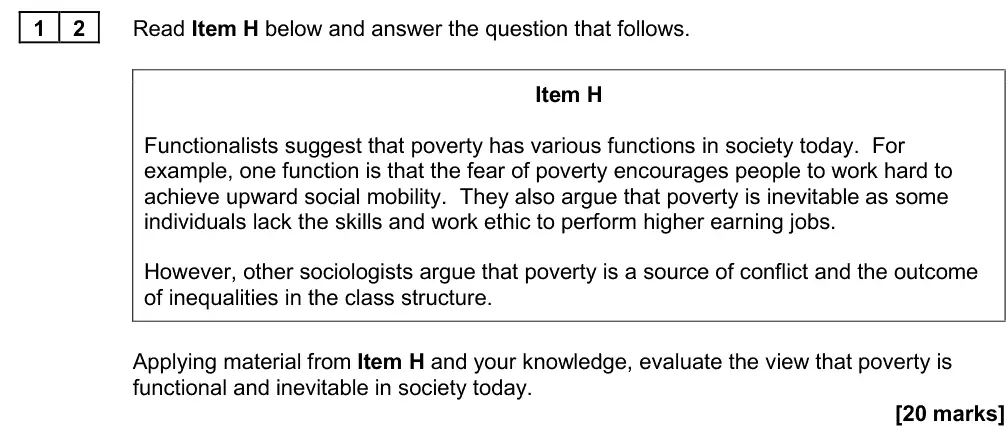
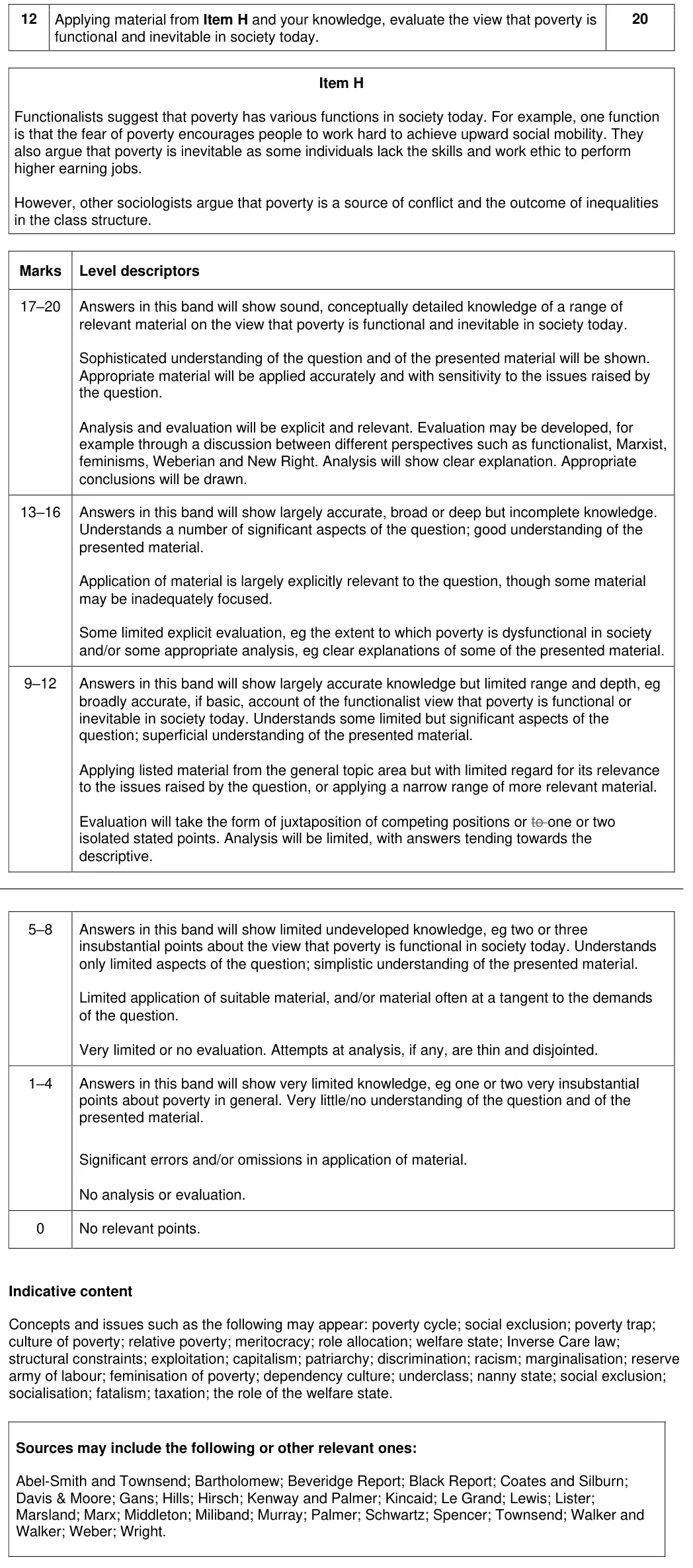
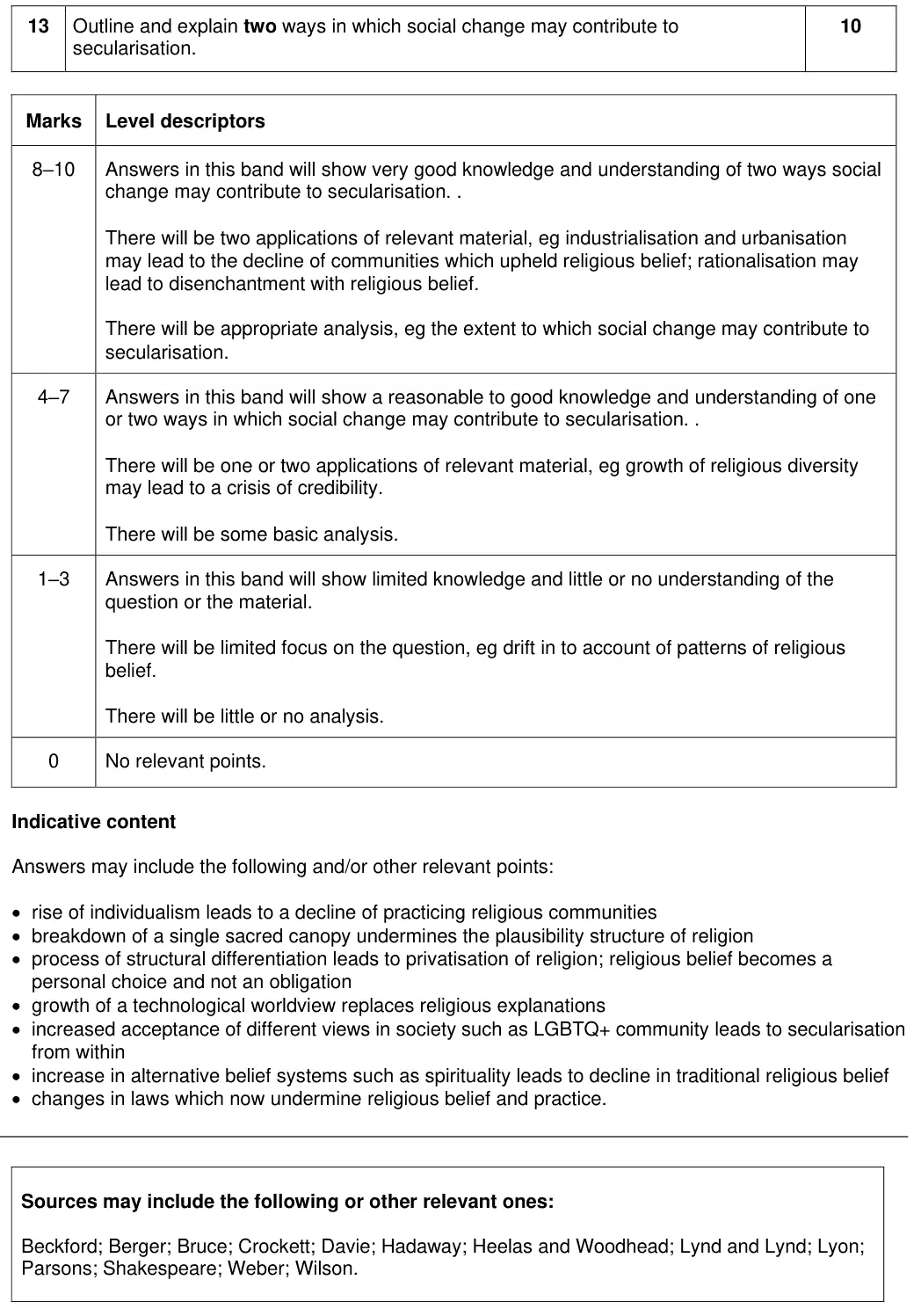
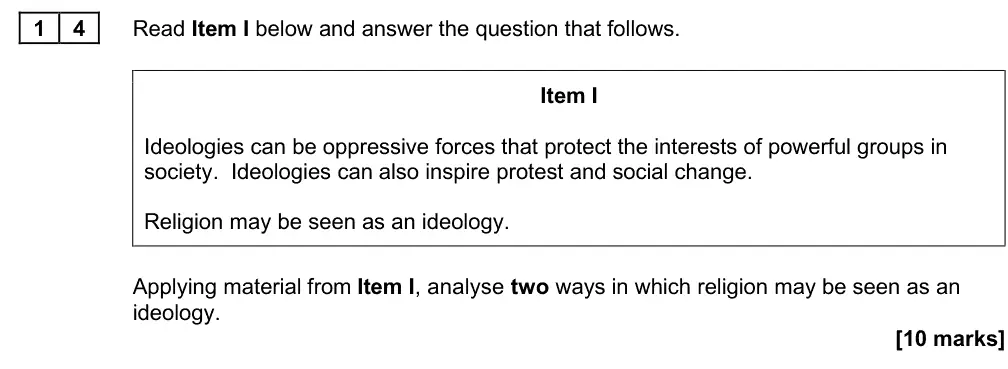
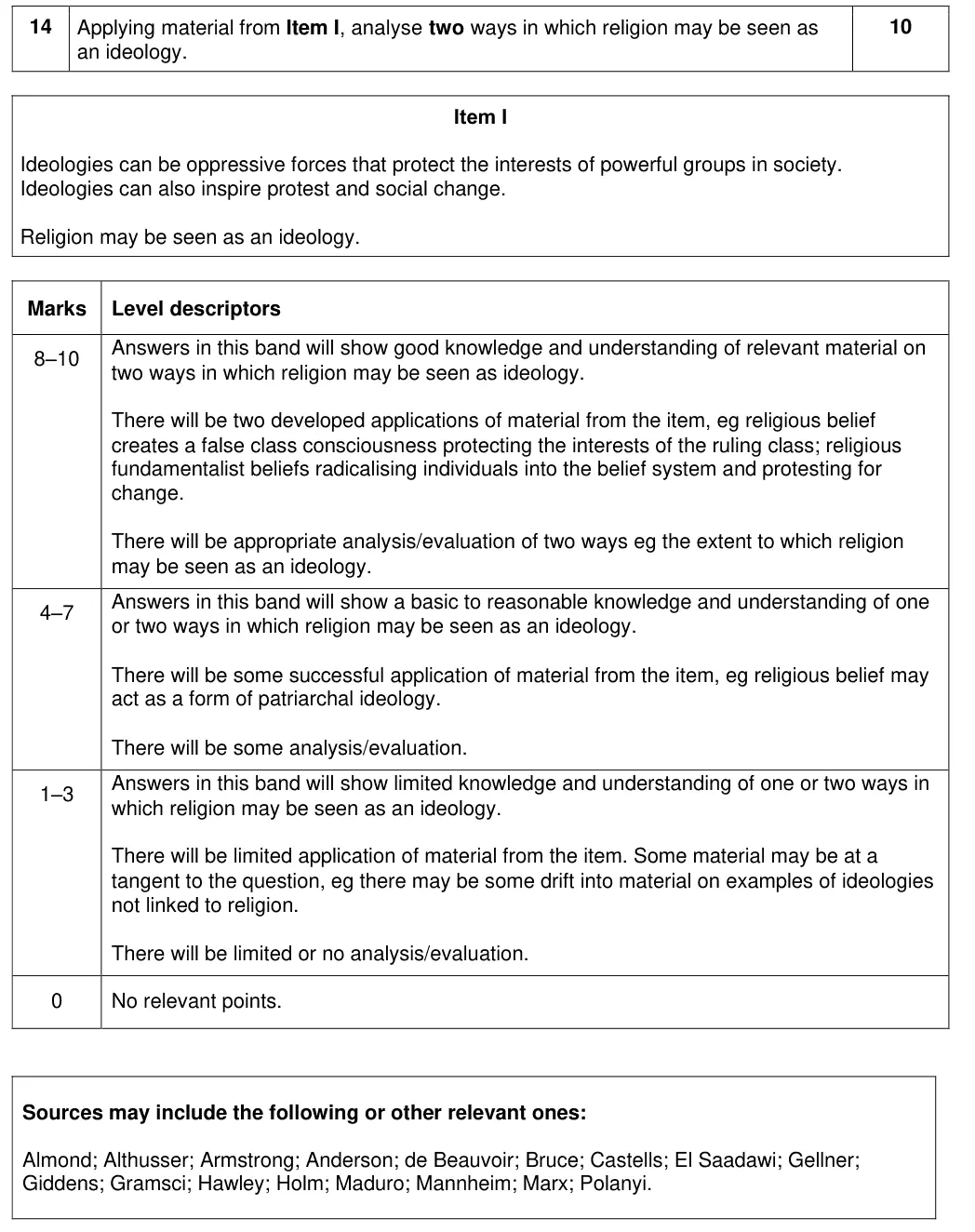
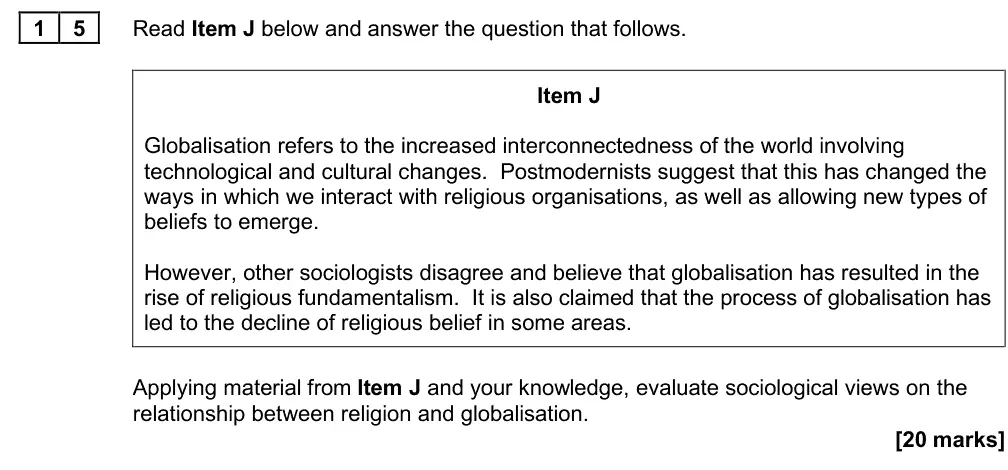
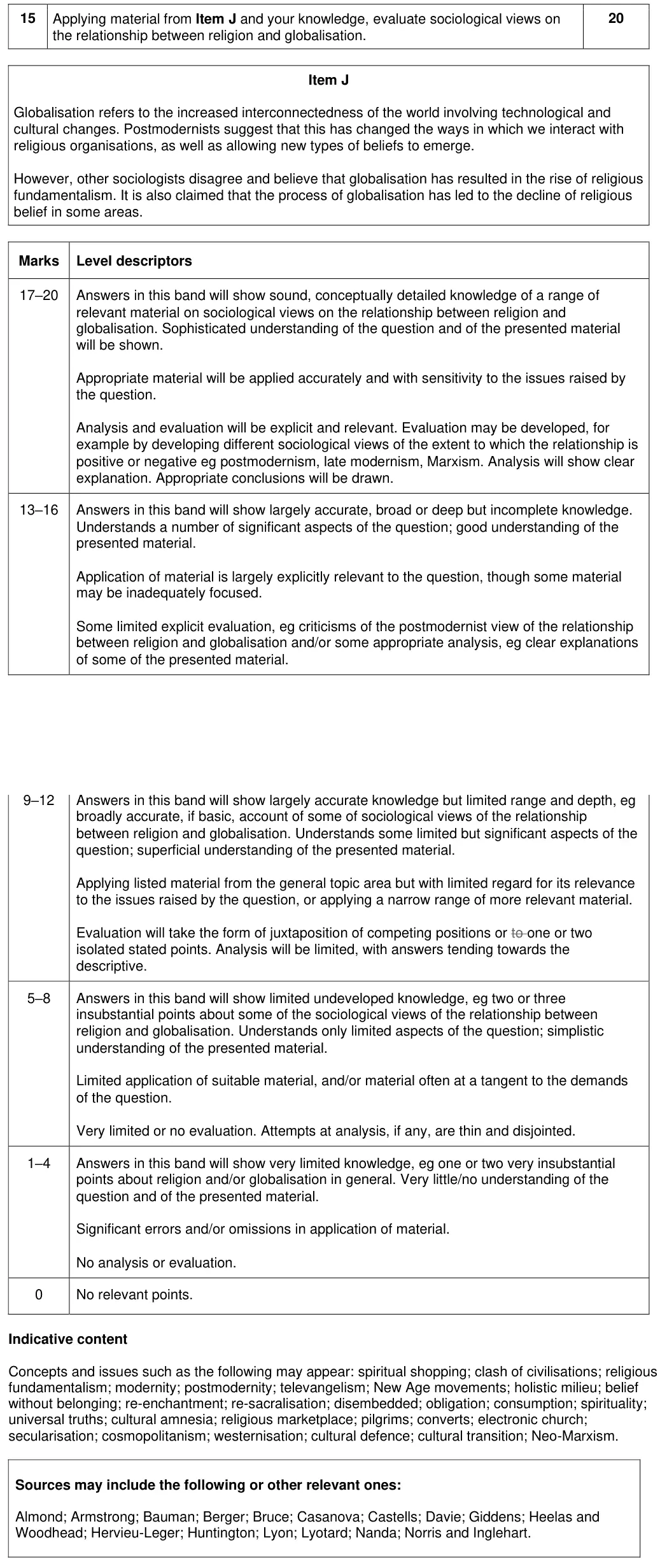
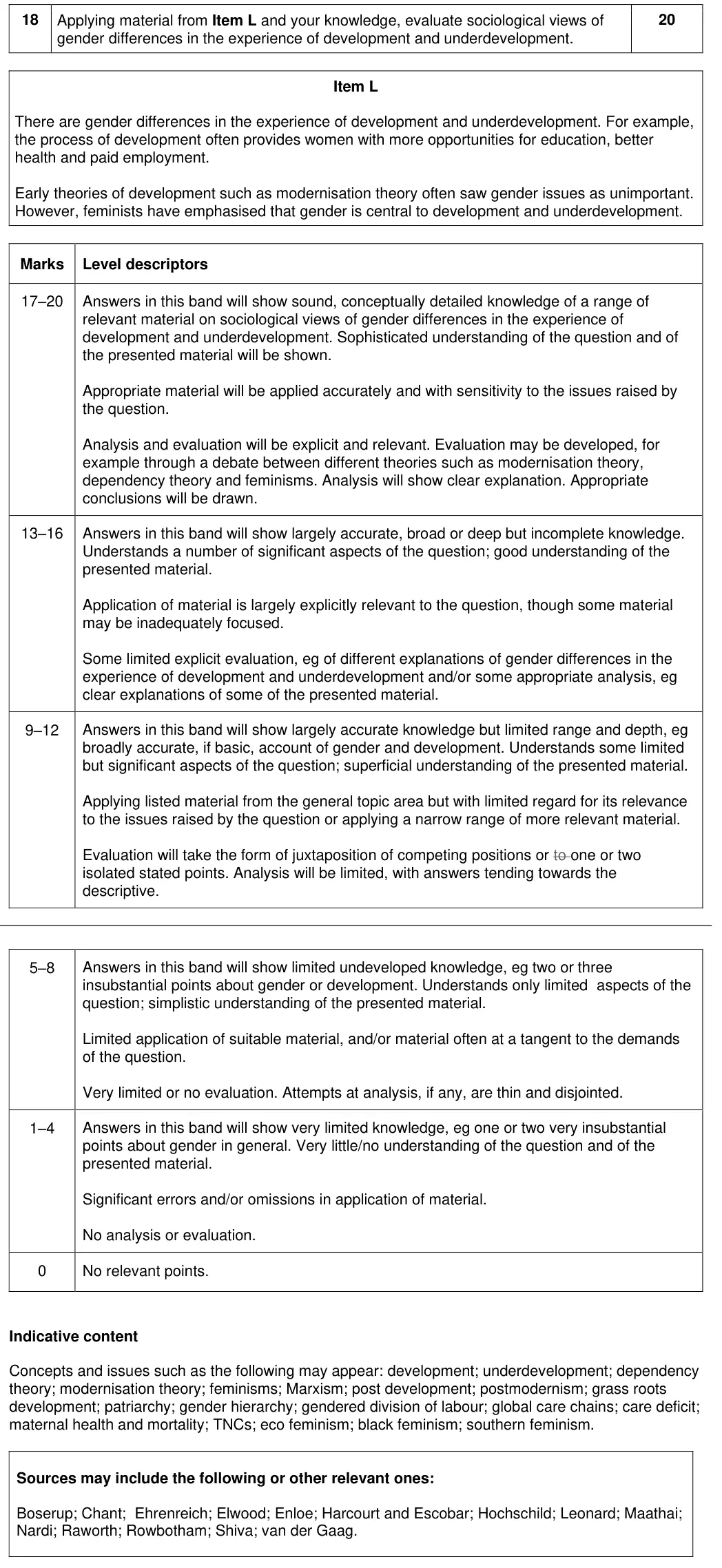
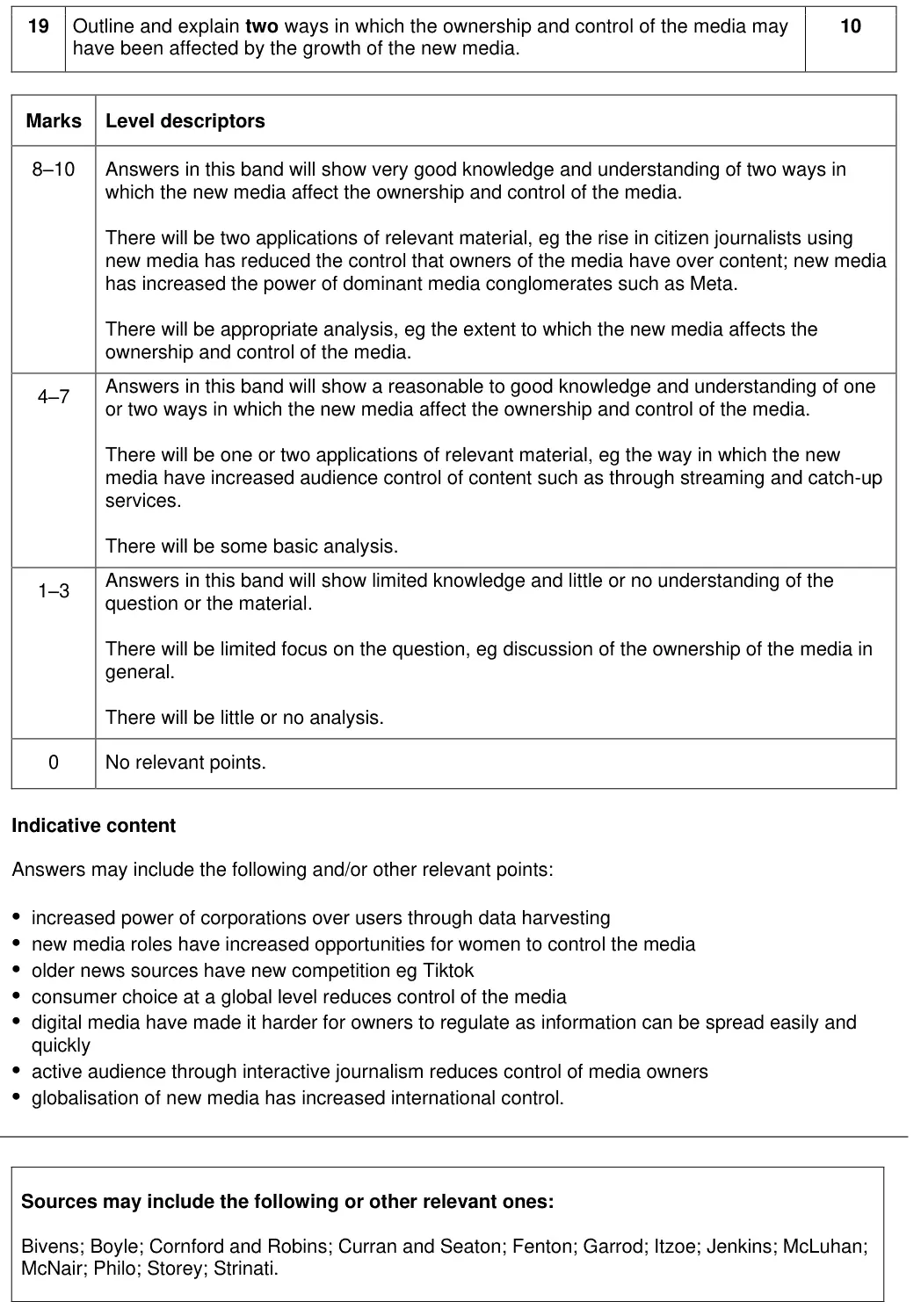
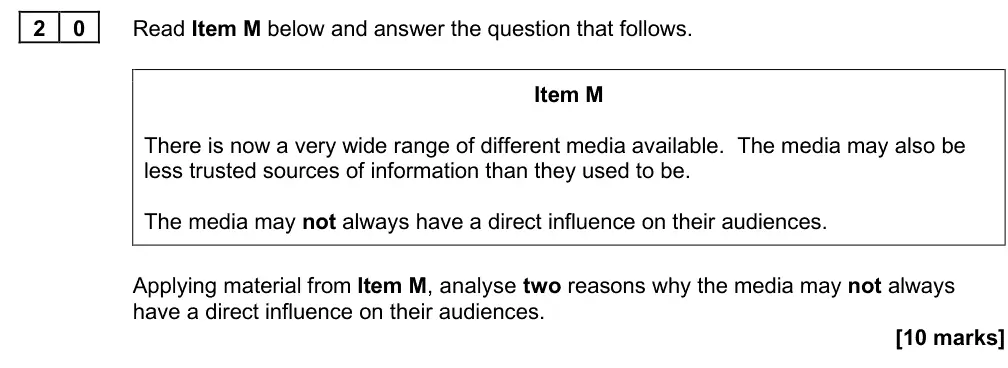
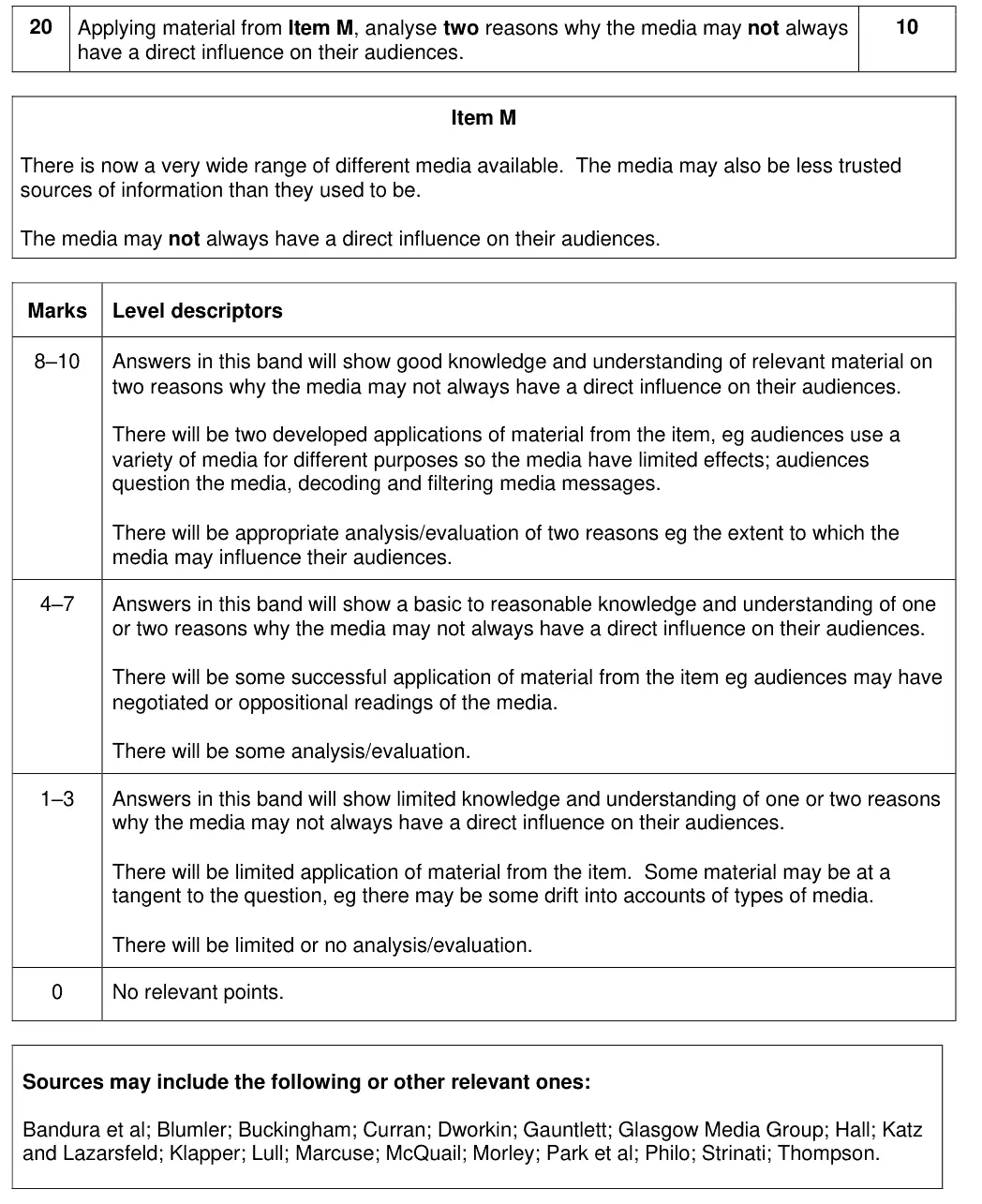
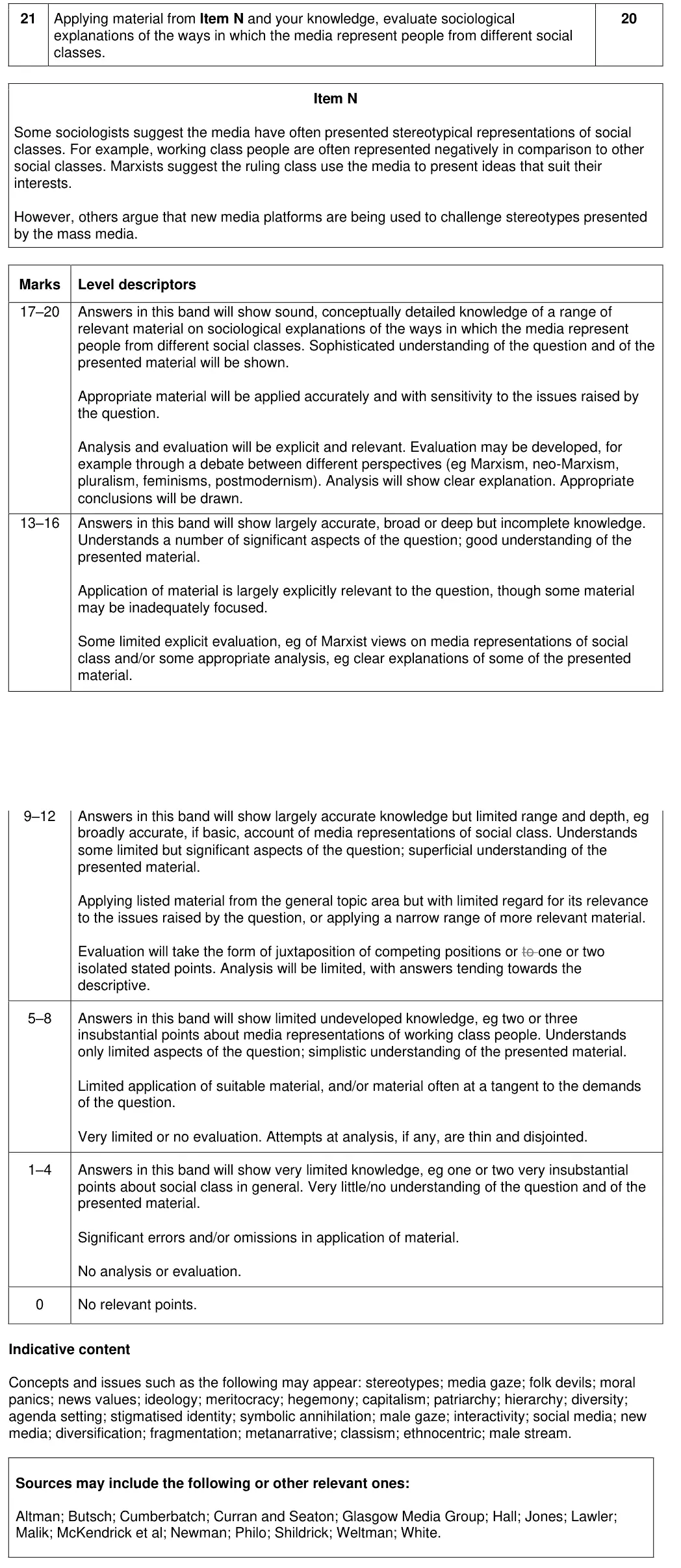
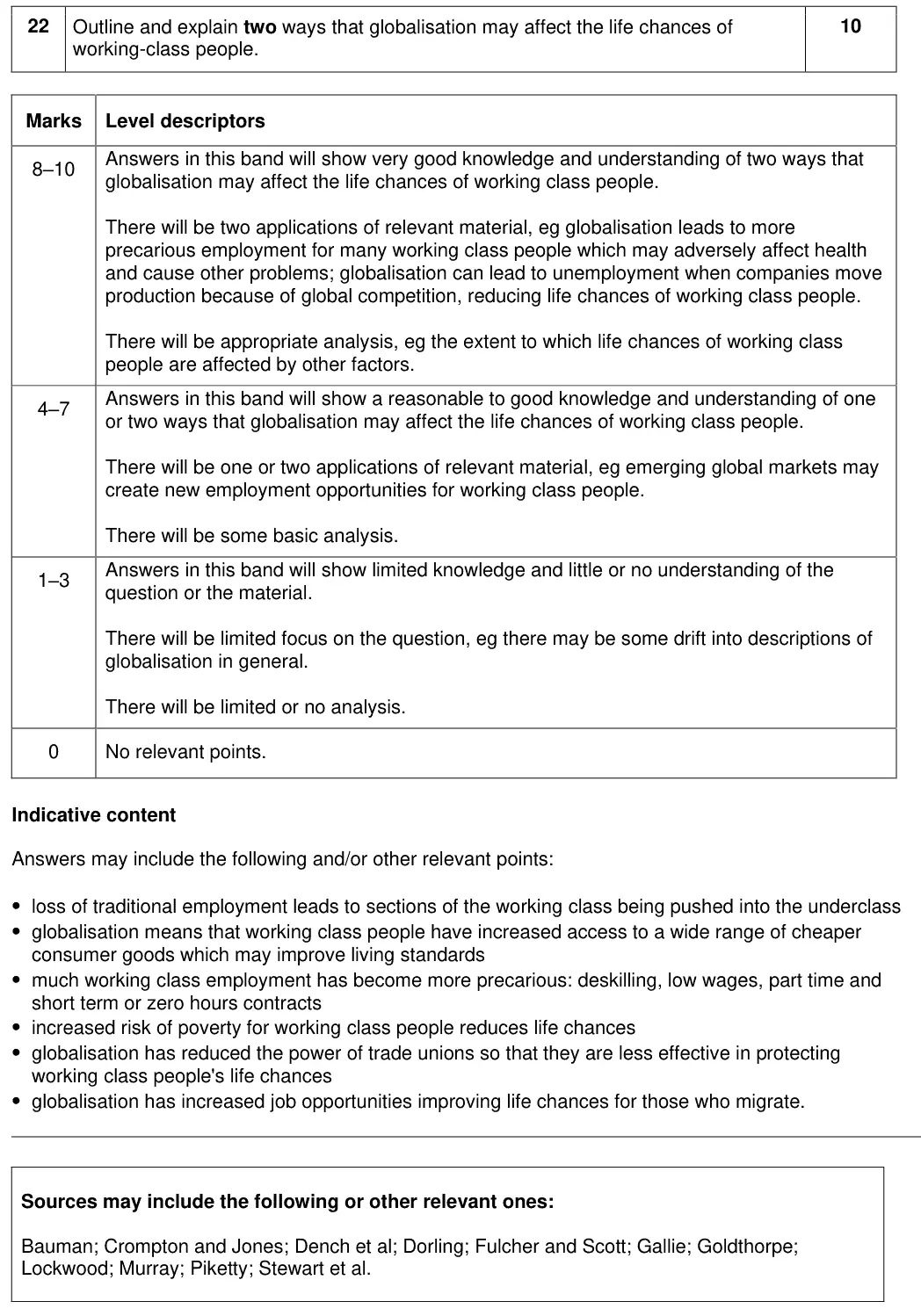
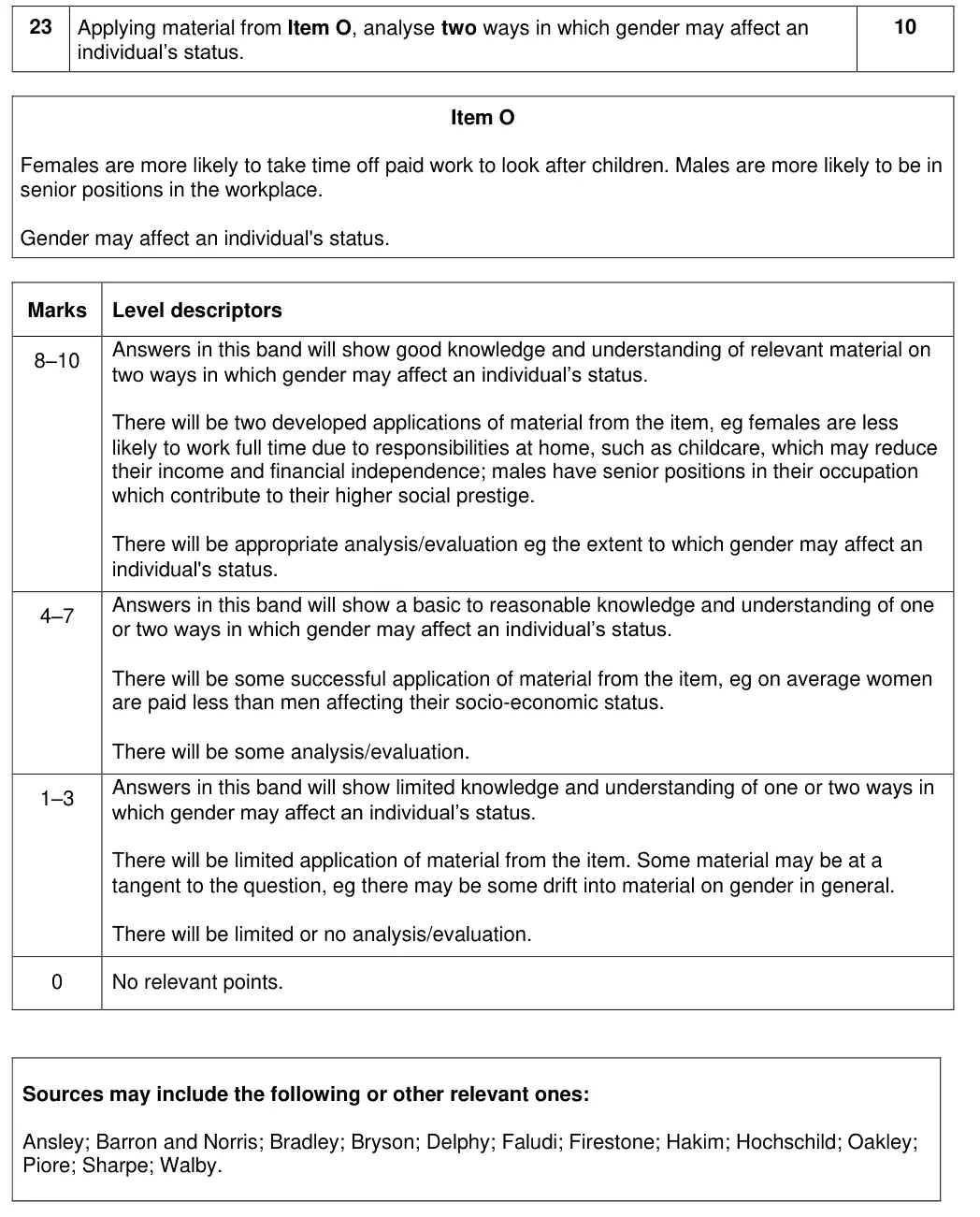
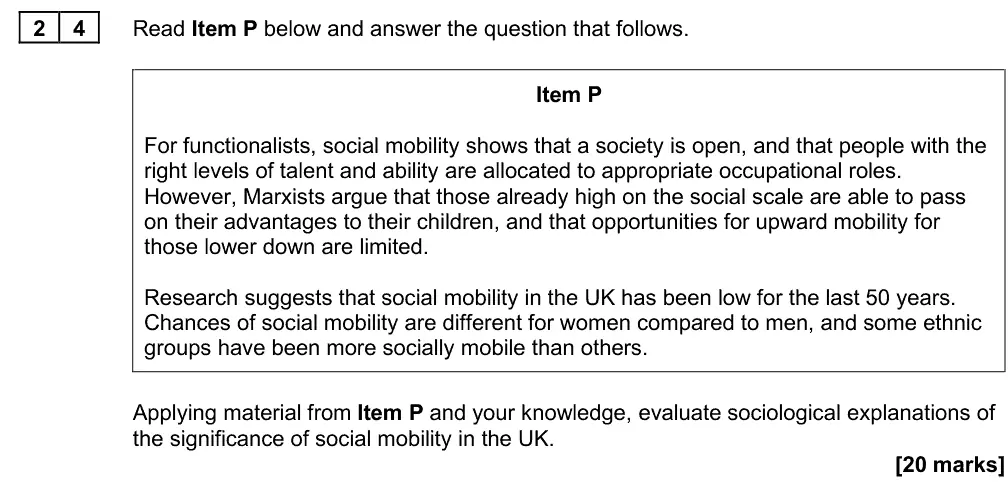
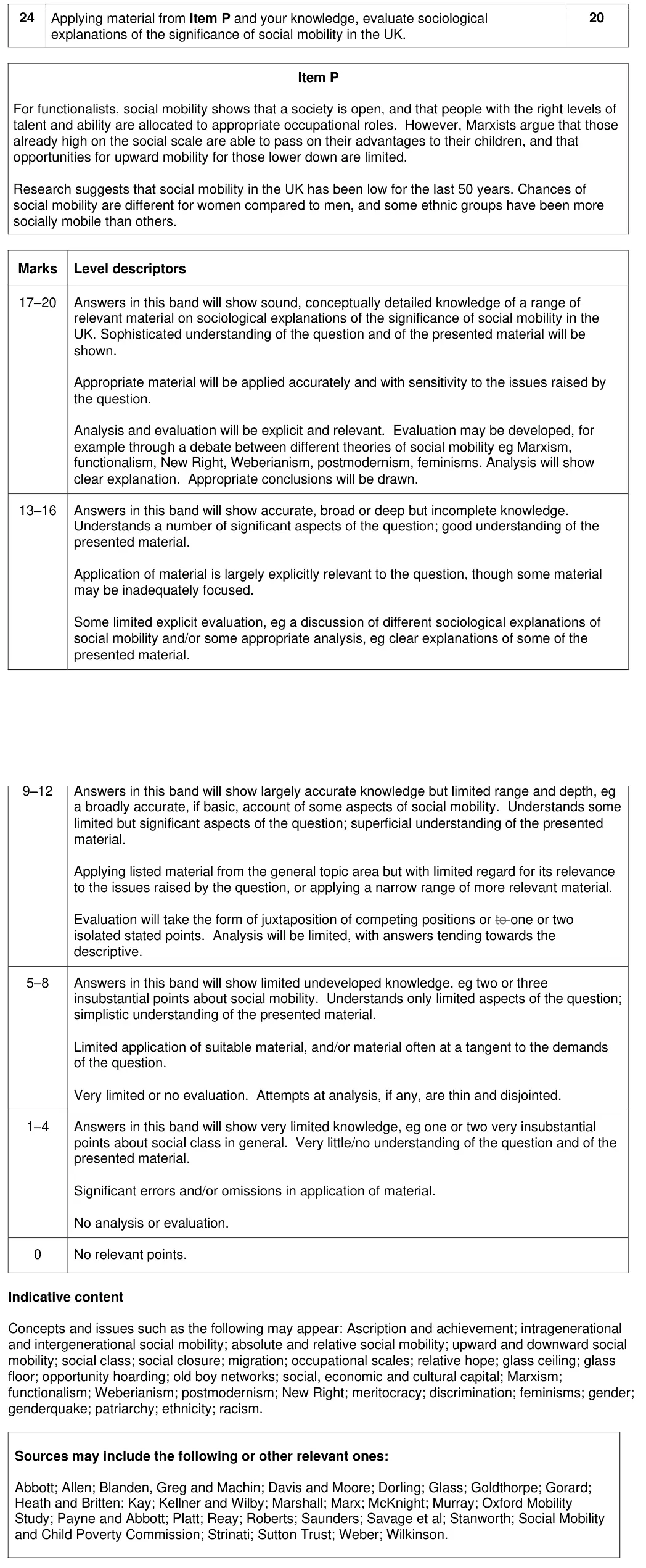
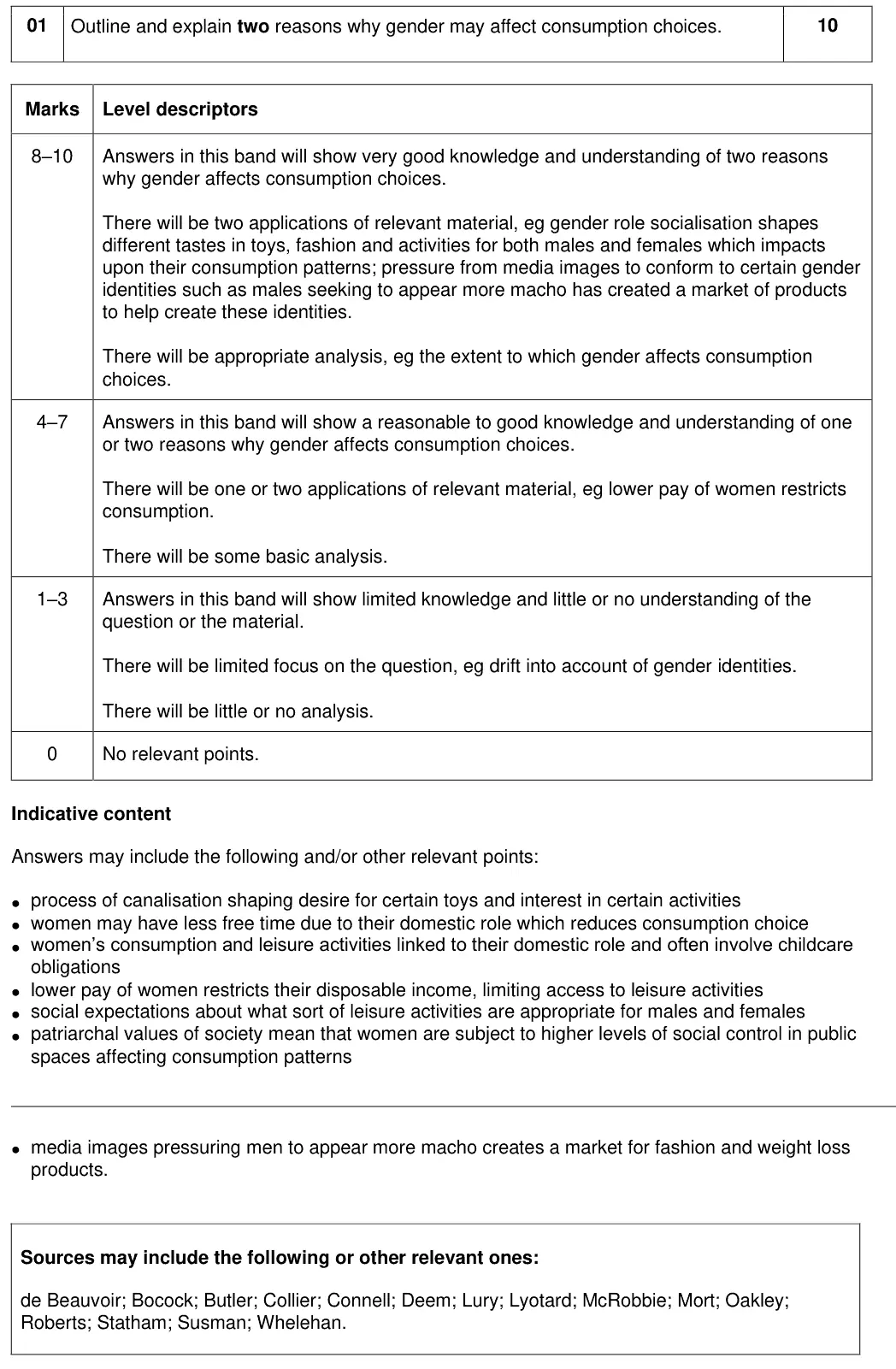
Mark scheme, including the levels grid and indicative content
Examiner's comment
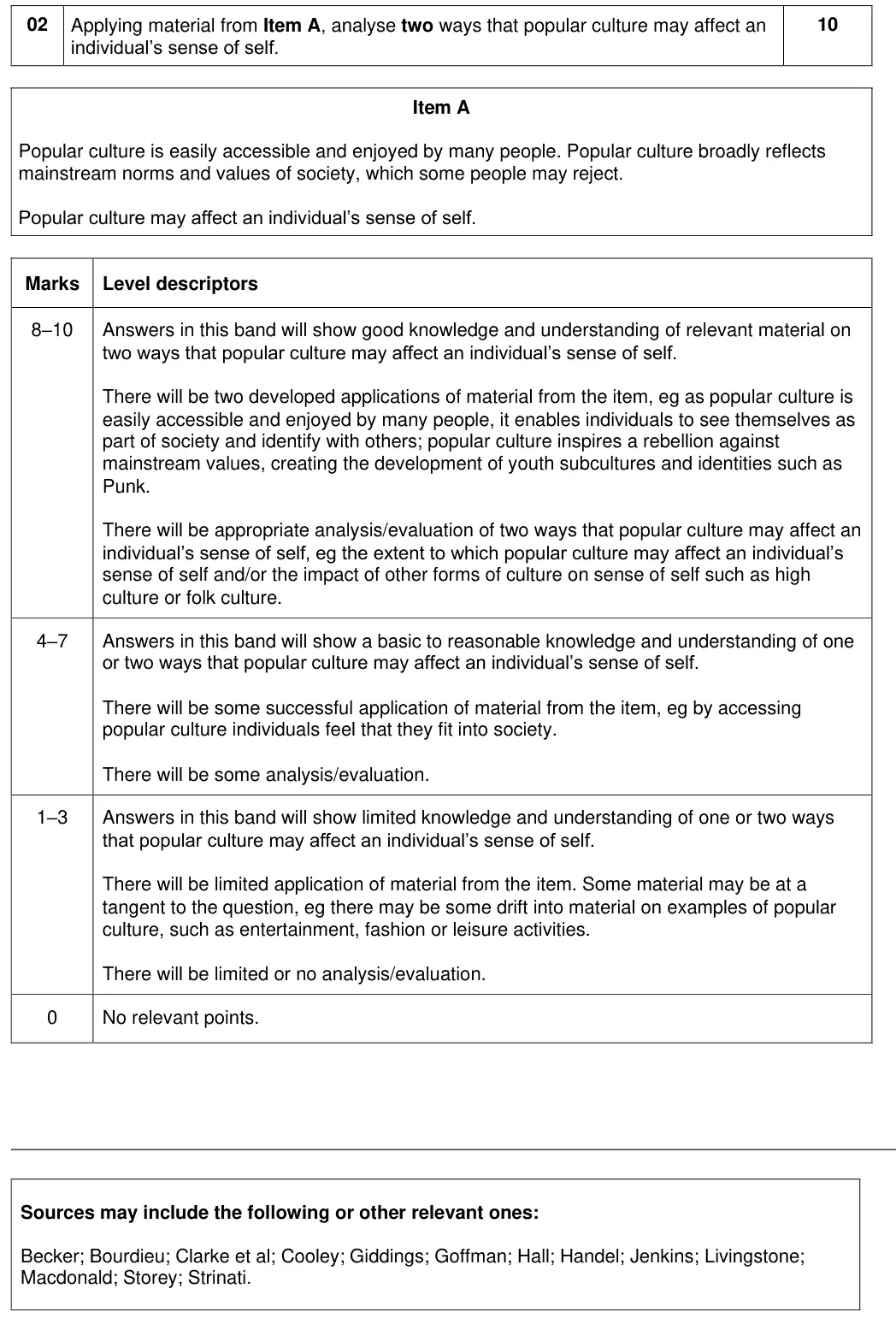
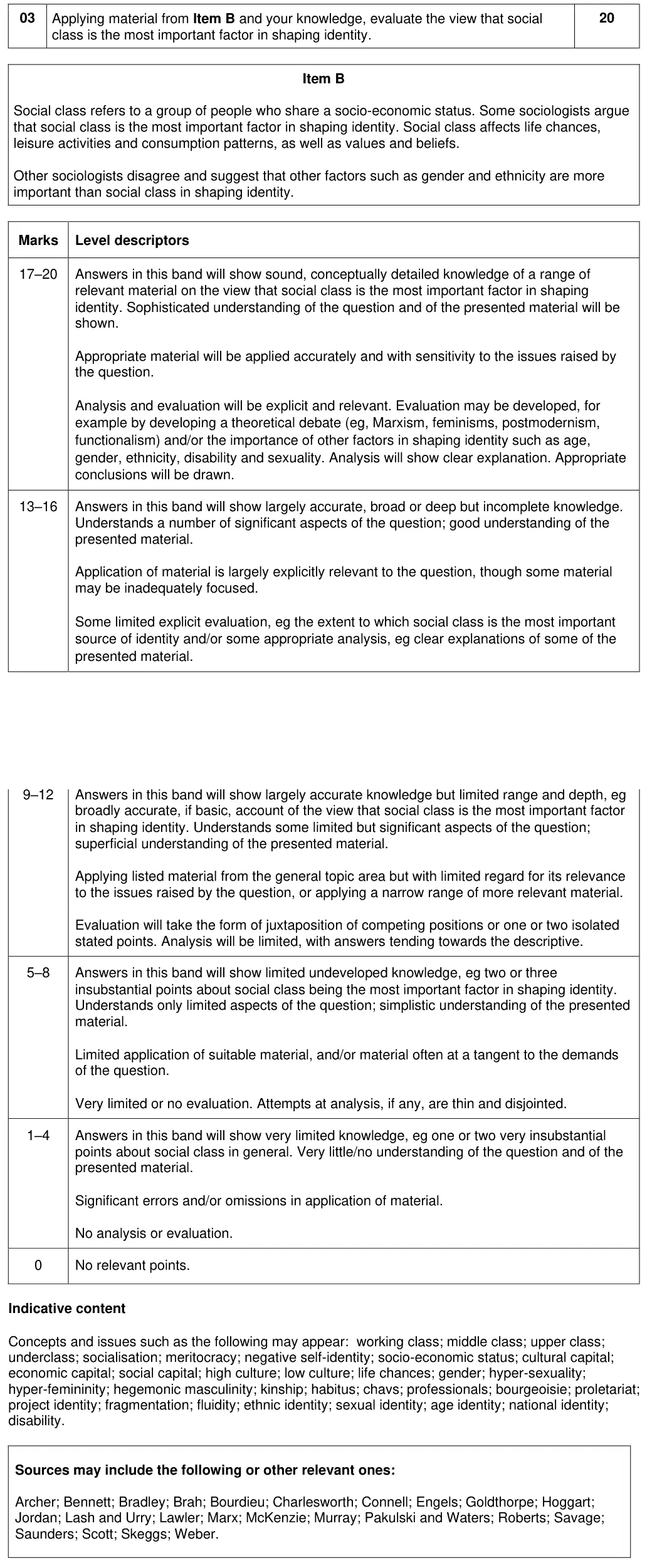
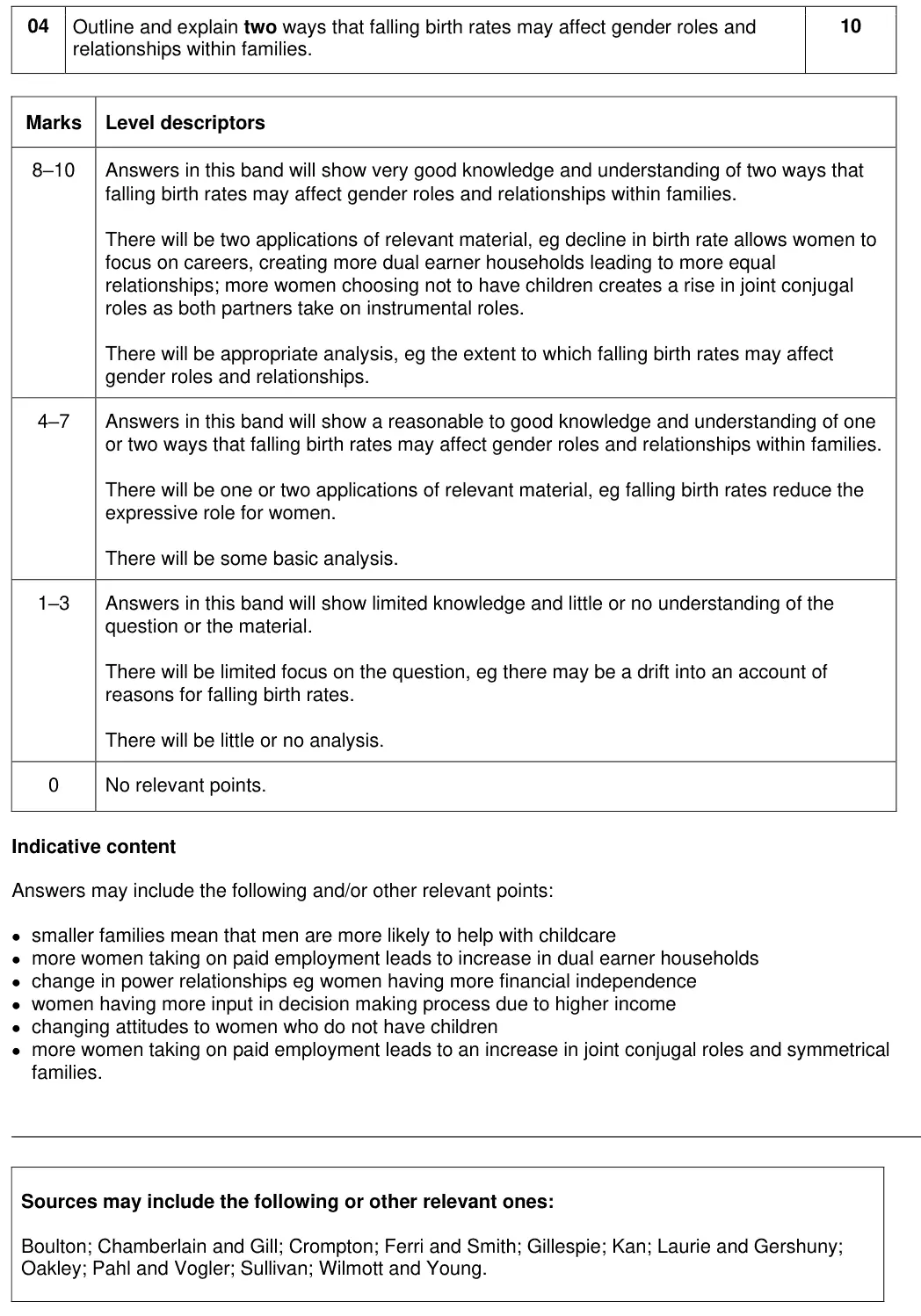
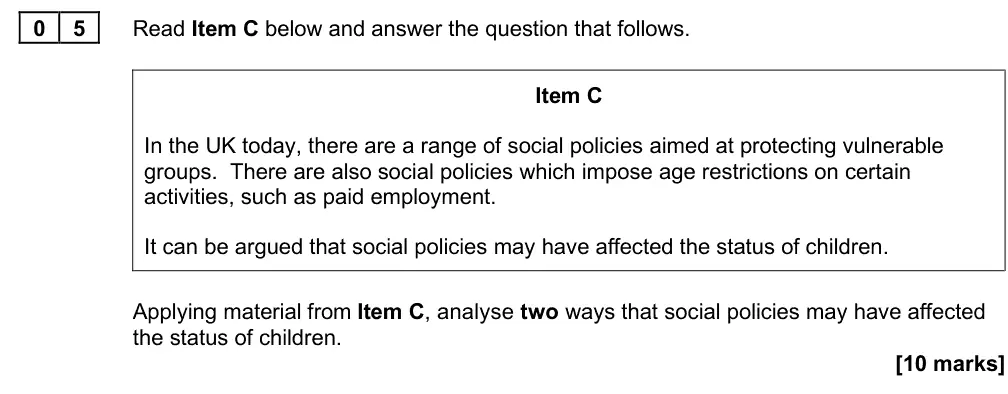
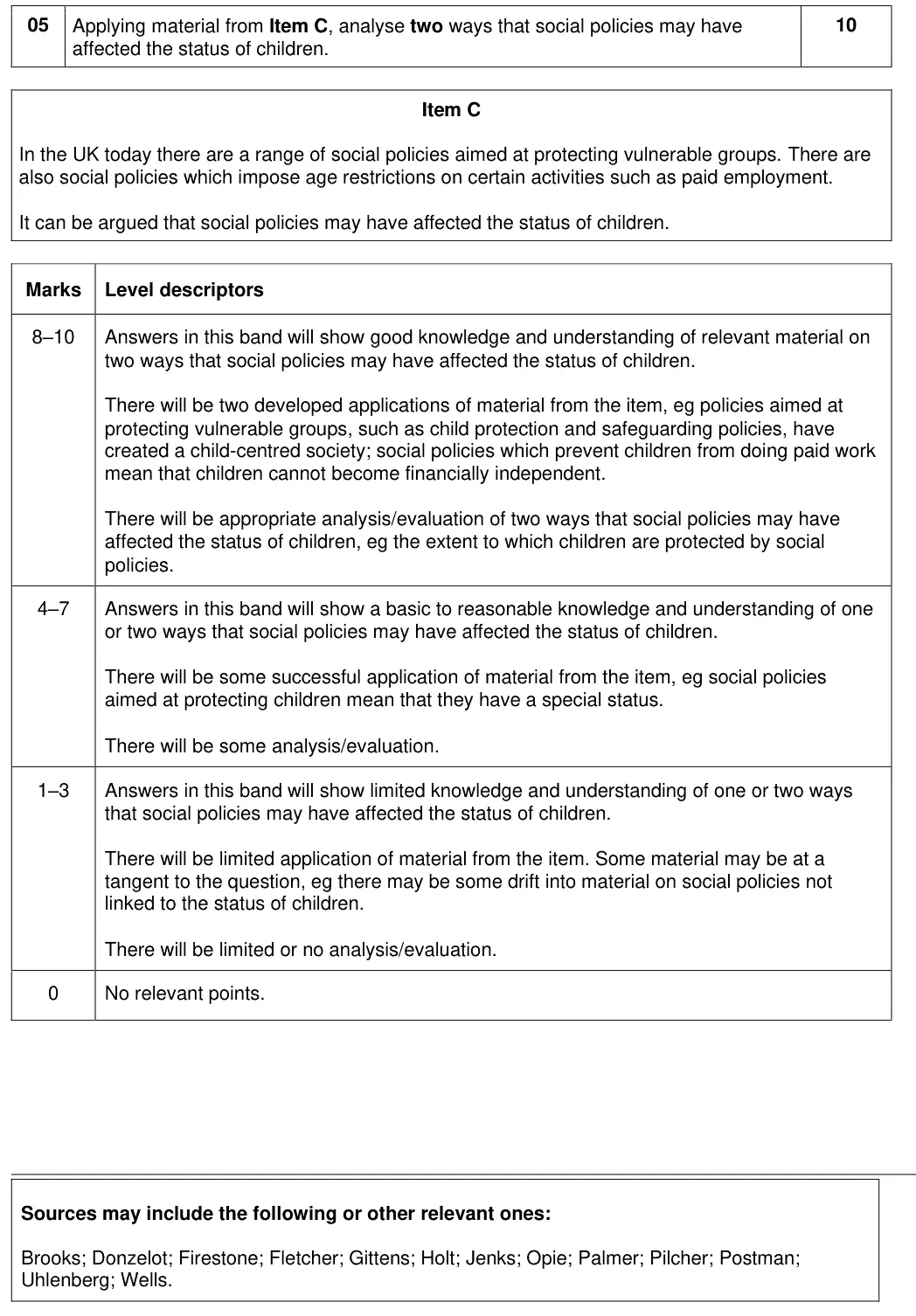
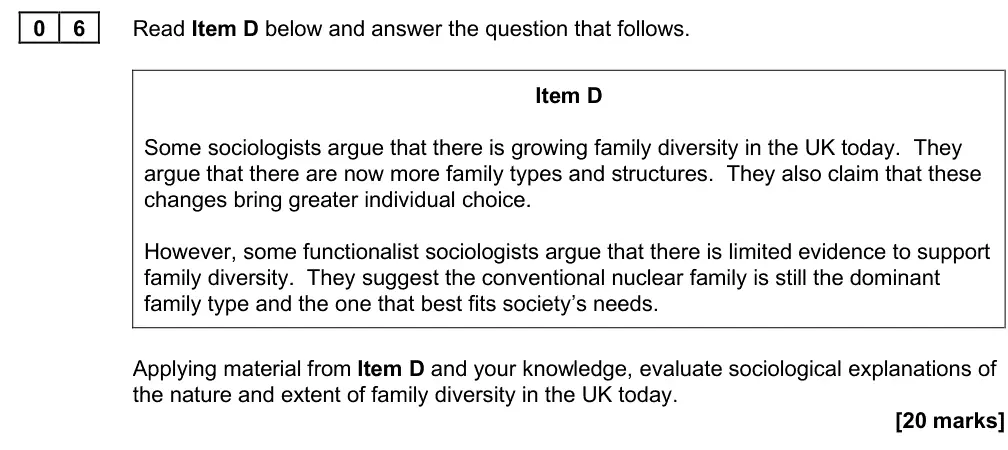
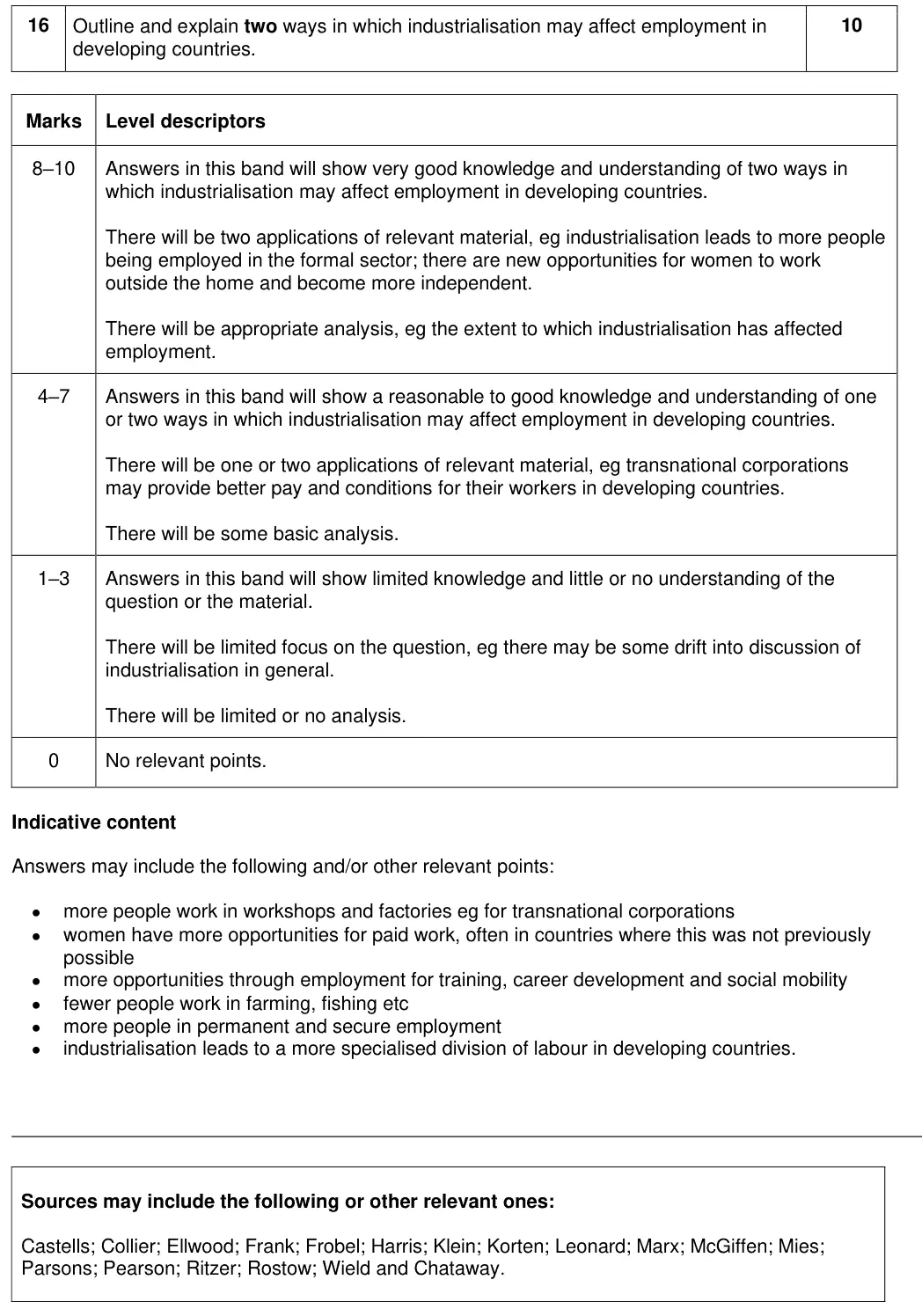
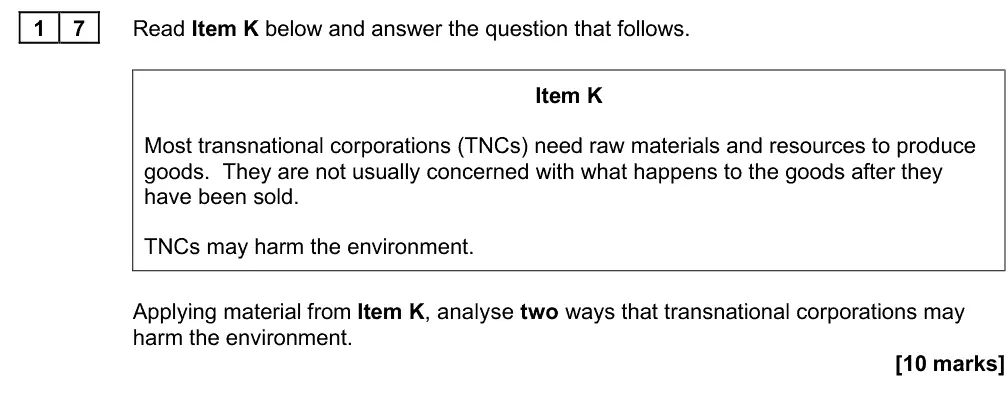
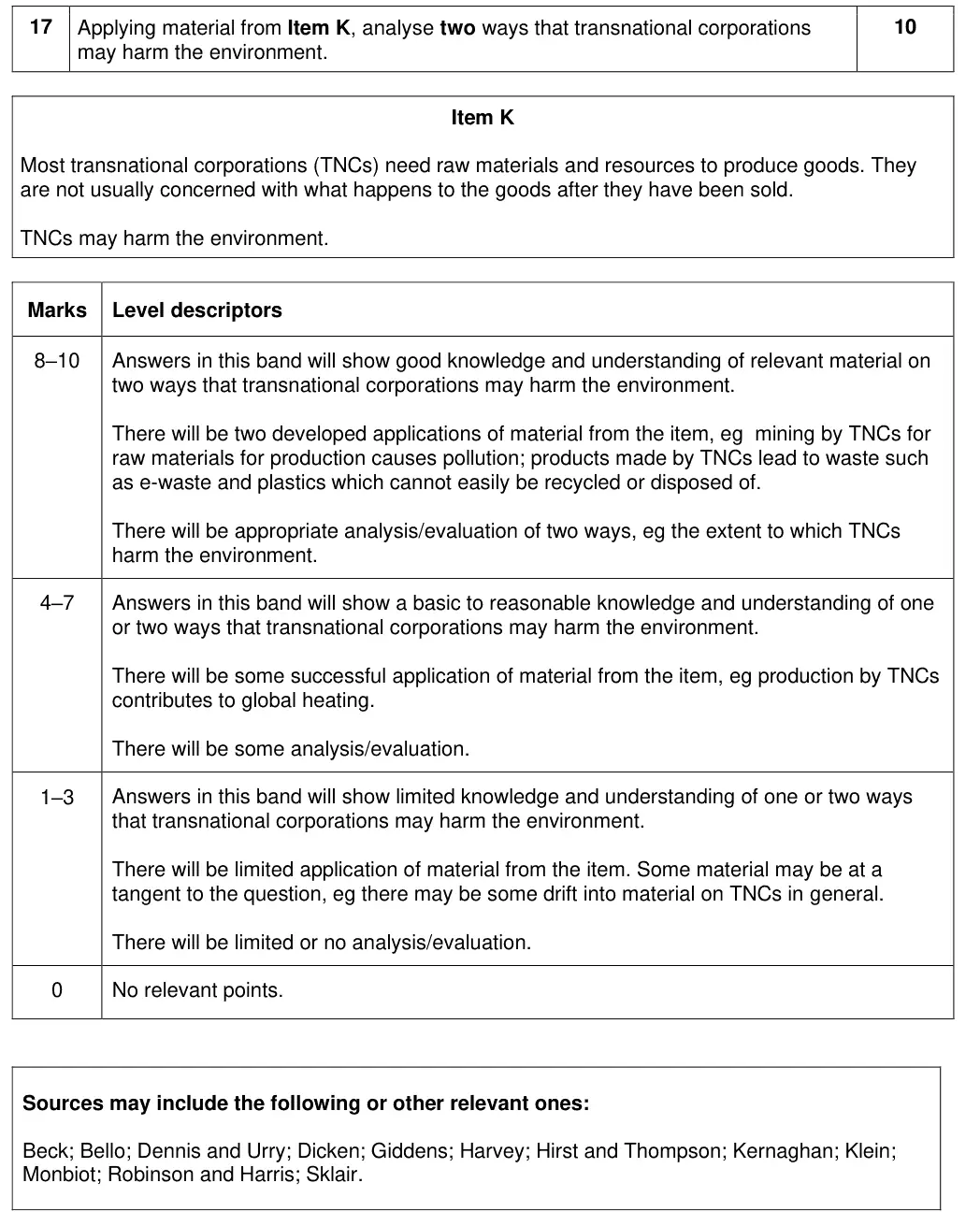
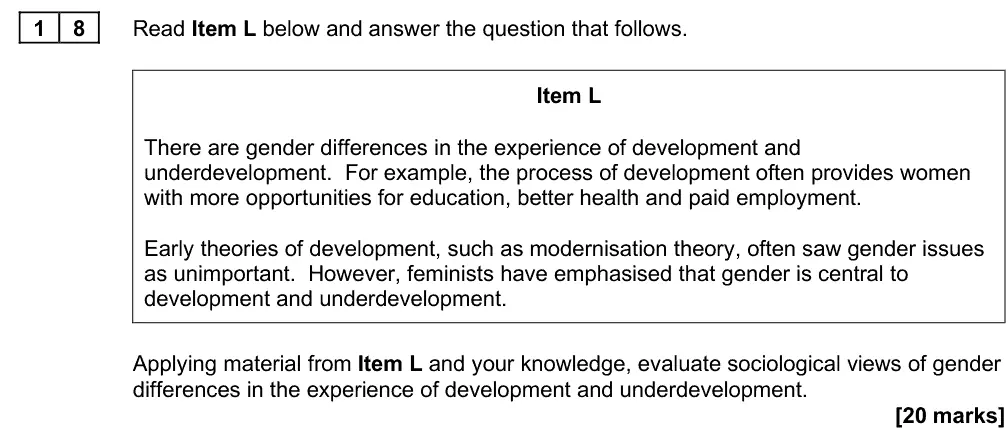
The nature of these questions means that students cannot rely on reciting knowledge. Questions will ask them to bring together aspects of their sociological knowledge in ways they will not have done before. It is therefore important for students to allow time to think about how to answer the question. Students should be made aware that there are two types of 10 mark questions. These have different requirements and different mark schemes . There are different marks available for the assessment objectives. A breakdown of the marks awarded by assessment objective can be found in the mark scheme. 10 mark “outline and explain” questions have more marks available for knowledge and understanding, and none for evaluation. Introductions and conclusions are not required for 10 mark questions; they take up time and rarely improve the mark. It is helpful if answers are set out to clearly indicate the two answers, with wording such as “One way/reason is…”, or by starting a new paragraph for the second point. Answers that give more than two points are unlikely to develop two of them sufficiently. Q1: Most students could identify two reasons why gender may influence consumption choices. Canalisation was the most cited reason, with the use of toys and activities as examples to elaborate the answer. The influence of media was another common reason given. The impact on consumption choices was not always thoroughly analysed, which limited the potential marks awarded.
Notes from the mark scheme and report
- two reasons each developed (e.g. canalisation and gender role socialisation shaping tastes, media pressure on male and female identities creating markets, women's lower pay and less free time)
- drift into gender identities in general = 1–3
- canalisation with toys and media influence were the most common reasons