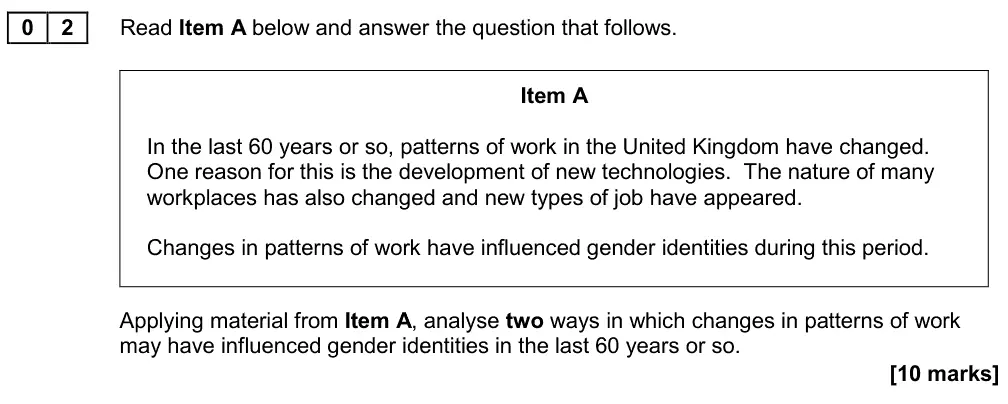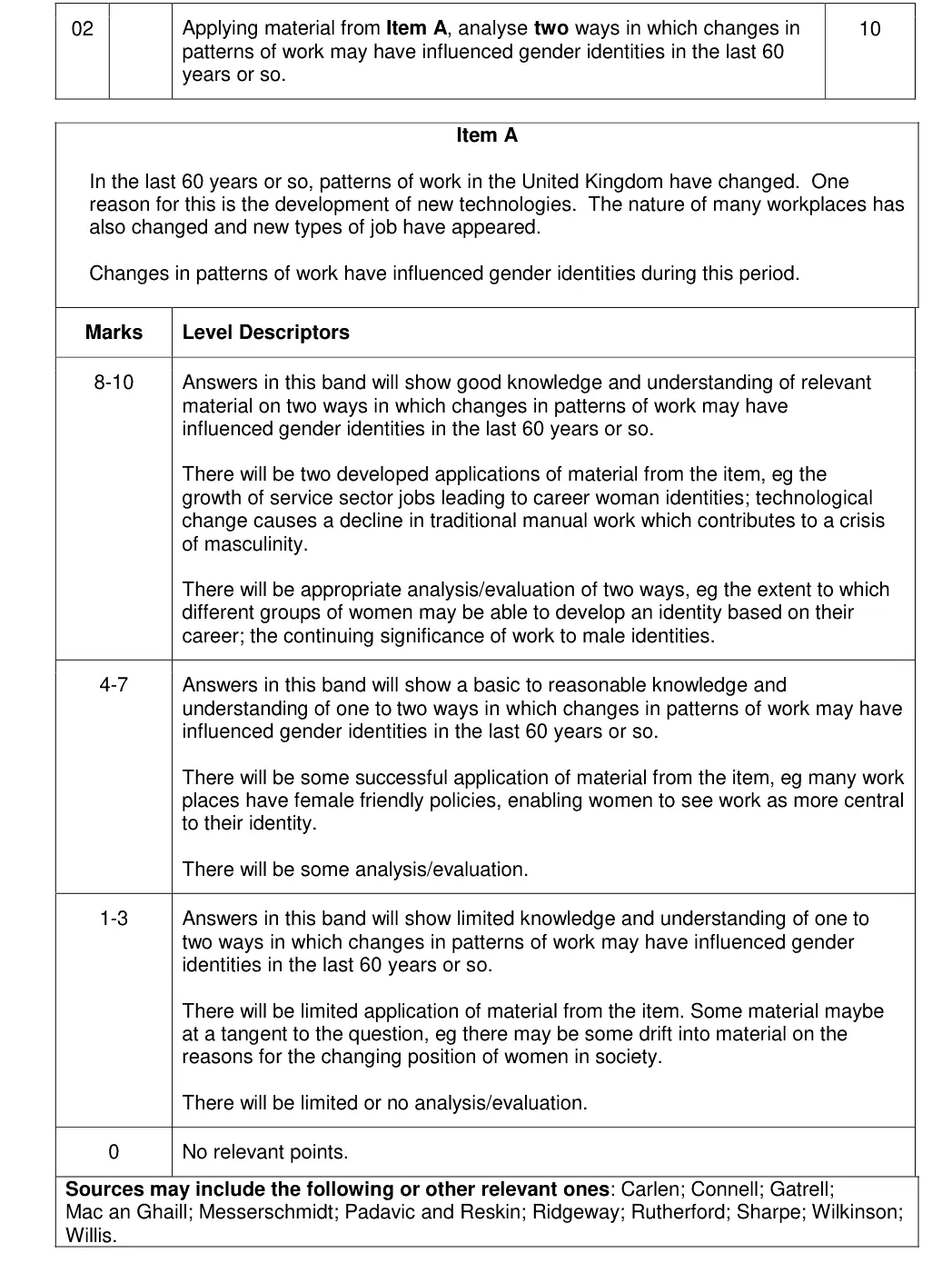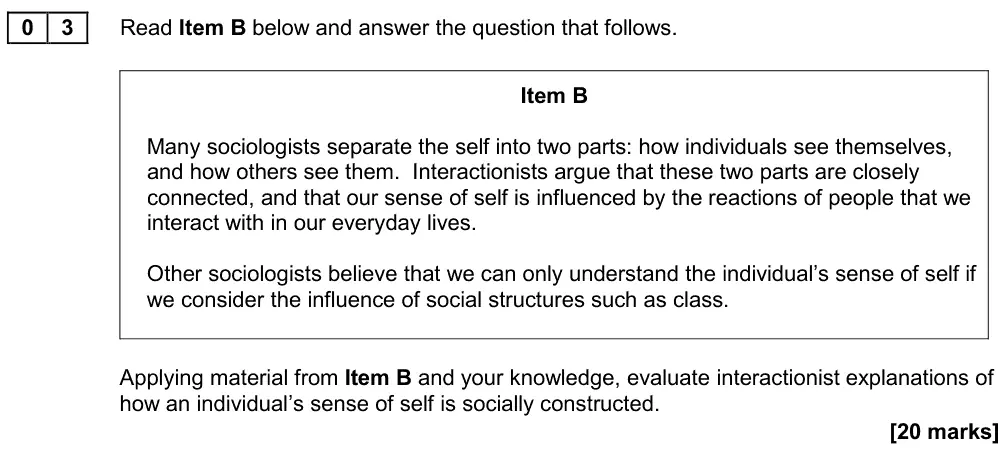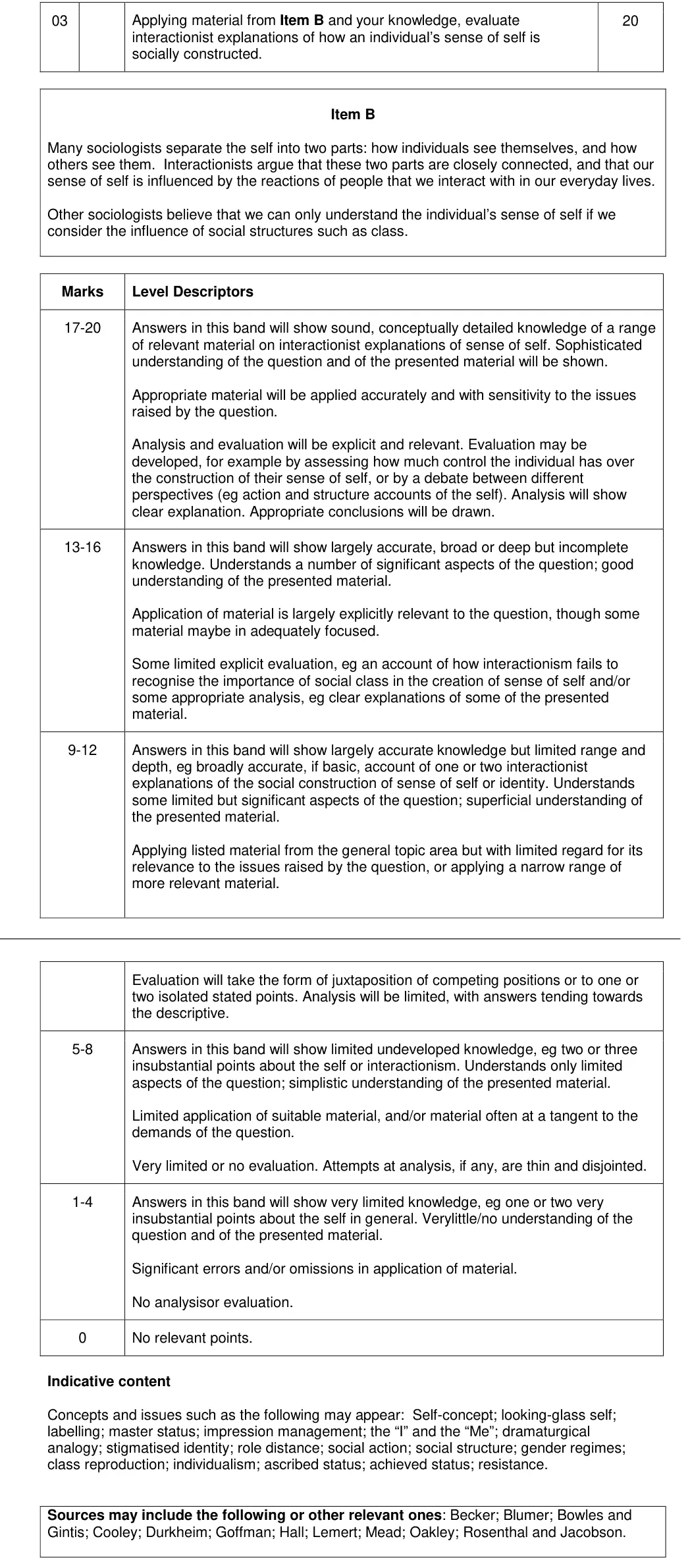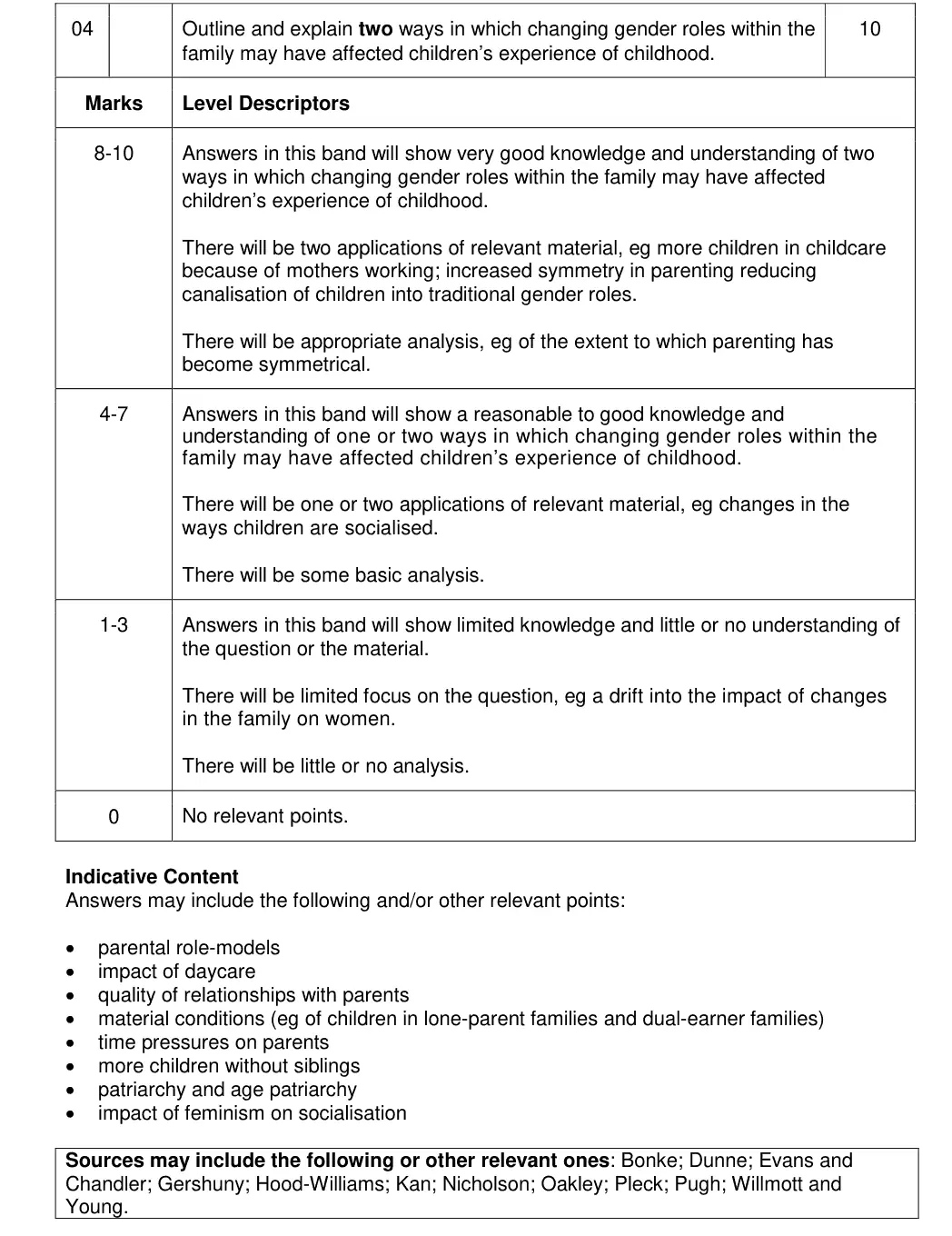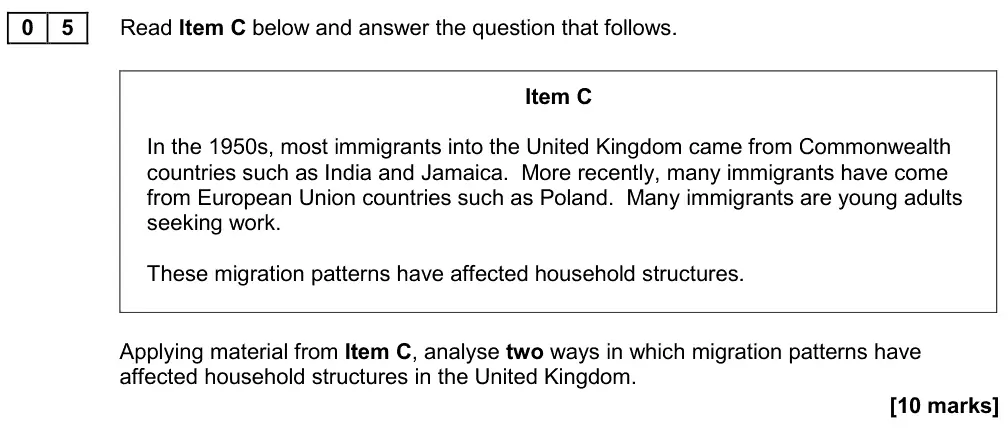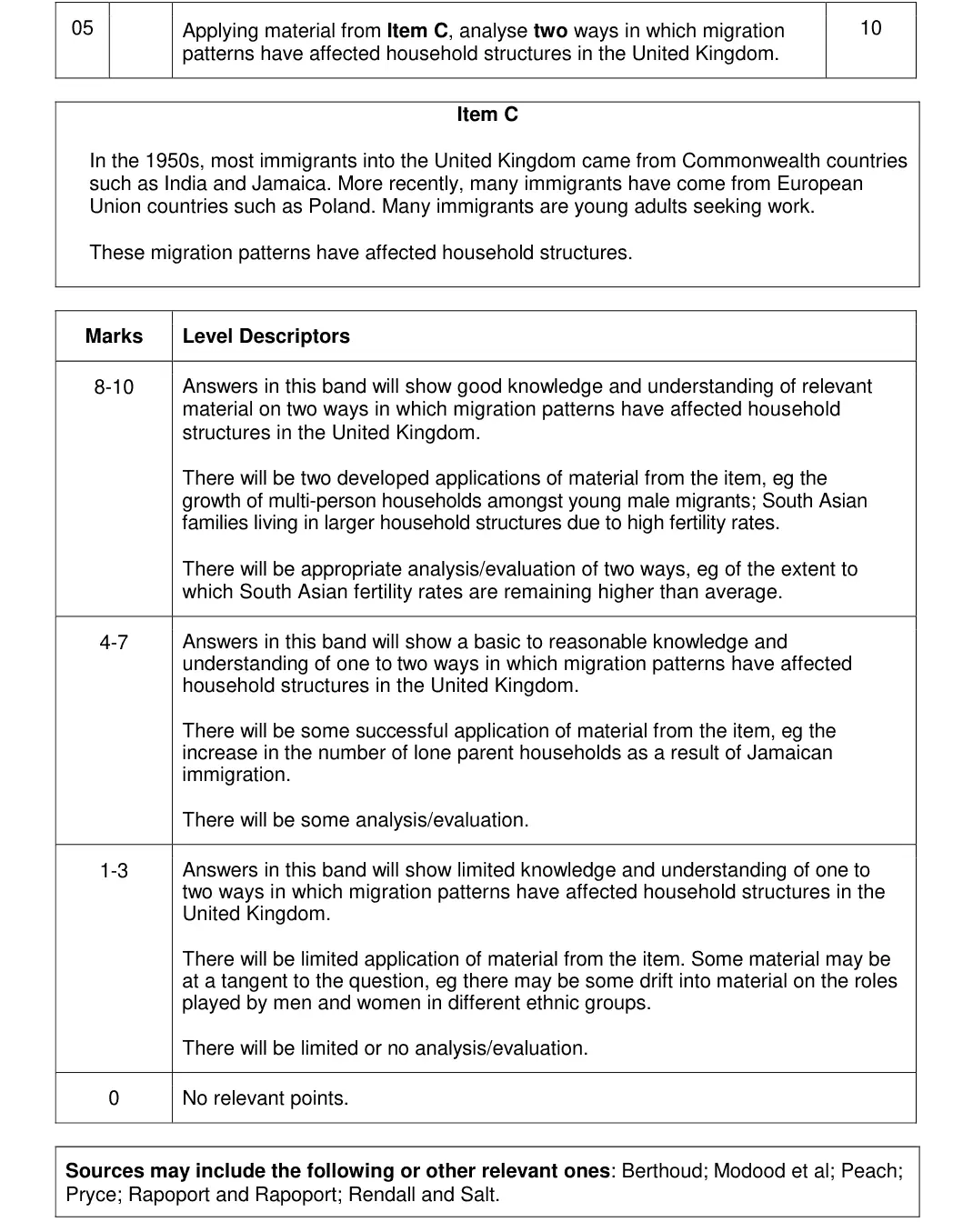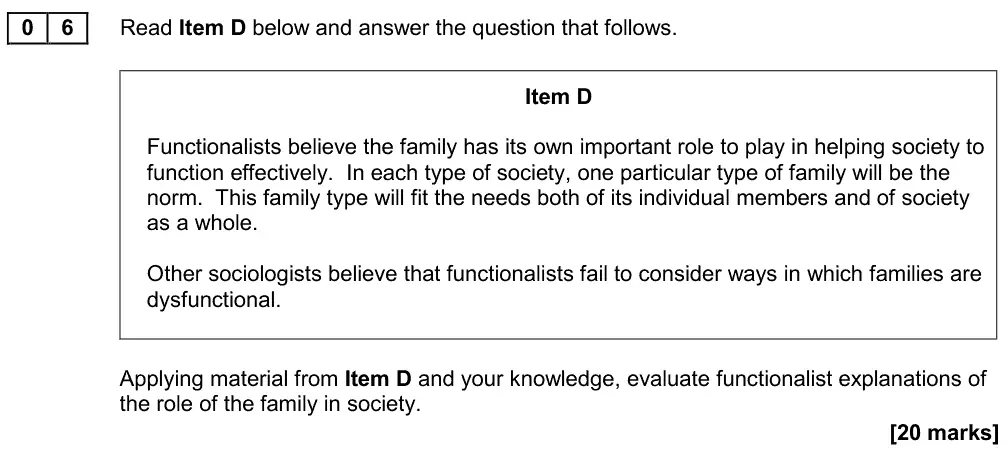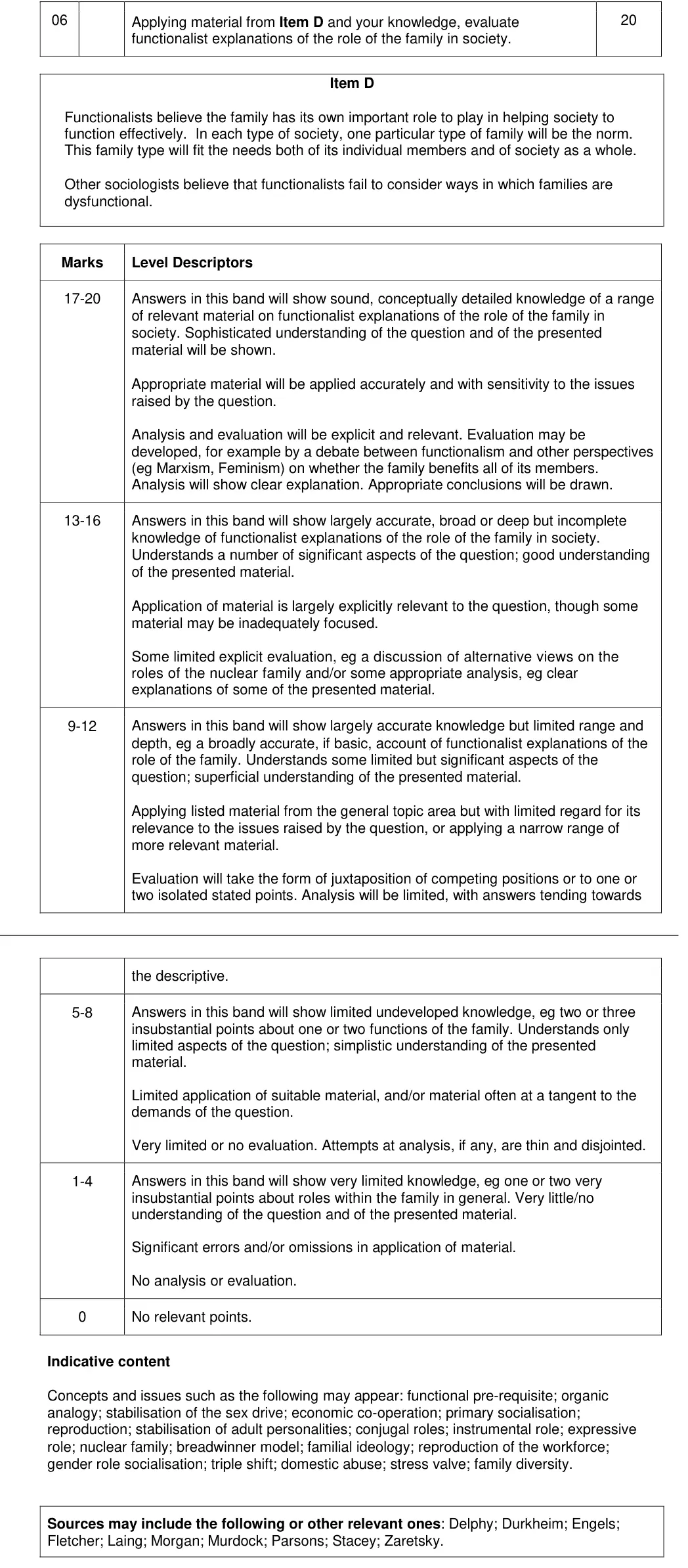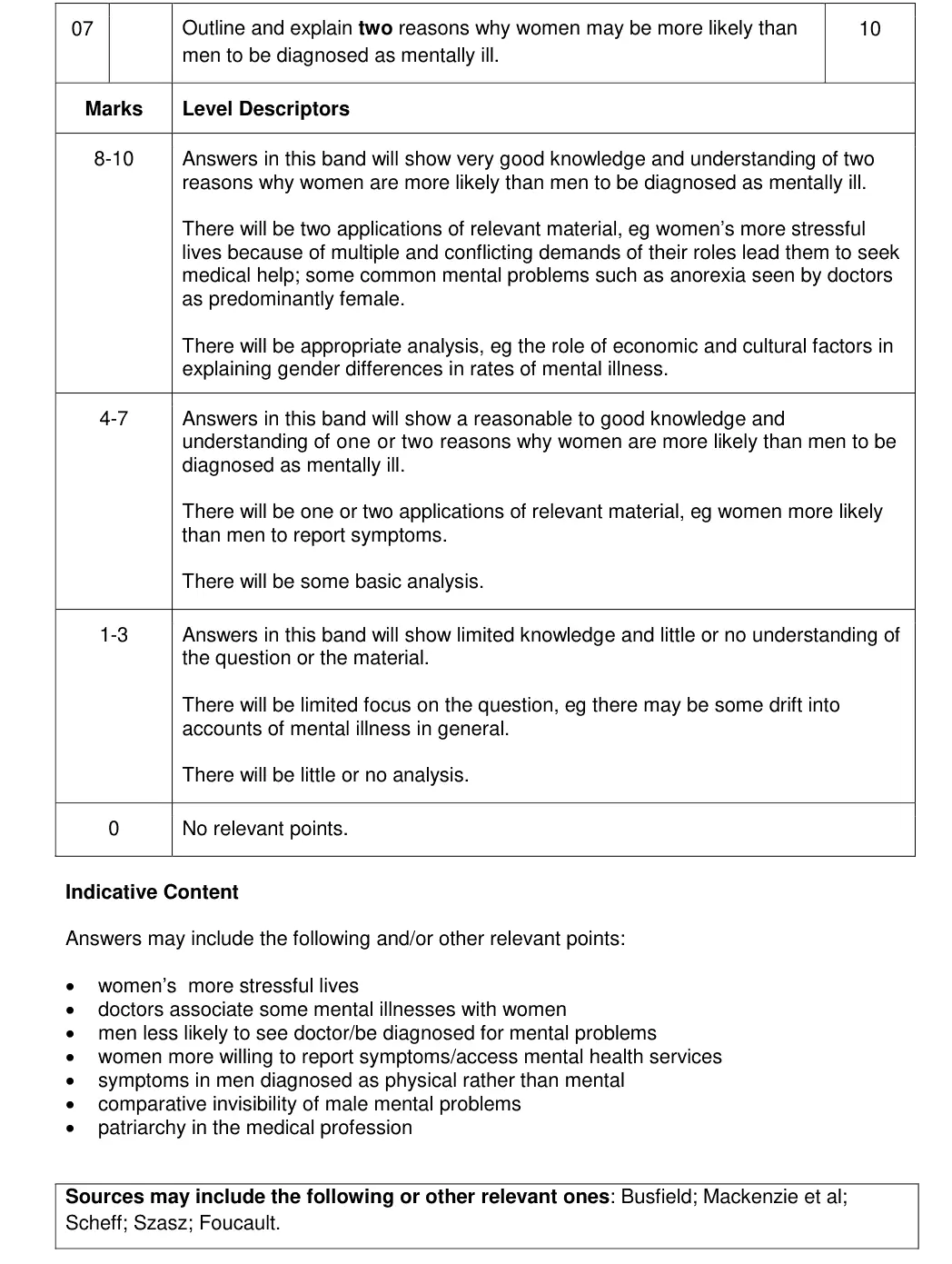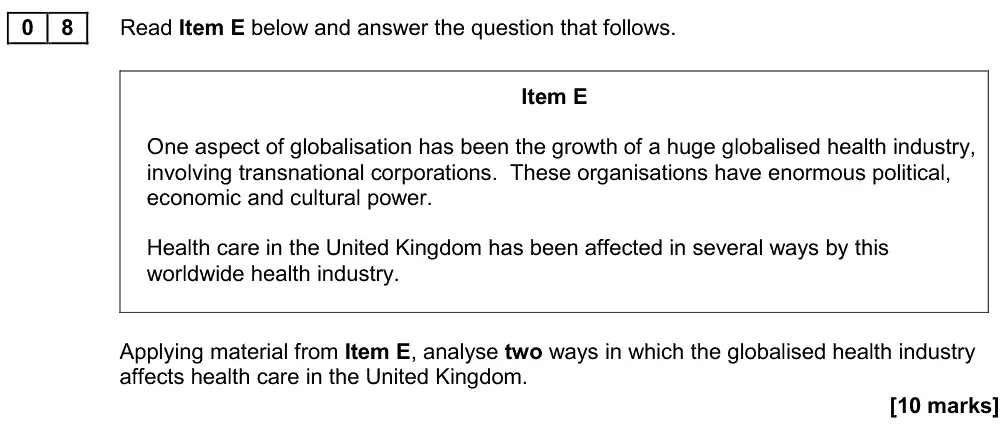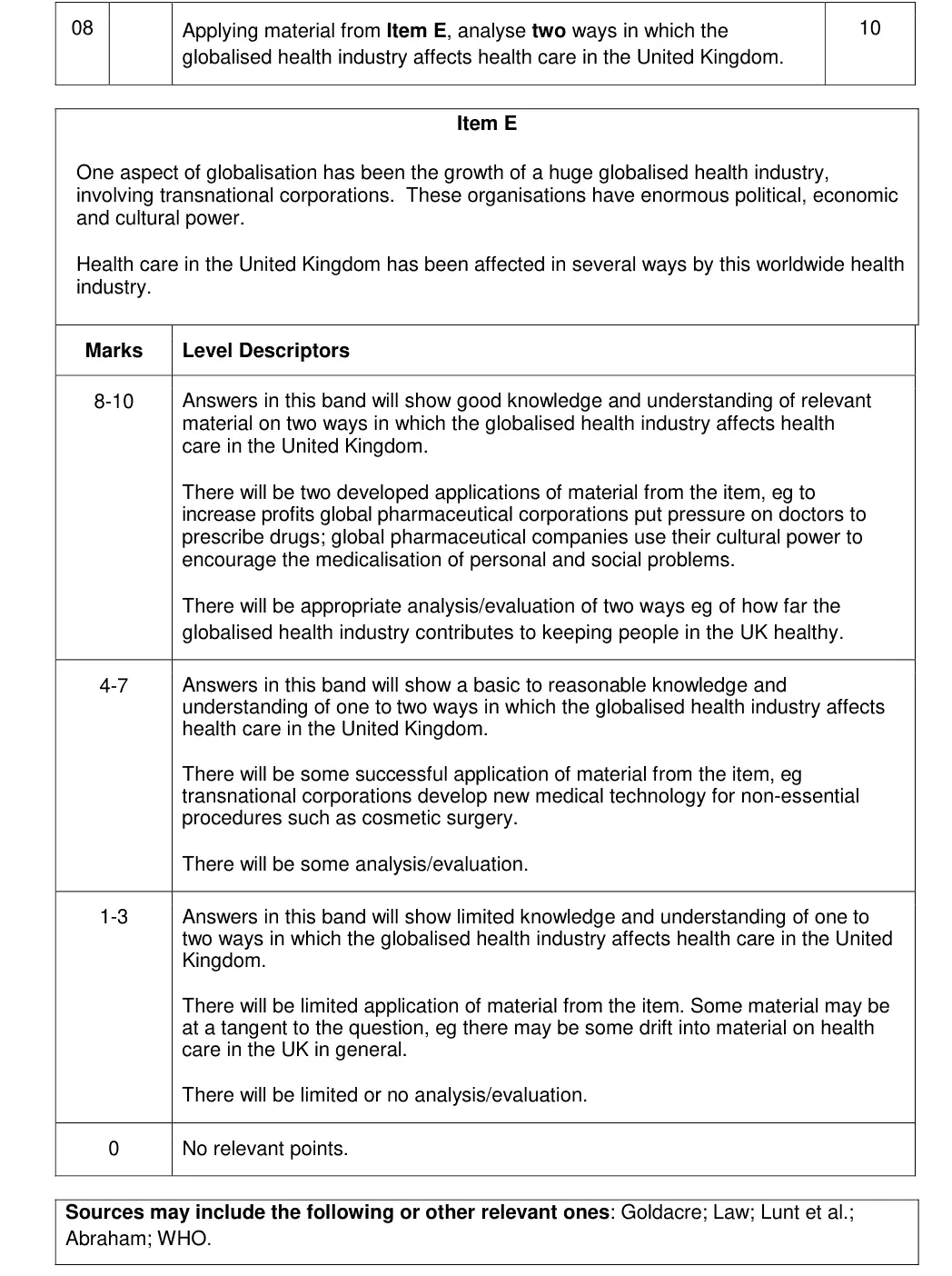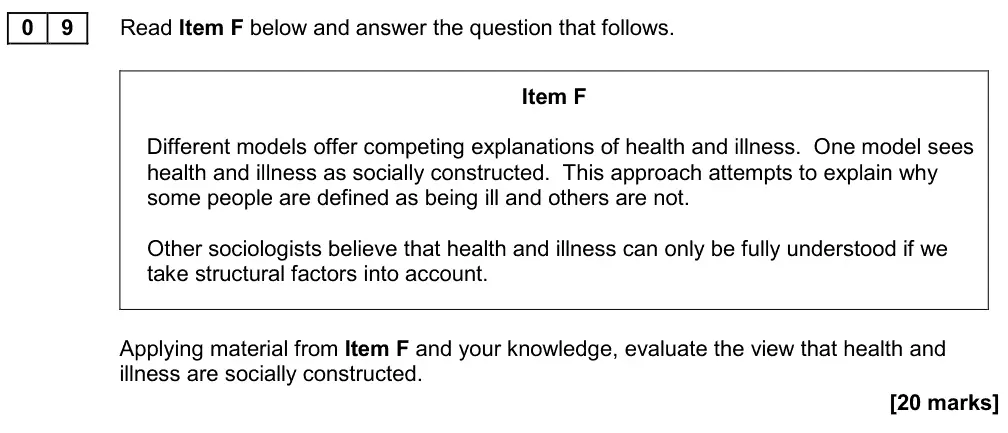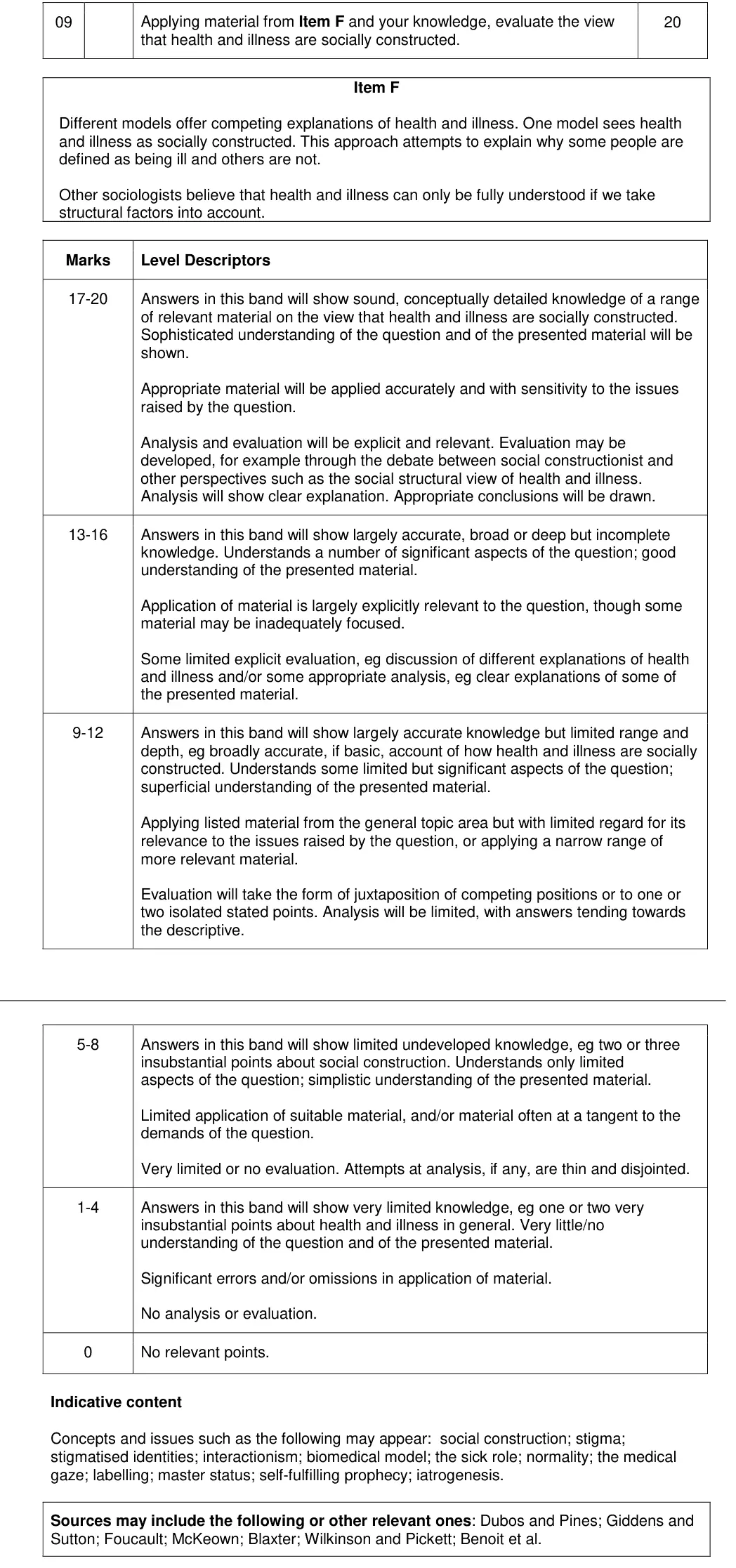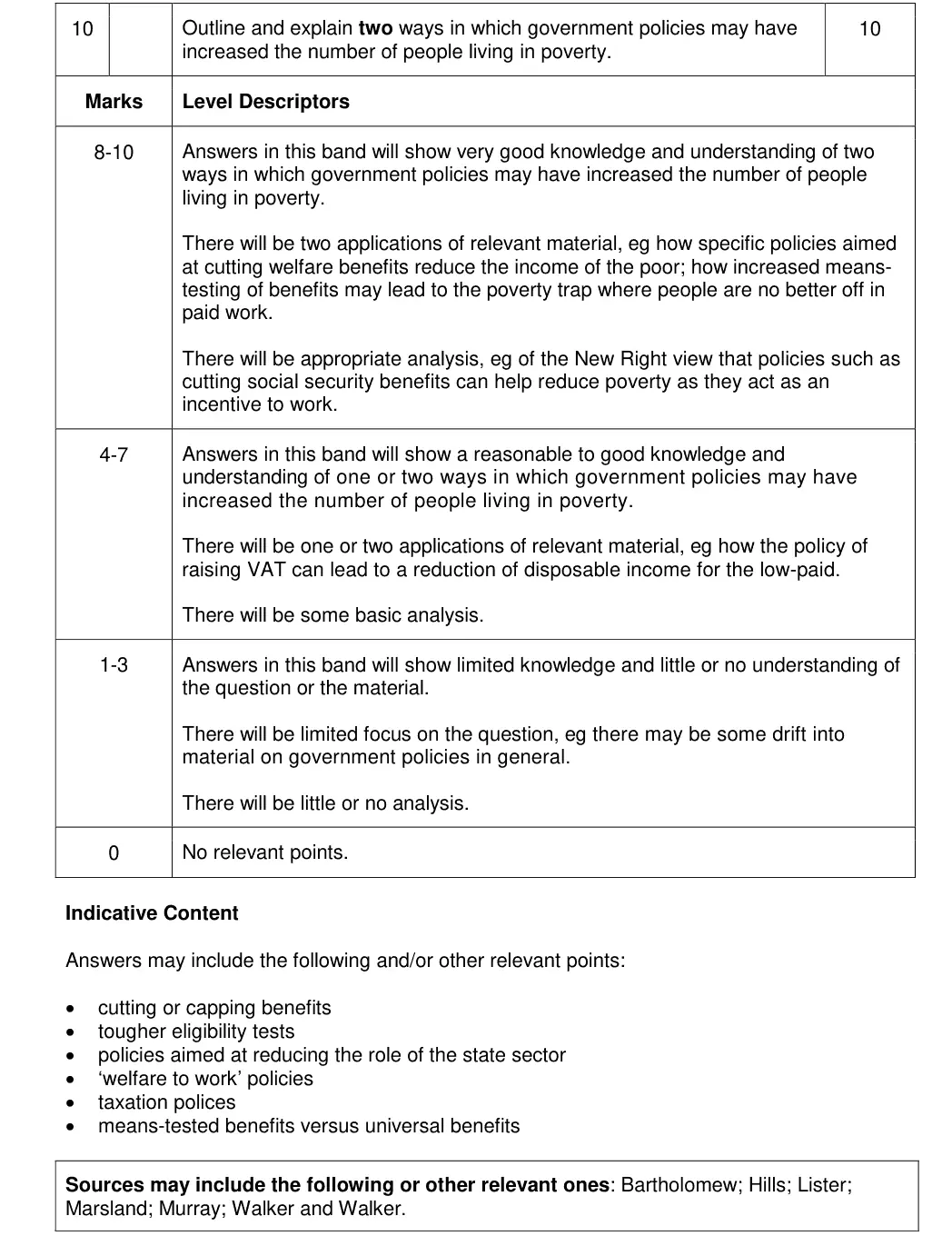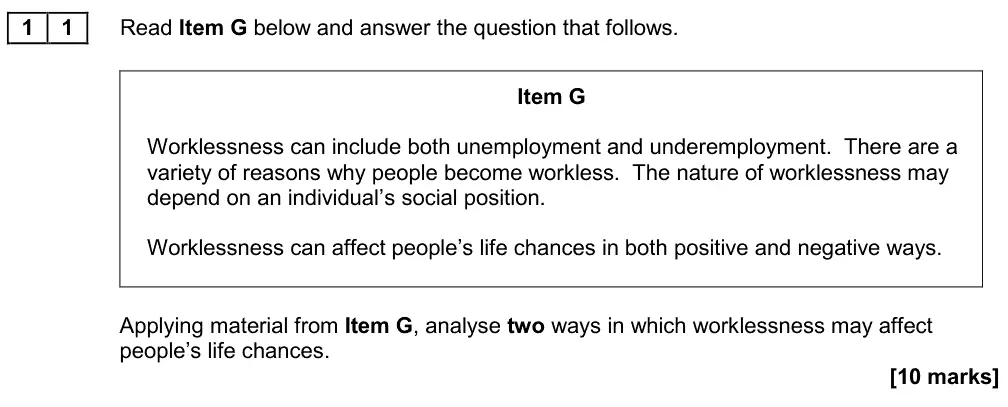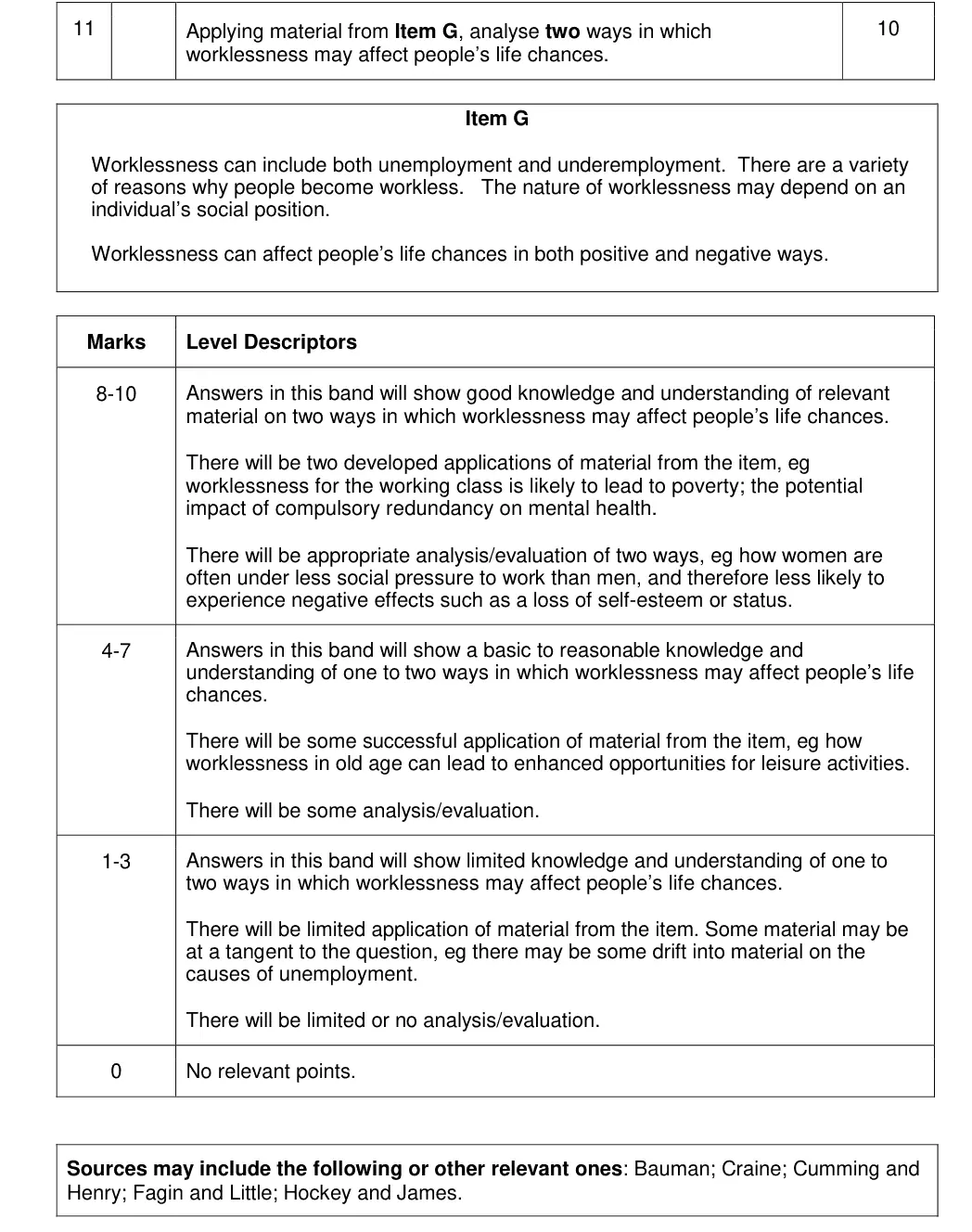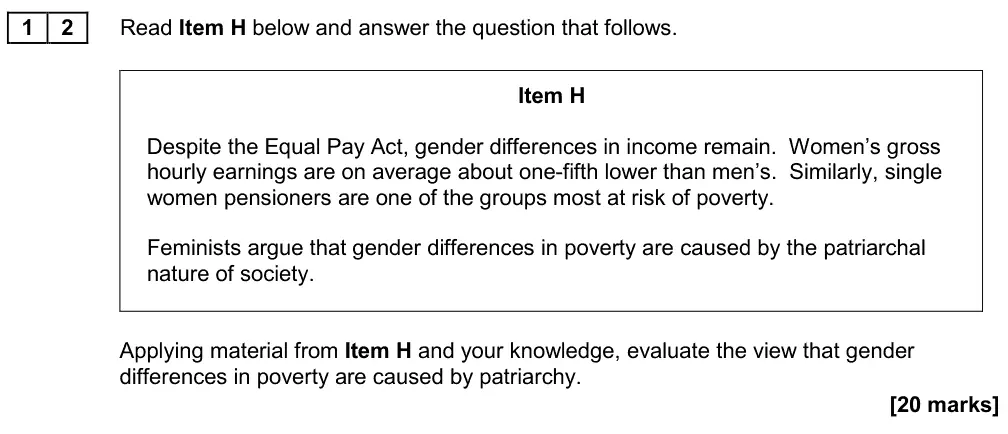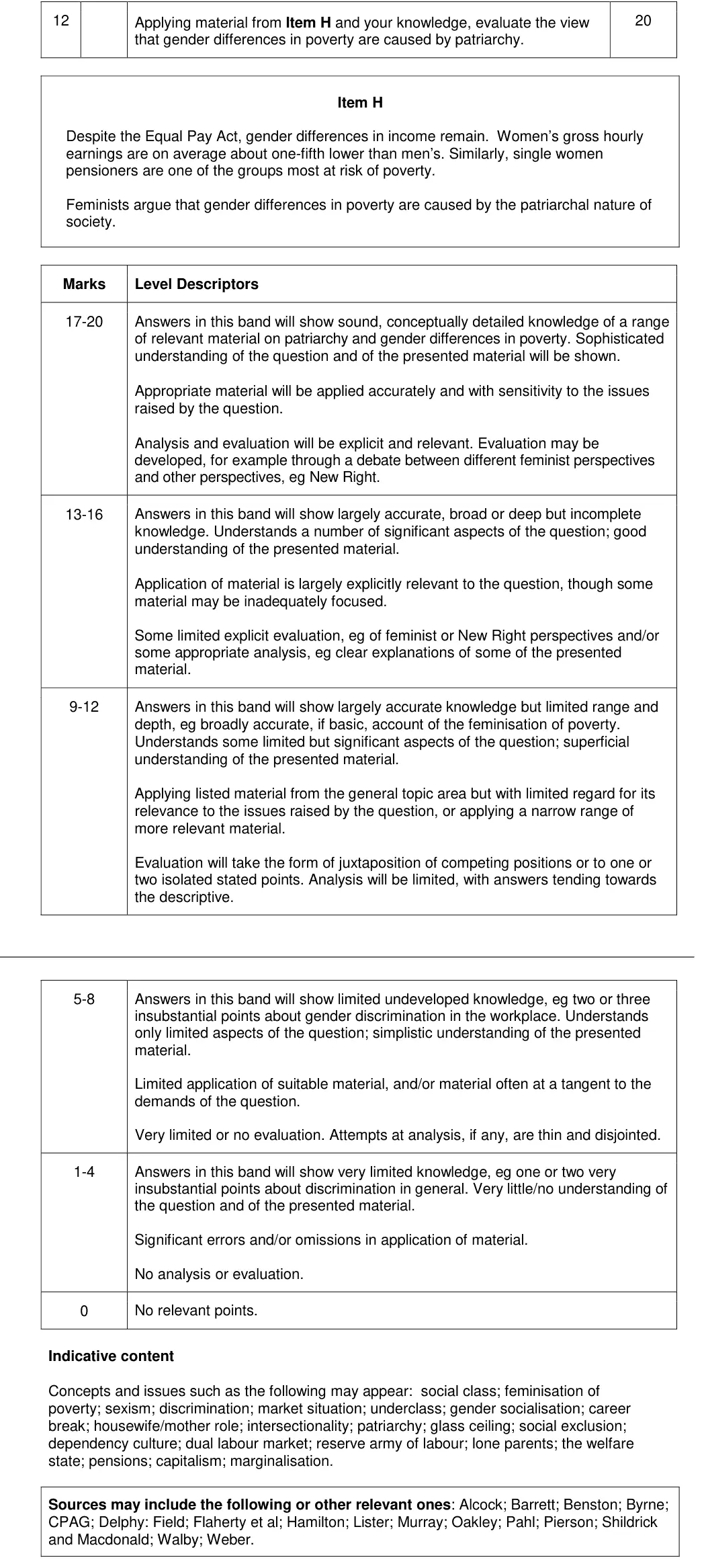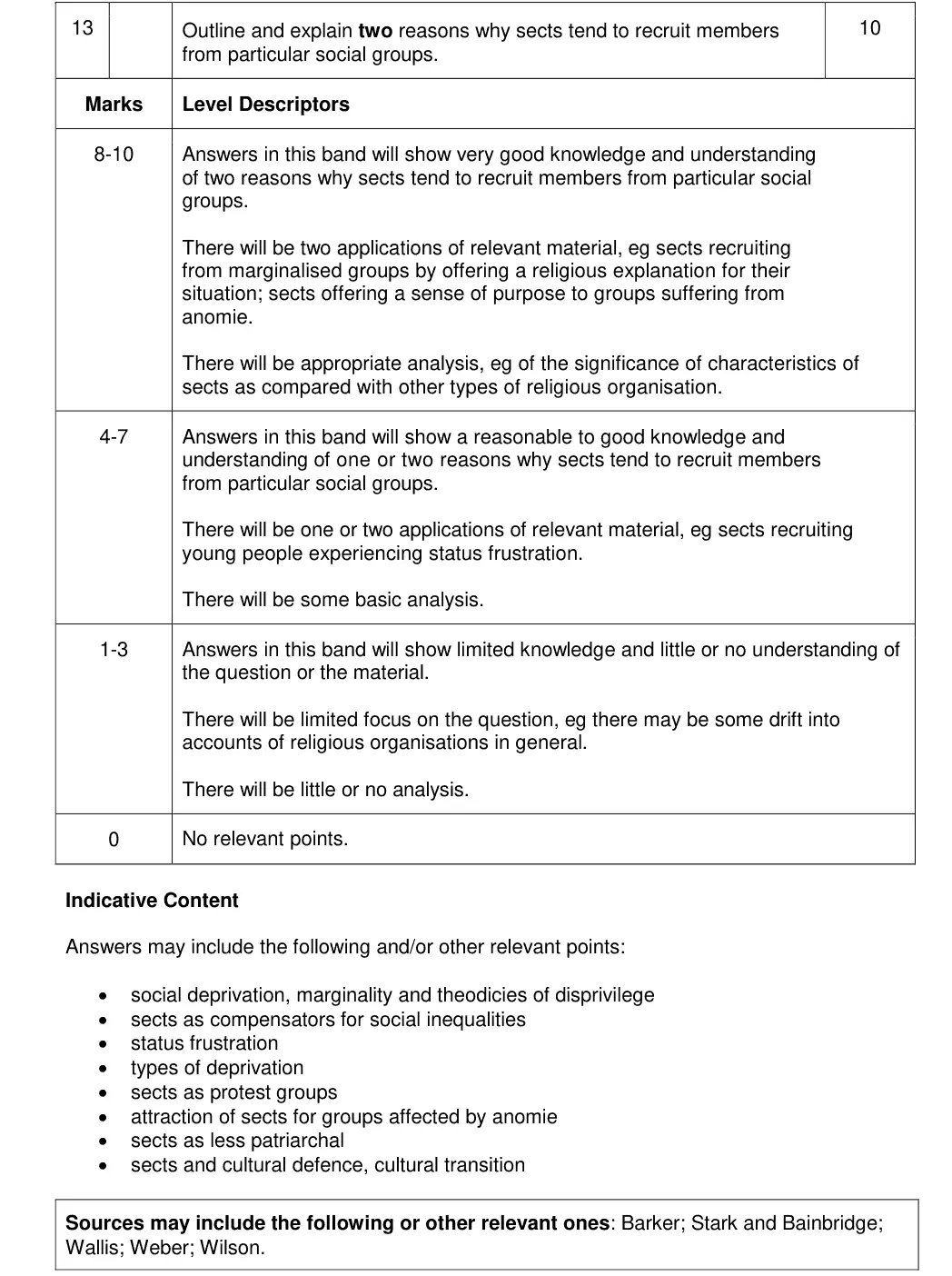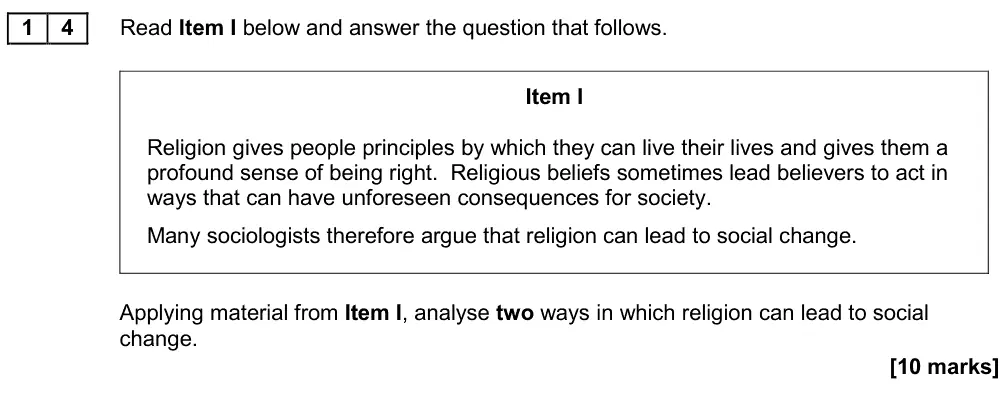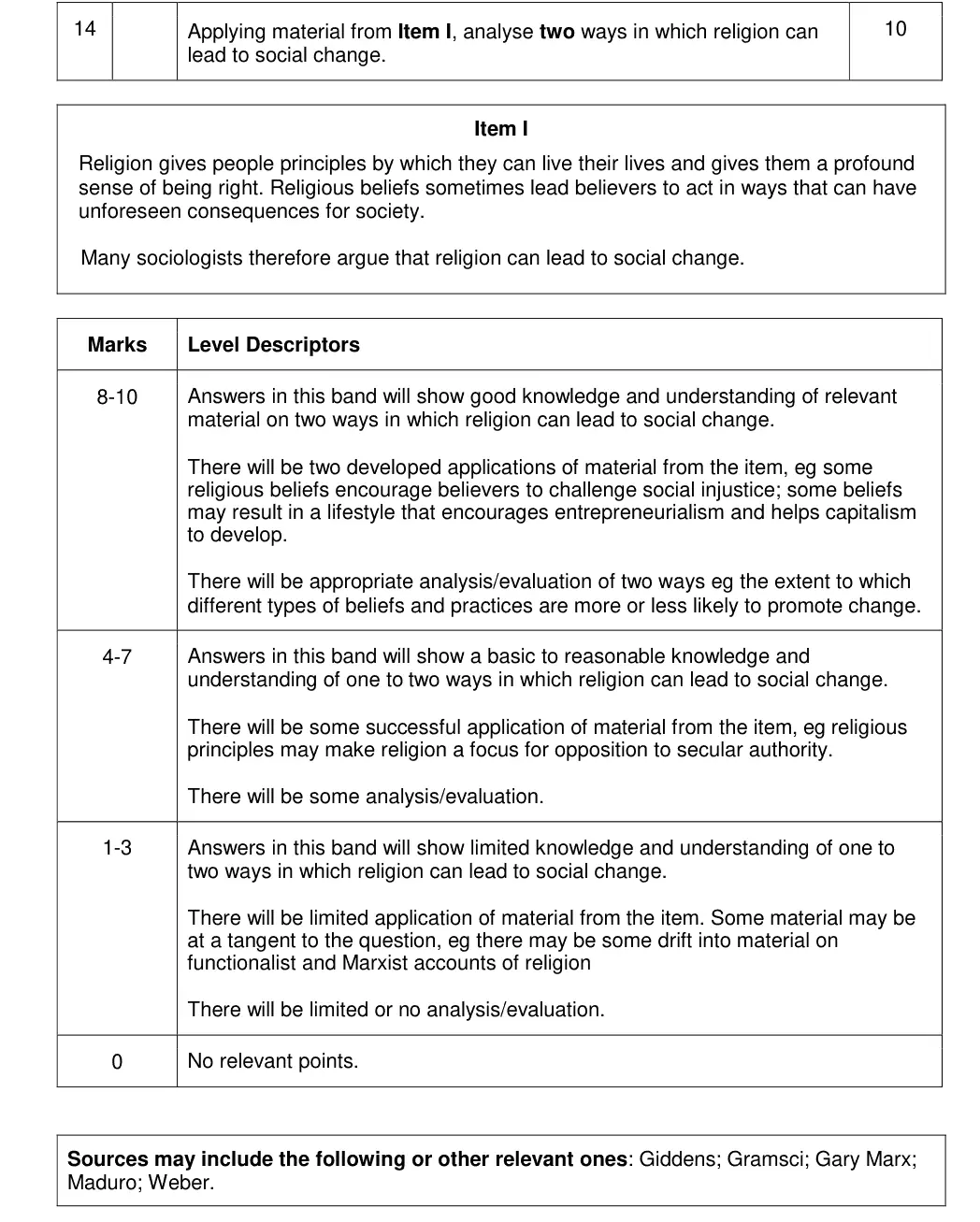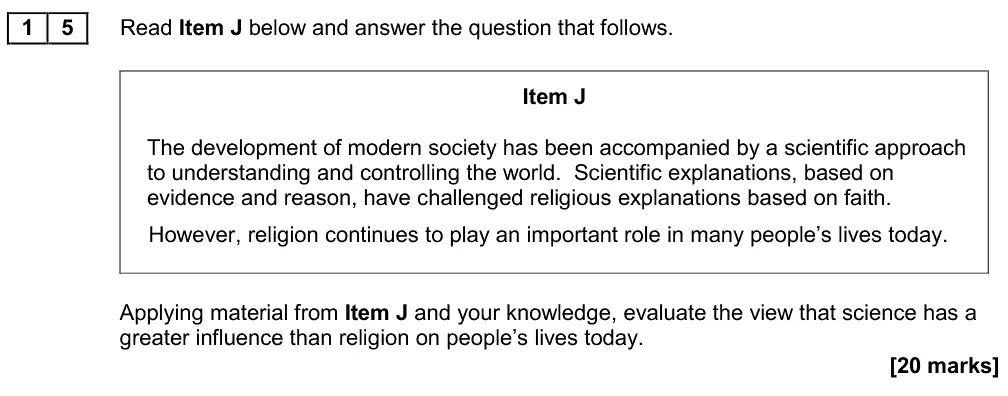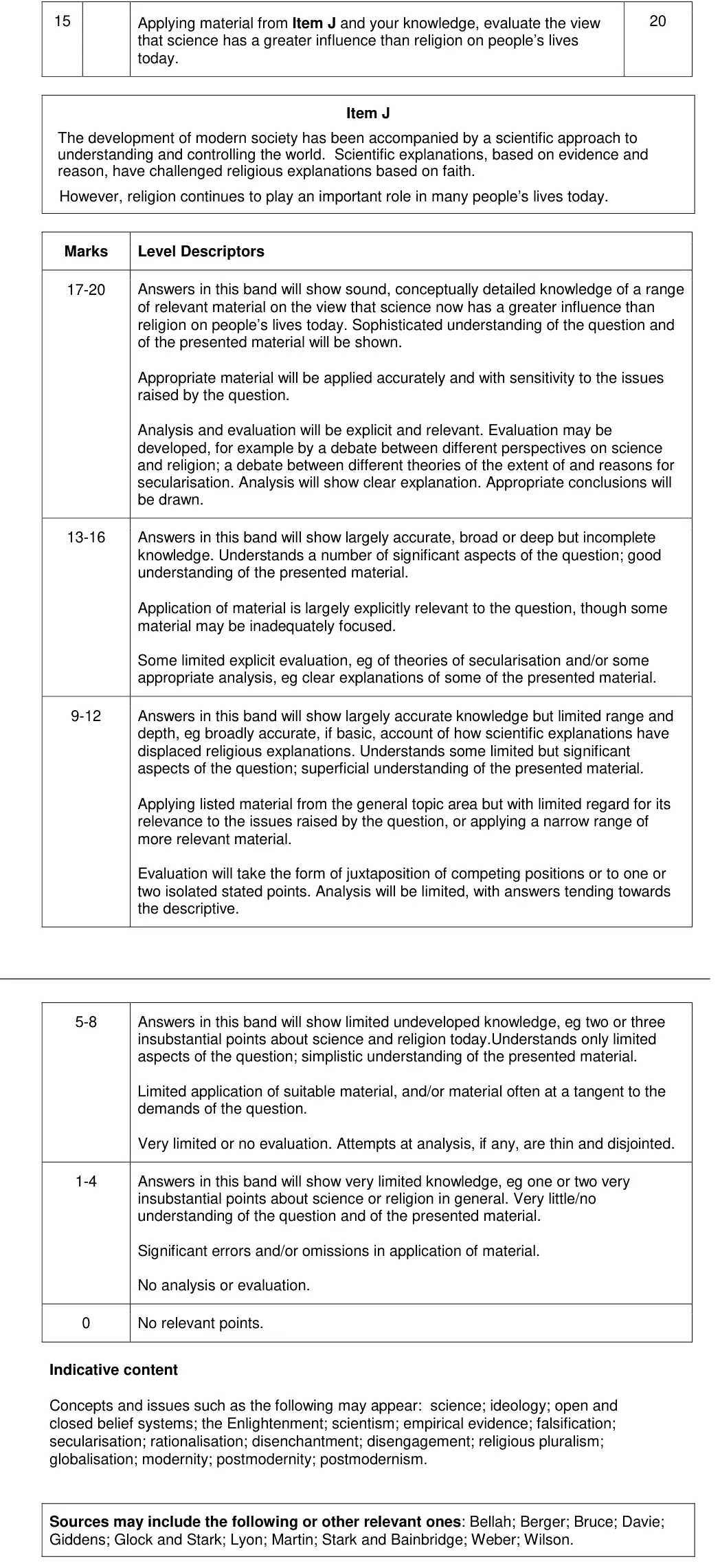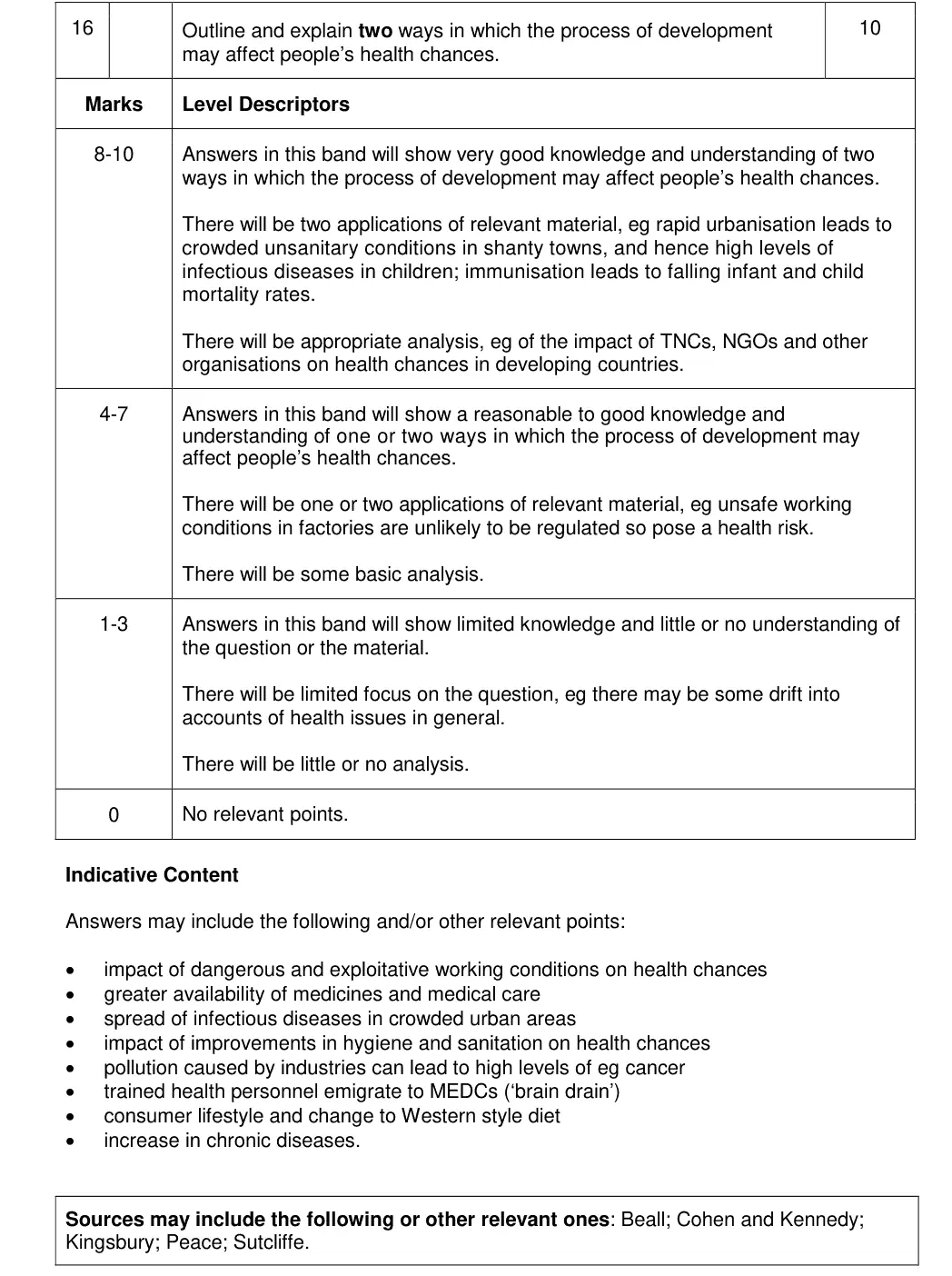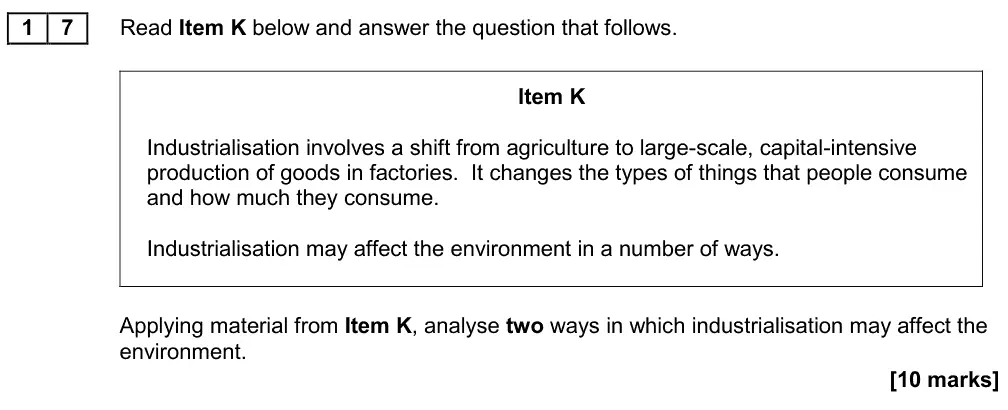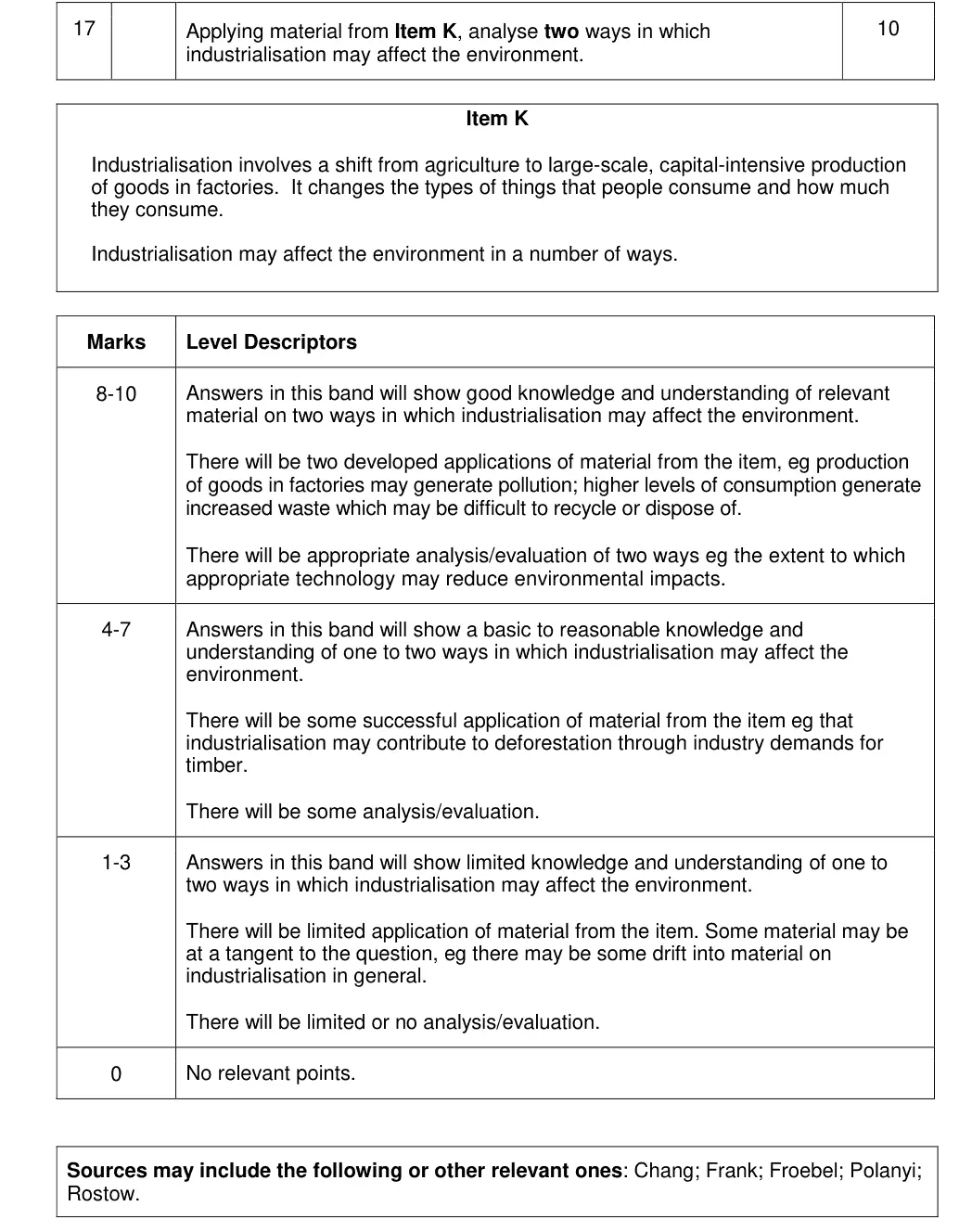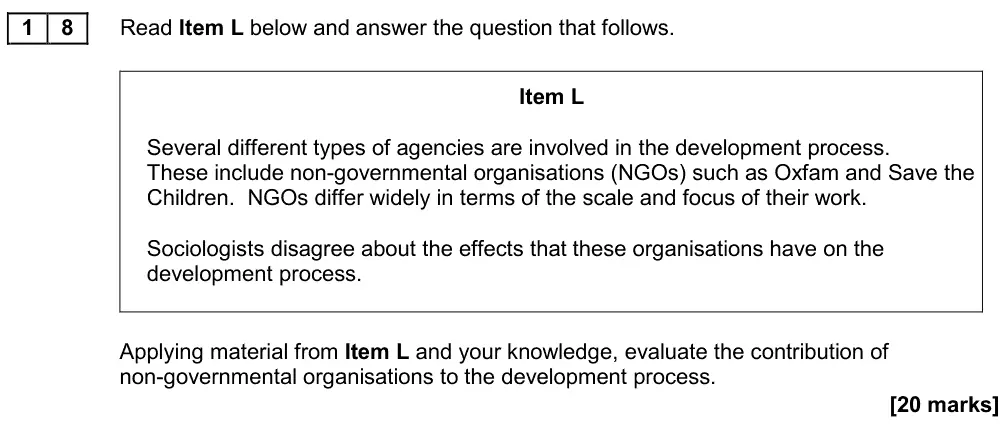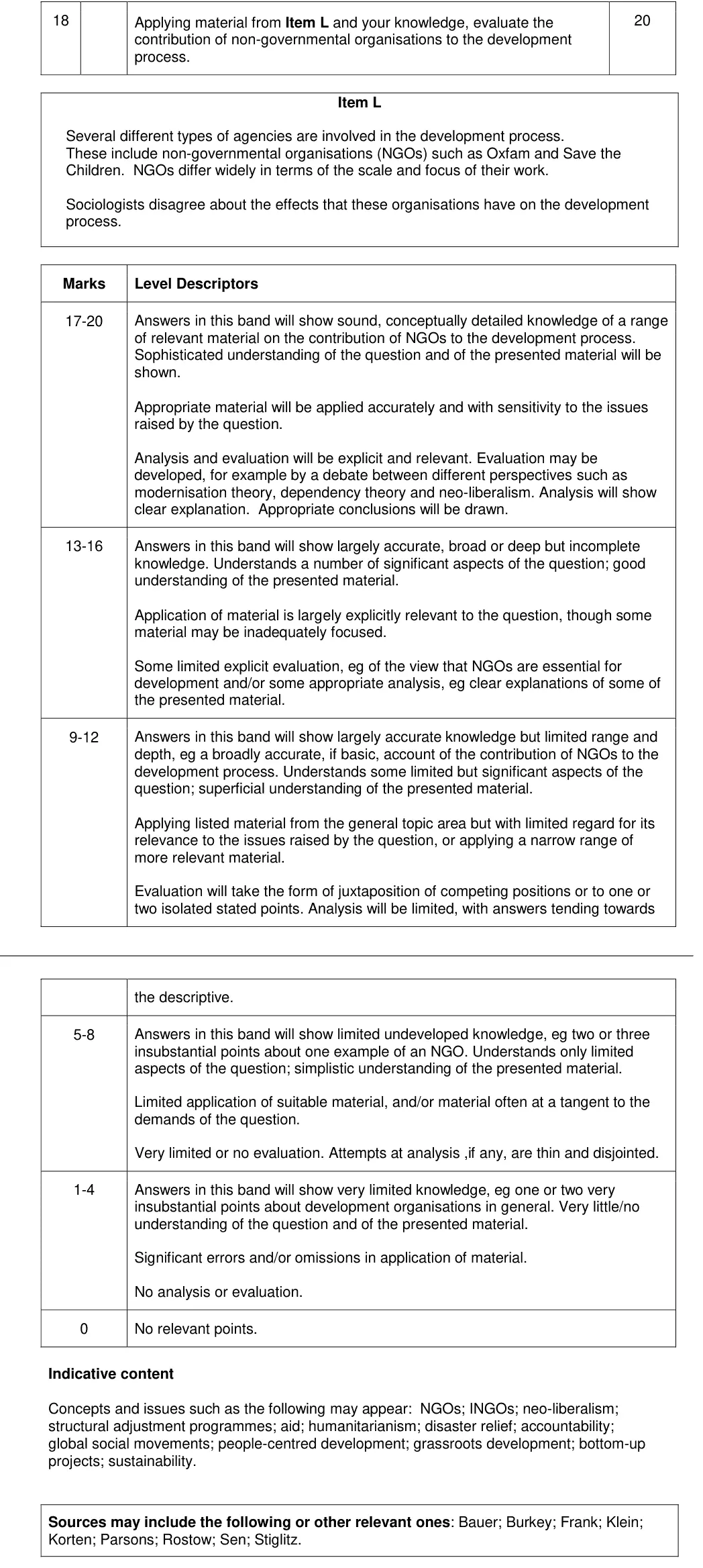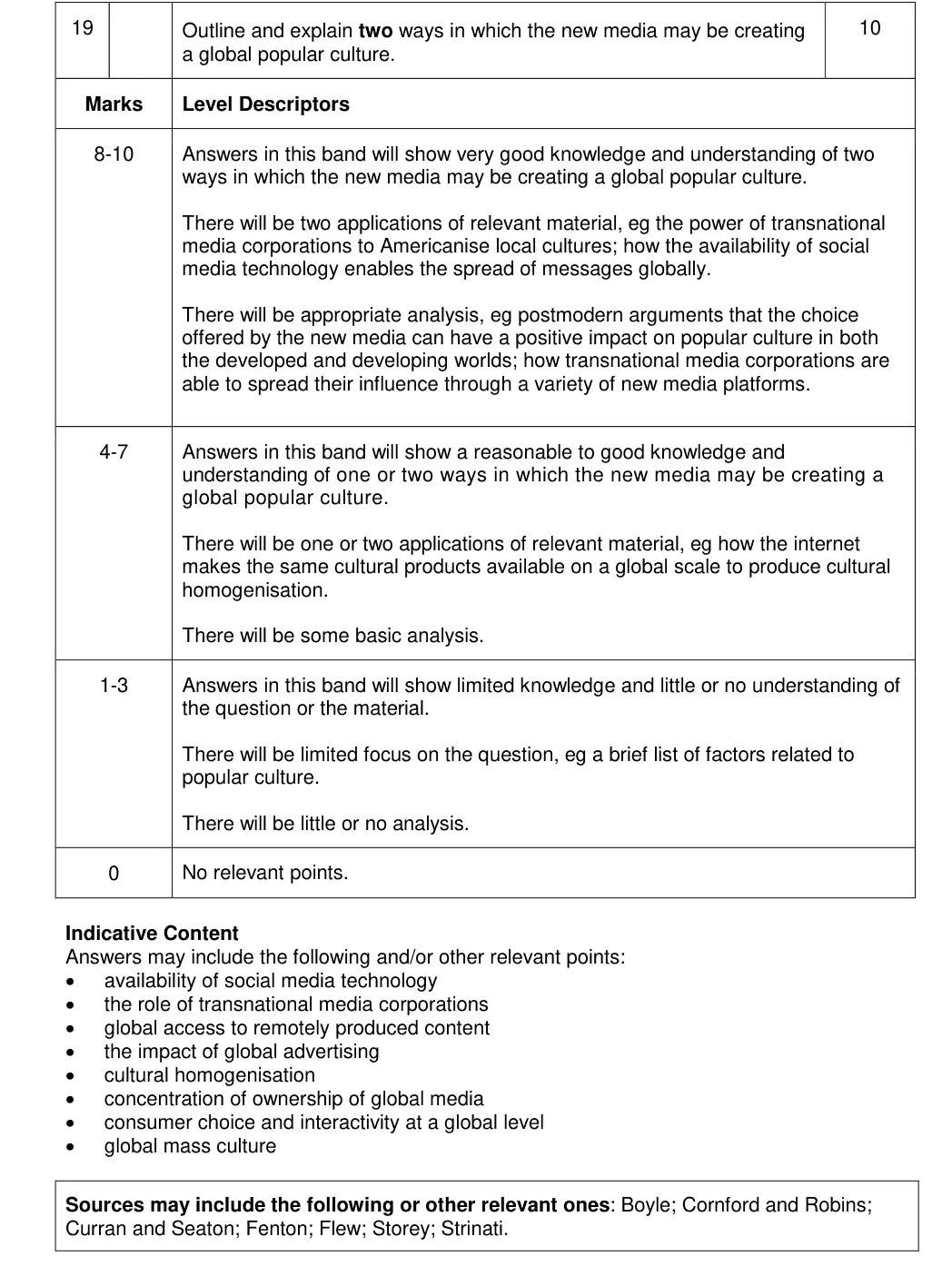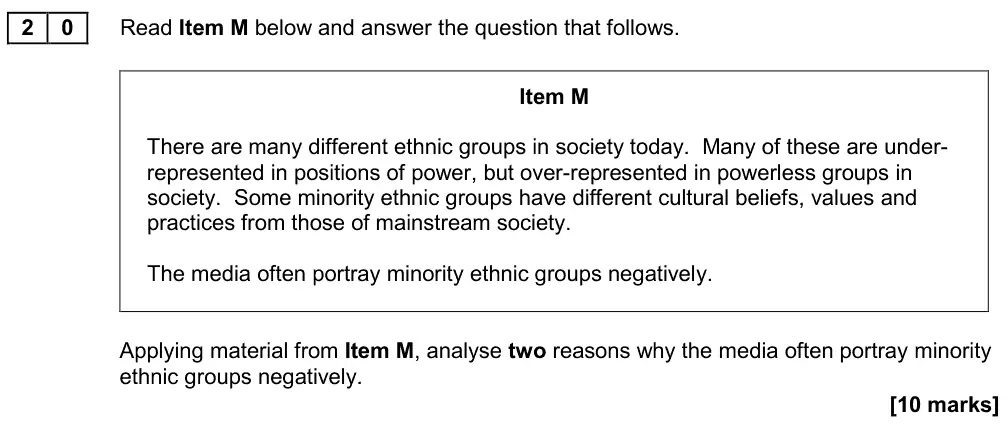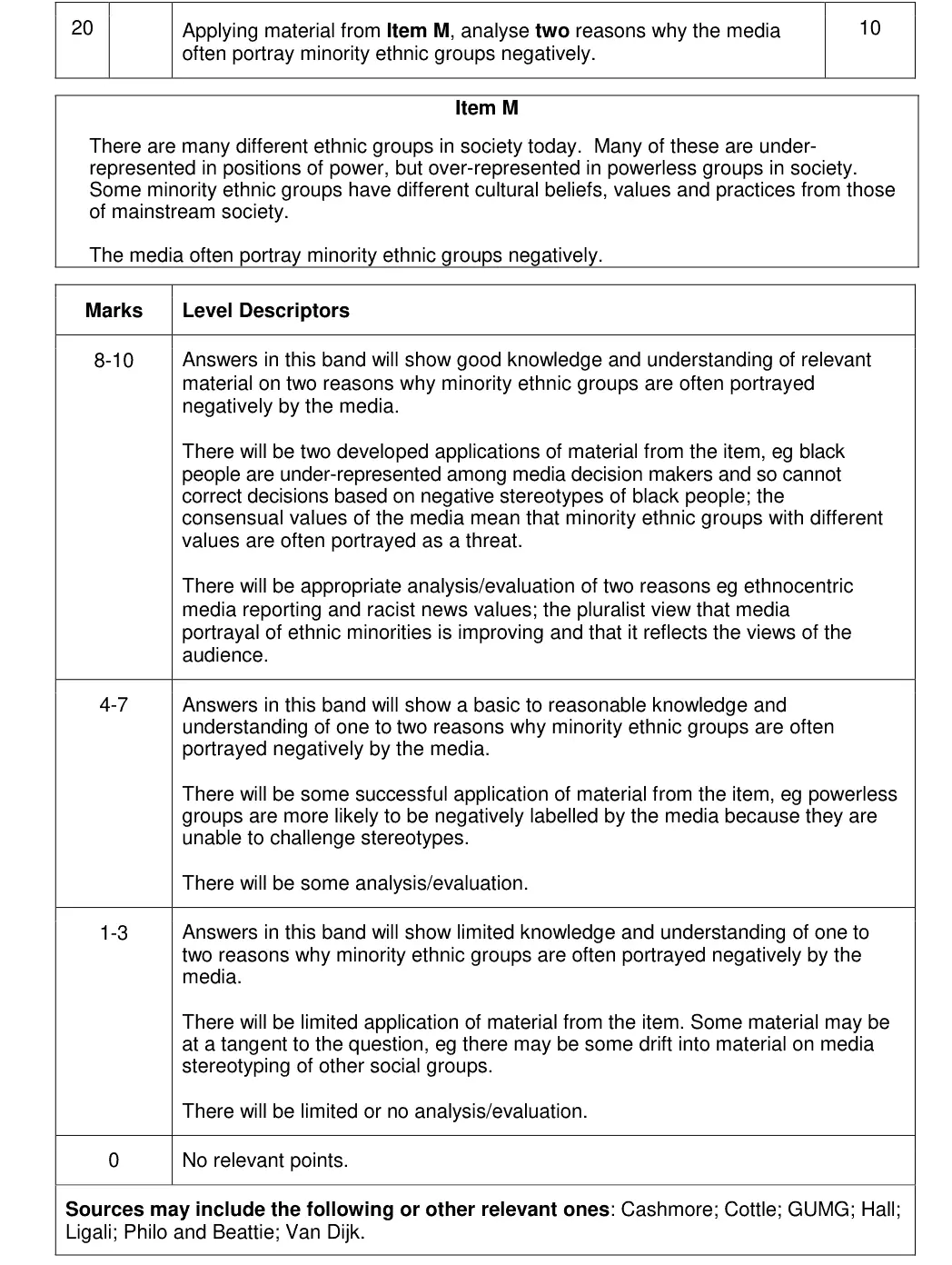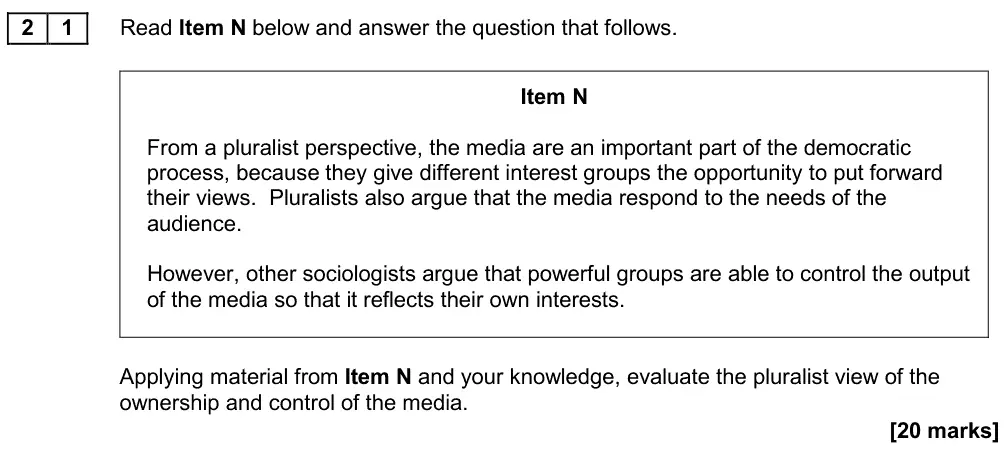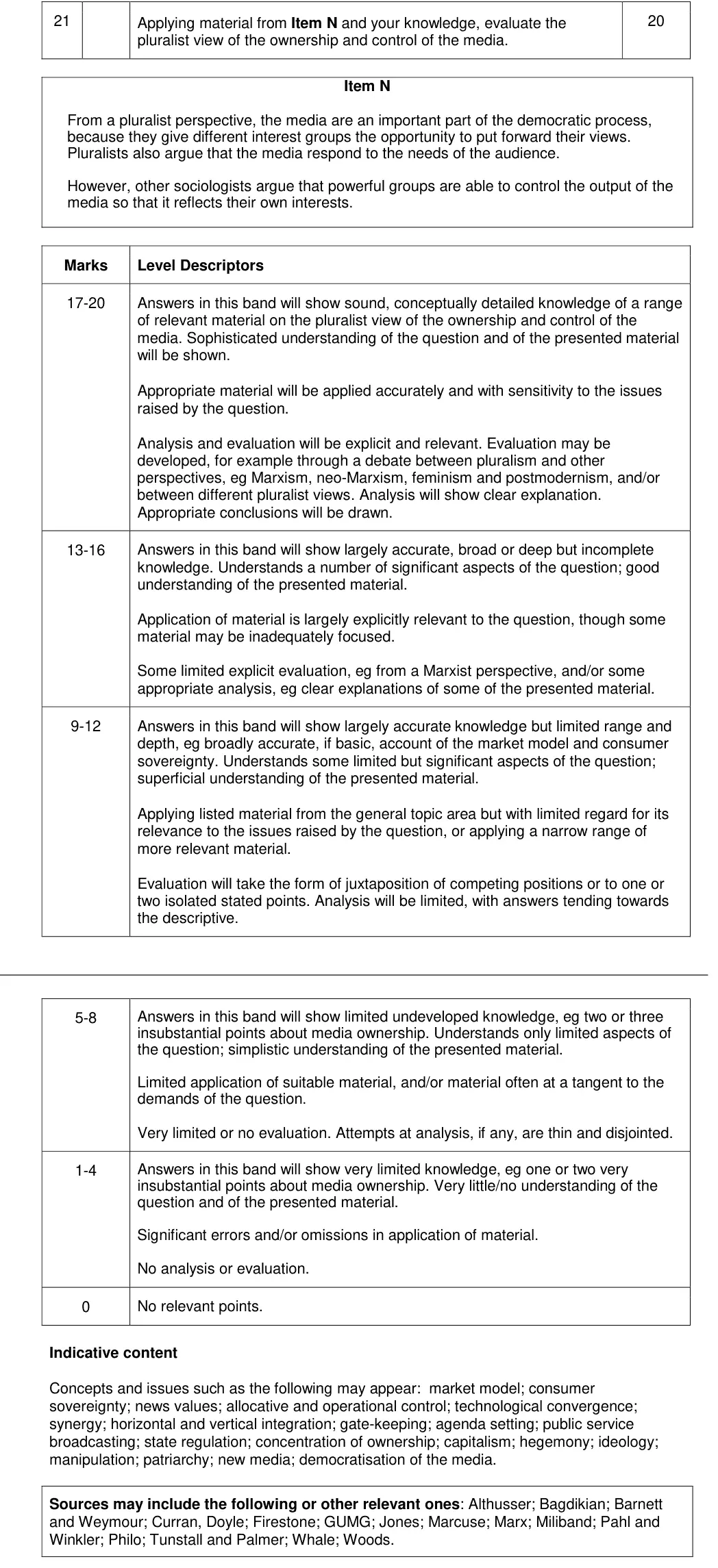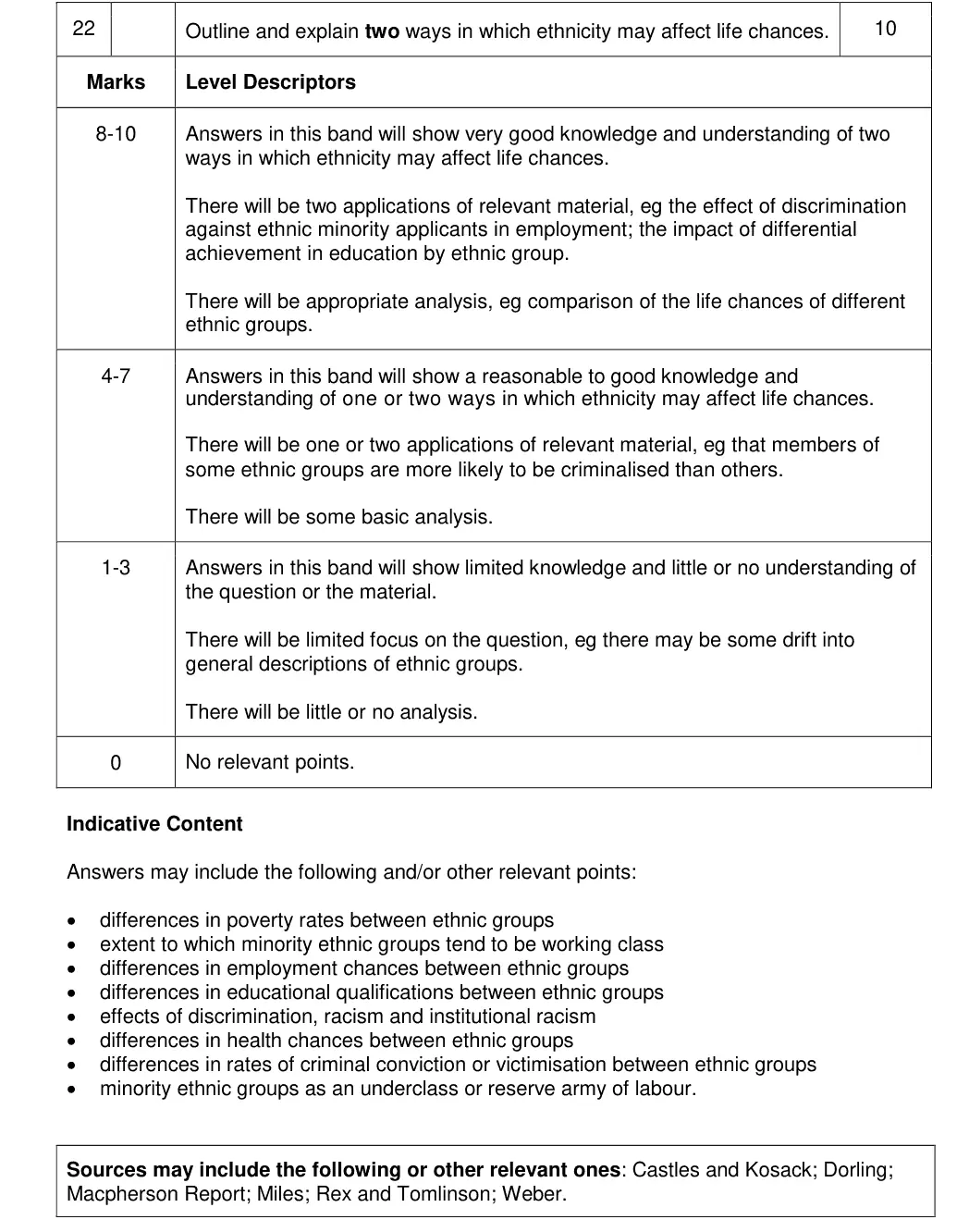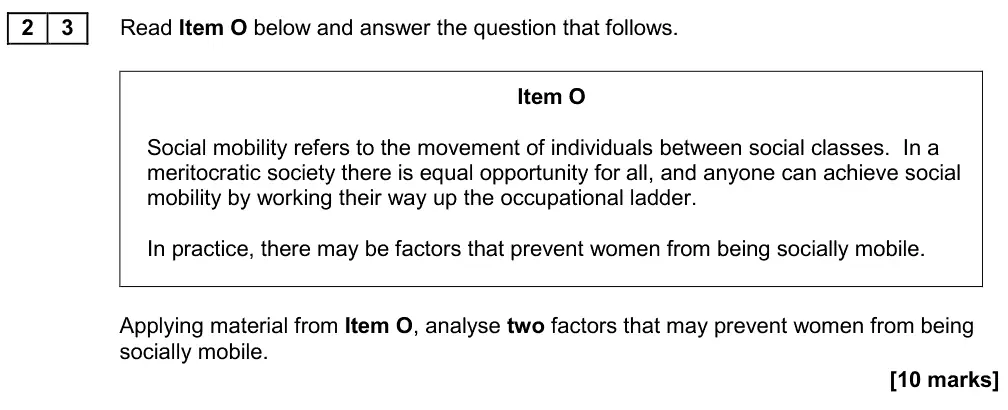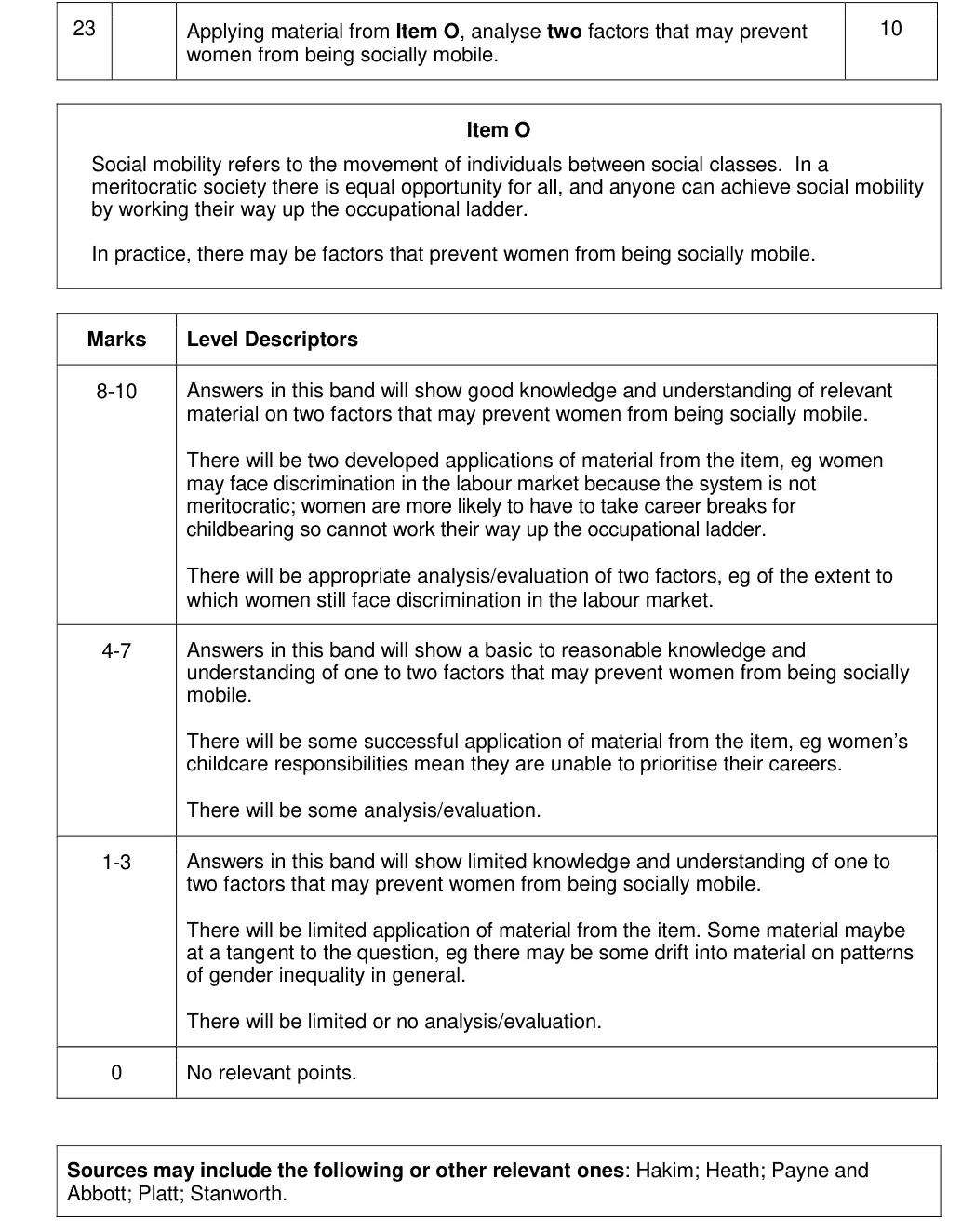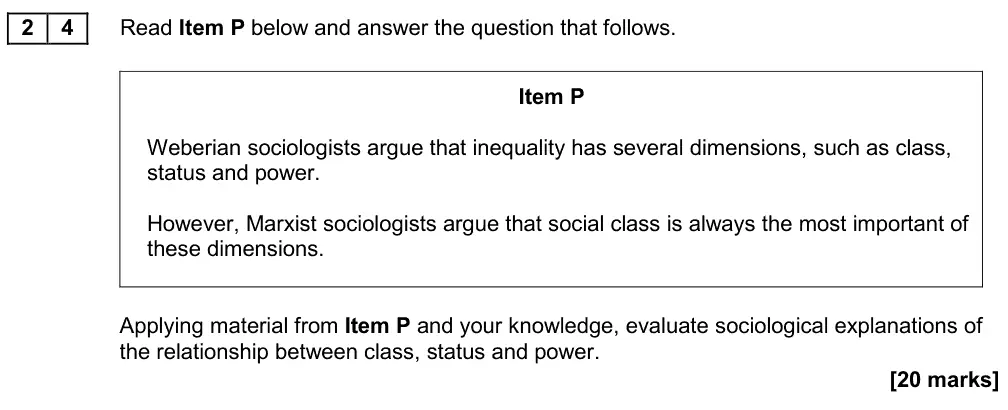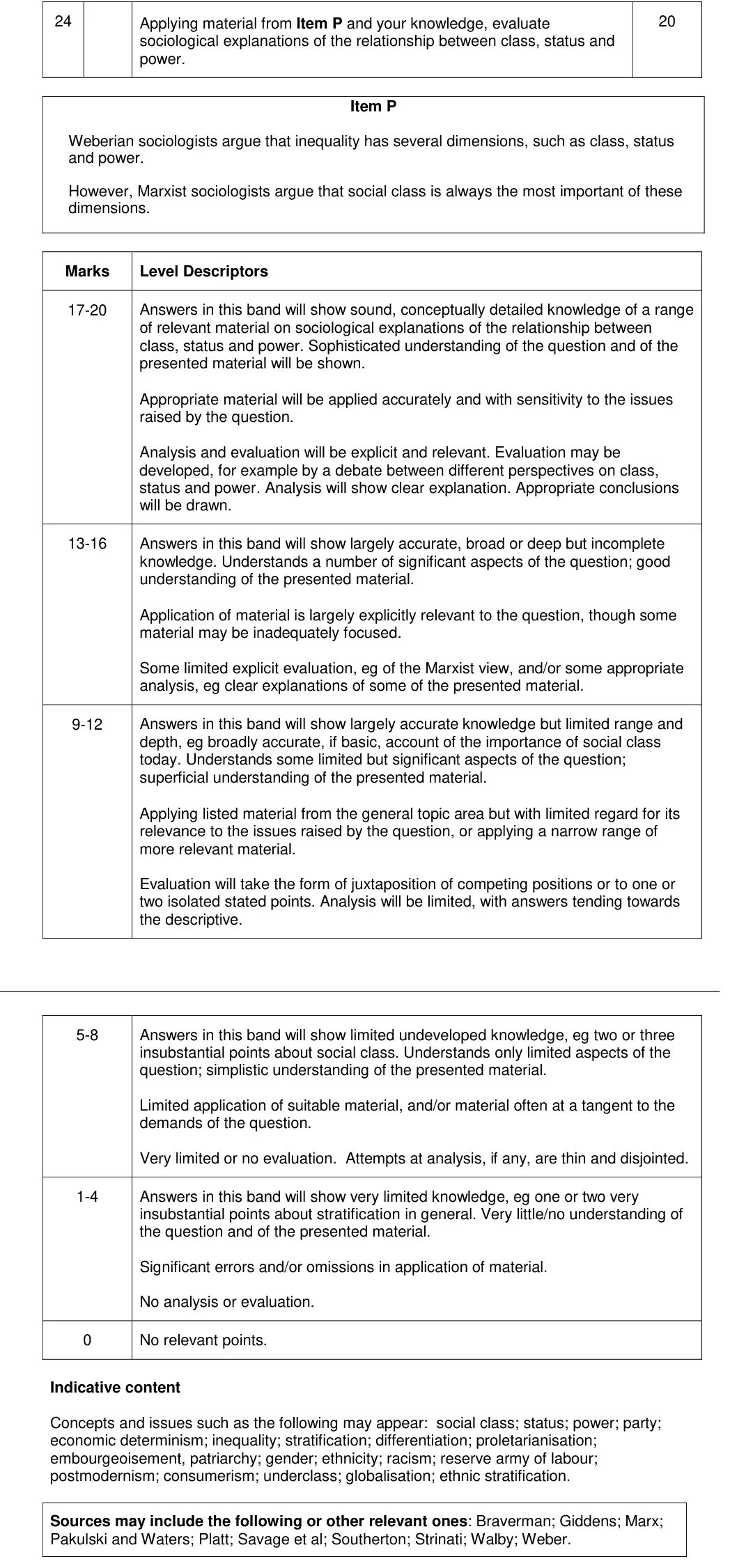
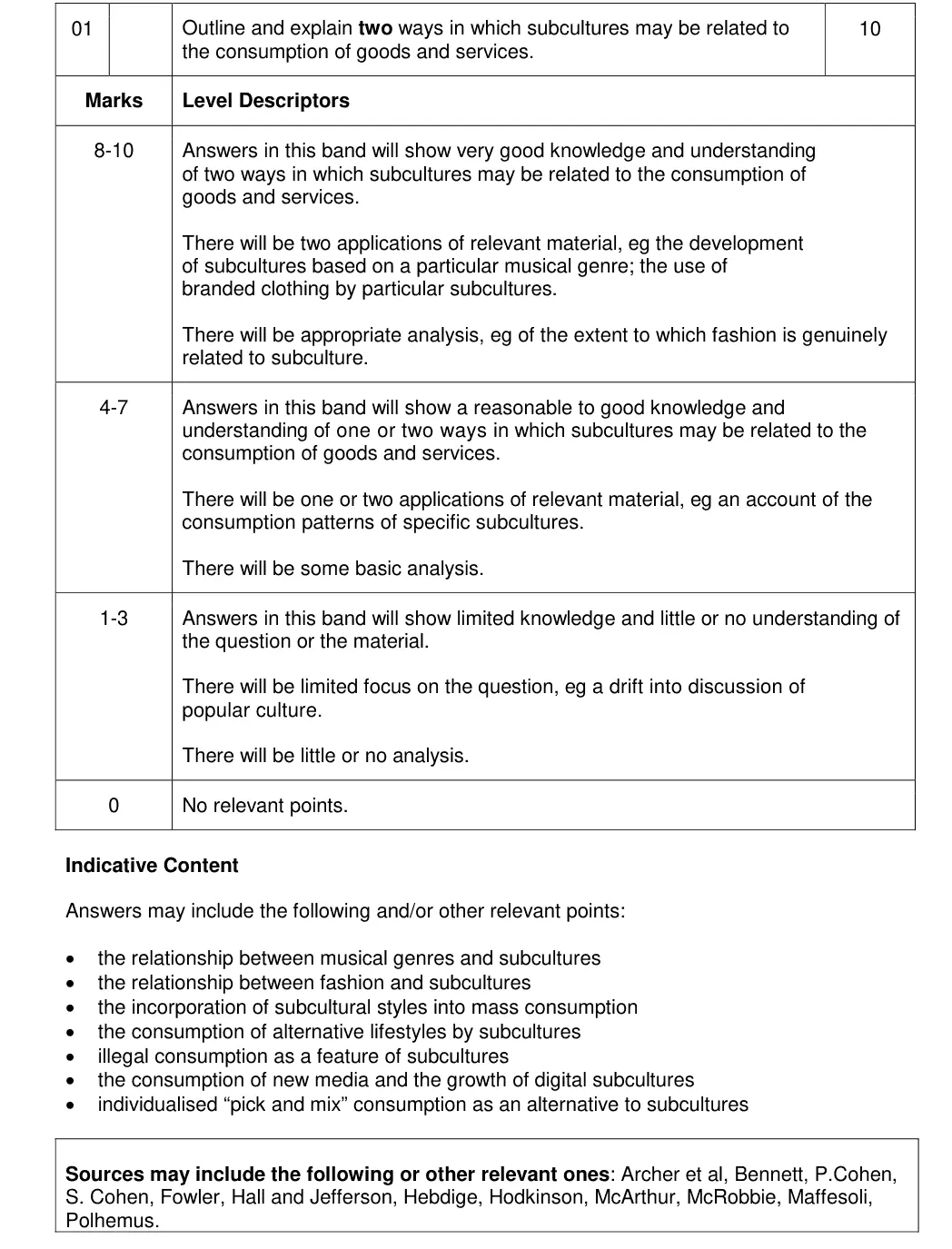
Mark scheme, including the levels grid and indicative content
Examiner's comment
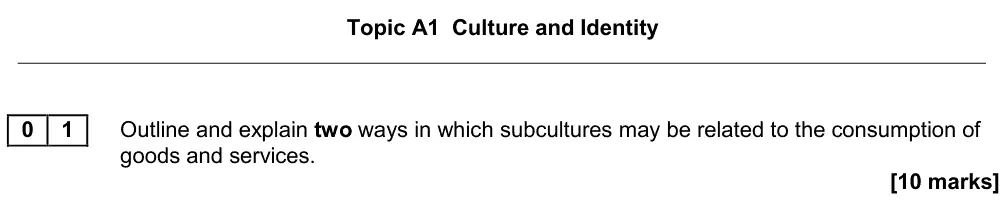
A number of students wrote introductory paragraphs and/or conclusions. These are not necessary, and are unlikely to gain additional marks. A number of students made only one point in their answer, or three or more, rather than the two asked for. In these cases, the two best answers were rewarded and will be in future series. It is helpful for students to clearly indicate their two answers, with wording such as “One way is…” or by starting a new paragraph for their second point. Schools and colleges should note that there is no reference in the mark scheme for 10 mark ‘outline and explain’ questions to evaluation, and that evaluation is not a requirement for answers to these questions. The assessment objective allocations are different in the two types of 10 mark questions, and students should be made aware of this. There was a wide range of responses to these questions. A minority of students wrote very brief answers. For these 10 mark items, a simple statement of two ways, reasons or factors, without development, is not sufficient to access more than the lower marks in the mark range. The best answers were focused, clearly stating a point and then developing it, with use of sociological concepts, evidence and theory where appropriate, in ways that demonstrated the skills expected from the targeted assessment objectives. There was a tendency, however, for many answers to focus on the first aspect of the question at the expense of the second. Students need guidance on how to approach these questions and how to best demonstrate their sociological understanding. The nature of these questions means that students cannot rely on reciting knowledge. They require students to bring together two aspects of their sociological knowledge in a way that they are unlikely to have done before. Answers will sometimes require claims that students may be unsure of because they do not know of specific evidence (for example, in question 5, whether migrants from Eastern Europe who are single workers tend to live alone or in shared households). However, answers that are sociologically plausible will be accepted. Many answered this by describing features, such as style of dress or preferred music, of particular subcultures with less success in developing general points about the relationship between subcultures and the consumption of goods and services.
Notes from the mark scheme and report
- two ways subcultures relate to consumption (music genres, branded clothing/fashion, incorporation into mass consumption, pick-and-mix consumption)
- drift into popular culture in general = 1–3
- many just described the dress or music of particular subcultures without making a general point about consumption