June 2017: AS Paper 2

180 marks · 22 question parts · Paper, mark scheme and report on AQA's site · AQA no longer hosts this series; the questions are from a copy of AQA's original paper
Question by question

QTopicMarksAOType
1 Research methods: questionnaires, interviews, observation, experiments, documents and official statistics 4AO1=2,AO3=2Outline
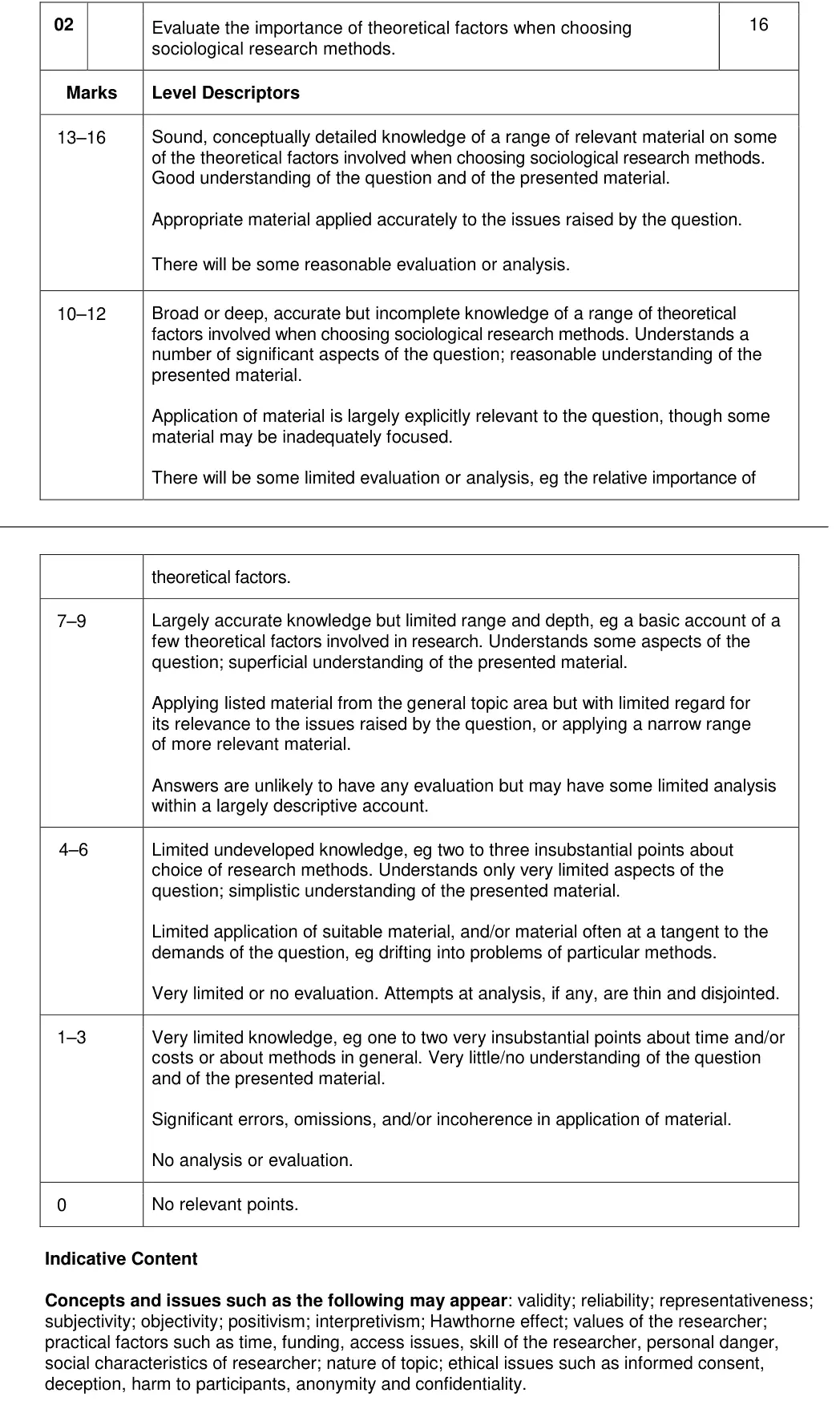
2 Theoretical, practical and ethical issues in research, Positivism, interpretivism and social facts 16AO1=6,AO2=5,AO3=5Essay
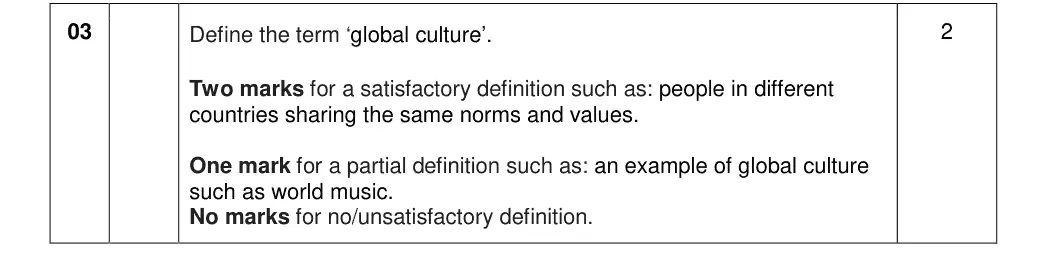
3 Conceptions of culture: subculture, mass, folk, high, popular and global culture 2AO1=2Define
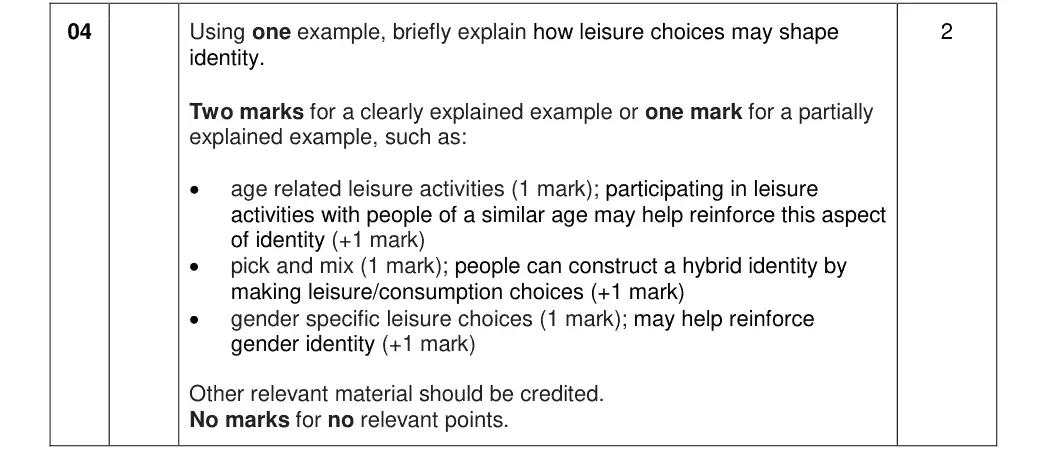
4 Identity, production, consumption and globalisation, Identity and age, disability, ethnicity, gender, nationality, sexuality and class 2AO2=2Brief explain
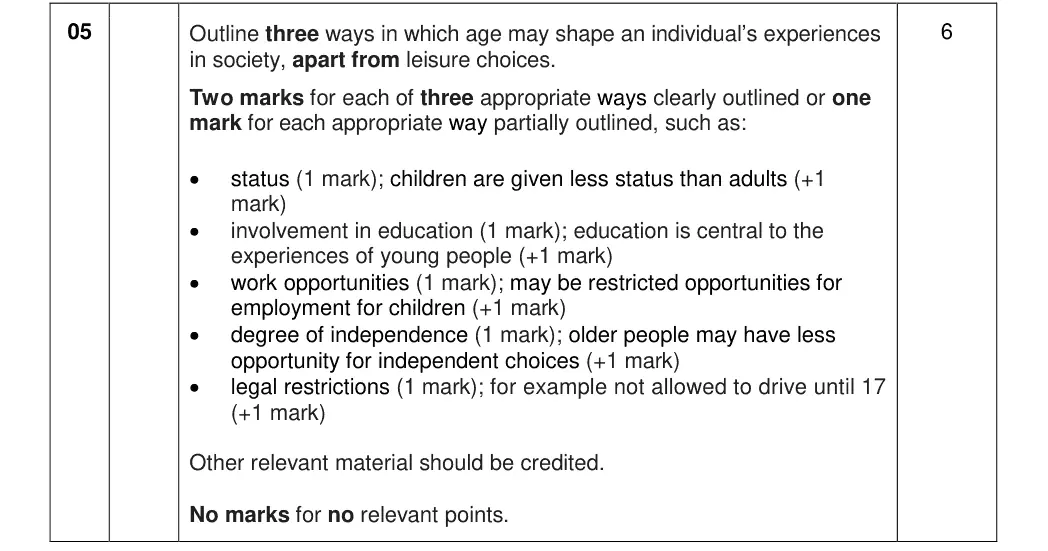
5 Identity and age, disability, ethnicity, gender, nationality, sexuality and class 6AO1=6Outline
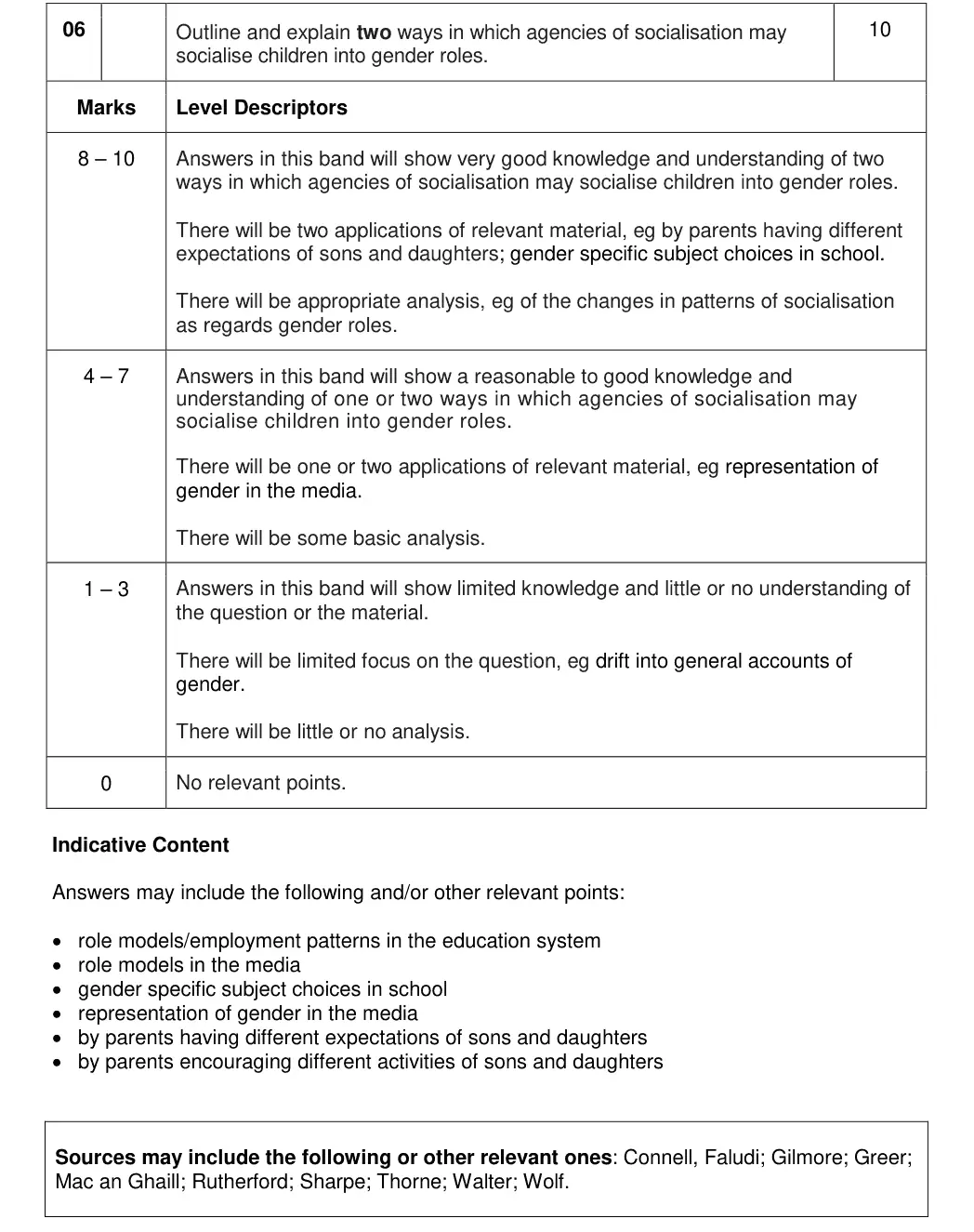
6 Socialisation and the agencies of socialisation, Identity and age, disability, ethnicity, gender, nationality, sexuality and class 10AO1=5,AO2=3,AO3=2Outline and explain
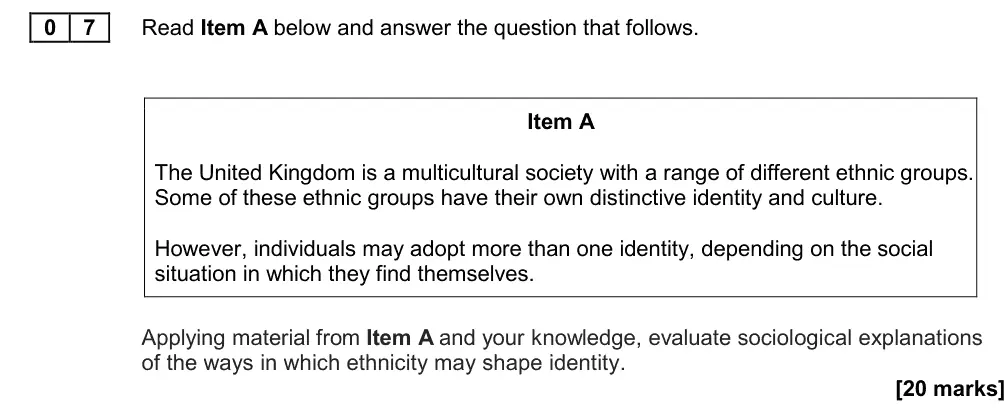
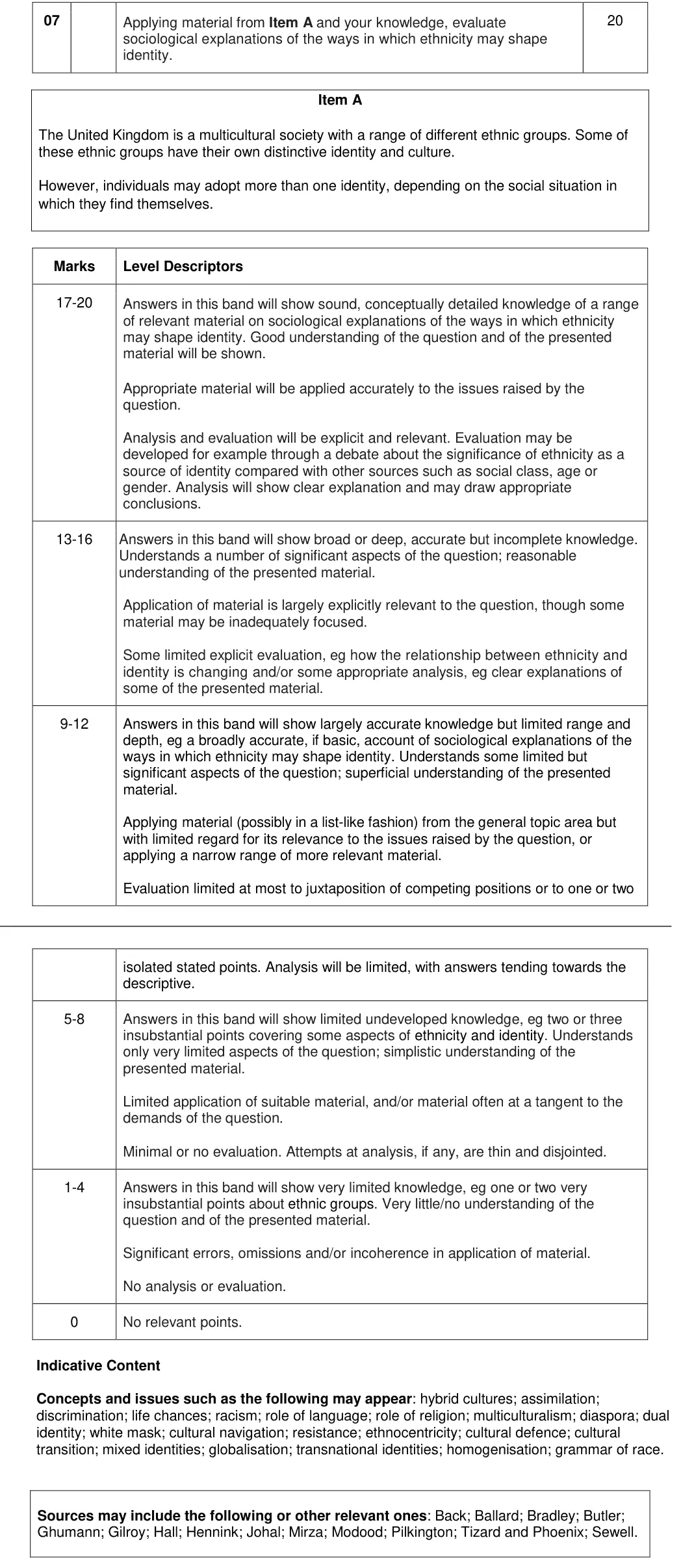
7 Identity and age, disability, ethnicity, gender, nationality, sexuality and class, Self, identity and difference 20AO1=8,AO2=6,AO3=6Essay
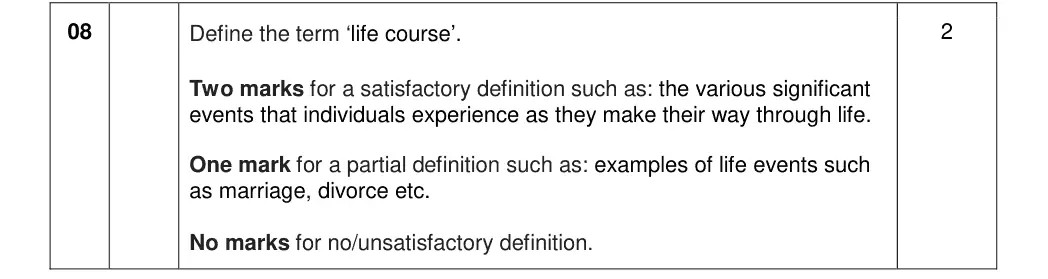
8 Marriage, divorce, cohabitation and family diversity 2AO1=2Define
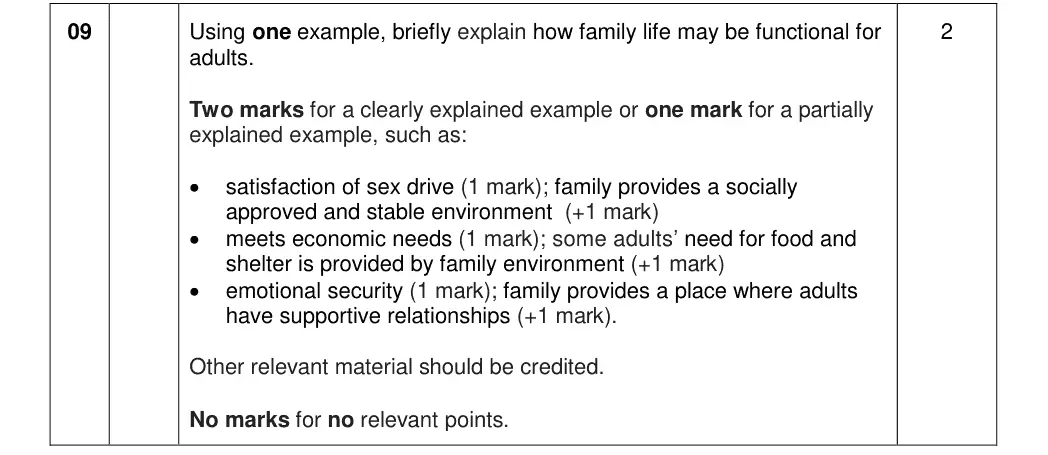
9 The family, social structure, the economy and state policies 2AO2=2Brief explain
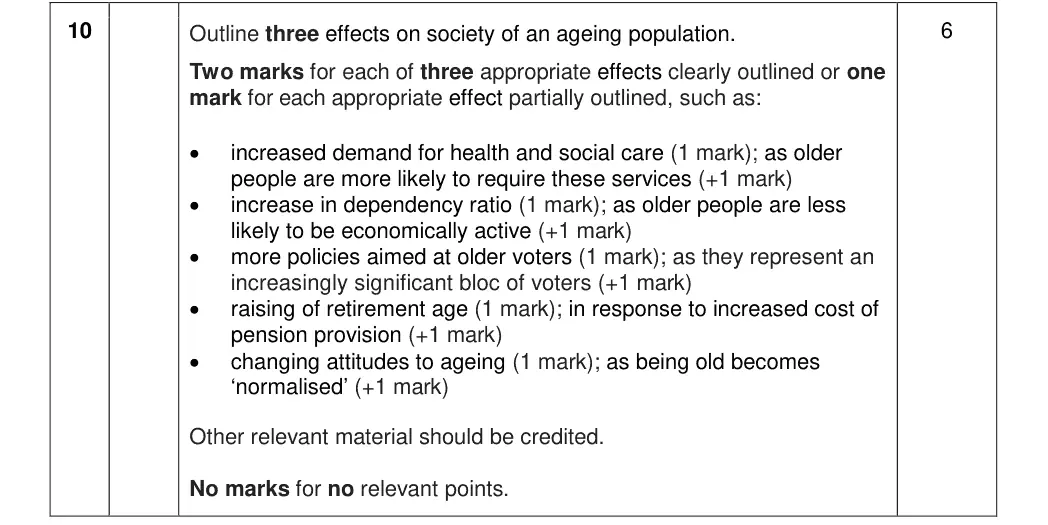
10 Demographic trends: birth rates, death rates, ageing and migration 6AO1=6Outline
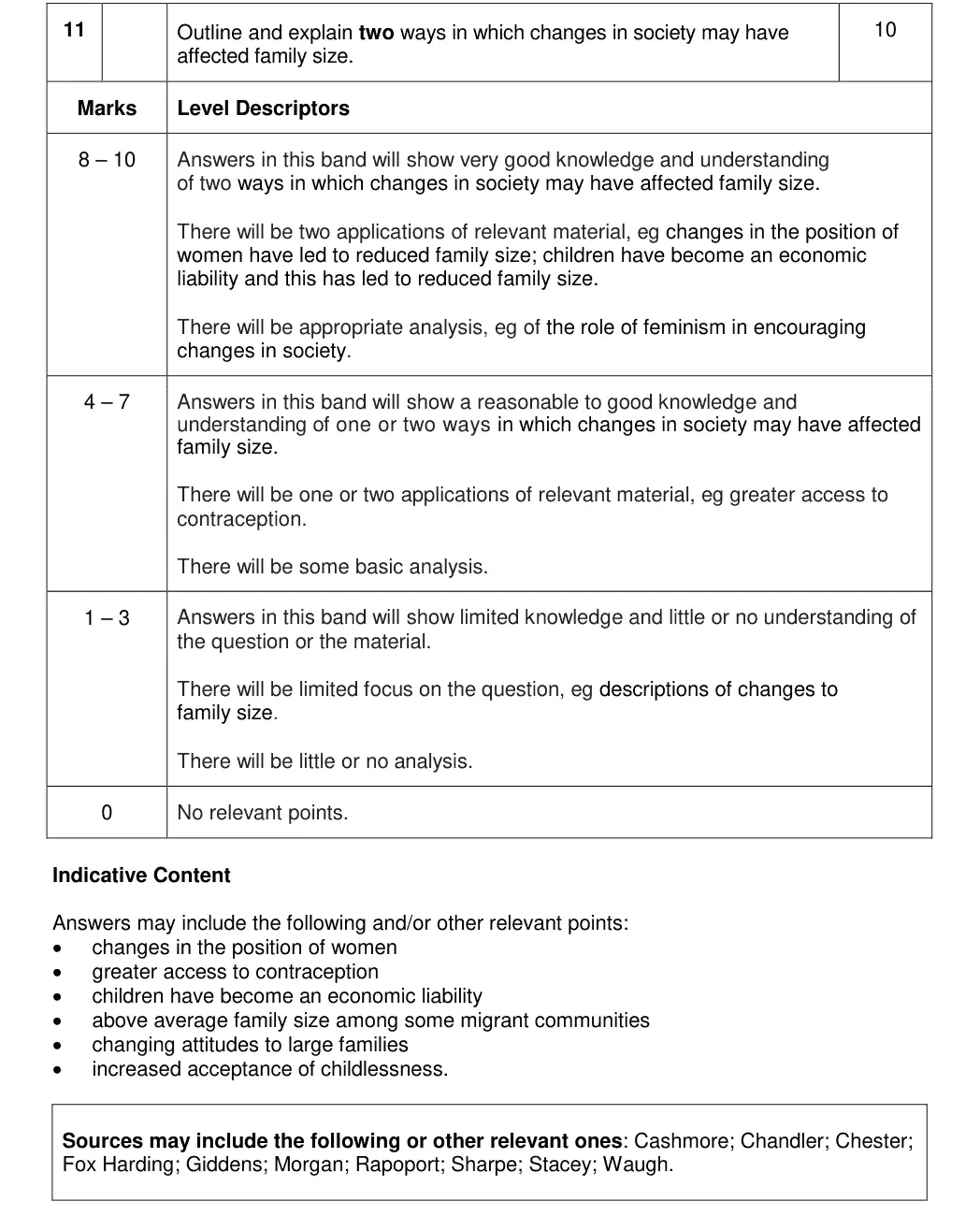
11 Demographic trends: birth rates, death rates, ageing and migration, Marriage, divorce, cohabitation and family diversity 10AO1=5,AO2=3,AO3=2Outline and explain
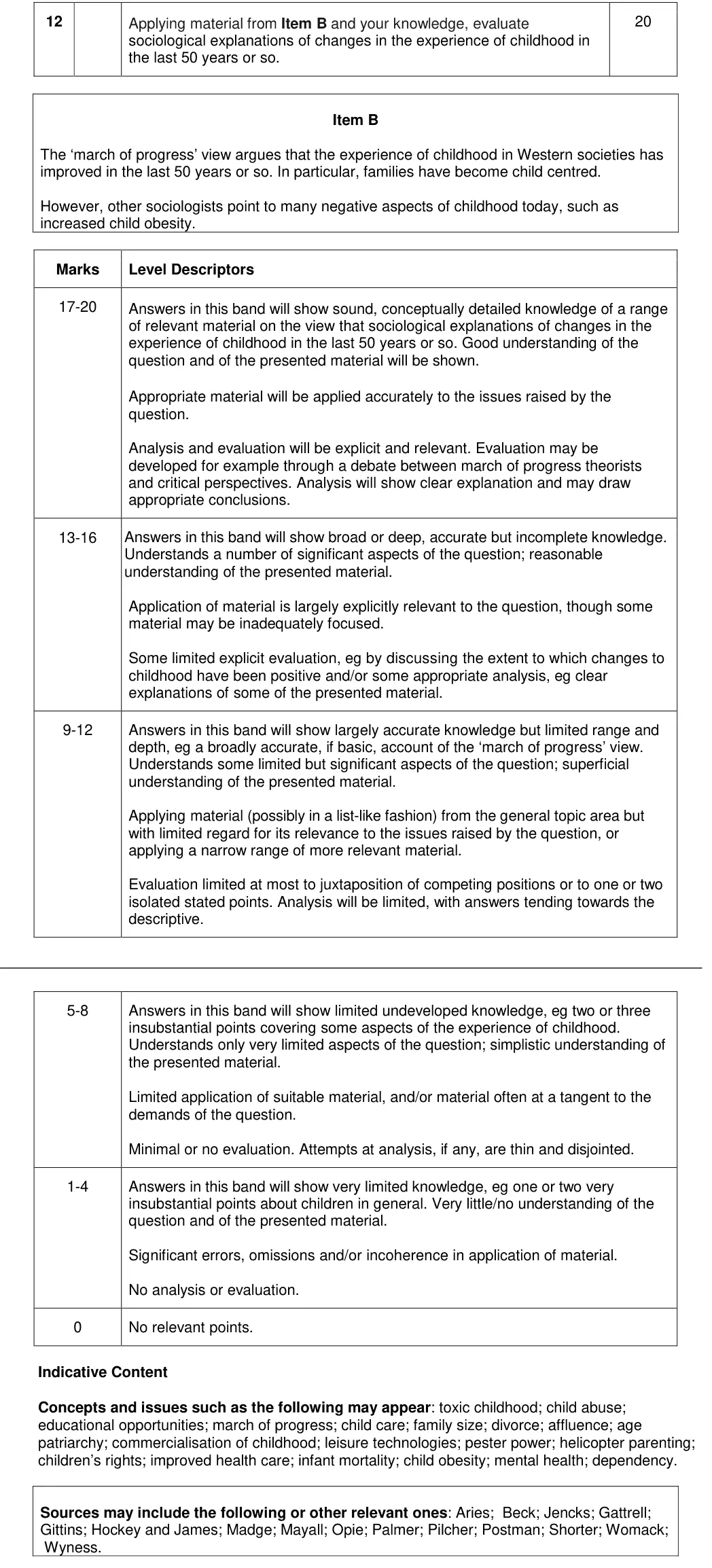
12 Childhood and the changing status of children 20AO1=8,AO2=6,AO3=6Essay
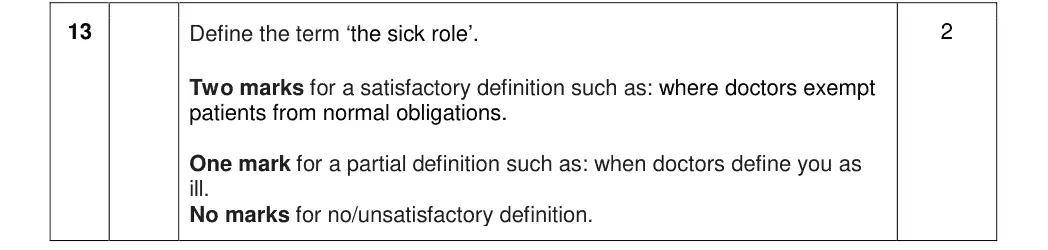
13 The social construction of health, illness, disability and the body 2AO1=2Define
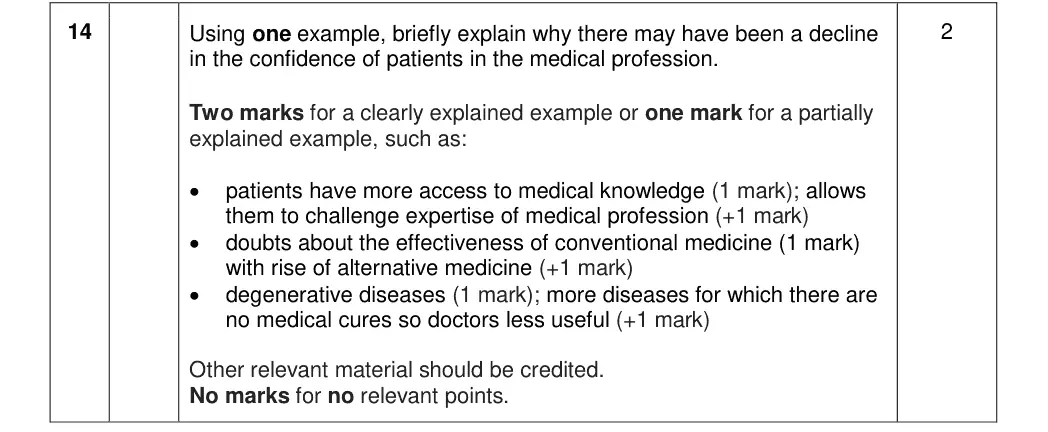
14 Medicine, the health professions and the globalised health industry 2AO2=2Brief explain
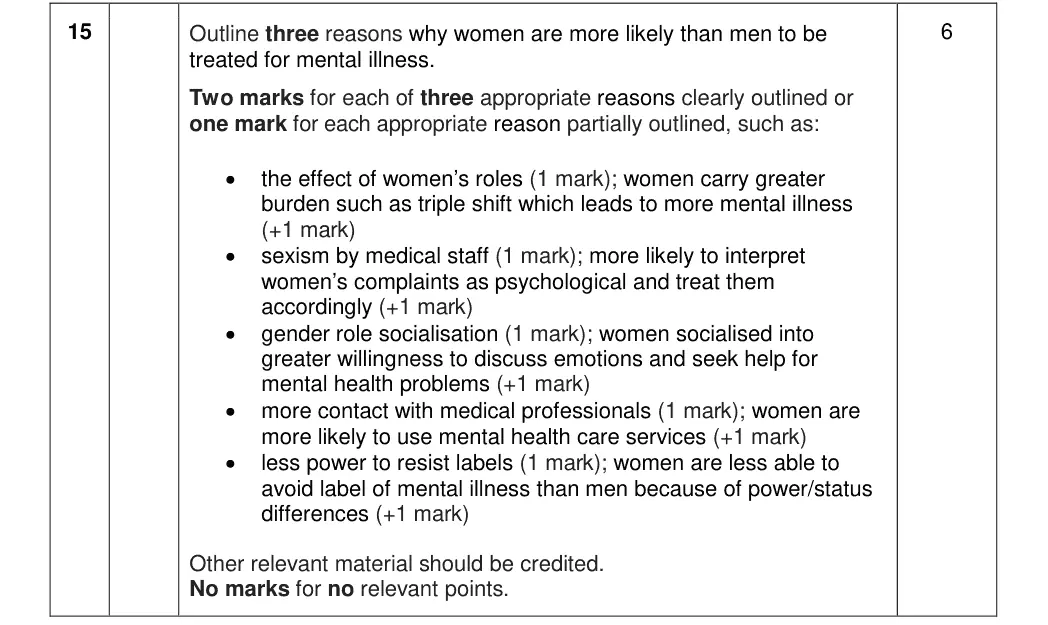
15 Mental illness 6AO1=6Outline
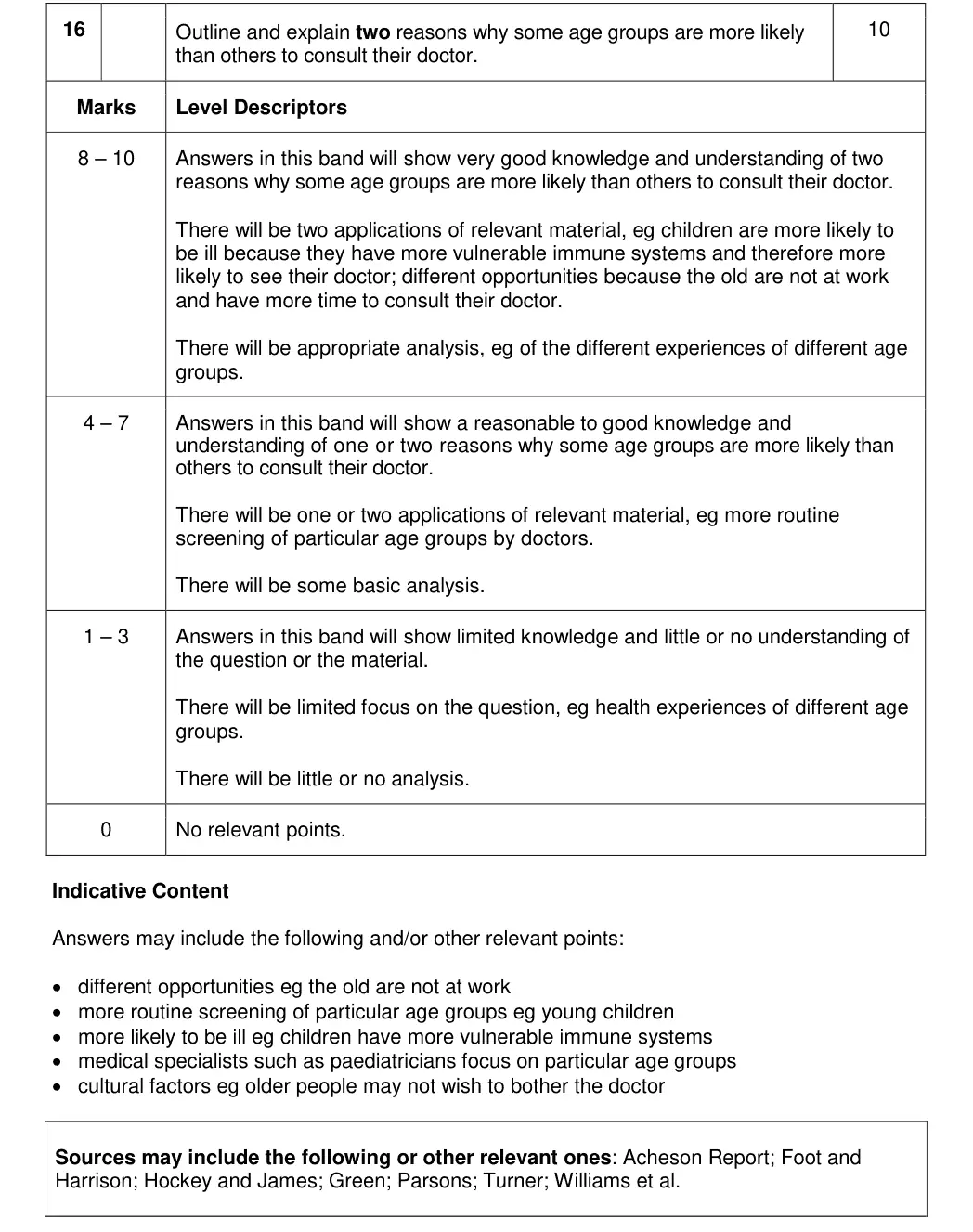
16 Inequalities in the provision of and access to health care, Health inequalities by class, gender, ethnicity and region 10AO1=5,AO2=3,AO3=2Outline and explain
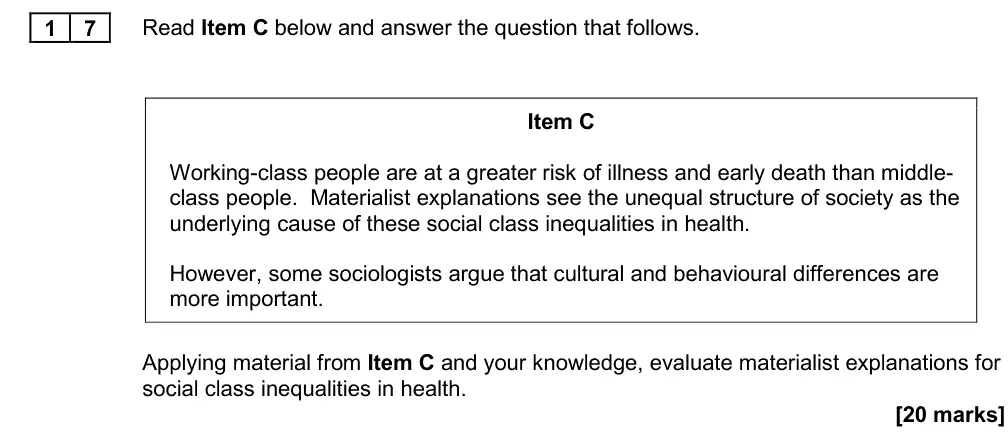
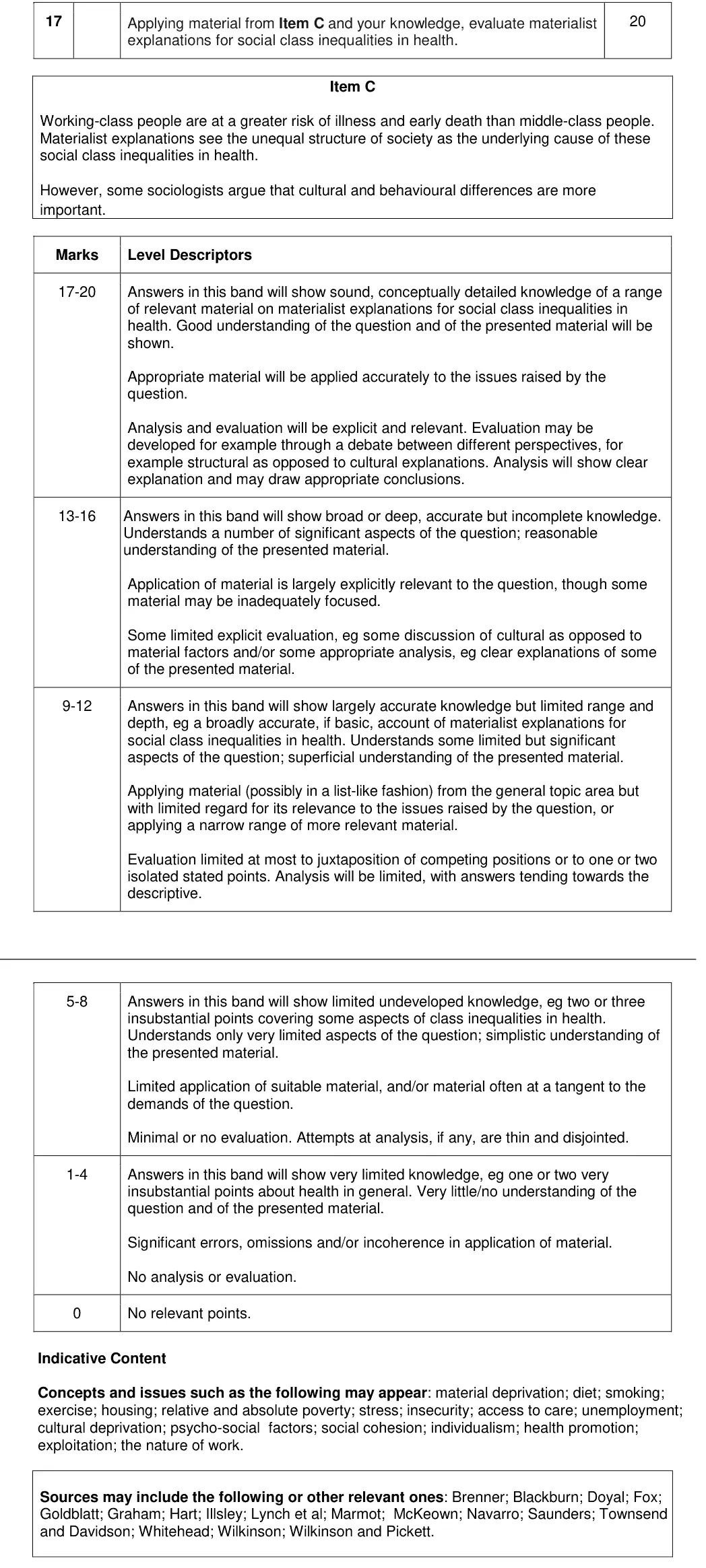
17 Health inequalities by class, gender, ethnicity and region 20AO1=8,AO2=6,AO3=6Essay
18 Work, worklessness and life chances 2AO1=2Define
19 The nature, existence and persistence of poverty 2AO2=2Brief explain
20 Work, worklessness and life chances 6AO1=6Outline
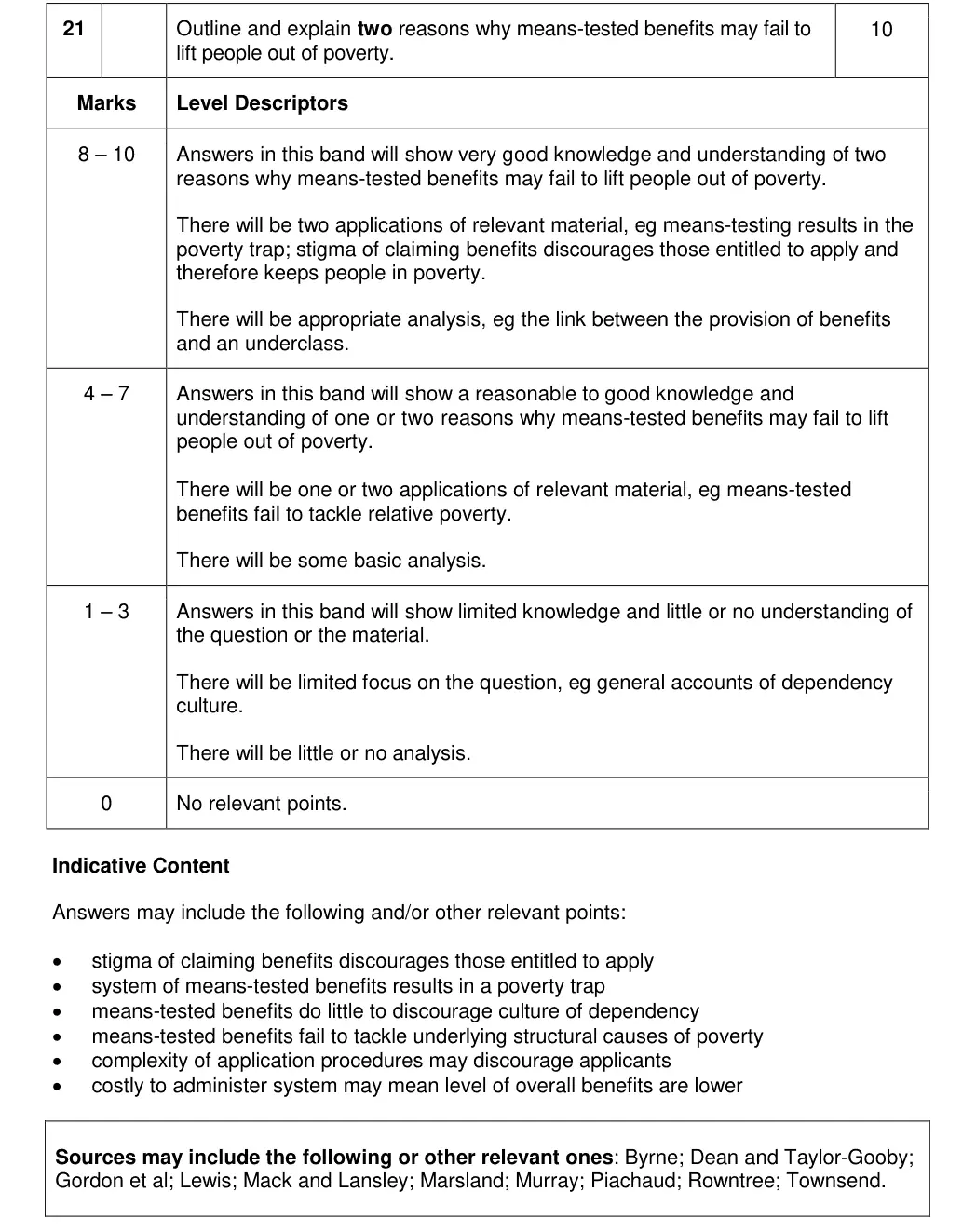
21 Responses and solutions to poverty: the state and welfare providers, The nature, existence and persistence of poverty 10AO1=5,AO2=3,AO3=2Outline and explain
22 The labour process: division of labour, technology and deskilling, Work, worklessness and life chances 20AO1=8,AO2=6,AO3=6Essay

The questions

12345678910111213141516171819202122
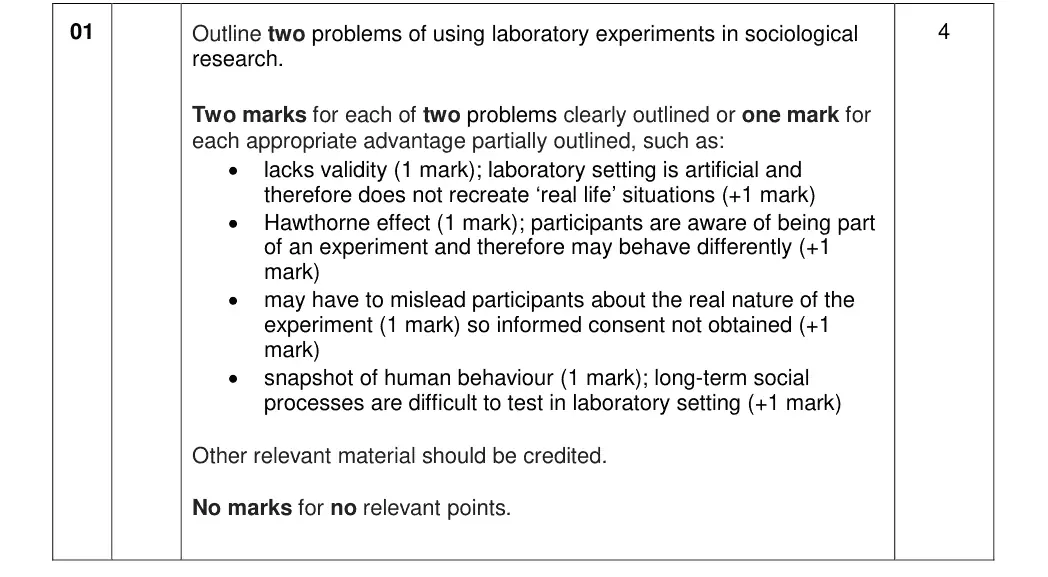
June 2017 · AS Paper 2 · Q1 4 marks AO1=2, AO3=2 Outline research methods

0 1
Outline two problems of using laboratory experiments in sociological research.
[4 marks]
June 2017 · AS Paper 2 · Q2 16 marks AO1=6, AO2=5, AO3=5 16-mark essay choice of research methodpositivism and interpretivism
0 2
Evaluate the importance of theoretical factors when choosing sociological research
methods.
[16 marks]
June 2017 · AS Paper 2 · Q3 2 marks AO1=2 Define conceptions of culture

0 3
Define the term ‘global culture’.
[2 marks]
June 2017 · AS Paper 2 · Q4 2 marks AO2=2 Brief explain identity consumption and globalisationidentity class gender ethnicity

0 4
Using one example, briefly explain how leisure choices may shape identity.
[2 marks]
June 2017 · AS Paper 2 · Q5 6 marks AO1=6 Outline identity class gender ethnicity
0 5
Outline three ways in which age may shape an individual’s experiences in society,
apart from leisure choices.
[6 marks]
June 2017 · AS Paper 2 · Q6 10 marks AO1=5, AO2=3, AO3=2 Outline and explain socialisationidentity class gender ethnicity
0 6
Outline and explain two ways in which agencies of socialisation may socialise children
into gender roles.
[10 marks]
June 2017 · AS Paper 2 · Q7 20 marks AO1=8, AO2=6, AO3=6 20-mark essay identity class gender ethnicityself identity and difference
0 7
Read Item A below and answer the question that follows.
Item A
The United Kingdom is a multicultural society with a range of different ethnic groups.
Some of these ethnic groups have their own distinctive identity and culture.
However, individuals may adopt more than one identity, depending on the social
situation in which they find themselves.
Applying material from Item A and your knowledge, evaluate sociological explanations
of the ways in which ethnicity may shape identity.
[20 marks]
June 2017 · AS Paper 2 · Q8 2 marks AO1=2 Define marriage divorce and family diversity
0 8
Define the term ‘life course’.
[2 marks]
June 2017 · AS Paper 2 · Q9 2 marks AO2=2 Brief explain family and social structure
0 9
Using one example, briefly explain how family life may be functional for adults.
[2 marks]
June 2017 · AS Paper 2 · Q10 6 marks AO1=6 Outline demographic trends
1 0
Outline three effects on society of an ageing population.
[6 marks]
June 2017 · AS Paper 2 · Q11 10 marks AO1=5, AO2=3, AO3=2 Outline and explain demographic trendsmarriage divorce and family diversity
1 1
Outline and explain two ways in which changes in society may have affected family size.
[10 marks]
June 2017 · AS Paper 2 · Q12 20 marks AO1=8, AO2=6, AO3=6 20-mark essay childhood
1 2
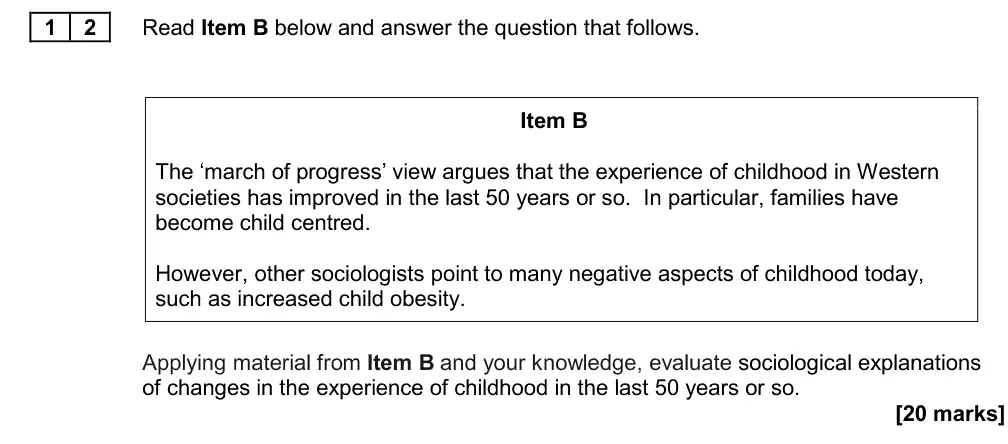
Read Item B below and answer the question that follows.
Item B
The ‘march of progress’ view argues that the experience of childhood in Western
societies has improved in the last 50 years or so.  In particular, families have
become child centred.
However, other sociologists point to many negative aspects of childhood today,
such as increased child obesity.
Applying material from Item B and your knowledge, evaluate sociological explanations
of changes in the experience of childhood in the last 50 years or so.
[20 marks]
June 2017 · AS Paper 2 · Q13 2 marks AO1=2 Define social construction of health
1 3
Define the term ‘the sick role’.
[2 marks]
June 2017 · AS Paper 2 · Q14 2 marks AO2=2 Brief explain medicine and health professions
1 4
Using one example, briefly explain why there may have been a decline in the
confidence of patients in the medical profession.
[2 marks]
June 2017 · AS Paper 2 · Q15 6 marks AO1=6 Outline mental illness
1 5
Outline three reasons why women are more likely than men to be treated for mental
illness.
[6 marks]
June 2017 · AS Paper 2 · Q16 10 marks AO1=5, AO2=3, AO3=2 Outline and explain access to health carehealth inequalities
1 6
Outline and explain two reasons why some age groups are more likely than others to
consult their doctor.
[10 marks]
June 2017 · AS Paper 2 · Q17 20 marks AO1=8, AO2=6, AO3=6 20-mark essay health inequalities
1 7
Read Item C below and answer the question that follows.
Item C
Working-class people are at a greater risk of illness and early death than middle-
class people.  Materialist explanations see the unequal structure of society as the
underlying cause of these social class inequalities in health.
However, some sociologists argue that cultural and behavioural differences are
more important.
Applying material from Item C and your knowledge, evaluate materialist explanations for
social class inequalities in health.
[20 marks]
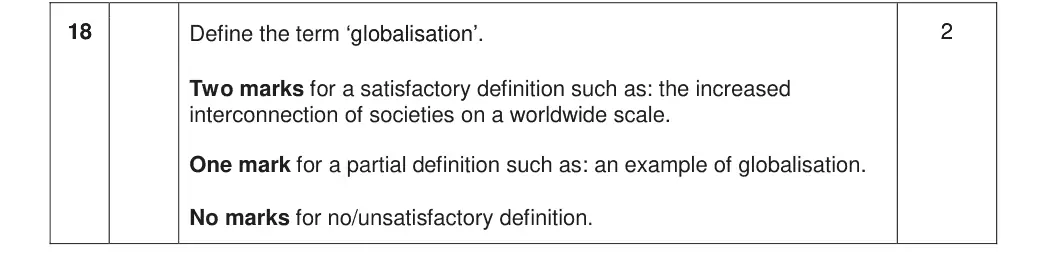
June 2017 · AS Paper 2 · Q18 2 marks AO1=2 Define work and worklessness
1 8
Define the term ‘globalisation’.
[2 marks]
June 2017 · AS Paper 2 · Q19 2 marks AO2=2 Brief explain poverty
1 9
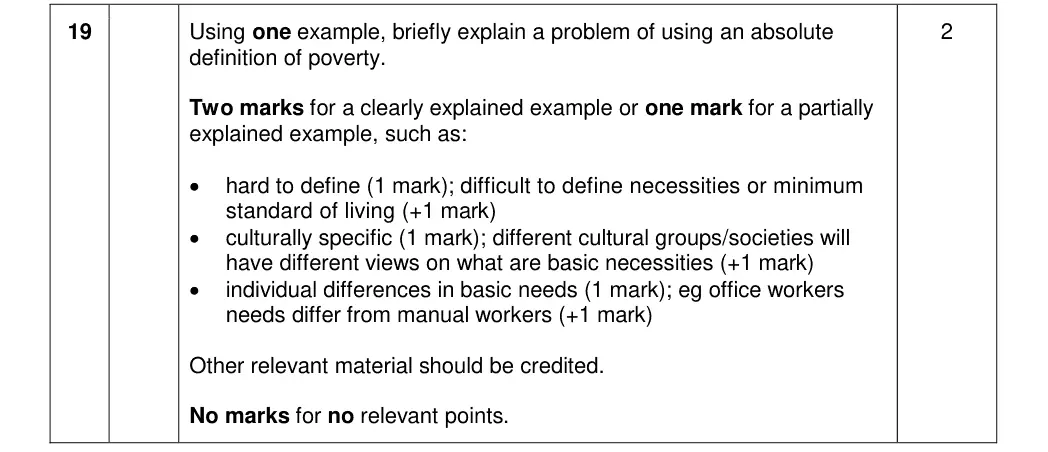
Using one example, briefly explain a problem of using an absolute definition of poverty.
[2 marks]
June 2017 · AS Paper 2 · Q20 6 marks AO1=6 Outline work and worklessness
2 0
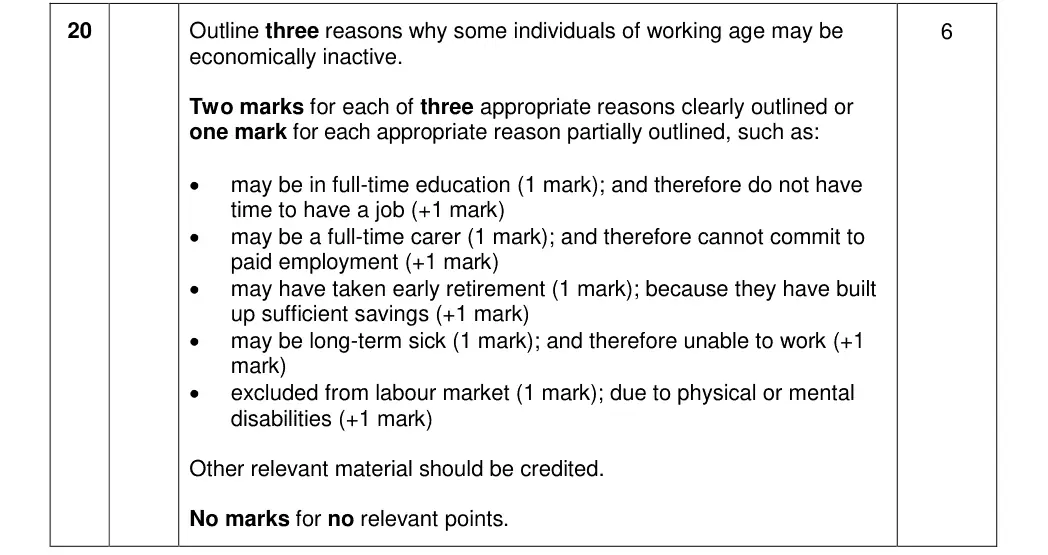
Outline three reasons why some individuals of working age may be economically
inactive.
[6 marks]
June 2017 · AS Paper 2 · Q21 10 marks AO1=5, AO2=3, AO3=2 Outline and explain responses to povertypoverty
2 1
Outline and explain two reasons why means-tested benefits may fail to lift people out of
poverty.
[10 marks]
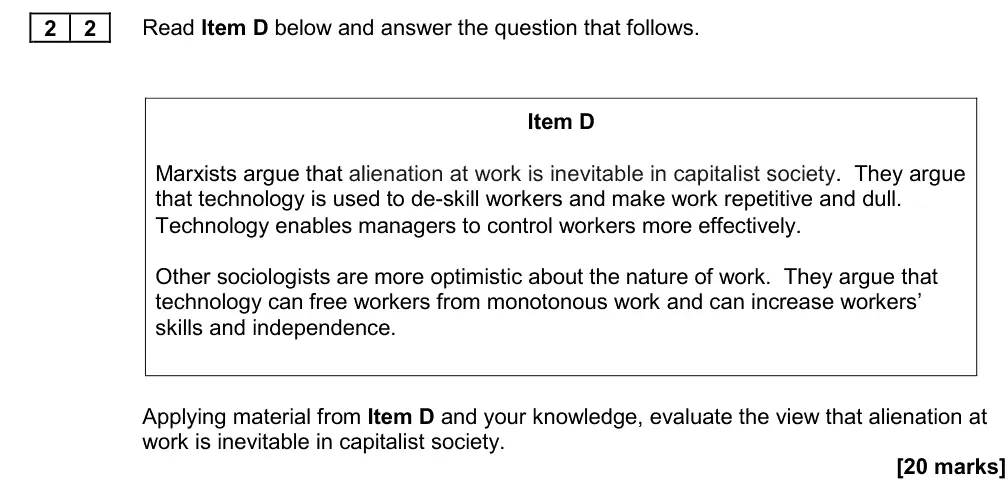
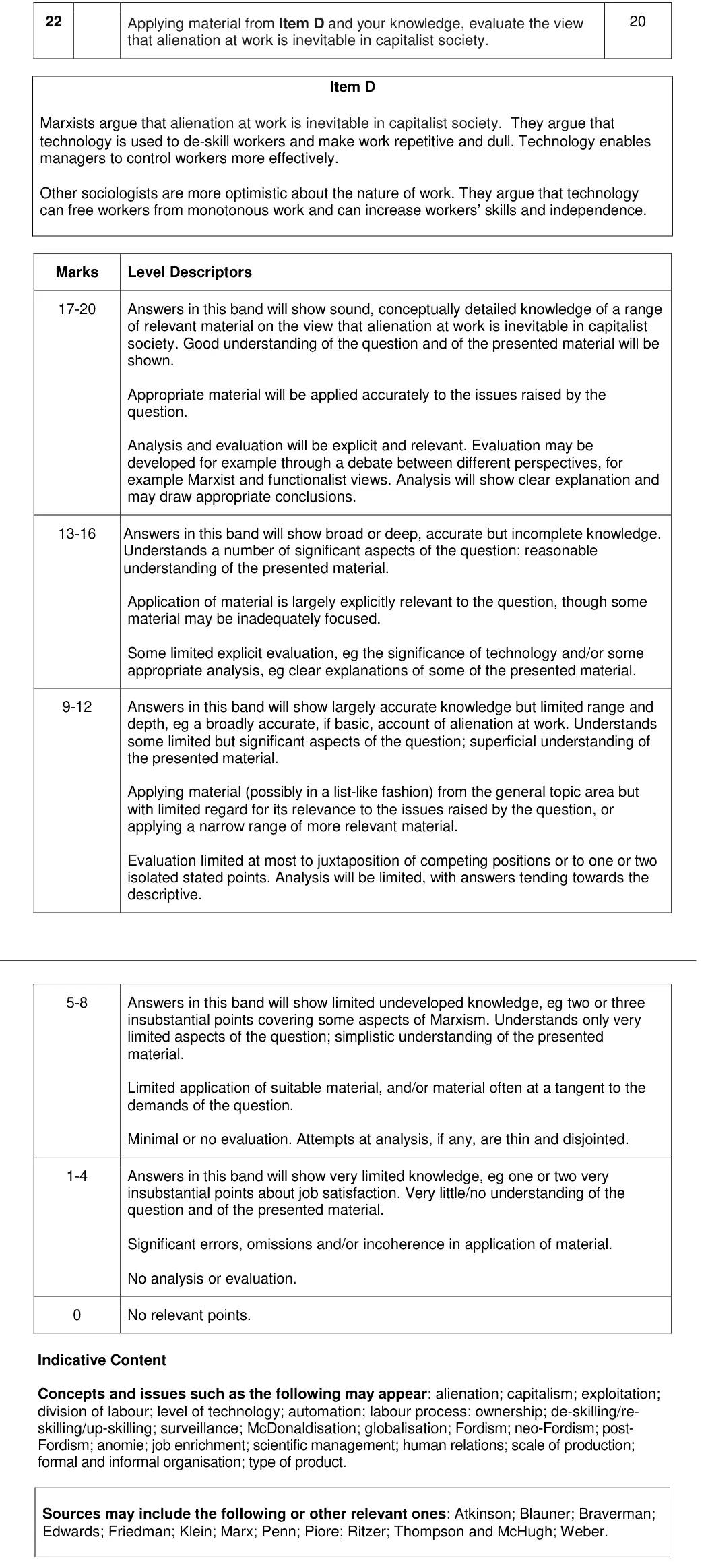
June 2017 · AS Paper 2 · Q22 20 marks AO1=8, AO2=6, AO3=6 20-mark essay labour processwork and worklessness
2 2
Read Item D below and answer the question that follows.
Item D
Marxists argue that alienation at work is inevitable in capitalist society.  They argue
that technology is used to de-skill workers and make work repetitive and dull.
Technology enables managers to control workers more effectively.
Other sociologists are more optimistic about the nature of work.  They argue that
technology can free workers from monotonous work and can increase workers’
skills and independence.
Applying material from Item D and your knowledge, evaluate the view that alienation at
work is inevitable in capitalist society.
[20 marks]

Work with an AQA sociology tutor

Want a paper marked and gone through with you? Message us.

Prefer email? Send an enquiry

If you are under 18, please include a parent's contact details. Enquiries go to enquiries@alevelsociologytutor.com and are deleted once handled. All tutoring is online.