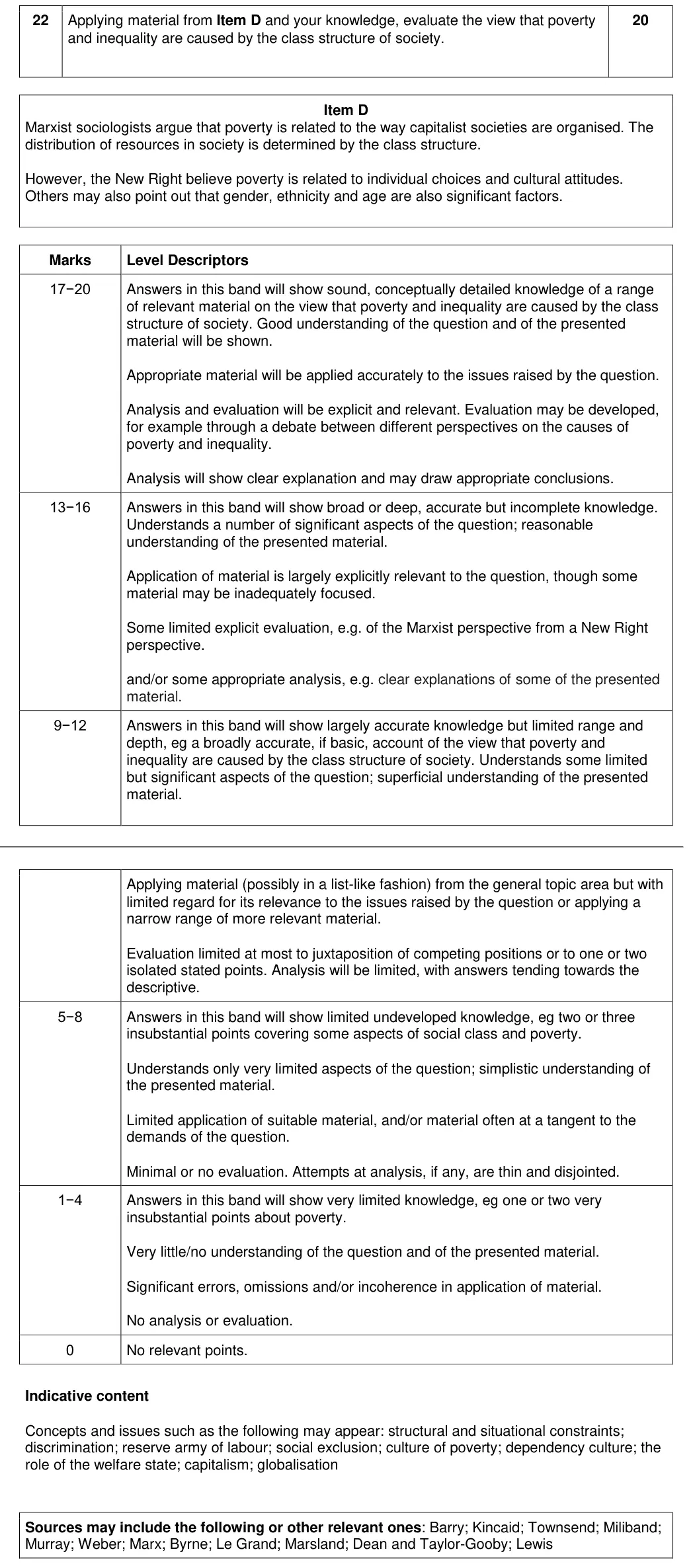
Mark scheme
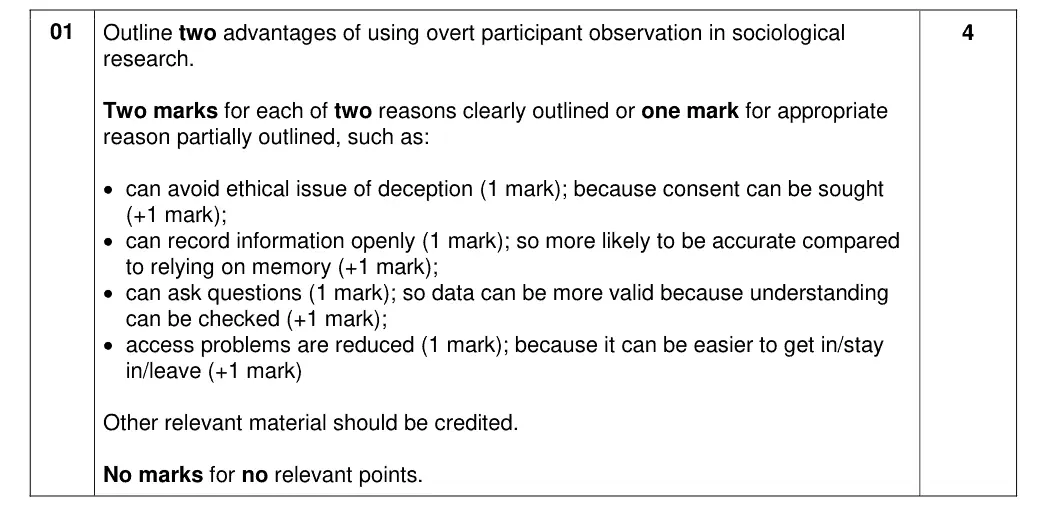
Examiner's comment
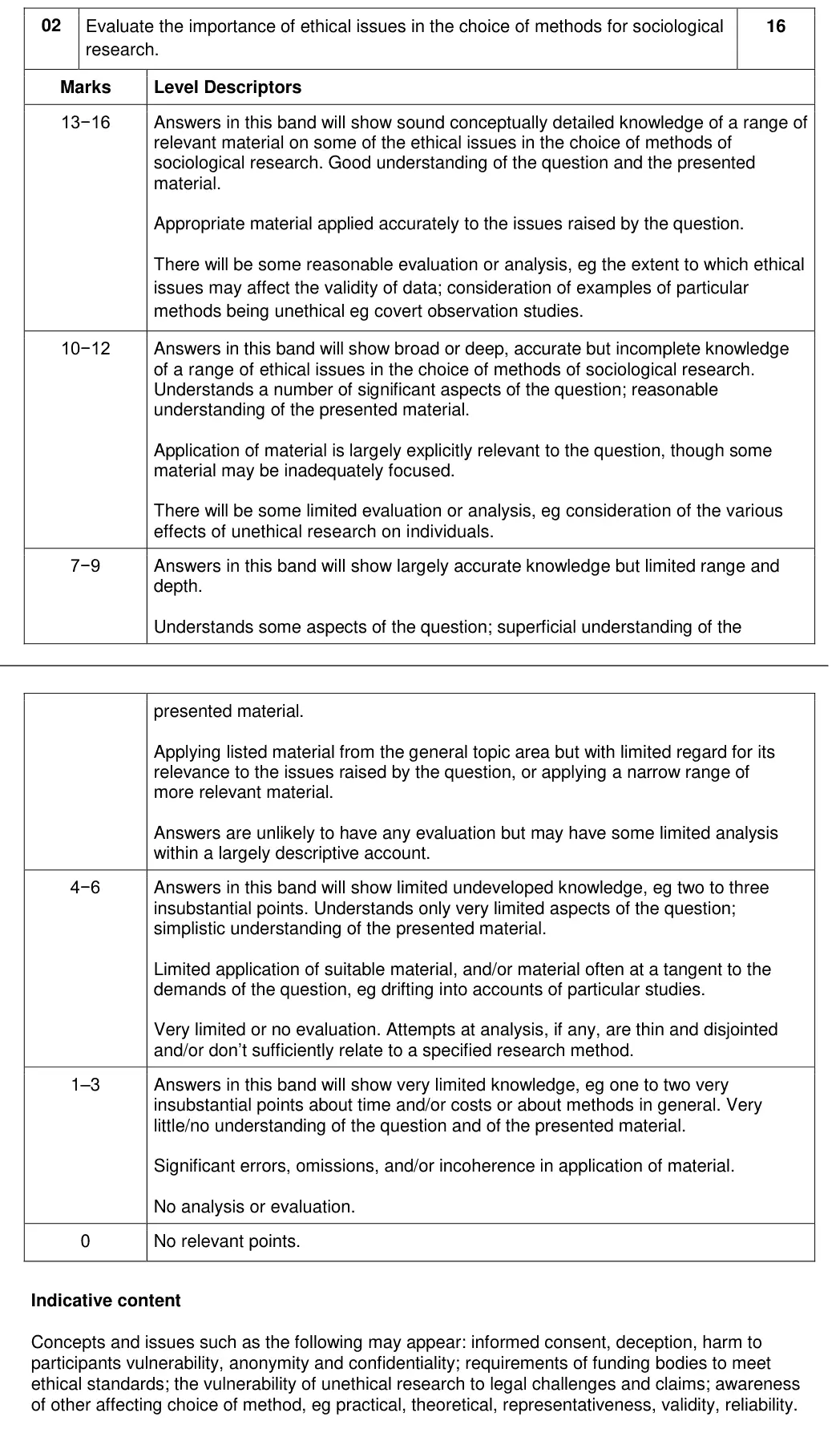
Students who recognised that the key to this question was the idea of overt observation were largely successful. The most common responses then identified the ethical advantage of gaining consent from those being observed. Many answers pointed out the advantage of being able to record information openly and not rely on memory. It is helpful for students to explain how the suggested advantage is an advantage. For example, answers that just said that one of the advantages was that overt observation allowed questions to be asked without elaborating on how or why that was an advantage were credited as partial answers. There were a number of students who identified generic advantages of observation in general. These answers failed to score any marks.
Notes from the mark scheme and report
- AO grid not printed
- 2 marks for each of two advantages clearly outlined, 1 if partial
- credited: avoids deception because consent can be sought, open recording is more accurate than memory, questions can check understanding, easier access
- the advantage must be specific to overt observation and explained (just 'can ask questions' = partial)
- generic advantages of observation scored nothing
- AO split from AQA's standard grid for this paper (this year's mark scheme does not print it).