Examiner's comment
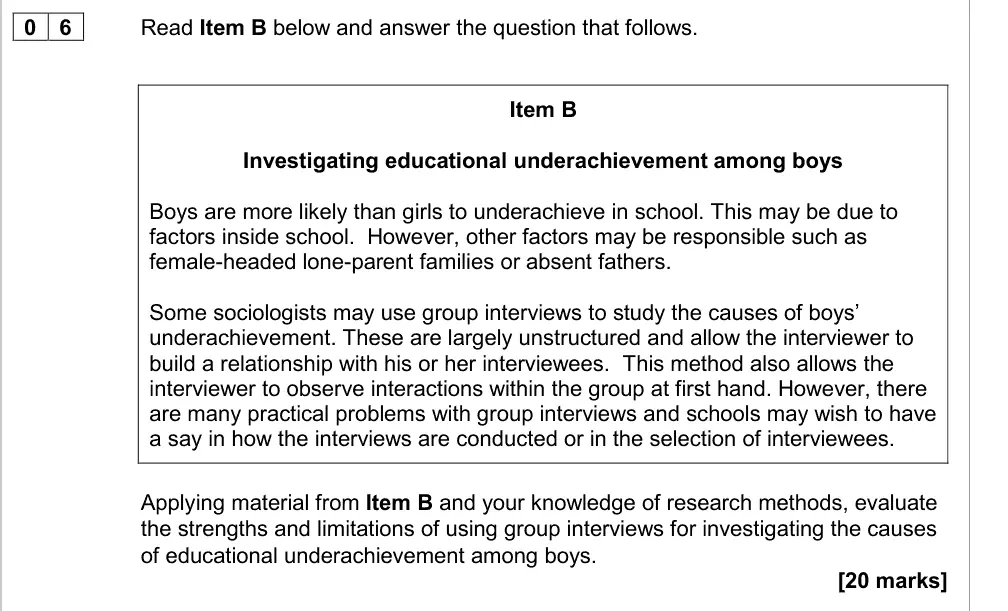
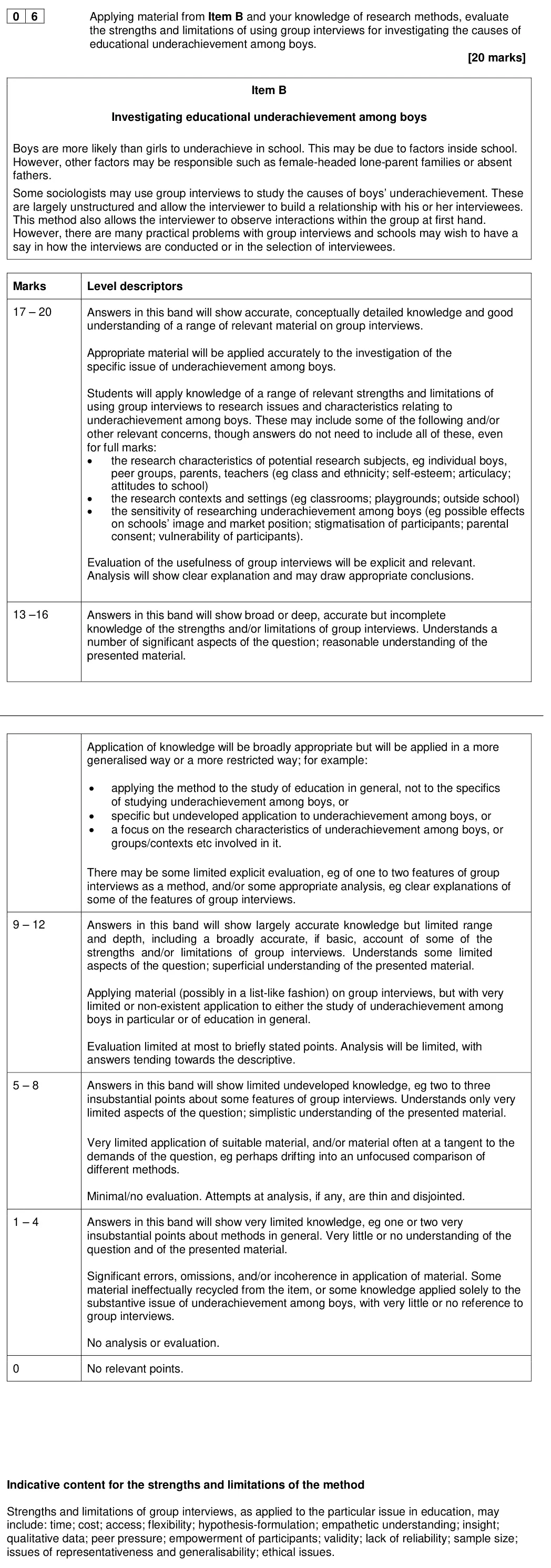
The most important factor in answering this question successfully was the extent to which students applied their understanding of group interviews to the specific issue of boys’ underachievement. However, some students were content simply to present a range of strengths and limitations of the method without applying them to the issue in the question. Some of these answers picked up on the idea in the Item that group interviews tend to be largely unstructured and then focused on an account of unstructured interviews without further reference to the ‘group’ dimension. Other responses presented some generic research characteristics of investigating education, such as that head teachers may wish to protect the reputation of their school and therefore be unwilling to allow research to take place. More developed versions of this approach pointed to the possible negative consequences for a school’s reputation, in a marketised education system, of research into underachievement among its pupils. Better responses identified specific characteristics of underachieving boys, for example that they may be members of anti-school subcultures, and may therefore treat the interviewer as an authority figure to be mocked, refuse to cooperate, or be truanting and thus be unavailable for interview. The best responses connected issues such as these to the strengths or limitations that result from the group nature of the method. For example, some argued that peer pressure arising from an anti-school subculture within the group, or embarrassment at having to talk about the reasons for their underachievement (such as their home and family life) in front of friends, may distort the outcome of the group interview.