Examiner's comment
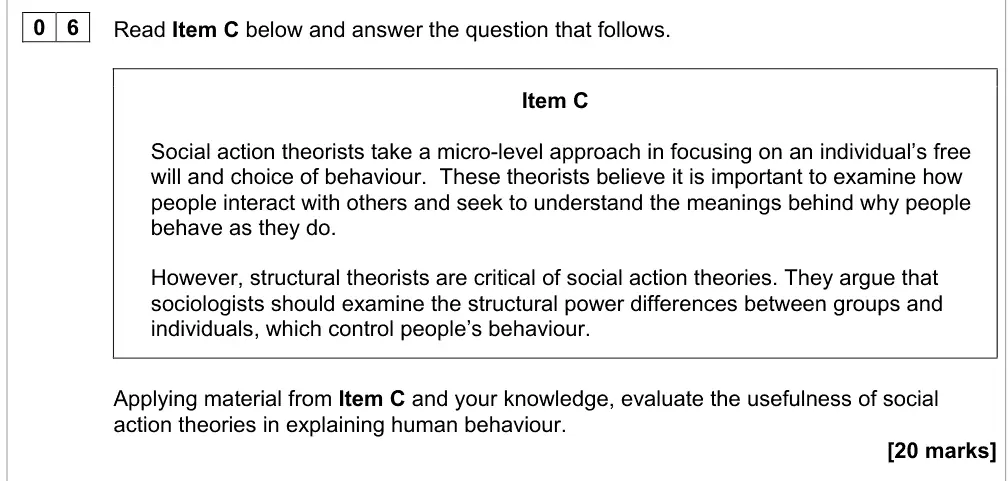
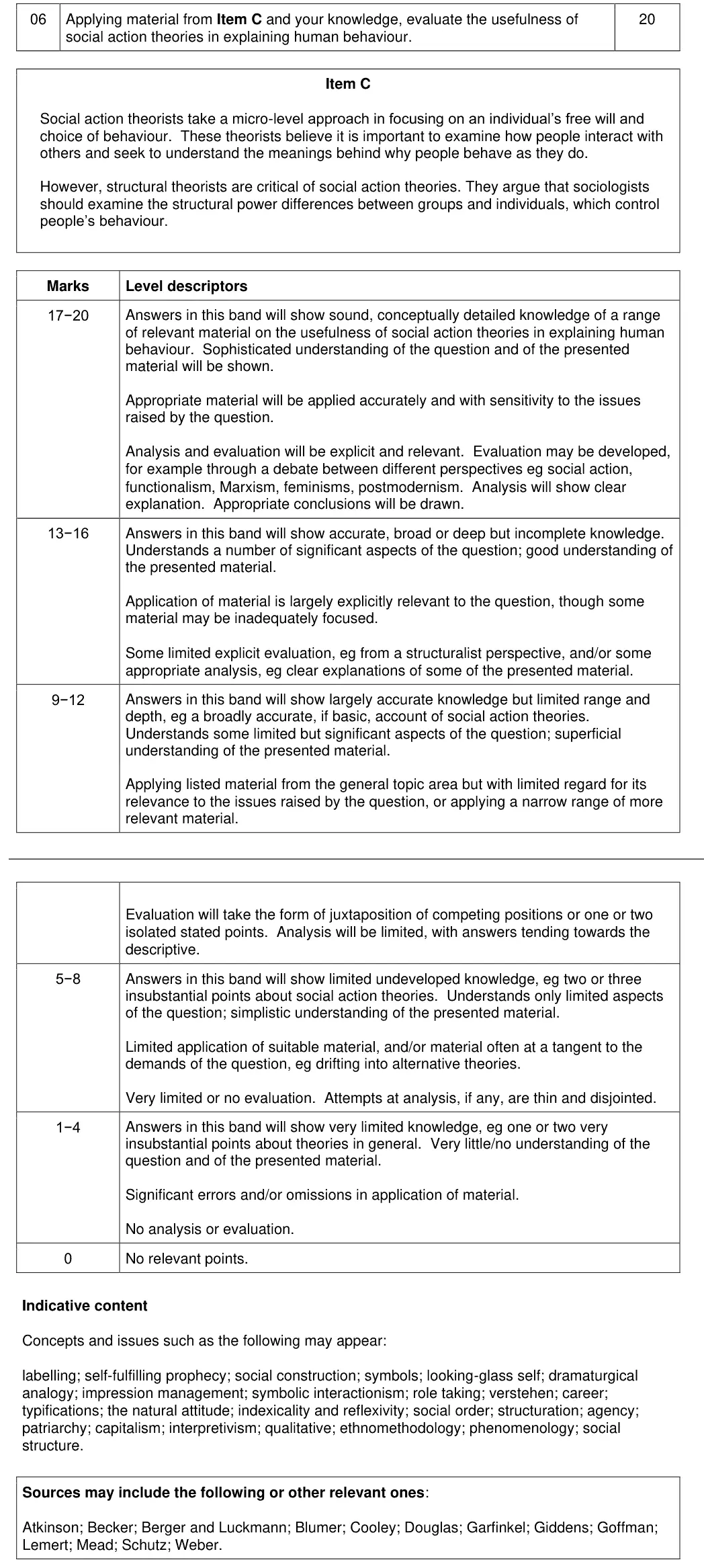
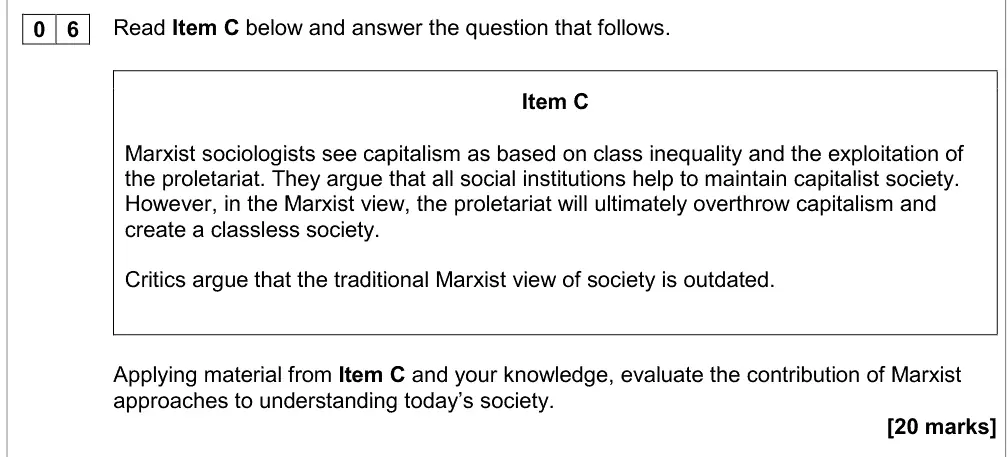
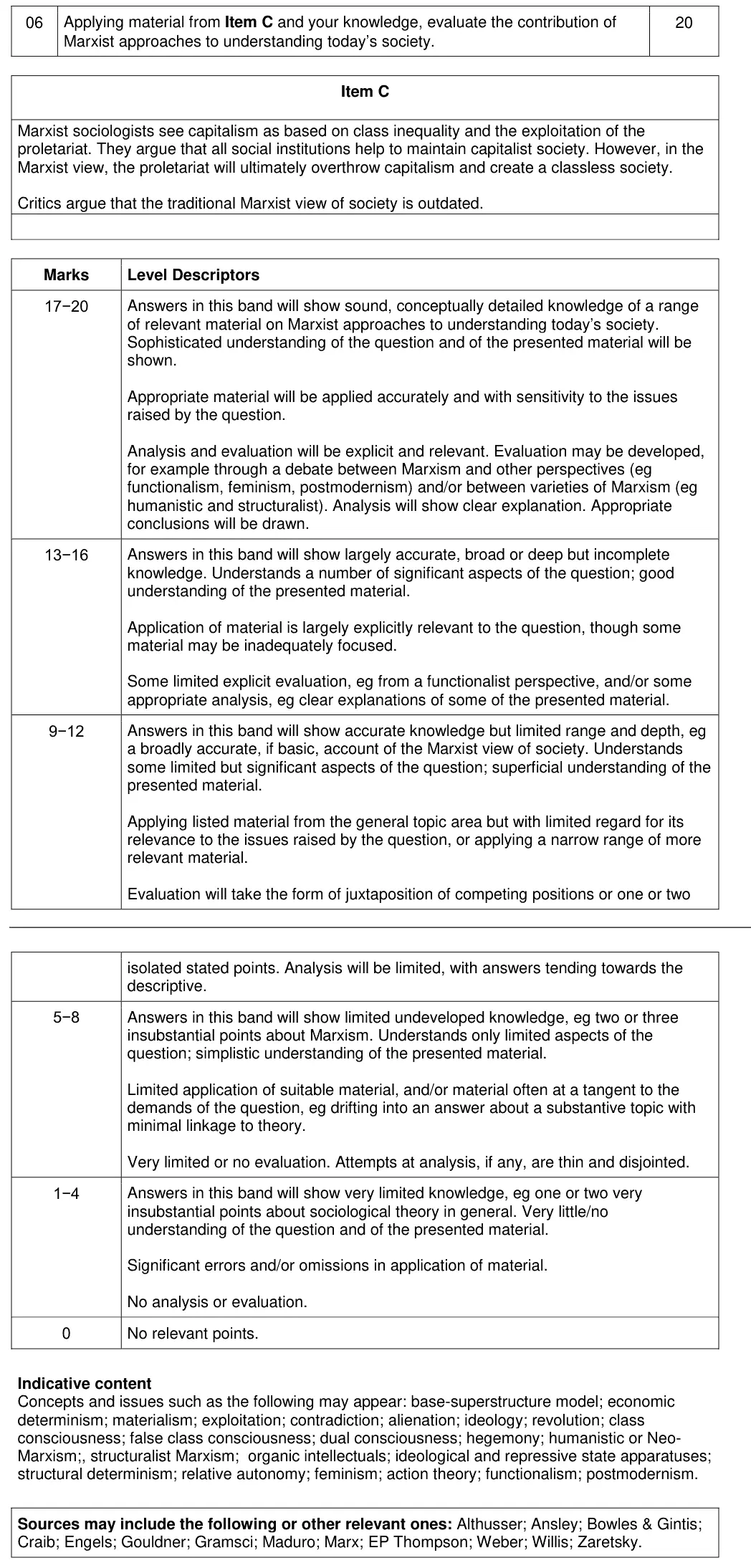
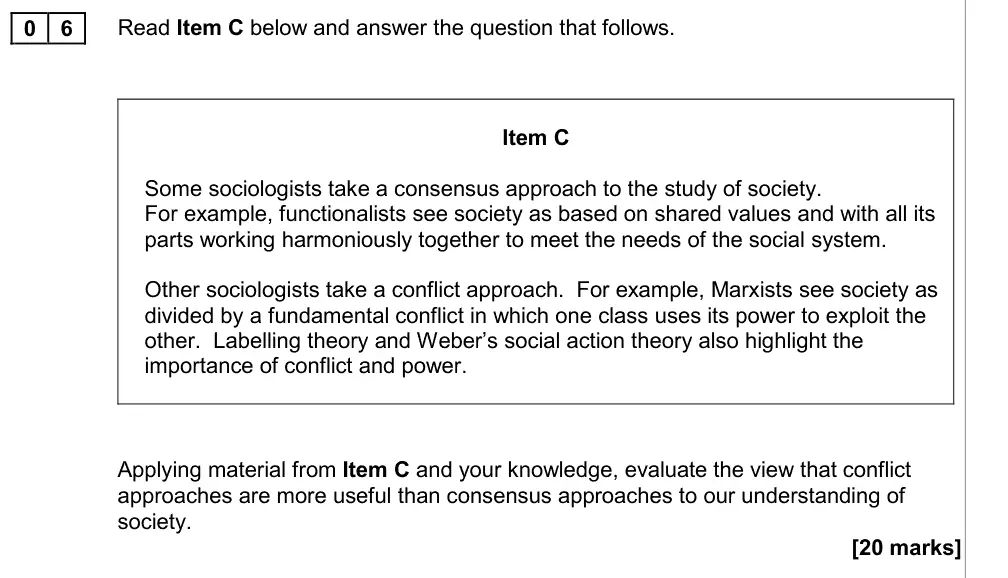
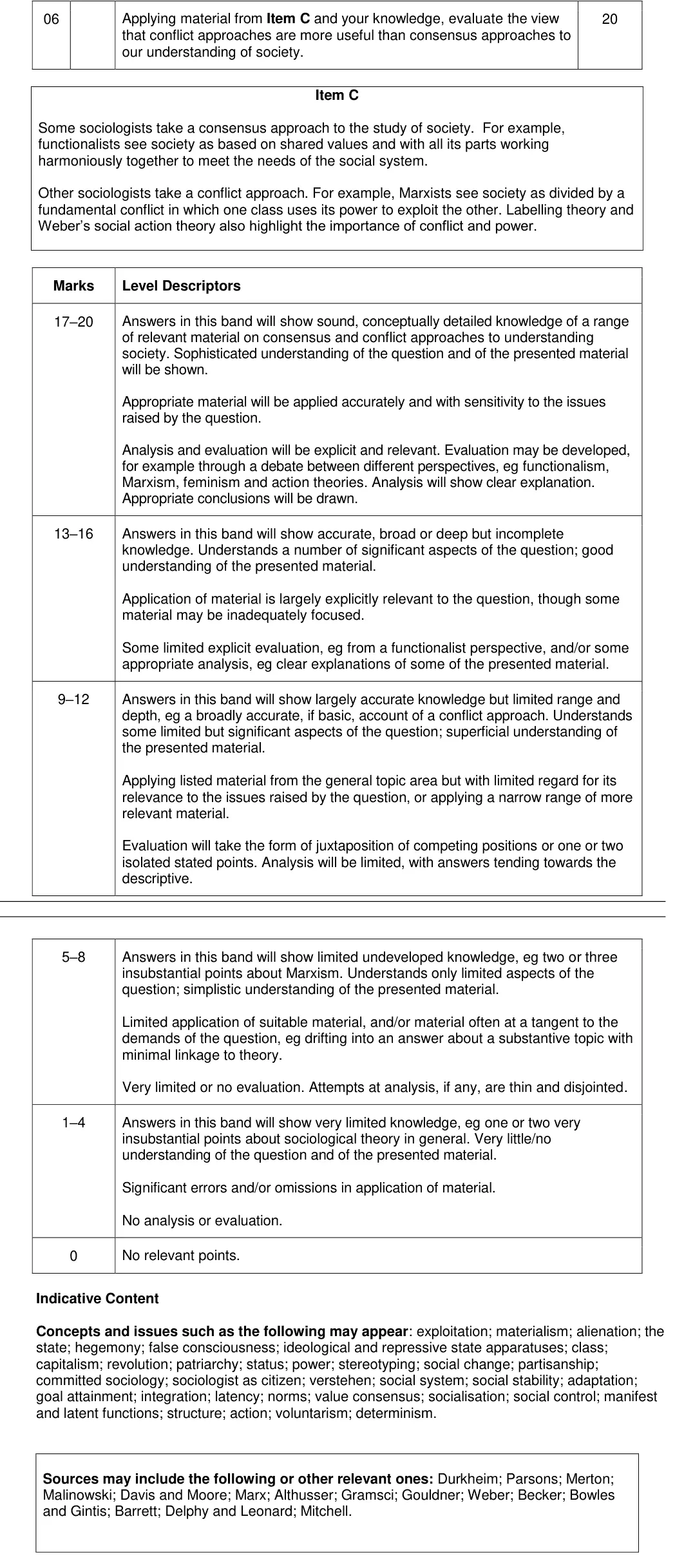
Similarly, in relation to AO3 skills (analysis and evaluation), opportunities to gain marks on the longer questions (04 and 06) were often missed. In these two questions, many students focused on recounting knowledge at the expense of the discussions and debates that could yield marks for AO3 skills. Many students wrote at length on questions 04 and 06. Nearly all students had at least a basic understanding of the consensus-conflict dimension in sociological theory and were able to locate functionalism, Marxism and often feminism within this. However, very weak answers did not go far beyond this basic structure and showed limited and even merely fragmentary knowledge of specific theories. Such answers were often highly dependent on Item C and unable to add much knowledge of their own. Answers that scored somewhat better were able to present an accurate if basic account of at least one main theory. However, the most effective responses showed depth of knowledge of the central ideas and concepts of consensus and conflict approaches. These answers were explicit in debating the usefulness of the two approaches and often applied material from topic areas in an appropriate manner to illustrate their points. On the other hand, some students took the question as an opportunity to write descriptively and at length about the functionalist, Marxist and/or feminist views of the family, education, crime and deviance or other substantive topics, but with little regard to the question and thus without reference to the usefulness of the approaches or even to their central concepts. A few students produced ‘catch all’ theory responses with seemingly obligatory and often lengthy accounts of postmodernism, structuration, etc. These were often presented as ‘evaluation’ but this tended to be of the structure-action debate and, as such, gained no credit. One common weakness was that, where students discussed social action theory, the focus tended to shift from consensus-conflict to structure-action. Similarly, while accounts of labelling theory usually showed at least a basic knowledge of relevant concepts, they were more focused on describing the labelling process and its consequences than on showing how this illustrated ideas of conflict between powerful labellers and the powerless labelled. Thus, knowledge of labelling and social action theory was often tangential to the set question.