Tap a question to zoom it. The mark scheme (with the level descriptors and indicative content) and the examiner's comment open underneath.
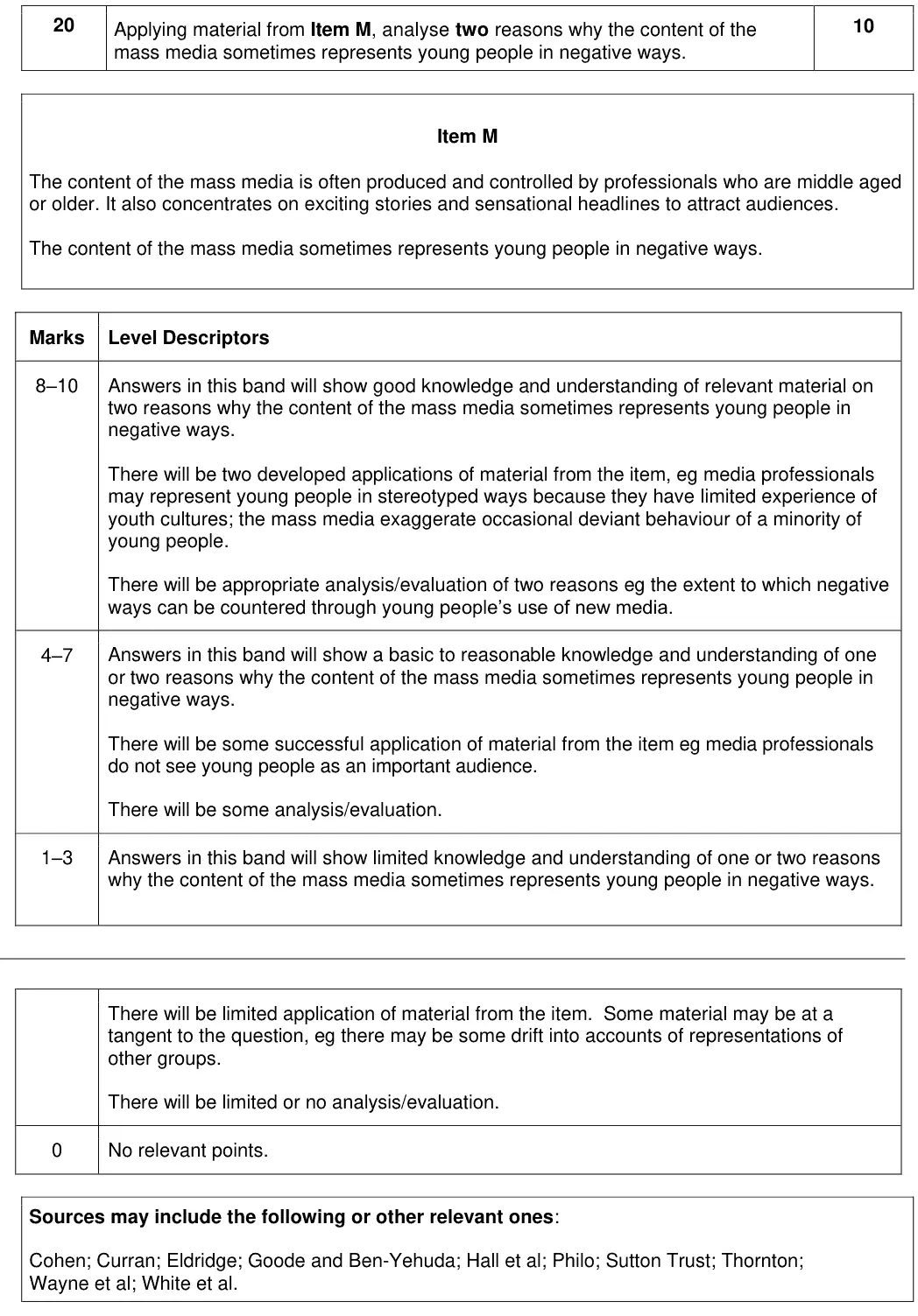
June 2023 · Paper 2 · Q2010 marksAO1=3, AO2=4, AO3=3Analyse
Mark scheme, including the levels grid and indicative content
Examiner's comment
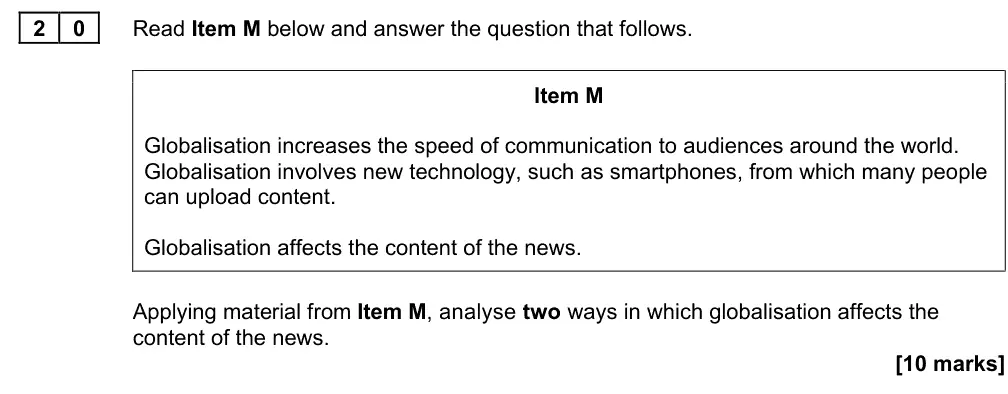
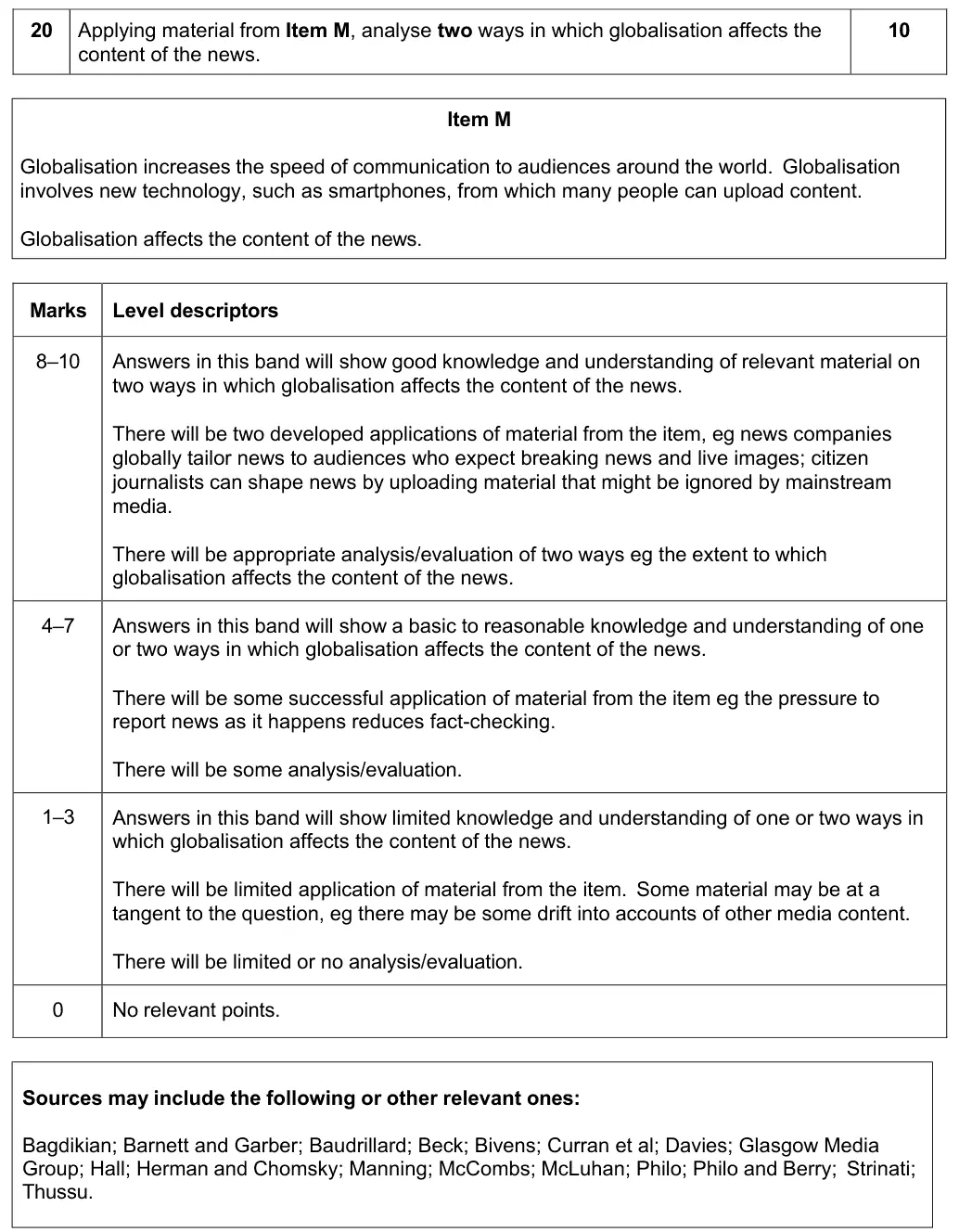
The nature of these questions means that students cannot rely on reciting knowledge. Questions will ask them to bring together aspects of their sociological knowledge in ways they are unlikely to have done before. It is therefore important for students to allow time to think about how to answer the question. Students should be made aware that there are two types of 10 mark questions. These have different requirements and different mark schemes. There are different marks available for the assessment objectives. The items for 10 mark “analyse” questions are written to give prompts or “hooks” for student answers. These have to be used to access application marks. Answers can indicate use of hooks by quoting, by a reference in parentheses or by wording (eg “As the item says…”). Items end with a sentence restating the question; the hooks are in the preceding part of the item. Introductions and conclusions are not required for 10 mark questions and take up valuable time. It is helpful if answers are set out to clearly indicate the two separate points, with wording such as “One way/reason is…” or by starting a new paragraph for the second point. Answers that give more than two points are unlikely to develop two of them sufficiently. Question 20: Most answers were able to develop from the item two ways that globalisation affects the content of the news. Popular answers included citizen journalism and the immediacy of reporting leading to less checking of facts and more misleading information.
Notes from the mark scheme and report
hooks: speed of communication and smartphone uploads
e.g. demand for breaking news and live images, citizen journalism, less fact-checking
drift into other media content = 1–3
popular answers: citizen journalism and immediacy causing misinformation
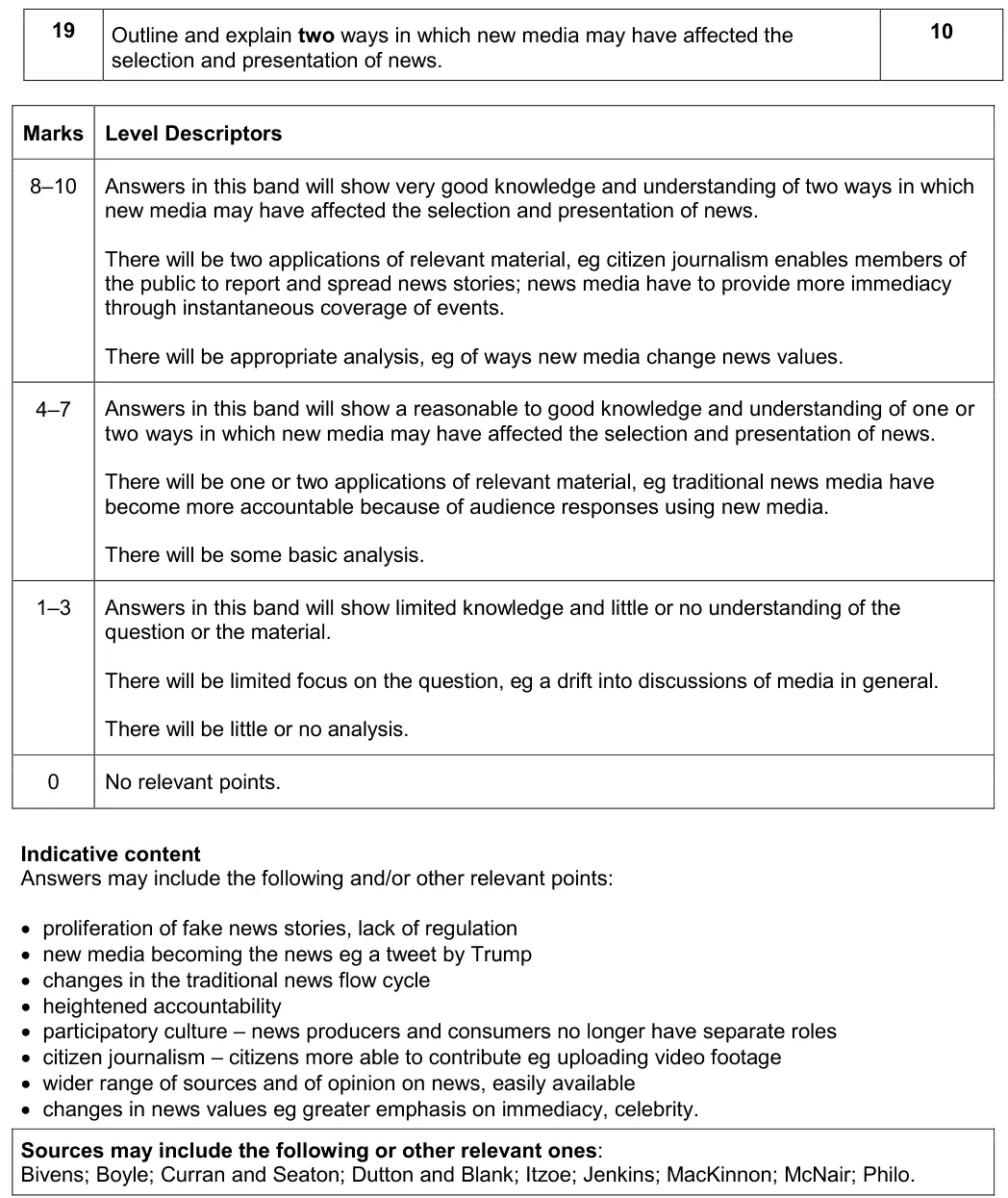
June 2022 · Paper 2 · Q1910 marksAO1=5, AO2=3, AO3=2Outline and explain
Mark scheme, including the levels grid and indicative content
Examiner's comment
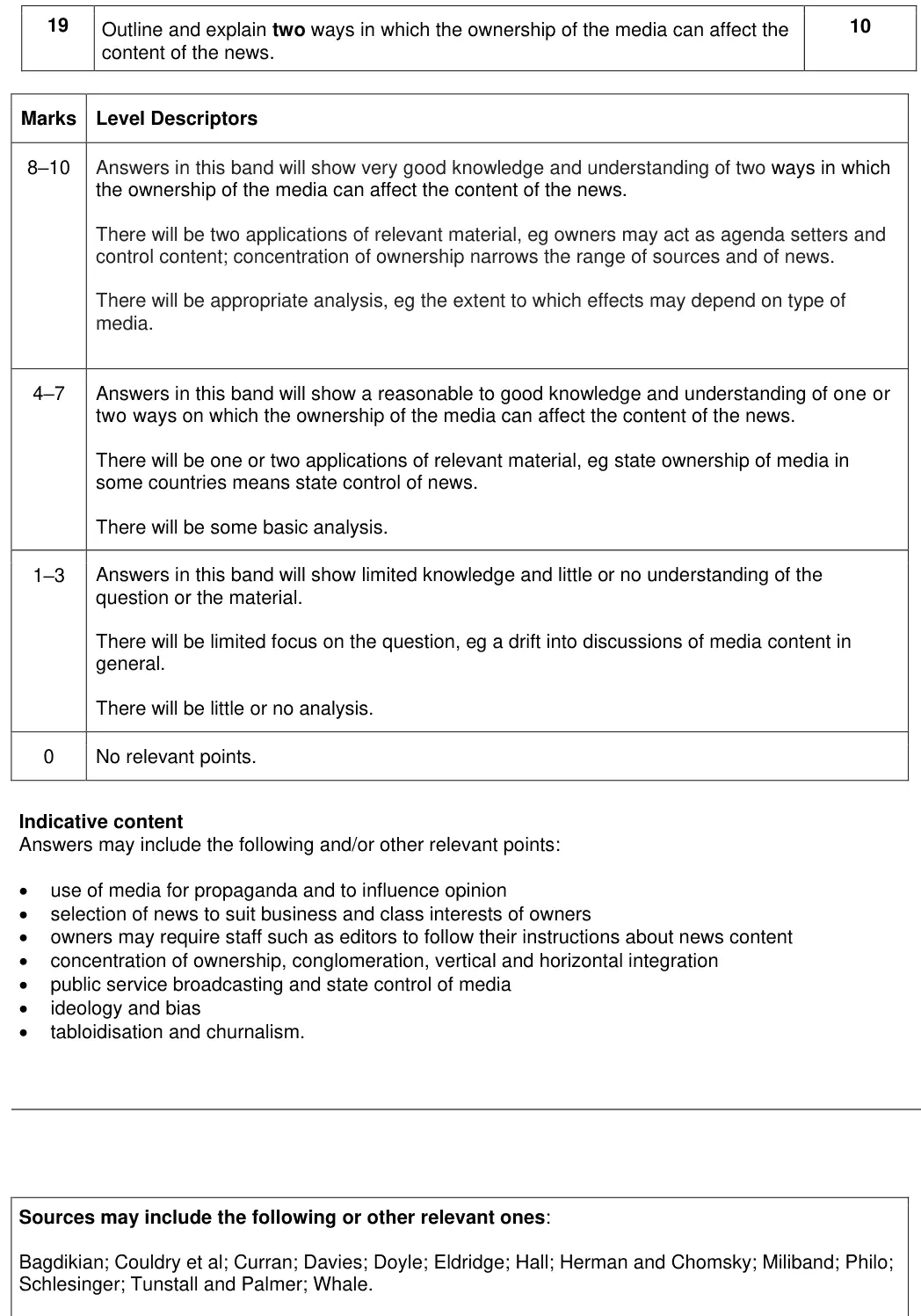
The nature of these questions means that students cannot rely on reciting knowledge. The questions will ask them to bring together aspects of their sociological knowledge in a way that they are unlikely to have done before. There was a tendency, however, to attempt to answer the question by giving knowledge based on words or phrases in the question, rather than meeting the demands of the question. Students are advised to spend time reading the question, and, where there is one the item, to ensure that they are answering the question. Some students seemed unaware of the different demands of the two types of questions. The marks awarded for the assessment objectives are different in the two types of ten mark questions, and students should be aware of this. In particular, it should be noted that there are no marks available for evaluation in “outline and explain” (no item) questions. There is no need for an introduction or conclusion for 10 mark questions. It is helpful if answers are set out to clearly indicate the two answers, with wording such as “One way is…” or by starting a new paragraph for the second point. The best answers to 10 mark questions were focused, clearly stating a point that addressed the question and then developing it, using sociological concepts, evidence and, where appropriate, theory. Answers need to address all aspects of the question. Q19 There were a number of strong answers to this question drawing for example on ways that owners use their power to shape content and on censorship and propaganda.
Notes from the mark scheme and report
top band e.g. owners as agenda setters, concentration of ownership narrowing news
analysis of how effects vary by type of media
drift into media content in general = 1–3 band
strong answers on owners' power, censorship and propaganda
June 2022 · Paper 2 · Q2010 marksAO1=3, AO2=4, AO3=3Analyse
Mark scheme, including the levels grid and indicative content
Examiner's comment
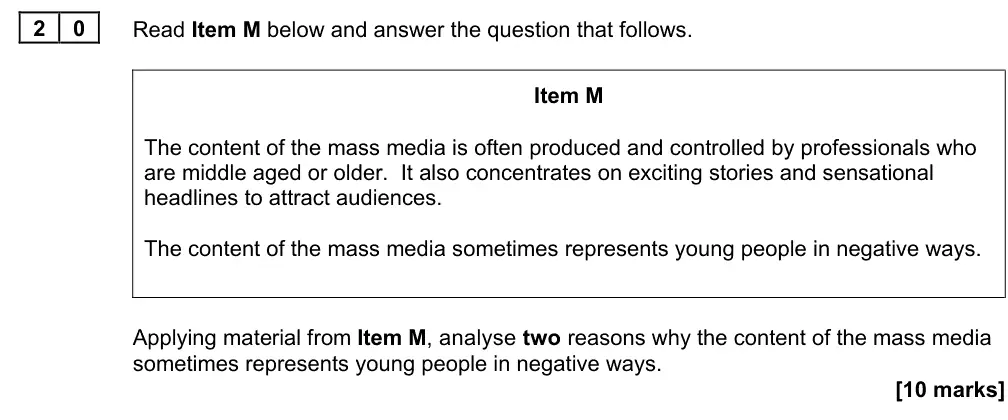
The nature of these questions means that students cannot rely on reciting knowledge. The questions will ask them to bring together aspects of their sociological knowledge in a way that they are unlikely to have done before. There was a tendency, however, to attempt to answer the question by giving knowledge based on words or phrases in the question, rather than meeting the demands of the question. Students are advised to spend time reading the question, and, where there is one the item, to ensure that they are answering the question. Some students seemed unaware of the different demands of the two types of questions. The marks awarded for the assessment objectives are different in the two types of ten mark questions, and students should be aware of this. In “analyse” (with item) questions, the answers need to be clearly based on the prompts or “hooks” in the item, not just on the final sentence of the item which restates the question. There is no need for an introduction or conclusion for 10 mark questions. It is helpful if answers are set out to clearly indicate the two answers, with wording such as “One way is…” or by starting a new paragraph for the second point. The best answers to 10 mark questions were focused, clearly stating a point that addressed the question and then developing it, using sociological concepts, evidence and, where appropriate, theory. Answers need to address all aspects of the question. Q20 Answers to this question were generally successful in explaining that controllers can have stereotypical views, and that news values shape selection and presentation. Relatively few answers addressed why it might be young people, rather than other groups, who are then represented in negative ways.
Notes from the mark scheme and report
hooks: older media professionals and news values favouring sensational stories
analysis e.g. young people countering this through new media
few explained why it is young people rather than other groups who are represented negatively
drift into representations of other groups = 1–3 band
November 2020 · Paper 2 · Q1910 marksAO1=5, AO2=3, AO3=2Outline and explain
Mark scheme, including the levels grid and indicative content
Notes from the mark scheme and report
how new media change news selection and presentation: citizen journalism, immediacy, fake news, tweets becoming news, accountability, changing news values
drift into the media in general = 1-3
no marks for evaluation in this question type (examiners' report general remark)
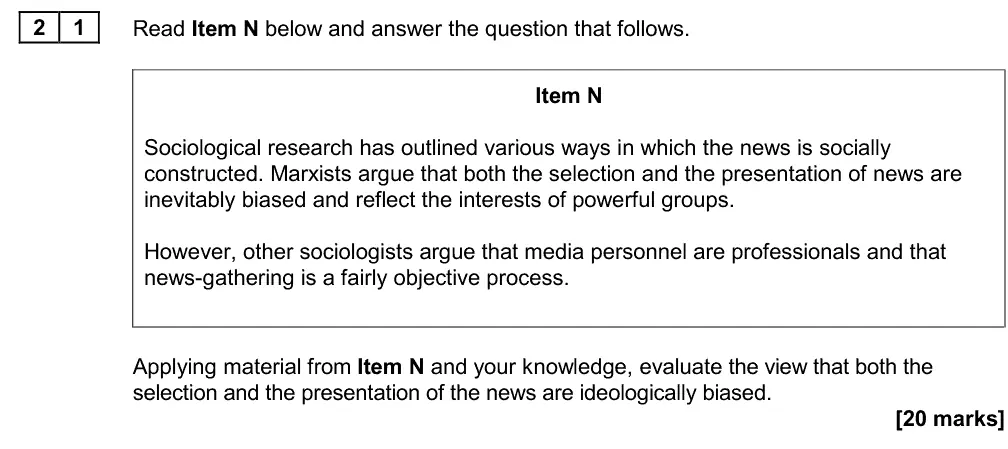
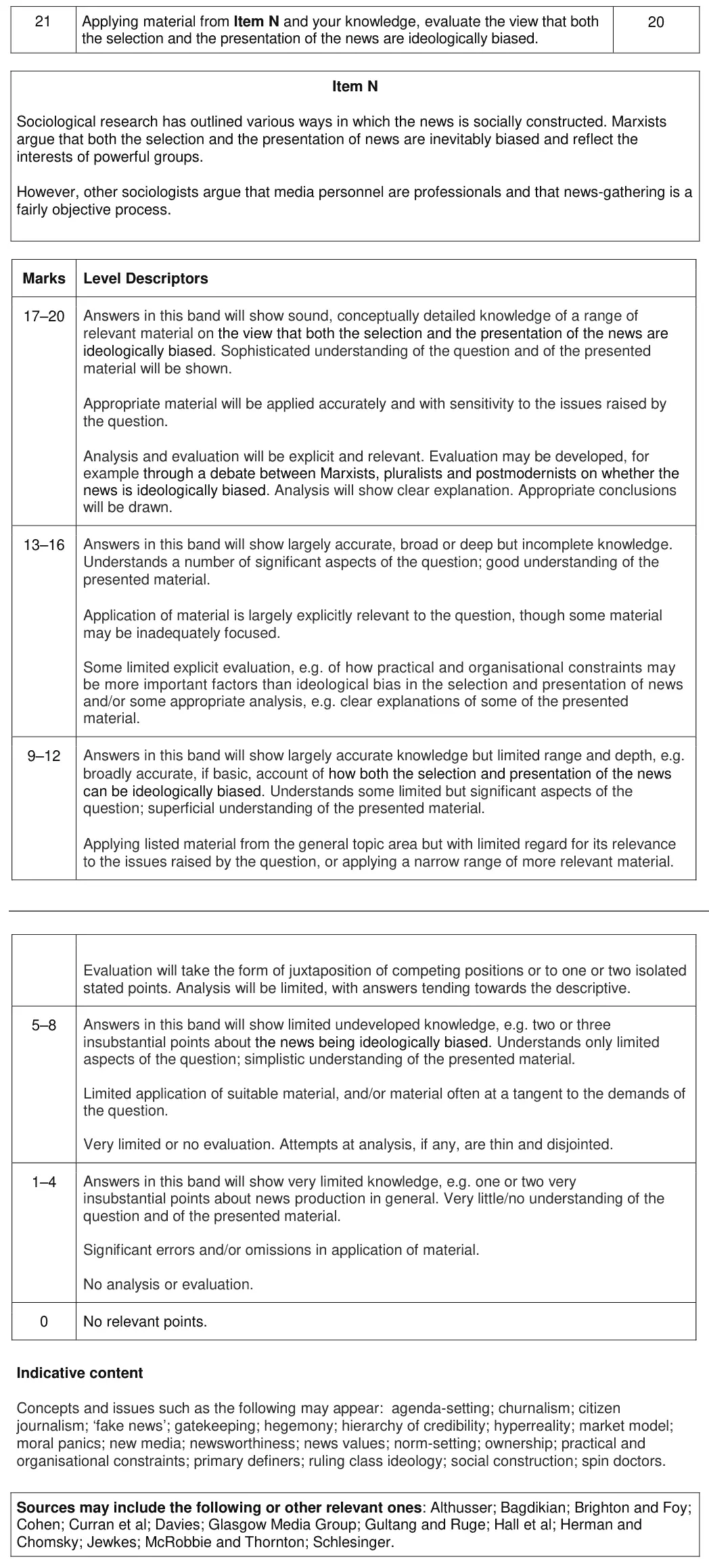
June 2019 · Paper 2 · Q2120 marksAO1=8, AO2=6, AO3=620-mark essay
Mark scheme, including the levels grid and indicative content
Examiner's comment
They therefore answered the section B 20 mark essay question last, and for many this was, as last year, a relatively brief and often apparently unfinished answer. This suggests that time management continues to be a problem for many students on this paper. As last year, many scripts had one substantial answer to the Section A 20-mark question and one significantly briefer one for Section B, suggesting problems with timing. There was often little evidence of planning. A wide range of material can be relevant to these questions, and students are not expected to include everything. They need to carefully choose the content and to plan their answers. The best answers will be both empirical and theoretical, for example showing knowledge of research findings and examples, and knowledge of theoretical perspectives. Some answers amounted to lists of theoretical perspectives, with learned points of criticism, and lost focus on the question itself. While the items are intended as a helpful starting point for answers, they should not be taken by students as a full list of what is relevant; better answers will draw in other relevant knowledge and ideas. Answers to this question varied in quality; the best were able to apply a range of theories, including Marxism, neo-Marxism and pluralism, to discriminate within these between selection and presentation of the news and to include relevant examples. Examples tended not to be recent (for example, the Glasgow Media Group on strikes) and relatively few answers brought in contemporary material on, for example, news on social media and globalisation.
Notes from the mark scheme and report
must cover both selection and presentation
top band debates Marxist, neo-Marxist, pluralist and postmodern views
practical and organisational constraints as alternative to ideology
examples often dated (Glasgow Media Group), little on social media
AO split from AQA's standard grid for this paper (this year's mark scheme does not print it).
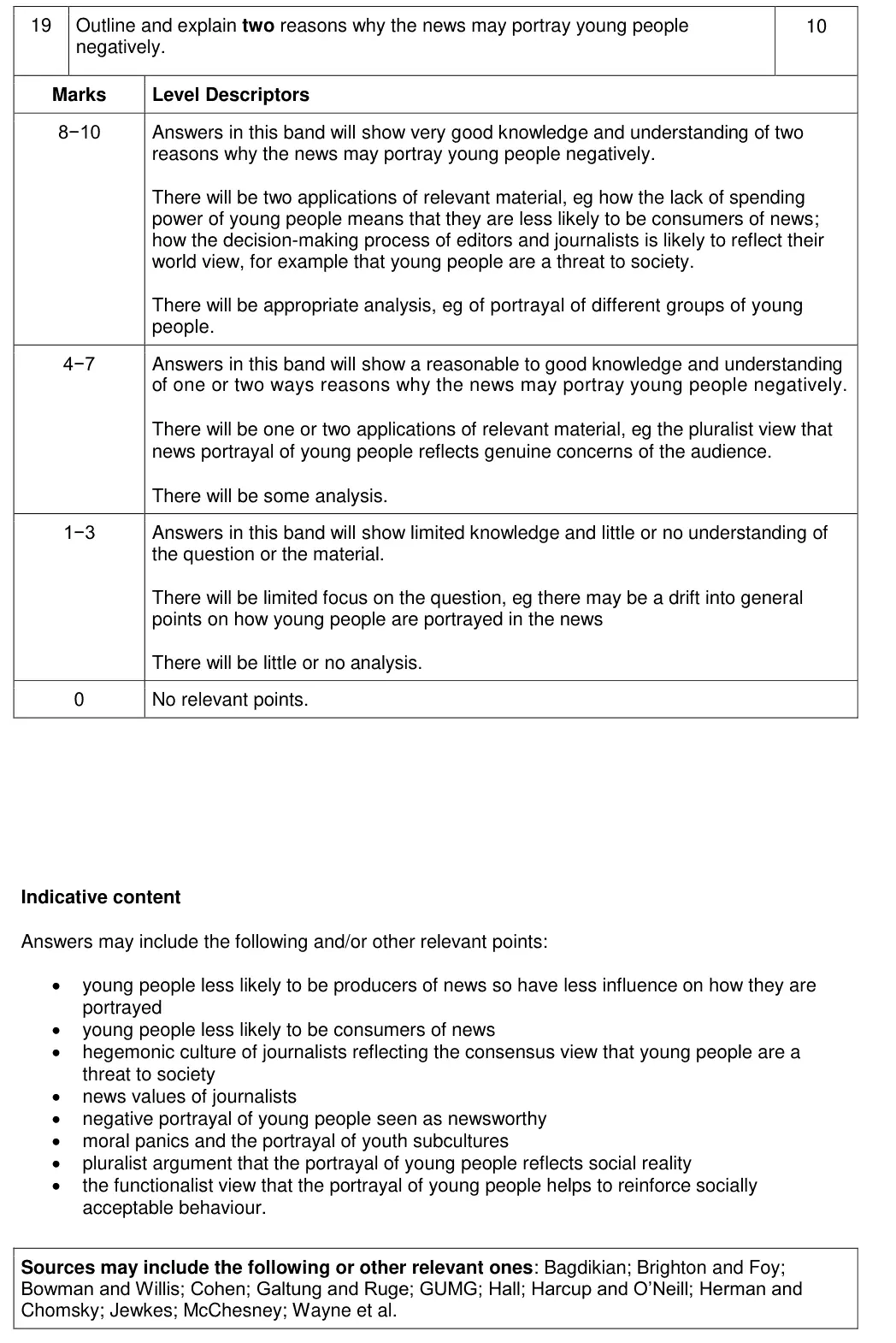
June 2018 · Paper 2 · Q1910 marksAO1=5, AO2=3, AO3=2Outline and explain
Mark scheme, including the levels grid and indicative content
Examiner's comment
Some students wrote introductory paragraphs and/or conclusions. These are not necessary, and are unlikely to gain additional marks, and they also take up time. Some students made only one point in their answers, or three or more, rather than the two asked for in the question. Sometimes it was unclear how many points were being made. It is helpful for students to clearly indicate their two answers, with wording such as “One way is…” or by starting a new paragraph for their second point. Evaluation is not a requirement for answers to 10 mark “outline and explain” questions. The marks awarded for the assessment objectives being targeted are different in the two types of ten mark questions, and students should be made aware of this. The best answers to 10 mark questions were focused, clearly stating a point and then developing it, using sociological concepts, evidence and theory where appropriate. In some questions students tended to focus on the first aspect of the question at the expense of the second. Students need guidance on how to approach these questions and how to best demonstrate their sociological understanding. The nature of these questions means that students cannot rely on reciting knowledge. These questions will ask them to bring together aspects of their sociological knowledge in a way that they are unlikely to have done before. Many answers chose to discuss moral panics, often drawing heavily on a description of Cohen’s mods and rockers, or other examples. Some, however, did not go beyond this to consider, for example, why young people in particular should tend to be cast as folk devils. Some good answers considered, for example, negative news values, the age of those controlling the media and the age of audiences, a reflection of reality linked to pluralism and functionalism’s need for boundary maintenance.
Notes from the mark scheme and report
two reasons for negative news portrayal of youth (e.g. young people not producers or consumers of news, journalists' hegemonic values, news values, moral panics, pluralist reflection of reality)
describing how youth are portrayed without explaining why = 1–3
many retold Cohen's mods and rockers without explaining why youth become folk devils
AO split from AQA's standard grid for this paper (this year's mark scheme does not print it).
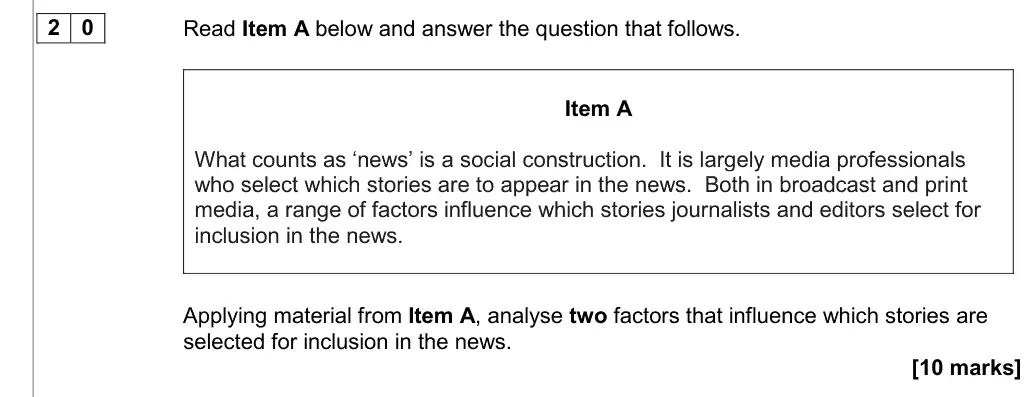
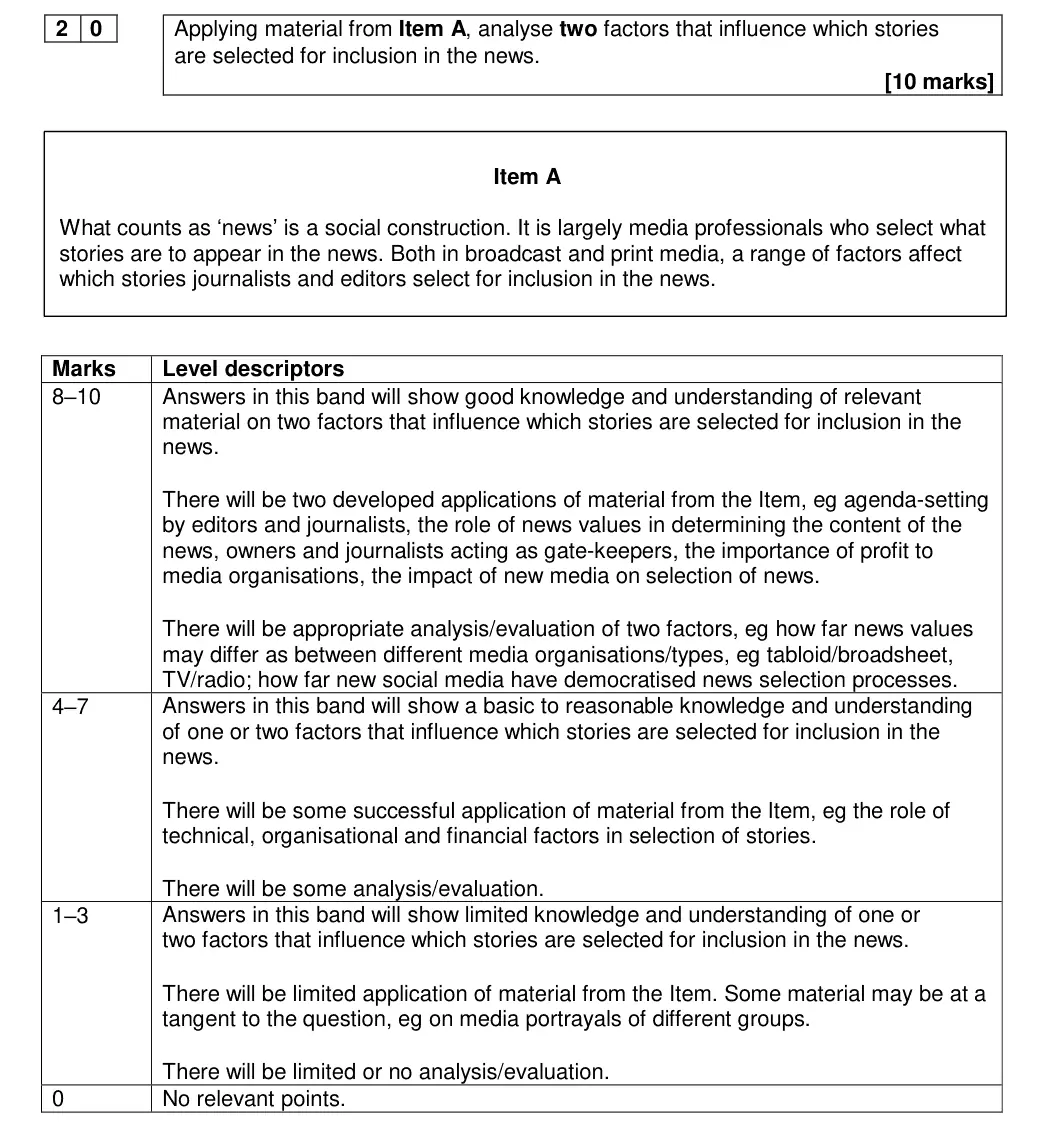
Specimen set 1 · Paper 2 · Q2010 marksAO1=3, AO2=4, AO3=3Analyse
Mark scheme, including the levels grid and indicative content
Notes from the mark scheme and report
item hooks: news as social construction selected by professionals
top band e.g. news values, agenda setting, gatekeeping, profit, new media
analysis of differences between media types or democratisation by social media
portrayals of groups are a tangent
Work with an AQA sociology tutor
Essays stuck in the middle band, or losing marks on the 10-markers? Book a trial lesson with Mark, a former AQA examiner.