Tap a question to zoom it. The mark scheme (with the level descriptors and indicative content) and the examiner's comment open underneath.
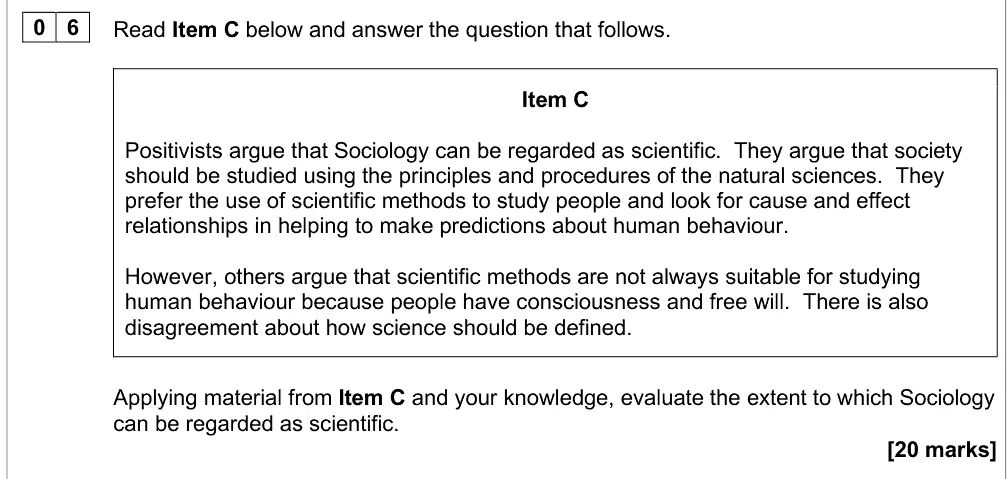
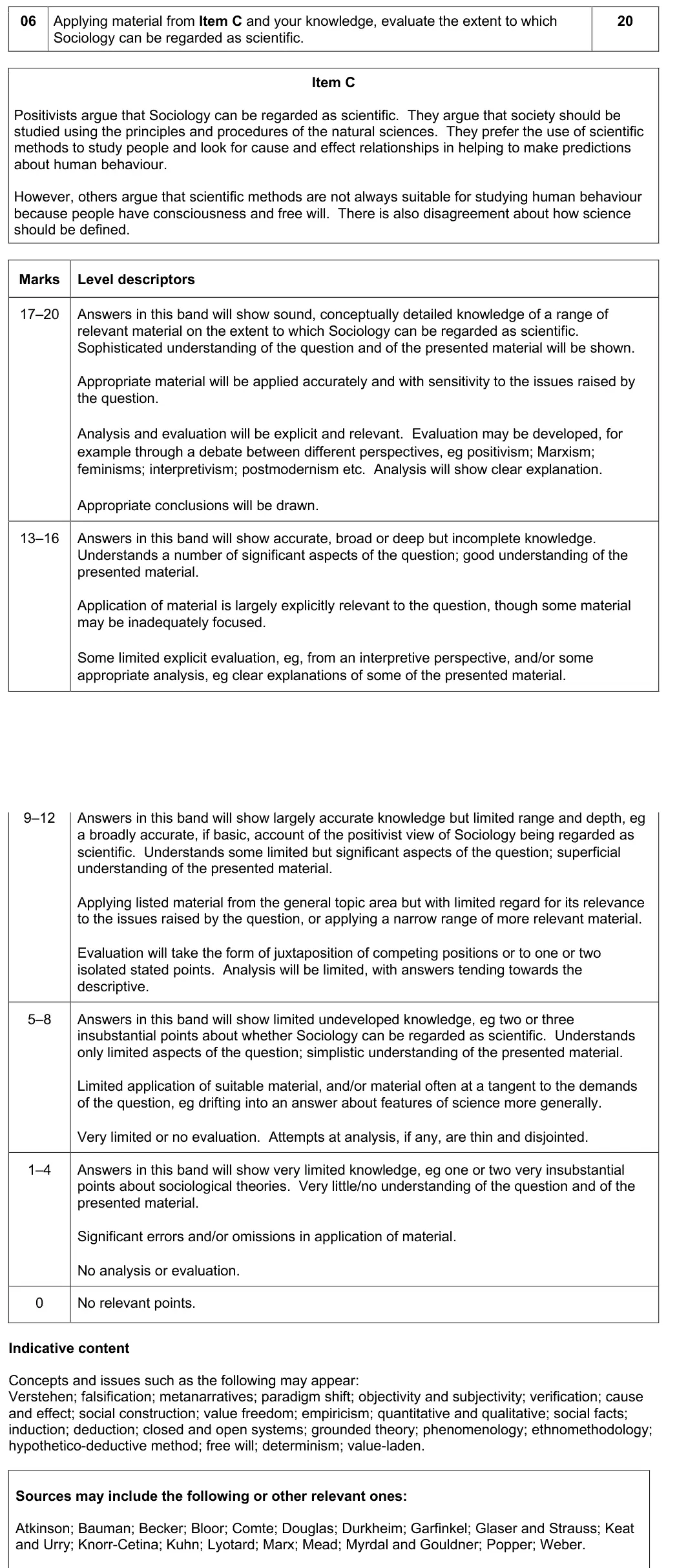
June 2024 · Paper 3 · Q620 marksAO1=8, AO2=6, AO3=620-mark essay
Mark scheme, including the levels grid and indicative content
Examiner's comment
This was answered well, and it was clear students were well prepared. There were different approaches in answering the question; some chose to go down a classical theory route; students developed mainly the work of Popper, Kuhn and Durkheim; some were able to develop the ideas of these thinkers and provide appropriate evaluation. Many students referenced positivism and interpretivism and linked this to research methods. Both approaches worked well when examples were given and ideas were developed with examples, such as ‘falsification’ or ‘objectivity vs subjectivity’ The evaluation skill was the weakest area for students although the question meant there were hooks in the item for evaluation. Many students were able to use the hooks and develop them. This meant evaluation was better than in the other questions. Note lengthy introductions are not required for this question; students are under time constraints.
Notes from the mark scheme and report
top band debates positivism, interpretivism, Marxism, feminisms and postmodernism on sociology as science
drift into features of science in general = 5–8
well prepared, using Popper (falsification), Kuhn (paradigms) and Durkheim
evaluation weakest skill though the item's hooks helped
long introductions unnecessary
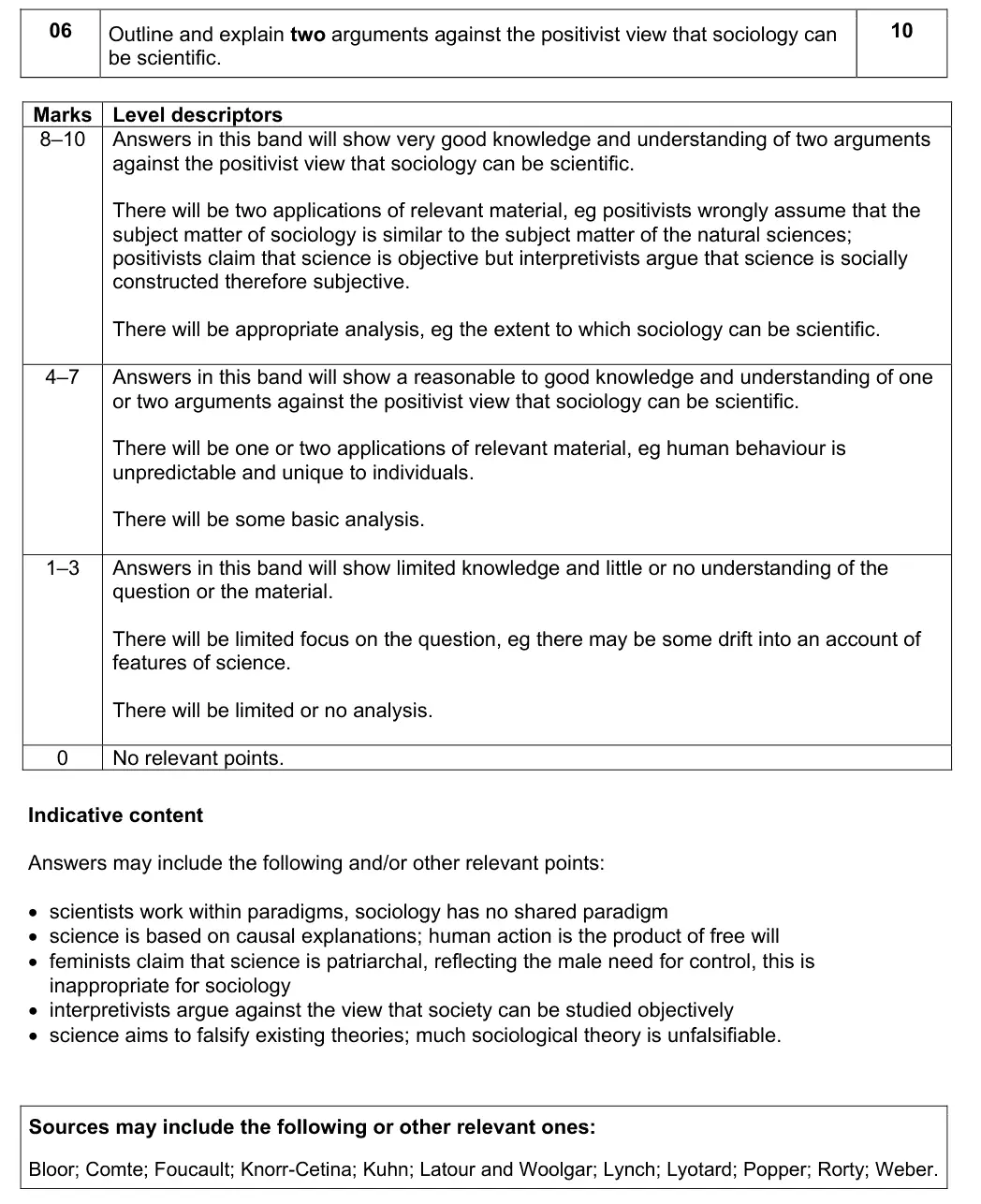
November 2021 · Paper 1 · Q610 marksAO1=5, AO2=3, AO3=2Outline and explain
Mark scheme, including the levels grid and indicative content
Examiner's comment
However, a small number of students left questions unanswered (particularly question 5 and/ or 6). Similarly to previous years, some students wrote lengthy answers to the 4-mark and 6-mark questions which may explain why a few of these students seemed to run out of time in answering the final question(s). Many students also seemed to struggle with this question. Some students were unable to offer a clear argument against the positivist view of Sociology being scientific, with some muddled and confused ideas being presented. Others were able to offer some clarity of response in offering arguments, which included difficulties of studying Sociology objectively. However, these were often written with limited or basic analysis. The more successful answers offered more developed application and analysis, for example, in explaining the reasons why studying issues such as divorce, achievement or criminal behaviours are difficult to study objectively and went on to outline reasons why they should not be regarded as ‘social facts’. However, knowledge and skills in the methods in context and Theory & Methods questions were generally weaker than previous series. It appeared that students had prepared less well for these topics and questions.
Notes from the mark scheme and report
no marks for evaluation in this question type
arguments must be against the positivist view, e.g. subject matter differs from natural science, science is socially constructed, paradigms (Kuhn), unfalsifiability (Popper), free will
drift into features of science = 1–3
many muddled
best answers explained why topics such as divorce or crime cannot be treated as social facts
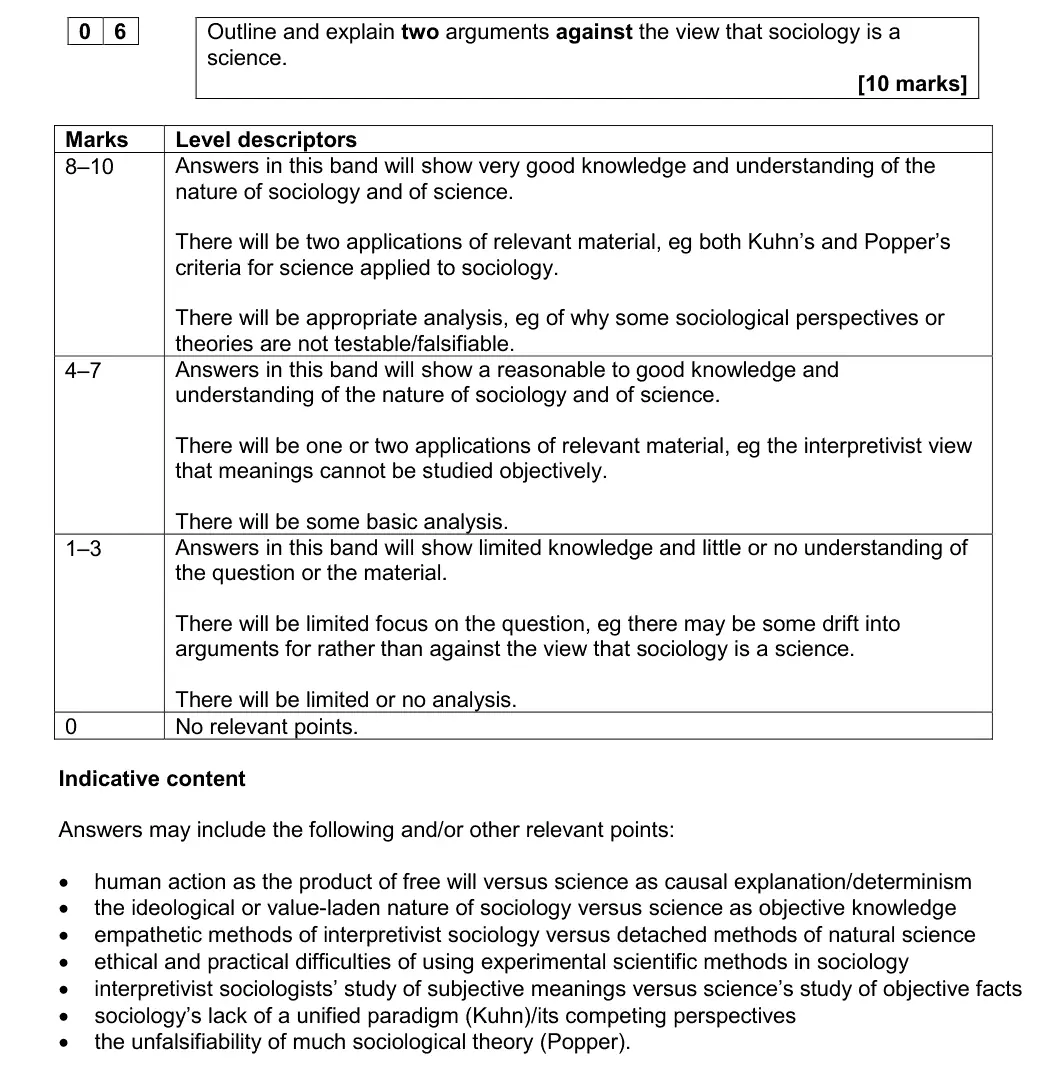
Specimen set 1 · Paper 1 · Q610 marksAO1=5, AO2=3, AO3=2Outline and explain
Mark scheme, including the levels grid and indicative content
Notes from the mark scheme and report
specimen paper, no examiners' report
no marks for evaluation in this question type
arguments must be against sociology as a science
drift into arguments for = 1–3
top band applies criteria such as Kuhn's paradigms and Popper's falsification
other credited points: free will vs determinism, value-laden sociology, interpretivist study of meanings
Work with an AQA sociology tutor
Essays stuck in the middle band, or losing marks on the 10-markers? Book a trial lesson with Mark, a former AQA examiner.